Introduction
Professional hair removal has evolved from traditional shaving, waxing, and mechanical epilation toward technology-driven treatment solutions. Among the many laser wavelengths available today, 808nm diode laser technology remains one of the most widely recognized choices for professional hair removal.
Its continued popularity is not simply because 808nm is a familiar wavelength. For beauty clinics and professional salons, the real value lies in the combination of wavelength characteristics, treatment efficiency, adjustable parameters, cooling technology, handpiece design, and operational flexibility.
Modern professional diode laser systems are designed to give operators greater control over energy delivery while helping clinics handle a wide range of treatment areas, from the face and underarms to the legs, arms, back, and larger body areas.
So, why does 808nm continue to play such an important role in professional hair removal? The answer starts with the way laser energy interacts with melanin and extends to the practical demands of running a modern aesthetic business.
Background: What Makes Professional Hair Removal Challenging?
Unwanted hair is not uniform. Hair differs in thickness, density, color, growth stage, and follicle depth. Skin also varies considerably between clients.
For a professional operator, this creates an important challenge: the device needs to deliver sufficient energy to the hair follicle while controlling the amount of heat reaching surrounding skin.
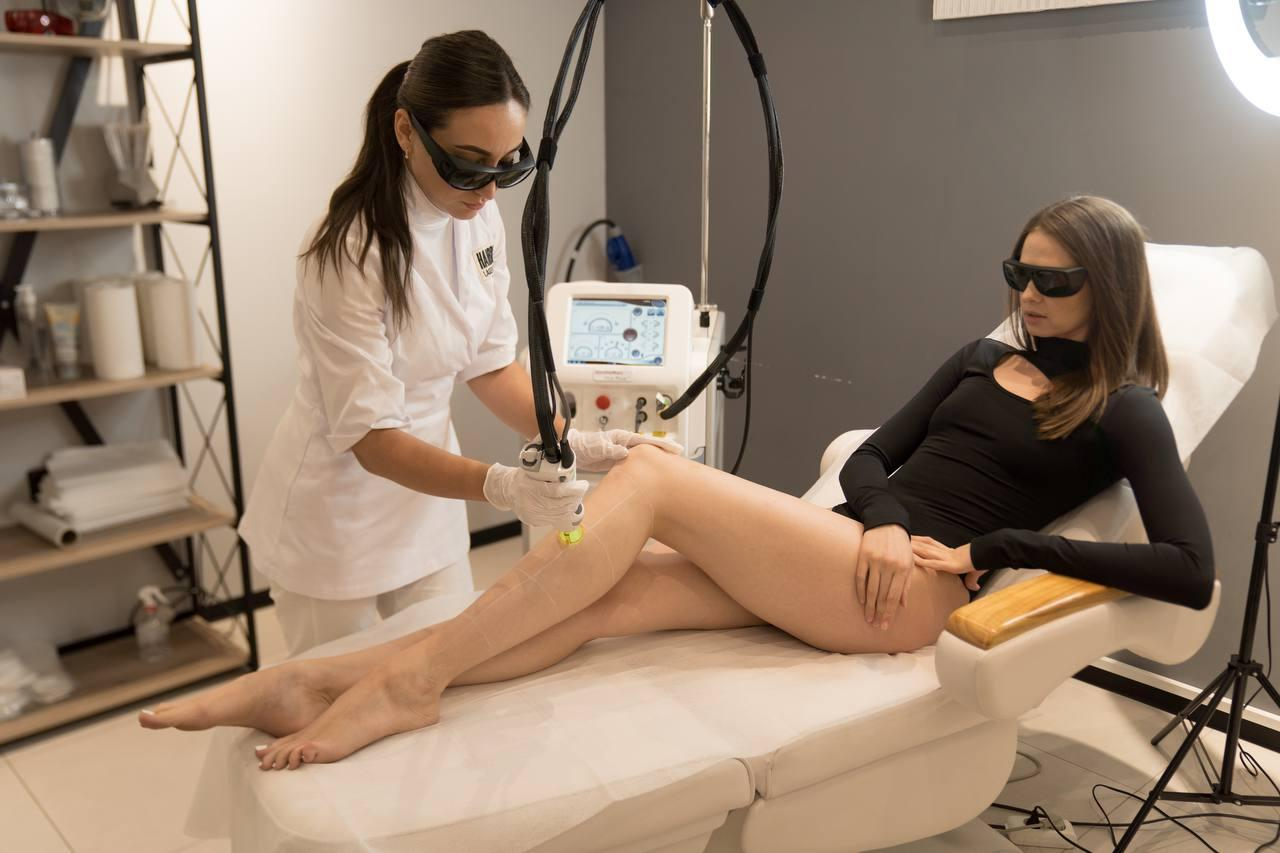
Traditional hair removal methods mainly remove visible hair rather than targeting the follicle itself. Laser hair removal takes a different approach. It uses light energy to target melanin in the hair and convert that energy into heat. This thermal effect can damage structures involved in hair growth and gradually reduce hair regrowth over a series of treatments.
Another challenge is treatment consistency. A professional clinic may treat dozens of clients with different skin and hair characteristics. Therefore, a useful hair removal platform needs more than a powerful laser source. It should provide adjustable pulse duration, energy settings, repetition rates, appropriate spot sizes, and effective cooling so operators can adapt treatments to individual clients.
This is one reason professional 808nm diode laser systems remain relevant.
Technology & Mechanism: How Does an 808nm Diode Laser Work?
An 808nm diode laser uses a semiconductor laser source to deliver light at approximately 808 nanometers. The wavelength is particularly useful for hair removal because melanin in the hair shaft and follicular structures can absorb the laser energy.
The basic process can be understood in three stages:
1. Laser energy reaches the target
The handpiece delivers concentrated laser energy into the treatment area. The objective is to direct energy toward the hair rather than broadly heating the surrounding tissue.
2. Melanin absorbs the energy
Melanin acts as the primary chromophore in laser hair removal. The absorbed optical energy is converted into thermal energy. That heat travels through the hair toward structures within the follicle.
3. Thermal damage affects hair growth
When an appropriate treatment temperature and energy delivery are achieved, thermal damage can affect the follicular structures responsible for hair growth. Because hair grows through different phases, multiple treatment sessions are normally required to address follicles when they are most responsive to treatment.
This mechanism explains why professional laser hair removal is fundamentally different from shaving or waxing. Instead of simply removing the visible hair, the treatment is designed to influence the follicle and reduce future regrowth.
Why 808nm?
The popularity of 808nm comes partly from its practical balance between melanin absorption and penetration depth.
Compared with shorter wavelengths, such as 755nm, 808nm can provide useful penetration for many common body-hair treatment scenarios while maintaining meaningful absorption by melanin. At the same time, longer wavelengths such as 1064nm interact differently with melanin and are often considered when treating darker skin types or specific clinical situations.
This does not mean that 808nm is universally superior to every other wavelength. Rather, its strength is its versatility and established role in professional hair removal.
A controlled clinical comparison of an 808nm diode laser and a 755nm alexandrite laser found comparable long-term axillary hair reduction after six treatments in patients with Fitzpatrick skin types I–IV. The study reported approximately 72% hair clearance after the sixth treatment for both systems, with reductions remaining at 18-month follow-up.
Why Professional Clinics Continue to Choose 808nm Diode Laser
1. A Strong Balance Between Performance and Versatility
Professional clinics need equipment that can be used across multiple treatment areas. The 808nm wavelength is commonly associated with treating dark, coarse, and medium-thickness hair on areas such as the legs, arms, underarms, back, chest, and bikini area.
This broad application range makes the technology commercially attractive. Instead of investing in a device designed around only one narrow treatment scenario, a clinic can use an 808nm platform as a core hair-removal solution.
2. Suitable for High-Volume Treatment Environments
Treatment speed matters in professional aesthetics.
A clinic does not evaluate a laser only by its theoretical energy output. Operators also consider spot size, repetition rate, pulse delivery, handpiece ergonomics, cooling performance, and how quickly a treatment area can be covered.
Research comparing diode and alexandrite systems has highlighted spot size and repetition rate as important factors affecting treatment speed and practical performance.
For this reason, modern 808nm diode systems may incorporate larger treatment spots, higher repetition rates, and sliding or continuous-motion treatment modes. These configurations can be particularly useful for larger areas such as legs, arms, abdomen, and back.
3. Adjustable Treatment Parameters
Every client is different.
Hair thickness, density, skin tone, treatment area, and treatment history can all influence how an operator approaches a session. Professional systems therefore commonly provide adjustable parameters such as energy density, pulse duration, and repetition frequency.
This flexibility is more valuable than simply offering a high maximum power rating.
A well-designed professional machine should allow trained operators to select appropriate settings according to the client and treatment protocol rather than applying identical parameters to every person.
4. Cooling Supports Treatment Comfort
Cooling has become an important part of modern diode laser design.
Because laser hair removal intentionally generates heat around the target follicle, the epidermis also needs to be protected from excessive thermal accumulation. Professional systems may use sapphire contact cooling, integrated cooling systems, air cooling, or other temperature-management technologies.
The purpose is not simply to make the treatment feel more comfortable. Effective cooling can help manage epidermal heat during treatment and support more controlled energy delivery.
For professional clinics, this can influence both client experience and operator confidence.
5. Professional Handpiece Design Improves Workflow
The handpiece is one of the most frequently overlooked components of a laser hair removal system.
During a busy working day, an operator may perform multiple treatments consecutively. A lightweight and ergonomic handpiece can therefore reduce physical strain and make repetitive movements easier.
Large spot sizes can also help cover larger areas more efficiently, while smaller or more precisely controlled delivery can be useful for areas requiring greater accuracy.
For equipment manufacturers, handpiece ergonomics are therefore not simply a design issue. They are directly connected to the daily workflow of professional salons and aesthetic clinics.
808nm Diode Laser vs. Other Hair Removal Technologies
The professional market includes several laser wavelengths and light-based technologies, including 755nm alexandrite, 808nm diode, 1064nm Nd, and IPL.
Each technology has different optical characteristics and treatment considerations.
755nm Alexandrite:
The shorter wavelength has stronger melanin absorption and can be particularly useful for certain lighter skin and darker-hair combinations. It may also have advantages when treating finer pigmented hair.
808nm Diode:
The 808nm diode offers a practical middle ground between absorption and penetration and has become a mainstream option for professional hair removal. Its broad application range and mature equipment ecosystem contribute to its continued popularity.
1064nm Nd:YAG:
The longer wavelength has lower melanin absorption than shorter wavelengths and can be valuable for appropriately selected darker skin types. However, treatment parameters and clinical protocols require careful consideration.
IPL:
IPL is not a laser. It uses a broad spectrum of light rather than a single laser wavelength. Its versatility can be attractive, but the underlying energy-delivery mechanism differs from diode laser technology.
The important point for clinics is that there is no single wavelength that is ideal for every client and every situation. A professional equipment strategy should consider skin type, hair characteristics, treatment area, operator training, and the device's parameter-control and cooling capabilities.
Applications: Where Can 808nm Diode Laser Be Used?
The versatility of 808nm technology makes it suitable for many professional hair-removal services.
Facial Hair
Facial areas require precision because they contain smaller treatment zones and may have finer hair. A professional operator can adjust treatment parameters and use an appropriately sized spot or handpiece to work around areas such as the upper lip, chin, jawline, and sideburn region.
Underarms
Underarms are a common professional hair-removal area because the hair is often relatively dark and coarse. The treatment area is also compact enough for efficient coverage.
Arms and Legs
Large body areas create a different operational requirement. Treatment speed becomes particularly important, making larger spot sizes, efficient cooling, and higher repetition rates valuable features.
Back and Chest
For male clients, back and chest hair can represent a significant treatment area. Professional diode laser systems can provide a scalable solution for these larger surfaces while allowing operators to adjust treatment parameters according to hair density and skin characteristics.
Bikini Area
The bikini area is another common application where precision, cooling, and operator control are important.
What Should Clinics Look for When Choosing an 808nm Diode Laser?
Choosing a professional laser should involve more than checking the wavelength on the product label.
A clinic should evaluate the entire system.
Laser source:
The quality and stability of the diode laser source influence the consistency of energy delivery.
Parameter control:
Look for practical adjustment of energy, pulse duration, and repetition rate rather than focusing only on maximum output.
Cooling system:
Efficient cooling can support controlled treatment and client comfort.
Spot size:
Different treatment areas benefit from different spot sizes. Larger spots can improve efficiency on broad areas, while smaller spots can support precision.
Handpiece ergonomics:
The device should be comfortable for repeated professional use.
User interface:
Clear controls and intuitive software can reduce operational complexity and help trained operators follow treatment protocols more consistently.
Service and technical support:
For a professional clinic, equipment downtime can directly affect revenue. Warranty coverage, spare parts, technical support, and operator training should therefore be considered alongside the machine itself.
This is also where professional equipment has a clear advantage over many home-use devices. Professional platforms are generally designed around higher treatment throughput, broader parameter control, dedicated cooling systems, replaceable or specialized handpieces, and commercial operating environments.
Client Needs: Why Results Alone Are Not Enough
Modern aesthetic clients increasingly expect more than visible treatment results.
They want treatments that fit into their schedules, provide a manageable level of discomfort, and are performed with professional equipment by trained operators.
For clinics, this means the customer experience is closely connected to device design.
A fast treatment session can improve appointment efficiency. Effective cooling can contribute to comfort. Flexible parameters can help operators personalize treatment. A reliable platform can support consistent daily operation.
In other words, the value of an 808nm diode laser is not only the wavelength itself. It is the complete professional treatment system built around that wavelength.
Conclusion
The continued popularity of 808nm diode laser technology is the result of a practical combination of optical characteristics, treatment versatility, mature technology, and professional usability.
It provides a well-established approach to targeting melanin in hair follicles, while modern systems add adjustable parameters, high-speed operation, cooling technology, ergonomic handpieces, and larger treatment spots to meet the needs of professional clinics.
Clinical evidence also shows that diode laser hair removal can provide meaningful and persistent hair reduction when treatments are performed repeatedly and appropriately.
For beauty salons, aesthetic centers, and professional hair-removal clinics, the question is therefore not simply whether 808nm is still relevant. Its continued presence in the professional market demonstrates that it remains a practical foundation for modern laser hair-removal services.
As diode laser technology continues to evolve, the most valuable systems will be those that combine a proven wavelength with intelligent parameter control, reliable cooling, efficient treatment delivery, ergonomic design, and dependable professional support.
For equipment suppliers and manufacturers, this creates an opportunity to develop 808nm platforms that are not merely powerful, but also efficient, adaptable, and designed around the real workflow of professional beauty businesses
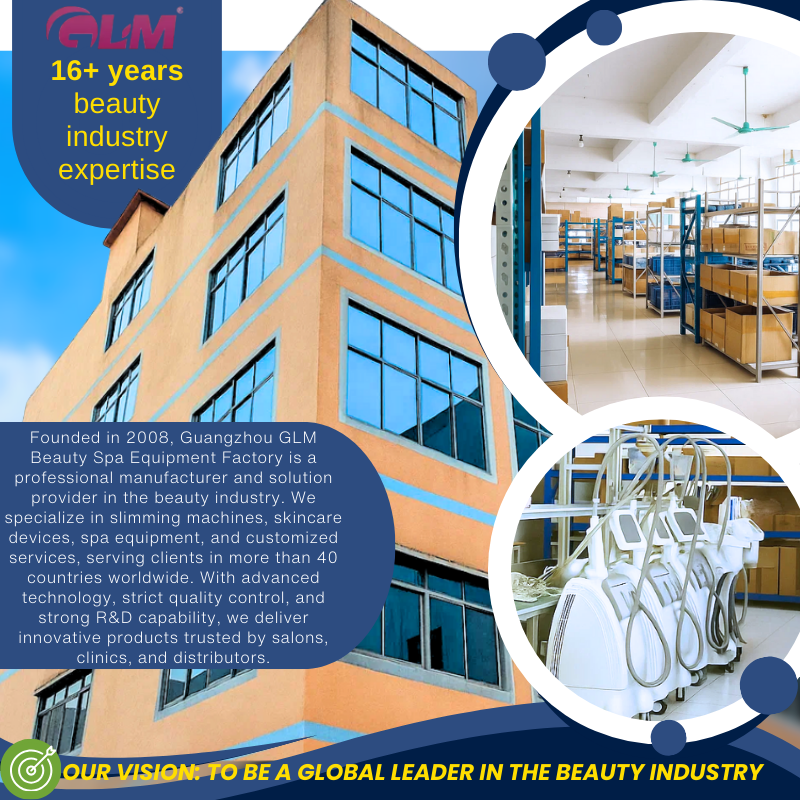
Founded in 2008, Guangzhou GLM Beauty Spa Equipment Factory specializes in research, development, manufacture and selling of beauty and slimming machines. Our production base is located in Guangzhou City, Guangdong Province, China. Since our foundation, we have introduced advanced technologies and equipment, to assure high quality and high performance of our products. With professional marketing guide and excellent after-sales service, our products have been exported to over 20 countries and regions, including Southeast Asia, the Middle East, Europe and the United States, won worldwide praises and gained a good reputation