
Introduction
Facial aging is not simply about wrinkles. Over time, the face can gradually lose volume, skin support, and structural definition. The cheeks may appear flatter, the lips can become less full, the chin may look less defined, and the jawline may lose some of its youthful contour.
This is why modern aesthetic treatments increasingly focus on facial structure rather than treating individual wrinkles alone.
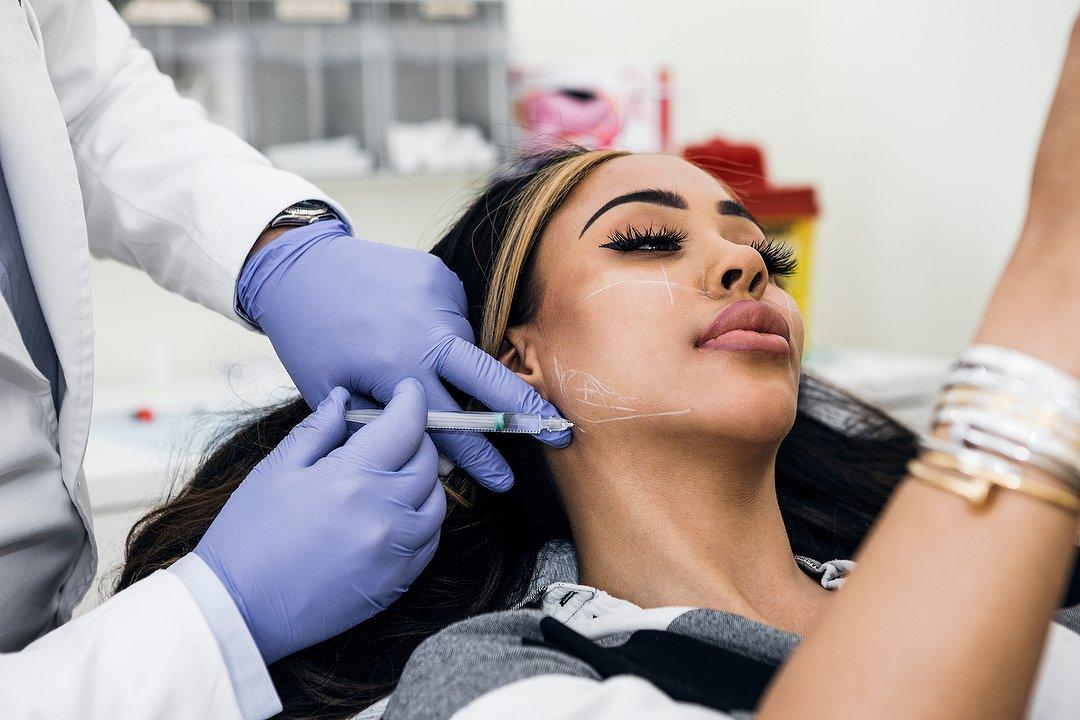
Dermal fillers are one of the most widely recognized non-surgical options for restoring lost facial volume and enhancing selected facial contours. Depending on the product and treatment area, fillers can create a fuller appearance, soften certain folds, and improve the visual balance between different facial features.
For professional beauty clinics and aesthetic practices, however, successful facial rejuvenation is not simply about injecting a product. It involves consultation, facial assessment, treatment planning, product selection, injection technique, and appropriate post-treatment care.
Modern aesthetic technology can support this process by helping professionals understand the condition of the skin, prepare the treatment area, and provide complementary skin-management services before or after injectable procedures.
Background: Why Does the Face Lose Volume?
Facial aging involves several interconnected changes.
As people age, the skin gradually loses collagen and elastin, while the underlying soft tissue and facial fat compartments may also change. Bone structure can undergo age-related remodeling, and repeated facial movement can contribute to visible lines and folds.
The result is often more than surface-level wrinkling.
A person may notice hollow cheeks, less prominent lips, deeper nasolabial folds, a less defined chin, or a softer jawline. These changes can alter the overall proportions of the face even when the skin itself is relatively healthy.
This explains why traditional skincare alone may not completely address concerns related to lost facial volume.
Moisturizers, serums, LED treatments, radiofrequency-based procedures, ultrasound technologies, and other professional aesthetic services can support skin quality and appearance. However, these approaches generally work through the skin or underlying tissue rather than physically replacing lost volume.
Dermal fillers work differently.
They are designed to be placed beneath the skin to create a fuller or smoother appearance. The FDA describes dermal fillers as gel-like substances used to create a smoother or fuller appearance in areas including the cheeks, chin, lips, and other approved facial treatment areas.
For clinics, this distinction is important: skin-quality treatments and volume-restoration treatments can address different aspects of facial aging and may therefore have complementary roles in a broader aesthetic program.
Technology and Mechanism: How Do Dermal Fillers Restore Definition?
The principle behind dermal fillers is relatively straightforward, but professional treatment requires a detailed understanding of facial anatomy.
Many commonly used fillers are based on hyaluronic acid (HA), a substance naturally found in the body. When formulated as a gel, HA can attract and hold water, contributing to a filling and smoothing effect.
Other filler materials include calcium hydroxylapatite and poly-L-lactic acid. Different materials have different characteristics, treatment indications, longevity, and mechanisms of action.
This means that “one filler fits all” is not an appropriate approach.
A professional injector considers the treatment objective, facial anatomy, skin condition, existing volume, desired degree of correction, and the characteristics of the selected product.
For example, restoring cheek volume is not the same as improving lip fullness. Defining the chin is different from softening a facial fold. Each area requires an individualized treatment plan.
The procedure itself is also only one part of the clinical workflow.
Before treatment, professional clinics may use facial photography, skin analysis systems, magnification, lighting systems, or digital consultation tools to document the patient's current condition. These technologies can help practitioners observe skin texture, pigmentation, hydration-related concerns, and other visible characteristics.
After assessment, the practitioner can determine whether the primary concern is related to volume, skin quality, pigmentation, laxity, or a combination of factors.
This creates a more structured approach to treatment planning.
[INLINE VISUAL: Facial Volume Restoration Map — cheeks, lips, chin, jawline, nasolabial area]
Why Professional Equipment Still Matters in Filler-Based Aesthetic Care
Dermal fillers themselves are injectable medical products, so specialized professional training and appropriate medical oversight are essential.
At the same time, professional aesthetic equipment can play an important supporting role around the injectable treatment.
For example, skin analysis equipment can help clinics establish a clearer baseline before treatment. High-resolution imaging and skin assessment technologies can make it easier to document visible skin concerns and compare changes during follow-up appointments.
Other professional devices may be incorporated into separate treatment sessions to support skin quality. Depending on the device and local regulations, clinics may offer LED phototherapy, oxygen-based facial treatments, radiofrequency skin treatments, ultrasound-based technologies, cooling systems, or other non-invasive procedures as part of a broader facial rejuvenation program.
The goal is not to replace fillers with a machine.
Instead, the value of professional equipment lies in creating a more complete aesthetic service around the injectable procedure.
A clinic equipped with consultation, assessment, treatment, and aftercare technologies can build a more systematic customer journey rather than relying on a single procedure.
This is particularly relevant for professional beauty clinics that want to offer customized treatment programs instead of one-size-fits-all facial services.
Advantages and Comparison: Fillers vs. Skin-Focused Treatments
One reason dermal fillers are frequently selected for facial volume concerns is that they directly address the issue of insufficient fullness.
Consider several common approaches.
Dermal fillers:
Designed to add volume or improve fullness in specific facial areas. Depending on the filler, effects can be visible relatively quickly and may last for different periods of time.
Radiofrequency treatments:
Primarily focus on controlled heating of tissue and are commonly used in professional aesthetic settings to support the appearance of firmer-looking skin. They are not designed to replace lost facial volume in the same way as fillers.
Ultrasound-based treatments:
Certain professional ultrasound technologies are used to deliver controlled energy into targeted tissue layers. Their applications differ according to the specific technology and regulatory indication.
LED phototherapy:
Uses selected wavelengths of light to support specific skin-management goals. It is generally positioned around skin quality rather than directly restoring structural facial volume.
Professional skin analysis:
Does not itself add volume or tighten tissue, but it can help practitioners assess the skin and document treatment conditions more systematically.
These approaches should not necessarily be viewed as competing technologies.
A professional clinic can use different technologies for different objectives. A patient with volume loss and uneven skin quality, for example, may require a treatment plan that addresses both structural appearance and skin condition.
This is where combination aesthetic services become increasingly valuable.
Applications: Where Can Facial Volume Be Enhanced?
Dermal fillers may be used for a variety of facial applications depending on the specific product, local regulations, and practitioner assessment.
Cheek Volume
Loss of cheek fullness can make the mid-face appear flatter or more tired. Carefully planned volume restoration can help create a more balanced facial appearance.
Lips
Lip augmentation is one of the most recognizable applications of dermal fillers. Treatment can focus on restoring lost fullness or creating more defined lip proportions.
Chin Definition
A less prominent chin can affect overall facial balance. Appropriate filler treatment may be used to increase chin projection or improve the appearance of the lower face when clinically appropriate.
Jawline
Facial contouring has become an important part of modern aesthetic services. In suitable cases, strategically placed filler may help create a more defined appearance around the jawline.
Facial Folds and Contour Irregularities
Some fillers are approved for treating specific facial wrinkles, folds, or contour deficiencies. The appropriate product and injection site depend on the individual case and the product's approved indications.
For every application, the objective should be controlled enhancement rather than simply adding as much volume as possible.
What Do Clients Expect From Modern Aesthetic Clinics?
Today's aesthetic clients are increasingly interested in results that look balanced and natural rather than obviously “treated.”
This changes the role of the professional clinic.
Clients may arrive asking for fuller cheeks, a sharper jawline, smoother folds, or more defined lips. However, their actual concern may involve several factors at once.
A professional consultation allows the practitioner to determine what is realistically achievable and whether the concern is primarily related to volume, skin laxity, skin texture, pigmentation, facial proportions, or a combination.
Professional imaging and skin analysis technologies can support this consultation by creating visual documentation and helping clients understand their current skin condition.
The clinic can then develop a treatment pathway rather than selling a single procedure.
This service model also creates opportunities for professional equipment manufacturers.
Aesthetic devices used for consultation, skin analysis, facial care, LED therapy, RF treatments, ultrasound applications, oxygen treatments, and post-treatment skin management can complement an injectable-focused service portfolio.
For equipment suppliers, this represents a broader market opportunity: clinics are not only purchasing machines for individual treatments; they are building integrated aesthetic service systems.
Safety and Professional Treatment
Although dermal fillers are widely used, they are not risk-free.
The FDA notes that common short-term effects can include swelling, bruising, redness, pain, tenderness, itching, and rash. More serious complications can occur, including accidental injection into a blood vessel, which may result in tissue damage, vision abnormalities, or stroke.
For this reason, dermal filler treatment should be treated as a medical procedure rather than a simple beauty service.
Professional providers should understand facial anatomy, use appropriate products, follow product-specific indications, and have procedures for recognizing and responding to complications.
Clients should also receive appropriate consultation and information about the product, treatment area, potential benefits, and risks.
This professional standard is one of the clearest differences between clinical aesthetic services and DIY or unregulated approaches.
Importantly, needle-free devices are not an appropriate substitute for professional filler injection. The FDA specifically warns that needle-free devices marketed for filler injection have not been approved for this purpose and may cause serious injury.
Conclusion
Dermal fillers have become an important tool for restoring facial volume and enhancing definition because they address one of the fundamental structural changes associated with facial aging: loss of fullness.
Their value is not simply that they can make one area look fuller. When used appropriately by qualified professionals, fillers can become part of a broader facial rejuvenation strategy that considers proportions, contours, skin quality, and individual treatment goals.
At the same time, modern aesthetic equipment has an important supporting role.
Skin analyzers, imaging systems, LED devices, RF technologies, ultrasound equipment, oxygen-based facial systems, and other professional platforms can help clinics assess skin condition, provide complementary treatments, document progress, and create more comprehensive customer experiences.
The future of professional aesthetics is therefore not necessarily about choosing between injectables and technology. It is about understanding what each treatment is designed to achieve and combining appropriate solutions within a professional, individualized treatment pathway.
For clinics and aesthetic centers, that approach can transform facial rejuvenation from a single procedure into a complete service experience—one that focuses on volume, definition, skin quality, professional assessment, and long-term client care
Founded in 2008, Guangzhou GLM Beauty Spa Equipment Factory specializes in research, development, manufacture and selling of beauty and slimming machines. Our production base is located in Guangzhou City, Guangdong Province, China. Since our foundation, we have introduced advanced technologies and equipment, to assure high quality and high performance of our products. With professional marketing guide and excellent after-sales service, our products have been exported to over 20 countries and regions, including Southeast Asia, the Middle East, Europe and the United States, won worldwide praises and gained a good reputation