Introduction
The professional beauty industry is moving into a more intelligent era. Across aesthetic clinics, medical spas, dermatology practices, and advanced beauty centers, clients are no longer looking only for a treatment that feels comfortable or uses the latest technology. They increasingly want personalized recommendations, visible progress, professional explanations, and confidence that the treatment they receive is appropriate for their individual needs.
This shift is changing the role of aesthetic equipment.
Traditional beauty machines remain important, but modern professional devices are becoming more connected, measurable, and intelligent. Instead of simply delivering energy through a handpiece, newer systems can combine imaging, sensors, digital controls, treatment parameters, data analysis, and even artificial intelligence to support a more structured workflow.
Recent developments in aesthetic medicine show growing interest in objective facial and skin assessment, with AI-supported analysis being used to make consultations more standardized and data-driven.
For clinic owners, this means that investing in smart beauty equipment is no longer simply about adding another machine to the treatment room. It can be about improving the entire client journey—from consultation and assessment to treatment, progress tracking, and long-term customer management.
The question is no longer whether technology belongs in modern aesthetics. The more relevant question is how intelligently that technology can be integrated into professional practice.
Background: Why Traditional Beauty Equipment Is No Longer Enough
For many years, aesthetic treatments depended heavily on the operator's experience.
A professional could examine the client's skin, discuss concerns, select a treatment, adjust parameters, and evaluate results based largely on visual observation and professional judgment. Experienced practitioners can provide excellent care using this approach, but the process can still be subjective.
Different operators may interpret the same skin condition differently. A client may also struggle to understand why a particular treatment is recommended when the explanation is based only on what can be seen in a mirror.
Modern clients, however, are becoming more informed.
They often compare treatment technologies online before visiting a clinic. They want to understand what a device does, why a treatment is appropriate, and whether progress can actually be measured. This creates a new expectation for professional beauty businesses: treatment should not only be performed professionally; it should also be explained and documented professionally.
This is where smart beauty devices become valuable.
A smart system can help turn an ordinary consultation into a more structured process:
Analyze → Assess → Personalize → Treat → Track → Optimize
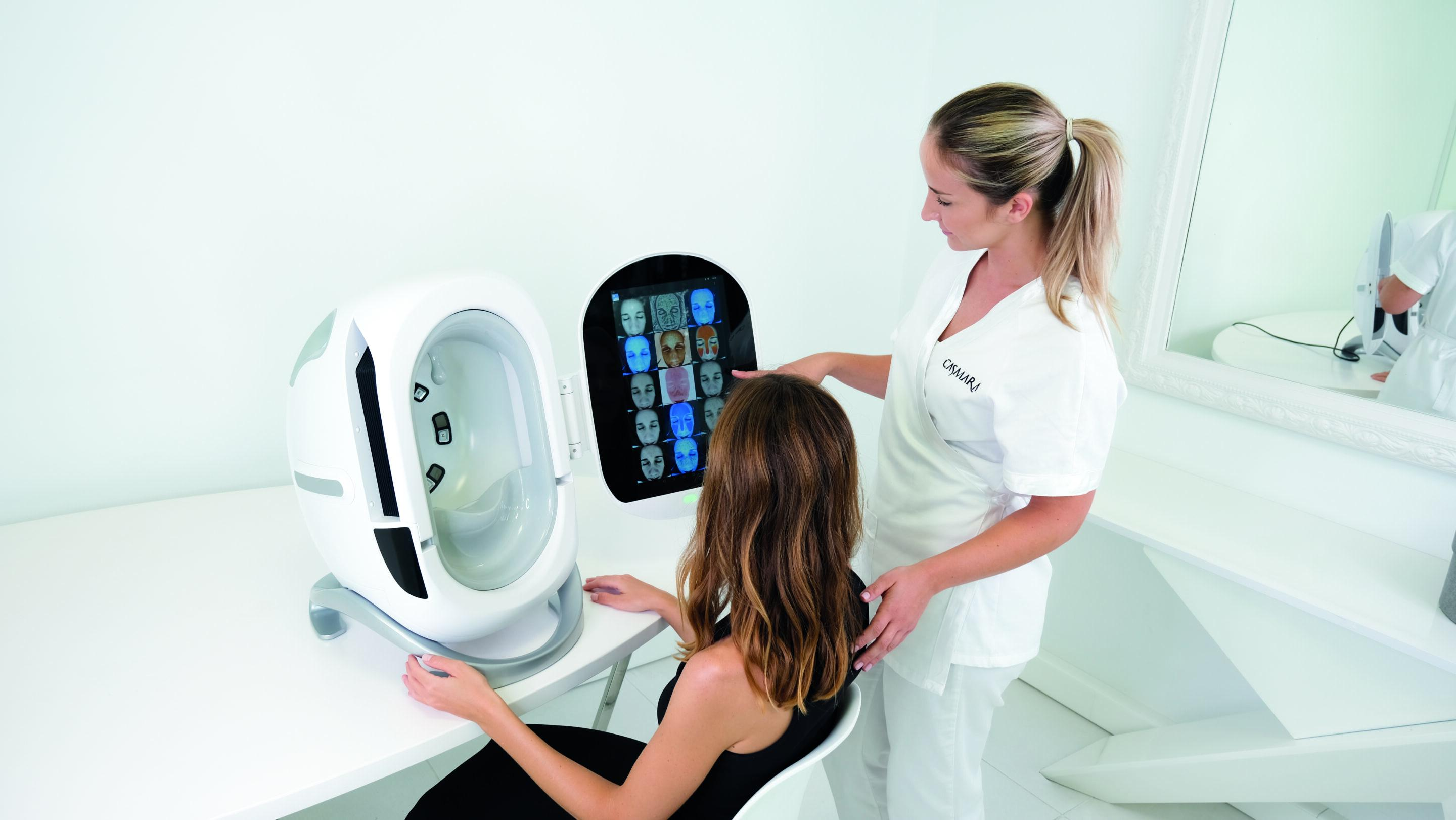
For example, an intelligent skin analysis system may use high-resolution imaging, multiple light sources, sensors, or algorithm-based image processing to identify and compare visible skin characteristics. Some professional systems combine multiple imaging modes with AI-supported analysis to provide standardized assessments and progress comparisons.
The purpose is not to replace the aesthetic professional.
Instead, the technology gives the professional more information to work with.
Technology and Mechanism: What Makes a Beauty Device “Smart”?
A smart beauty device is not simply a machine with a touchscreen.
The concept generally refers to the combination of professional hardware, intelligent software, data processing, and controlled treatment functions.
Several technologies are helping shape this new generation of equipment.
1. AI-Powered Skin Analysis
AI-supported skin analysis is one of the clearest examples of intelligent aesthetics.
A professional analyzer can capture facial images under controlled lighting conditions and use image-processing algorithms to evaluate different characteristics such as wrinkles, pores, pigmentation, texture, redness, or other visible parameters.
The key advantage is standardization.
Instead of relying entirely on a quick visual examination, practitioners can establish a digital baseline before treatment. The same client can then be assessed again after several sessions, making changes easier to visualize and communicate.
This can be particularly useful in clinics offering long-term skin management programs.
The technology does not eliminate professional judgment. Rather, it creates an additional layer of objective information that can support consultation and treatment planning.
2. Smart Imaging and Multi-Spectral Technology
Modern skin analysis systems may use different light sources or imaging modes because certain skin characteristics are easier to visualize under specific conditions.
Visible-light imaging can help evaluate surface appearance, while specialized lighting can reveal additional patterns that are less obvious during a conventional consultation.
Some professional systems combine multiple imaging technologies, facial positioning, and high-resolution cameras to create a more comprehensive assessment.
For clinics, this can transform the consultation room into a more professional diagnostic environment.
3. Intelligent Treatment Control
Smart technology is also changing treatment equipment itself.
Modern RF, HIFU, IPL, laser, LED, ultrasound, vacuum, and body-contouring platforms can incorporate digital interfaces, adjustable parameters, preset programs, sensors, cooling systems, treatment timers, and other control technologies.
These features help operators manage treatment parameters more consistently.
For example, an RF device may allow practitioners to adjust energy levels and treatment time according to the treatment area and client condition. A professional laser platform may provide multiple wavelength options, cooling systems, and controlled pulse parameters. A multifunctional facial system may combine several technologies into one platform.
The goal is not simply to make the machine more complicated.
The goal is to make professional operation more controlled and repeatable.
4. Data and Progress Tracking
One of the biggest differences between traditional equipment and smart equipment is the ability to create a continuous treatment record.
A client's initial skin analysis can become a baseline. Follow-up images can then be compared with the original condition.
This creates a visual treatment history rather than relying entirely on memory.
For clients, progress reports can make the treatment journey easier to understand. For practitioners, historical data can support future consultations and help identify how a client has responded to previous treatment protocols.
In a competitive aesthetic market, this type of documentation can also strengthen the perceived professionalism of the clinic.
Advantages: Why Clinics Are Investing in Smart Beauty Equipment
More Personalized Treatment
One of the strongest advantages of intelligent equipment is personalization.
Clients rarely have exactly the same skin condition, treatment history, sensitivity, or aesthetic goals. A standardized treatment may therefore not always provide the best experience.
Smart analysis tools can provide additional information before treatment, allowing practitioners to create more individualized protocols.
For professional clinics, personalization can also support premium positioning. Instead of selling a generic facial or rejuvenation session, the clinic can present a structured treatment plan based on the client's specific concerns.
More Efficient Consultations
Time is an important business factor in professional aesthetics.
A clinic may need to manage consultations, treatment sessions, customer records, follow-ups, and multiple operators throughout the day.
Smart systems can automate or simplify parts of this process.
Digital reports, automatic image comparisons, preset treatment parameters, and centralized client information can reduce repetitive work and help practitioners spend more time communicating with clients.
This does not mean every consultation should become automated. Human interaction remains essential.
The value lies in allowing technology to handle repetitive information processing while professionals focus on interpretation, treatment, and client care.
Better Client Communication
A client may understand “your skin has pigmentation” very differently from seeing a detailed image or analysis report showing where pigmentation appears and how it has changed over time.
Visual information is powerful.
Smart beauty devices can turn complex skin information into easier-to-understand images, scores, comparisons, or reports. This helps bridge the communication gap between professional knowledge and client understanding.
Better communication can also improve trust.
When clients understand why a treatment is recommended and can see how their condition changes, the treatment process becomes more transparent.
Stronger Treatment Documentation
Before-and-after documentation has always been important in aesthetics.
Smart equipment can make this process more systematic.
Instead of taking informal photographs with different lighting and camera angles, professional imaging systems can provide more standardized conditions for comparison. This can make progress tracking more meaningful.
It can also help clinics build organized treatment histories for returning clients.
Greater Operational Consistency
Professional clinics often have more than one operator.
Without standardized workflows, treatment quality can vary depending on individual experience and working habits.
Smart equipment can help reduce unnecessary variation by providing controlled settings, treatment timers, digital instructions, and predefined protocols.
Of course, equipment cannot replace professional training.
Proper operation, contraindication screening, parameter selection, maintenance, and professional supervision remain essential for safe and appropriate treatment.
Smart Beauty Devices vs. Basic Home Devices
Smart professional equipment should not be viewed simply as a more powerful version of a home beauty device.
The difference is broader.
Home devices are generally designed for simplicity and convenience. Professional systems are built around repeated operation, larger treatment workloads, more flexible parameters, specialized handpieces, ergonomic design, and professional workflows.
For example, a professional RF system may offer multiple handpieces for different treatment areas, adjustable energy levels, controlled treatment times, and features designed for repeated daily use.
A professional skin analyzer may provide structured reports and client management functions that are unnecessary for a consumer using a device at home.
The value of professional equipment therefore comes from the entire system—not just energy output.
Professional hardware + intelligent control + operator expertise + treatment workflow = a smarter clinical solution.
This is particularly important for clinics that want to differentiate themselves through service quality rather than competing only on price.
Applications: Where Smart Beauty Devices Fit Into Modern Clinics
Smart technology can be integrated into many areas of professional aesthetics.
Facial Rejuvenation
RF, ultrasound, LED, microcurrent, and other technologies can be combined with digital controls and intelligent consultation systems.
A practitioner can first assess the client's skin condition, identify priorities, and then select an appropriate treatment strategy.
This creates a more structured approach to skin tightening, texture improvement, hydration-focused care, and general skin maintenance.
Body Contouring
Smart technology is also relevant to professional body treatments.
Devices using technologies such as cavitation, RF, vacuum, or other non-invasive energy systems can provide different treatment modes and adjustable parameters.
For clinics, multifunctional platforms can be particularly useful because one system may support several treatment services.
The commercial advantage is straightforward: a versatile professional device can help clinics expand their treatment menu without necessarily requiring a separate machine for every individual service.
Hair Removal
Modern diode laser systems increasingly focus on controllable treatment parameters, cooling, multiple wavelengths, and user-friendly interfaces.
For professional operators, these features can help adapt treatment settings to different clients and treatment areas while maintaining a consistent workflow.
Smart functions can therefore support both treatment flexibility and operational efficiency.
Skin Consultation and Treatment Planning
This may be the most important application of smart technology.
A skin analyzer can become the starting point of the treatment journey rather than an isolated device.
The workflow can look like this:
Skin Analysis → Client Consultation → Treatment Recommendation → Professional Treatment → Progress Analysis → Follow-Up
This integrated model allows the clinic to move from selling individual sessions toward building longer-term treatment programs.
Client Retention
A smart beauty device can also contribute indirectly to customer retention.
Clients are more likely to return when they feel that the clinic understands their individual needs and remembers their treatment history.
Progress tracking gives practitioners a reason to continue the conversation after the first appointment.
Instead of asking a client to “come back for another facial,” the clinic can discuss the next stage of an individualized treatment plan.
That difference may seem small, but it can significantly change the perceived value of the service.
What Clinic Owners Should Look for When Choosing Smart Equipment
Not every device labeled “smart” provides meaningful intelligence.
Clinic owners should evaluate the complete system rather than focusing only on AI, touchscreen interfaces, or attractive product design.
Important considerations include:
1. Treatment flexibility
Does the equipment support different treatment areas, parameters, or handpieces?
2. Usability
Can professional operators learn the system quickly and use it efficiently during busy clinic hours?
3. Data management
Can client information, images, treatment records, or progress comparisons be stored and reviewed?
4. Safety and control
Does the system provide appropriate parameter control, cooling, timers, warnings, or other relevant safety functions?
5. Workflow integration
Can the device fit naturally into consultation, treatment, and follow-up processes?
6. Service and training
Does the supplier provide technical support, operator training, documentation, and after-sales service?
For equipment manufacturers and distributors, these factors are equally important. The future of professional aesthetics is increasingly moving from individual machines toward complete technology solutions.
Conclusion
Smart beauty devices are becoming essential for modern clinics because the definition of professional aesthetics is changing.
Clients increasingly expect personalization, measurable progress, professional explanations, and technology-driven experiences. At the same time, clinics need equipment that can improve treatment efficiency, standardize workflows, support practitioners, and create new opportunities for long-term client relationships.
AI skin analysis, smart imaging, intelligent treatment controls, digital records, and multifunctional professional platforms are helping connect different stages of the aesthetic workflow.
The most valuable technology is not necessarily the machine with the most complicated specifications.
It is the technology that helps professionals make better decisions, communicate more clearly, operate more efficiently, and deliver a more personalized client experience.
For modern aesthetic clinics, the future is not simply about using more advanced beauty machines.
It is about building a smarter treatment ecosystem where data supports decisions, technology supports professionals, and every treatment is designed around the individual client.
That is why smart beauty devices are moving from being optional upgrades to becoming an increasingly important part of the modern professional clinic
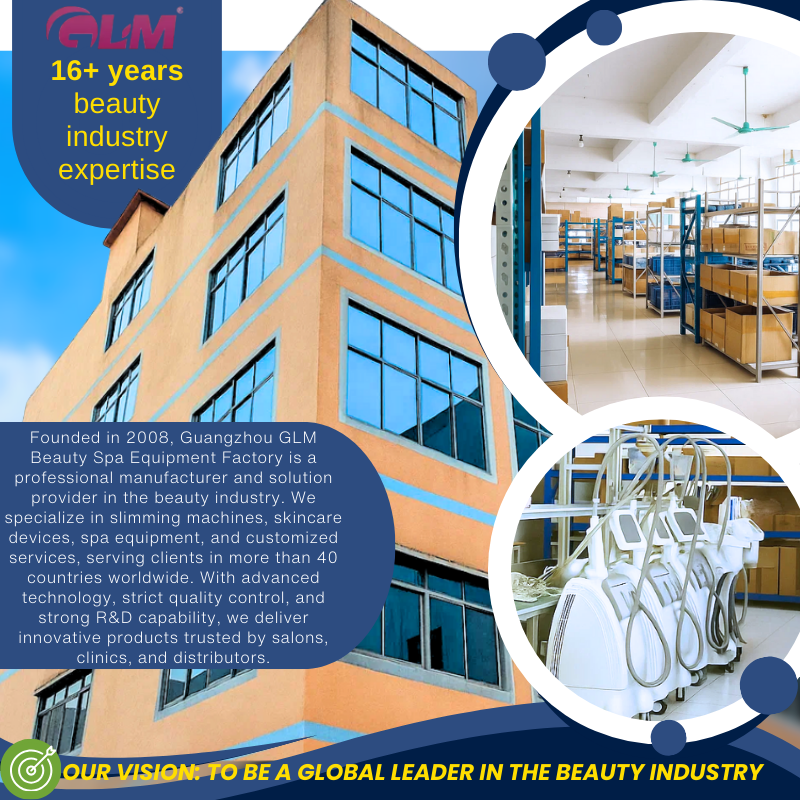
Founded in 2008, Guangzhou GLM Beauty Spa Equipment Factory specializes in research, development, manufacture and selling of beauty and slimming machines. Our production base is located in Guangzhou City, Guangdong Province, China. Since our foundation, we have introduced advanced technologies and equipment, to assure high quality and high performance of our products. With professional marketing guide and excellent after-sales service, our products have been exported to over 20 countries and regions, including Southeast Asia, the Middle East, Europe and the United States, won worldwide praises and gained a good reputation