Introduction
As professional beauty clinics continue to adopt technology-driven treatment solutions, vacuum technology has become an increasingly familiar component of modern aesthetic equipment. From body contouring and cellulite-focused treatments to massage-based tissue stimulation and selected facial applications, controlled vacuum can be integrated into a wide range of professional treatment protocols.
At first glance, the principle seems simple: a device creates negative pressure and gently pulls the skin toward the treatment head. However, professional vacuum technology involves much more than suction alone. The design of the handpiece, vacuum intensity, treatment mode, movement technique, treatment duration, and combination with rollers or other technologies all influence the treatment experience.
This is one reason vacuum systems remain relevant to beauty salons, aesthetic clinics, and professional body-management centers. Instead of relying entirely on manual massage techniques, practitioners can use adjustable mechanical stimulation to create more structured and repeatable treatment protocols.
Scientific literature describes vacuum massage as a non-invasive mechanical technique in which suction lifts the skin, creates a skin fold, and mobilizes that fold. The technology has also evolved from earlier mechanical massage concepts into increasingly sophisticated professional aesthetic systems.
So why is vacuum technology used so widely in beauty clinics? The answer lies in its combination of mechanical stimulation, treatment flexibility, controllability, and compatibility with other aesthetic technologies.
Background: Why Do Beauty Clinics Need Vacuum Technology?
Professional clients today are not necessarily looking for one single treatment. A client may be concerned about the appearance of cellulite, uneven skin texture, localized body contours, skin firmness, or temporary fluid retention. At the same time, clinics need treatment technologies that can be adapted to different body areas and customer requirements.
Traditional manual massage can provide a valuable treatment experience, but it depends strongly on the operator's physical technique, strength, and consistency. Two practitioners may apply noticeably different levels of pressure or follow different movement patterns.
Vacuum technology introduces a more controlled mechanical approach.
By generating negative pressure, a vacuum handpiece can gently lift and mobilize the skin and superficial tissue. Depending on the device design, this action can be combined with gliding movements, pulsed suction, rollers, mechanical massage, radio frequency, infrared, or other technologies.
This versatility is particularly useful for professional beauty businesses. A single vacuum platform may support several service concepts rather than being limited to one treatment.
For example, a clinic may use vacuum technology for body massage and skin-texture treatments, while a vacuum-and-roller system can be positioned as part of a professional body-contouring program. Some clinics also combine vacuum-based treatments with other non-invasive technologies to create customized treatment plans.
The important point is that vacuum technology is not a single treatment with a universal effect. Results and treatment sensations depend on the device, operating parameters, treatment area, and professional protocol.
Technology & Mechanism: How Does Vacuum Technology Work?
The fundamental mechanism is based on controlled negative pressure.
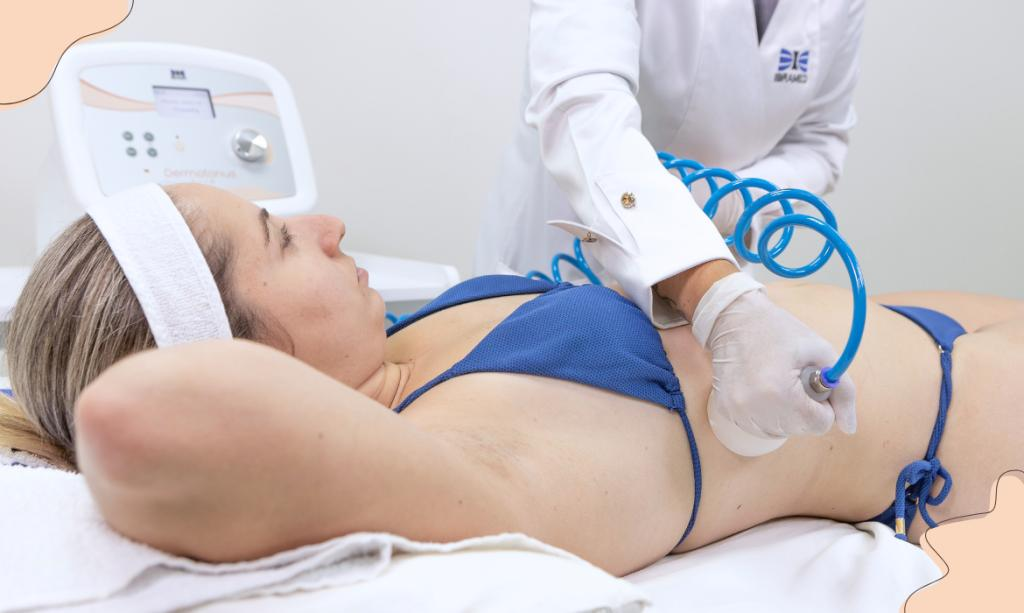
Inside a professional device, a vacuum pump creates a pressure difference. When the handpiece is placed against the skin, this pressure difference gently draws the skin and superficial tissue toward the applicator.
This creates a temporary skin fold or lifting effect. When the operator moves the handpiece across the treatment area, the tissue can be repeatedly lifted, released, and mobilized.
Research reviews describe vacuum massage as a mechanical process involving lifting and mobilization of the skin fold rather than simply applying static pressure to the skin.
1. Controlled Negative Pressure
The first major feature is adjustable suction.
Professional machines typically allow operators to select different vacuum levels according to the treatment area, client comfort, and treatment protocol.
This is important because stronger suction does not automatically mean better treatment. Excessive suction may increase discomfort or cause temporary redness and bruising. A professional system should therefore emphasize controlled and adjustable suction, rather than simply maximizing vacuum power.
For operators, this means greater flexibility when working on different areas such as the abdomen, thighs, buttocks, arms, or other suitable treatment zones.
2. Skin and Tissue Mobilization
Vacuum creates a lifting action that can temporarily draw superficial tissue into the handpiece.
When combined with appropriate movement techniques, the resulting mechanical stimulation creates a massage-like treatment experience. Vacuum roller systems can add another mechanical component by simultaneously lifting and rolling the tissue.
This combination is particularly attractive in body-treatment applications because the operator can control the direction, speed, pressure, and movement pattern according to the selected protocol.
3. Mechanical Massage
One of the reasons vacuum systems have become popular in professional settings is their ability to reproduce certain massage movements in a more standardized way.
Vacuum roller devices, for example, combine suction with mechanical rolling. The rollers can continuously move across the lifted tissue, creating a rhythmic mechanical treatment.
Modern professional systems may therefore provide multiple operating modes rather than a single suction function.
4. Combination with Other Technologies
Another important advantage is compatibility.
Vacuum technology can be incorporated into multifunction aesthetic platforms together with technologies such as radio frequency, infrared, LED, vibration, or mechanical rollers, depending on the equipment configuration.
For example, a vacuum-and-RF system can use controlled suction to support tissue manipulation while RF delivers controlled thermal energy. A vacuum-and-roller system focuses more strongly on mechanical massage and tissue mobilization.
This allows manufacturers and clinics to develop different treatment concepts around the same basic vacuum platform.
Advantages & Comparison: Why Choose Professional Vacuum Equipment?
The biggest advantage of professional vacuum equipment is not simply stronger suction. It is control.
More Consistent Treatment Parameters
Manual massage is highly dependent on the operator. Professional equipment can provide defined suction levels, operating modes, and treatment durations.
This makes it easier for clinics to establish standardized protocols and train staff.
Adjustable for Different Treatment Areas
Different parts of the body have different tissue characteristics and client comfort requirements.
A professional device with adjustable vacuum intensity and interchangeable handpieces can provide greater flexibility than a single fixed manual technique.
Efficient Treatment Workflow
For busy salons and clinics, treatment efficiency matters.
A motorized vacuum system can provide continuous mechanical stimulation without requiring the practitioner to maintain the same physical effort throughout the entire treatment.
This does not eliminate the importance of operator skill. Instead, the technology becomes a tool that supports the professional's treatment technique.
More Flexible Service Development
Vacuum technology can support several types of professional services, including:
- Body massage and relaxation treatments
- Cellulite-focused aesthetic programs
- Body-contouring protocols
- Skin-texture improvement programs
- Lymphatic-style massage applications
- Vacuum roller treatments
- Combination treatments with RF or other technologies
Professional clinics commonly position vacuum-based body treatments around areas such as the thighs, buttocks, abdomen, and arms.
Professional Equipment vs. Home Devices
Home beauty devices are generally designed around convenience, compactness, and relatively simple operation.
Professional systems have different priorities.
Clinics typically need greater adjustment ranges, stronger mechanical capabilities where appropriate, interchangeable applicators, longer operating cycles, ergonomic handpieces, and treatment protocols that can be adapted to individual clients.
Professional equipment also requires trained operation. The objective should not be to use the highest possible suction, but to select appropriate parameters based on the treatment area, skin condition, client tolerance, and desired treatment experience.
This distinction is important when evaluating a vacuum beauty machine. Performance should be measured by control, consistency, usability, and protocol flexibility—not simply by maximum vacuum strength.
Applications & Client Needs
Body Contouring and Shape Management
Body contouring is one of the most recognizable applications of vacuum technology.
Vacuum and roller systems can be used as part of non-invasive body-treatment programs focusing on the abdomen, thighs, buttocks, arms, and other suitable areas.
The mechanical lifting and rolling action can create a structured massage treatment and may help improve the temporary appearance and feel of treated tissue.
However, professional communication should remain realistic: vacuum massage should not be described as equivalent to liposuction or as a guaranteed method for permanently removing fat. Current evidence and professional treatment descriptions support a more measured approach focused on mechanical tissue mobilization and cosmetic appearance.
Cellulite-Focused Treatments
Cellulite is another major reason clinics use vacuum technology.
The appearance of cellulite is influenced by the relationship between subcutaneous fat, connective tissue, skin structure, and other individual factors. A vacuum treatment cannot simply eliminate all of these underlying factors.
However, device-assisted massage may be incorporated into professional programs designed to improve the appearance of uneven skin texture.
Some clinics combine vacuum with rollers or other mechanical technologies specifically for cellulite-focused body treatments.
Massage and Tissue Stimulation
Some clients are not primarily looking for body contouring. They may prefer a treatment focused on massage, relaxation, or the sensation of mechanical tissue stimulation.
In these cases, adjustable vacuum allows the practitioner to create a treatment experience that can be adapted to individual comfort.
This flexibility makes vacuum systems useful not only as a body-contouring technology but also as part of a broader professional body-care menu.
Facial and Smaller-Area Applications
With appropriately designed applicators and lower-intensity protocols, vacuum technology can also be used in selected facial or smaller-area aesthetic treatments.
The key consideration is that facial tissue is different from larger body areas. Therefore, the same vacuum intensity should not automatically be applied everywhere.
Professional systems with multiple handpieces and adjustable parameters give practitioners more options for adapting treatment to different areas.
Combination Treatments
Perhaps the strongest commercial application of vacuum technology is its ability to work alongside other technologies.
For example:
Vacuum + Roller:
Combines controlled suction with mechanical rolling for intensive massage and tissue mobilization.
Vacuum + RF:
Combines mechanical tissue manipulation with radio-frequency heating in appropriately designed professional systems.
Vacuum + Infrared/LED:
Allows mechanical treatment to be integrated into a broader aesthetic protocol.
Vacuum + Multifunction Platforms:
Creates a more versatile treatment system that can support different client needs.
This type of technology integration is increasingly important for professional clinics because equipment is expected to support multiple treatment programs rather than serve only one narrow purpose.
What Should Clinics Look for in a Professional Vacuum Machine?
When selecting a vacuum beauty machine, clinics should look beyond the appearance of the device.
Several technical and practical factors deserve attention.
Adjustable vacuum intensity:
Allows practitioners to customize treatment according to different areas and client tolerance.
Stable vacuum output:
Consistent suction is important for repeatable treatment protocols.
Interchangeable handpieces:
Different applicator sizes and designs can expand treatment possibilities.
Ergonomic design:
A comfortable handpiece can reduce operator fatigue during longer sessions.
Easy parameter adjustment:
Clear controls help practitioners modify suction and treatment modes efficiently.
Combination technology options:
Vacuum combined with rollers, RF, or other technologies can create additional service opportunities.
Training and protocol support:
Good equipment should be supported by clear operating instructions and appropriate professional training.
Ultimately, the best vacuum system is not necessarily the machine with the most powerful pump. It is the system that allows professionals to deliver controlled, comfortable, repeatable, and commercially practical treatments.
Conclusion
Vacuum technology has earned an important position in professional beauty clinics because it combines a relatively simple physical principle with a wide range of treatment possibilities.
By creating controlled negative pressure, professional devices can lift and mobilize the skin and superficial tissue. When combined with movement, rollers, or complementary technologies, vacuum can become part of structured body-care, cellulite-focused, massage, and aesthetic treatment protocols.
Its real value for professional clinics lies in flexibility and control.
Rather than replacing the expertise of the practitioner, a well-designed vacuum beauty machine provides an additional technical tool. Adjustable suction, specialized handpieces, ergonomic operation, and combination technologies can help clinics create more consistent treatment experiences while expanding their service portfolio.
As the professional beauty industry continues to move toward technology-assisted and customized treatments, vacuum technology is likely to remain relevant—not because suction alone is a miracle solution, but because controlled mechanical treatment can be integrated into practical, adaptable, and professional aesthetic protocols.
For beauty clinics, salons, and equipment buyers, that is ultimately the most important question: not simply whether a machine uses vacuum, but whether its vacuum technology is engineered well enough to support professional treatment quality, operator efficiency, and diverse client needs
Founded in 2008, Guangzhou GLM Beauty Spa Equipment Factory specializes in research, development, manufacture and selling of beauty and slimming machines. Our production base is located in Guangzhou City, Guangdong Province, China. Since our foundation, we have introduced advanced technologies and equipment, to assure high quality and high performance of our products. With professional marketing guide and excellent after-sales service, our products have been exported to over 20 countries and regions, including Southeast Asia, the Middle East, Europe and the United States, won worldwide praises and gained a good reputation