Introduction
In the beauty and aesthetics industry, your resume is more than a list of previous jobs. It is your professional introduction—and for an esthetician, it should communicate three things quickly: what you can do, how well you can do it, and what kind of treatment environment you can work in.
Modern salons, medical spas, aesthetic clinics, and professional skincare centers are no longer looking only for candidates who can perform traditional facials. Employers increasingly look for estheticians who understand consultation, skin assessment, treatment protocols, client communication, sanitation, documentation, and professional skincare technology.
Current industry job descriptions commonly emphasize experience with advanced aesthetic treatments, technology knowledge, client care, and ongoing professional development.
That means a strong esthetician resume should show more than “facials” or “skincare.” If you have experience operating professional equipment such as hydrodermabrasion systems, microdermabrasion machines, LED therapy devices, radio frequency systems, ultrasound equipment, body contouring platforms, or other authorized aesthetic technologies, that experience can help demonstrate your ability to work in a modern treatment environment.
This guide explains how to build an esthetician resume step by step, while showing how treatment technology and professional equipment experience can make your qualifications more relevant to today's beauty industry.
Background: Why a Good Esthetician Resume Matters
The beauty industry is highly client-focused. A successful esthetician needs technical knowledge, practical skills, attention to detail, and the ability to create a professional client experience.
According to O*NET's current occupational profile for skincare specialists, common responsibilities include performing skincare treatments, maintaining clean work areas, keeping client records, evaluating skin conditions, and recommending skincare routines. The occupation also includes specialized roles such as aesthetician, clinical esthetician, medical esthetician, skin therapist, and laser hair removal specialist.
For employers, this creates a simple hiring question:
Can this candidate safely and professionally contribute to our treatment menu?
Your resume should answer that question before the hiring manager reaches the bottom of the page.
A weak resume might say:
“Provided facials and skincare services to clients.”
A stronger version could say:
“Performed customized facial treatments based on client skin assessments, incorporating professional exfoliation, hydration, LED therapy, and other device-assisted protocols according to training and clinic standards.”
The second example communicates treatment knowledge, customization, technology familiarity, and professional practice.
The goal is not to make your resume sound complicated. The goal is to make your actual experience easier to understand.
Technology and Mechanism: Why Equipment Knowledge Belongs on an Esthetician Resume
Professional beauty equipment is increasingly integrated into modern treatment rooms. Technology does not replace the esthetician. Instead, it gives trained professionals additional tools to structure and deliver treatment protocols.
Different technologies work through different mechanisms.
Microdermabrasion, for example, uses controlled mechanical exfoliation to remove surface layers of dead skin cells. In a professional setting, an esthetician must understand appropriate pressure, treatment areas, skin sensitivity, contraindications, sanitation, and post-treatment care.
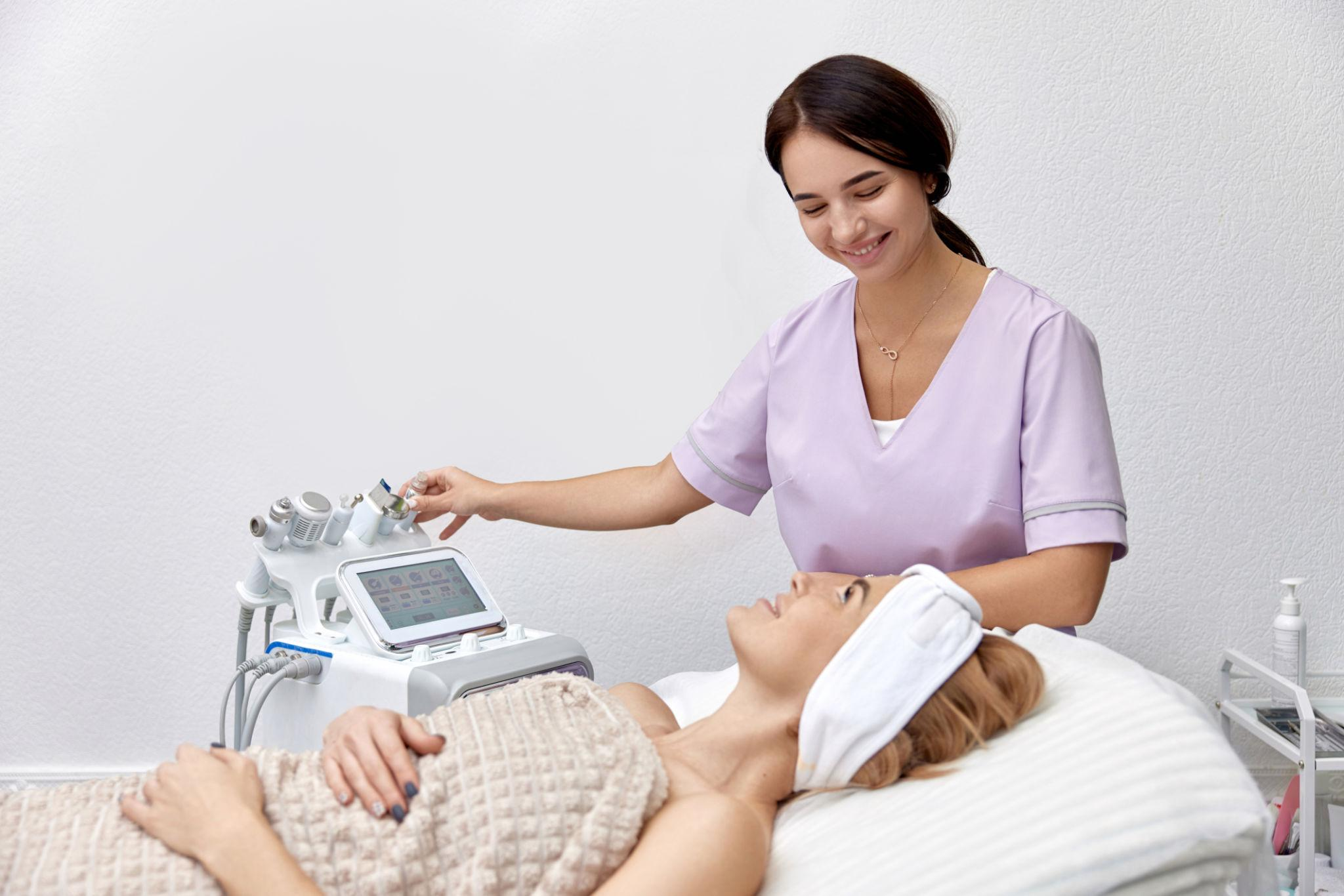
Hydrodermabrasion or hydro-facial-style systems combine cleansing, exfoliation, fluid-based treatment, and infusion-oriented steps. The value of the device is not simply the machine itself. The operator must understand how to select appropriate solutions and treatment intensity according to the client's skin condition and the clinic's protocol.
LED light therapy uses specific light wavelengths for cosmetic skincare applications. A professional operator needs to understand treatment timing, positioning, eye protection requirements where applicable, device settings, and appropriate client selection.
Radio frequency systems deliver controlled electromagnetic energy to tissues to create a thermal effect. In professional aesthetics, correct parameter selection, movement technique, treatment area, skin assessment, and safety procedures are essential.
Other technologies—including ultrasound, electroporation, vacuum systems, body contouring equipment, and certain laser-based systems—also require proper training and adherence to local regulations and manufacturer protocols.
This is why “equipment experience” can be valuable on an esthetician resume.
Instead of simply writing:
“Experienced with beauty machines.”
Be specific:
“Trained in the operation of professional facial equipment, including microdermabrasion, LED therapy, hydrodermabrasion, and radio frequency systems.”
Only list technologies you have genuinely used, been trained on, or are legally qualified to operate.
Step 1: Start With a Clear Professional Header
The top of your resume should immediately identify who you are and what position you are targeting.
Include:
- Full name
- Professional title
- Phone number
- Professional email address
- City and region, when relevant
- LinkedIn or professional portfolio, if applicable
For example:
Emma Carter
Licensed Esthetician | Skin Therapist | Aesthetic Treatment Specialist
Avoid overly creative titles that do not match the position.
If the employer is hiring for a “Licensed Esthetician,” using that professional title can make your resume easier to understand and align with the job description.
Your contact information should also be clean and easy to scan. A professional email address is preferable to a casual personal account.
Step 2: Write a Strong Esthetician Resume Summary
Your professional summary should be short but specific.
Instead of describing yourself with general phrases such as “hardworking,” “passionate,” or “friendly,” focus on professional value.
A good summary can mention:
- Years of experience
- Treatment specialties
- Professional environment
- Equipment experience
- Client consultation
- Relevant certifications
- Commitment to safety and continuing education
Example
Professional Summary
Licensed Esthetician with 4+ years of experience in professional spa and aesthetic clinic environments. Experienced in customized facial treatments, skin consultations, client aftercare, and professional skincare technologies including microdermabrasion, LED therapy, hydrodermabrasion, and radio frequency. Skilled in maintaining treatment protocols, sanitation standards, client records, and a high-quality treatment experience.
This summary immediately tells an employer what you can contribute.
Step 3: Turn Your Work Experience Into Evidence
The work experience section is often the most important part of an esthetician resume.
Do not simply list responsibilities. Show what you actually did.
A useful formula is:
Action + Treatment/Technology + Client Need + Result
For example:
Instead of:
“Performed facial treatments.”
Write:
“Performed customized facial treatments based on individual skin assessments, incorporating professional cleansing, exfoliation, hydration, and device-assisted techniques.”
Instead of:
“Used RF machine.”
Write:
“Operated professional radio frequency equipment according to established treatment protocols to support skin tightening and rejuvenation services.”
Instead of:
“Used microdermabrasion machine.”
Write:
“Performed controlled microdermabrasion treatments for clients seeking improved skin texture and surface exfoliation, while adjusting treatment intensity according to skin condition and professional guidelines.”
These descriptions demonstrate that you understand both the technology and the operator's role.
That distinction matters in professional clinics.
A machine can deliver energy, suction, light, or mechanical action, but the esthetician is responsible for client assessment, treatment selection, parameter management within their scope, technique, communication, hygiene, and aftercare.
Step 4: Highlight Professional Equipment Skills
For modern aesthetic clinics, your equipment section can become an important differentiator.
Create a dedicated Technical Skills or Equipment & Treatment Skills section.
For example:
Technical Skills
- Customized facial treatments
- Skin analysis and consultation
- Microdermabrasion
- Hydrodermabrasion
- LED light therapy
- Radio frequency treatments
- Ultrasound facial treatments
- Vacuum-based facial treatments
- Professional exfoliation
- Body contouring equipment
- Client treatment documentation
- Equipment sanitation and maintenance procedures
- Treatment protocol compliance
- Post-treatment skincare guidance
Do not create a long list just to make your resume look technical.
Relevance is more important than quantity.
If the clinic specializes in advanced facial treatments, highlight facial technologies. If the business focuses on body contouring, emphasize relevant body treatment equipment and training. If the employer operates a medical aesthetics environment, emphasize the technologies and certifications that genuinely match your experience and legal scope.
Step 5: Explain Your Understanding of Treatment Protocols
Knowing how to switch on a machine is not the same as understanding a professional treatment.
A strong esthetician should understand the relationship between:
Client Assessment → Treatment Selection → Device Settings → Technique → Skin Response → Aftercare
Your resume should reflect that understanding.
For example:
“Conducted client consultations and skin assessments before selecting appropriate treatment protocols and professional skincare products.”
Or:
“Adjusted treatment procedures according to client skin condition, sensitivity, treatment objectives, and established clinic protocols.”
This language shows that you are not simply an equipment operator.
You are a trained professional who uses technology as part of a structured treatment process.
That distinction is particularly valuable for aesthetic clinics investing in professional equipment. Employers need staff who can turn equipment investment into consistent, well-managed services.
Step 6: Add Certifications and Training
Certification information should be easy to find.
Depending on your location and professional scope, this section may include:
- Esthetician license
- Advanced skincare certifications
- Device-specific training
- Laser-related certifications where legally applicable
- Infection control or sanitation training
- Manufacturer training
- Continuing education courses
- Specialized facial or body treatment certifications
For equipment training, be specific.
Instead of:
“Machine Training”
Use:
“Professional RF Facial Treatment Equipment Training — Completed”
or:
“Hydrodermabrasion System Operation and Treatment Protocol Training”
or:
“LED Phototherapy Device Training — Treatment Procedures and Safety Protocols”
Never claim a certification that you do not possess.
For technologies subject to specific regulations, licensing requirements can vary significantly by location. Your resume should accurately reflect your legal scope of practice.
Step 7: Show Client-Care Skills
Technology may attract attention, but client experience often determines whether a beauty business retains customers.
Your resume should therefore demonstrate both technical and interpersonal skills.
Useful client-care skills include:
- Professional consultation
- Active listening
- Skin assessment
- Treatment explanation
- Aftercare education
- Product recommendations
- Client record management
- Appointment preparation
- Personalized treatment planning
- Complaint handling
- Retail support
- Client retention
For example:
“Consulted with clients to understand skincare concerns, explain treatment procedures, establish realistic expectations, and provide customized aftercare recommendations.”
This is much stronger than simply writing:
“Good communication skills.”
Step 8: Use Numbers When They Are Genuine
Quantifiable achievements can make a resume more persuasive.
Consider including:
- Number of treatments performed
- Client satisfaction rates
- Repeat booking rates
- Retail sales performance
- New client acquisition
- Treatment volume
- Revenue contribution
- Training completed
- Team responsibilities
For example:
“Performed more than 500 customized facial treatments while maintaining clinic sanitation and documentation standards.”
Or:
“Supported a high-volume treatment schedule of 15–20 client appointments per week.”
Or:
“Contributed to improved client retention through personalized treatment plans and structured aftercare recommendations.”
Only use numbers that you can substantiate.
Step 9: Match Your Resume to the Clinic
One of the biggest mistakes applicants make is sending the same resume to every employer.
A day spa, luxury facial studio, medical aesthetics clinic, laser center, and body contouring facility may all hire estheticians—but their treatment environments can be very different.
For example, a modern aesthetic clinic may advertise services such as laser hair removal, skin rejuvenation, body contouring, microneedling, and advanced facial treatments. Current clinic vacancies specifically highlight technology knowledge, treatment experience, and continued professional development.
If the job description repeatedly mentions:
Hydrafacial → Skin Analysis → LED → Client Consultation → Product Knowledge
your resume should naturally contain relevant experience in those areas.
If another employer focuses on:
Laser Hair Removal → Body Contouring → Advanced Skin Treatments
highlight your relevant training and professional experience instead.
This is not about stuffing keywords into your resume. It is about making your most relevant qualifications easy to find.
Step 10: Compare Traditional and Technology-Focused Resume Positioning
A traditional esthetician resume may focus heavily on:
- Facials
- Waxing
- Extractions
- Skincare products
- Customer service
These are still valuable.
However, a technology-focused professional resume can communicate a broader treatment capability:
- Skin analysis
- Customized treatment planning
- Device-assisted facials
- Microdermabrasion
- Hydrodermabrasion
- LED therapy
- RF treatments
- Ultrasound
- Body contouring
- Equipment sanitation
- Treatment documentation
- Client education
The strongest resume does not eliminate traditional esthetic skills.
It combines them with relevant technology.
Professional equipment should support your professional identity—not replace it.
Applications and Client Needs: Where a Strong Resume Makes the Difference
A well-written esthetician resume can support applications across several professional environments.
Day Spas
Day spas may prioritize client experience, facial treatments, waxing, relaxation services, skincare recommendations, and retail knowledge.
Your resume should emphasize communication, treatment quality, repeat clients, and customer service.
Medical Spas and Aesthetic Clinics
Medical spas may place greater emphasis on advanced technologies, treatment protocols, documentation, safety, and professional training.
This is where device-specific experience can become particularly valuable.
A candidate who can demonstrate familiarity with professional equipment may require less basic operational training, depending on the employer's protocols and the candidate's qualifications.
Skin Clinics
Skin-focused practices may value consultation, skin assessment, treatment planning, professional skincare, and technology-assisted procedures.
Here, your ability to connect client concerns with appropriate treatment processes becomes important.
Body Contouring and Wellness Centers
If your background includes professional vacuum, RF, ultrasound, cavitation, or other body treatment technologies within your legal scope and training, clearly identify that experience.
For example:
“Experienced in professional body treatment protocols incorporating vacuum and RF technologies, with emphasis on client consultation, treatment preparation, equipment operation, and post-treatment guidance.”
Again, the goal is not to promise unrealistic outcomes.
Professional employers value candidates who understand that equipment must be used according to training, manufacturer instructions, client suitability, and applicable regulations.
A Simple Esthetician Resume Structure
For most applicants, the following structure is easy for hiring managers to scan:
1. Name & Professional Title
2. Contact Information
3. Professional Summary
4. Core Skills
5. Treatment & Equipment Skills
6. Professional Experience
7. Education
8. Certifications & Training
9. Additional Skills
10. Professional Portfolio or Online Profile, if relevant
Keep the design clean.
Avoid excessive graphics, complicated layouts, multiple fonts, or decorative elements that make important information difficult to find.
Your resume should look like a professional treatment room: organized, clean, purposeful, and easy to navigate.
Common Esthetician Resume Mistakes to Avoid
1. Being Too General
“Provided excellent skincare services” does not tell the employer much.
Describe the treatments, technologies, responsibilities, and client needs involved.
2. Listing Equipment Without Experience
Do not list every machine you have seen in a salon.
Only include equipment you have genuinely operated, received training on, or are qualified to use.
3. Ignoring Safety and Hygiene
Professional aesthetics depends on cleanliness, sanitation, documentation, and appropriate treatment protocols.
Show that you understand these responsibilities.
4. Overloading the Resume With Keywords
A resume should sound natural.
A long list of disconnected technologies can make you look less credible rather than more qualified.
5. Focusing Only on Beauty Knowledge
Employers need professionals who can operate within a real business environment.
Include client communication, documentation, teamwork, retail support, appointment flow, and continuing education when relevant.
6. Using the Same Resume Everywhere
Customize your resume according to the clinic's services and treatment environment.
Conclusion
Writing a perfect esthetician resume is not about making your career sound more impressive than it is. It is about presenting your real experience in a way that clearly demonstrates professional value.
A strong resume combines technical knowledge, treatment experience, client care, professional credentials, and equipment familiarity.
For today's beauty salons, medical spas, and aesthetic clinics, professional technology is becoming an increasingly important part of treatment delivery. Current industry roles frequently combine hands-on skincare services with advanced equipment, product knowledge, client consultation, and ongoing technology training.
If you have experience with professional aesthetic equipment, do not hide it in a generic skills list. Explain what technologies you have worked with, what treatments they support, how you follow professional protocols, and how your skills contribute to the client experience.
The best esthetician resume ultimately answers one question:
“Why should this clinic trust you with its clients, treatments, and professional equipment?”
Make that answer clear, specific, and evidence-based—and your resume becomes much more than a job application. It becomes a professional representation of the value you can bring to a modern aesthetic business
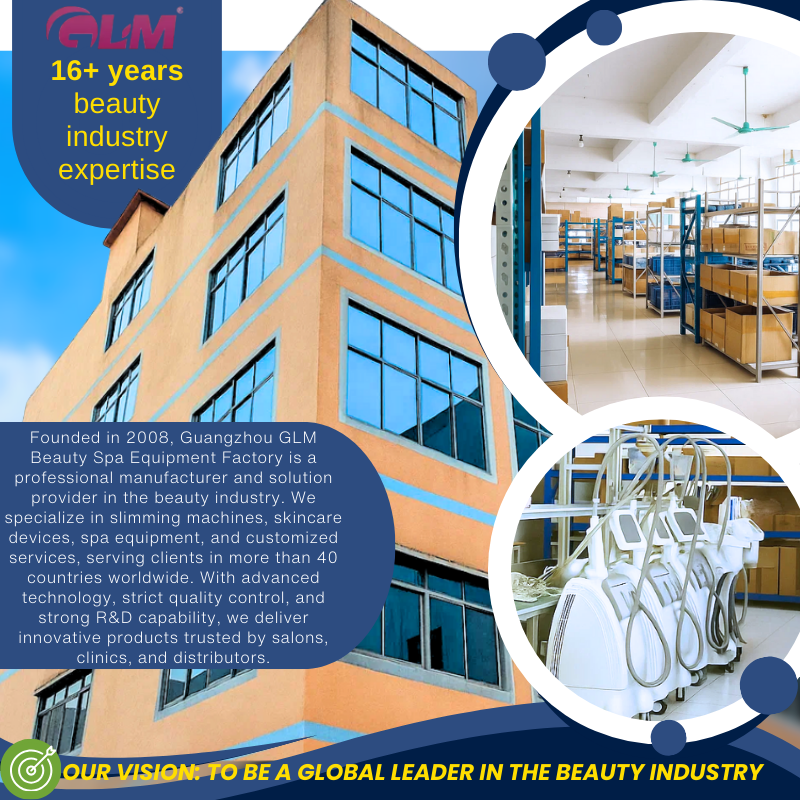
Founded in 2008, Guangzhou GLM Beauty Spa Equipment Factory specializes in research, development, manufacture and selling of beauty and slimming machines. Our production base is located in Guangzhou City, Guangdong Province, China. Since our foundation, we have introduced advanced technologies and equipment, to assure high quality and high performance of our products. With professional marketing guide and excellent after-sales service, our products have been exported to over 20 countries and regions, including Southeast Asia, the Middle East, Europe and the United States, won worldwide praises and gained a good reputation.