
Introduction
Diode laser hair removal has become one of the most discussed technologies in modern hair reduction. Professional clinics and beauty salons have long relied on laser systems to target unwanted hair at the follicle, while a growing consumer market now offers compact light-based devices for home use.
The convenience is attractive: users can treat selected areas without scheduling appointments. However, “at home” should not mean “without rules.” Laser and light-based hair-removal devices deliver energy to the skin, and safe results depend on appropriate device selection, skin assessment, treatment settings, and aftercare. The American Academy of Dermatology notes that laser hair removal can cause burns, pigment changes, and scars when performed improperly.
For salons, clinics, and beauty-equipment businesses, this distinction is important. Home-use products are designed around simplicity and controlled energy output, whereas professional diode laser systems can offer more sophisticated parameter control, cooling, treatment modes, and operator oversight.
Background: Why Hair Removal at Home Requires More Than a Laser Device
Unwanted hair is influenced by hair color, thickness, skin tone, body area, and the hair-growth cycle. Laser hair removal is therefore not simply a matter of applying more energy until the hair disappears.
The basic principle is selective photothermolysis: light energy is absorbed preferentially by melanin in the hair. The absorbed energy is converted into heat, which can damage follicular structures responsible for hair growth. FDA-cleared diode laser systems describe this mechanism as infrared light being selectively absorbed by melanin in the hair follicle, creating a localized thermal effect.
Because hair grows in different phases, one session cannot effectively target every follicle. Multiple treatments are normally required, and professional sources emphasize that maintenance may be necessary.
This is also why professional treatment remains valuable. An experienced operator can assess the treatment area, select appropriate parameters, monitor the skin response, and adjust the treatment approach over time.
Technology & Mechanism: How Diode Laser Hair Removal Works
A diode laser hair-removal system converts electrical energy into a controlled laser beam at a specific wavelength. Professional systems may use wavelengths such as 755 nm, 808 nm, and 1064 nm, either individually or in combination, depending on the equipment design and intended application.
The 808 nm wavelength is widely associated with diode laser hair removal because it provides a practical balance between melanin absorption and penetration into the skin. Multi-wavelength systems can provide professional operators with greater flexibility when working with different hair characteristics and skin phototypes.
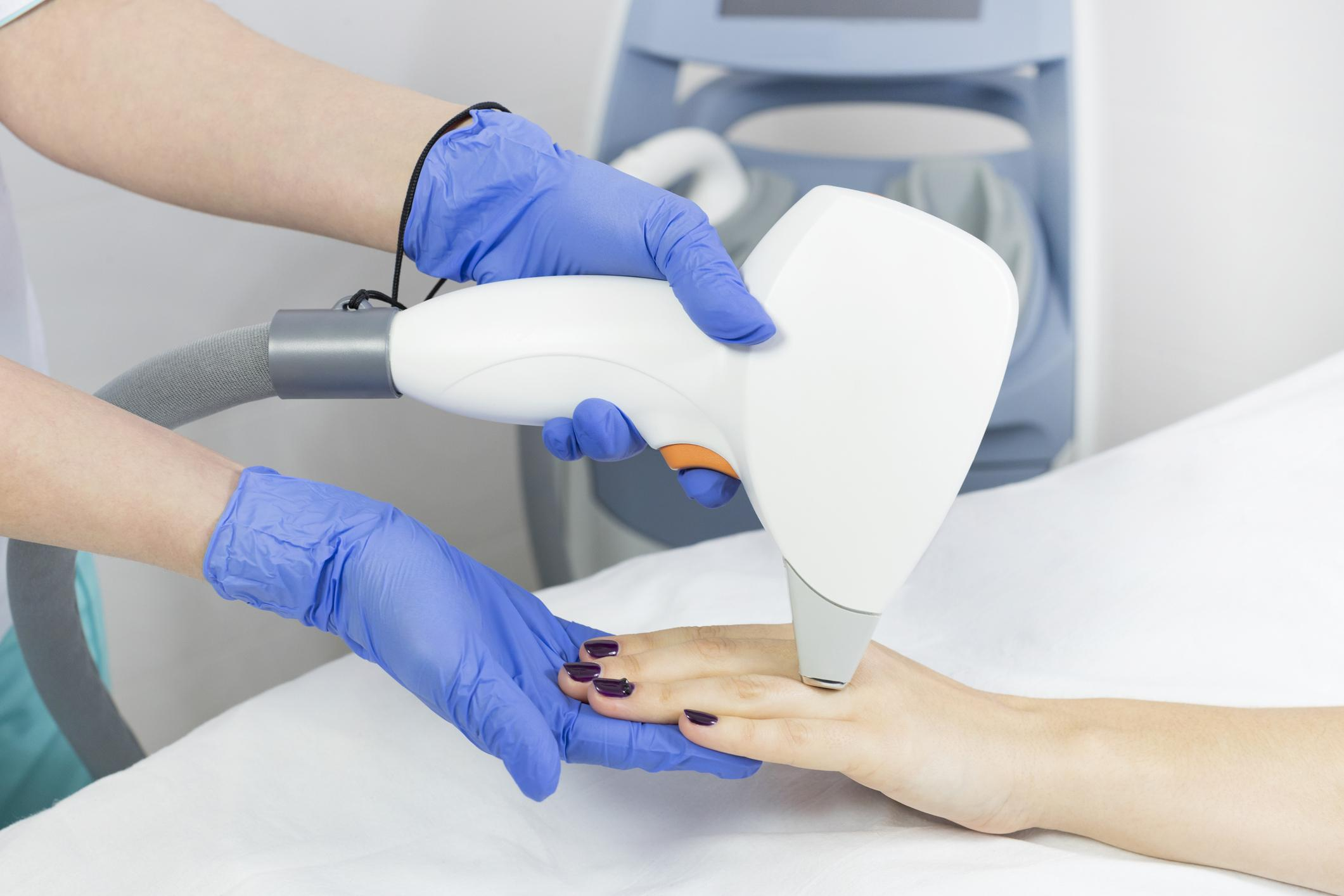
A professional handpiece may also incorporate contact cooling or other cooling technology. Cooling helps protect the epidermis and improve treatment comfort while the laser delivers energy to the follicle. Some FDA-cleared diode devices include skin-cooling features and contact sensors that help control when the laser can emit.
The key point is that effective treatment depends on a combination of wavelength, energy, pulse duration, repetition rate, cooling, and treatment technique, rather than one specification alone.
10 Tips for Safe and Effective Diode Laser Hair Removal at Home
1. Choose a Device Designed for Its Intended Use
Do not judge a hair-removal device only by wattage, appearance, or marketing claims. Check the manufacturer's instructions, intended use, safety features, and applicable regulatory information in your market.
The FDA classifies light-based over-the-counter hair-removal devices as devices that use thermal energy to target hair follicles, and some diode laser hair-removal systems have received 510(k) clearance.
For professional businesses, documentation and compliance are even more important. A salon or clinic should verify certifications, technical specifications, training requirements, warranty coverage, and service support before purchasing.
2. Understand Your Skin and Hair Characteristics
Laser energy interacts with pigment. Dark, coarse hair generally provides a stronger target than very light hair. The AAD notes that conventional laser hair removal is ineffective on blonde, white, gray, and red hair because these hair colors contain too little target pigment.
Skin tone also matters because surrounding skin contains melanin. Higher-pigment skin may require more careful parameter selection and cooling to reduce the risk of unwanted thermal injury.
Do not assume that one setting is suitable for every person—or every body area.
3. Perform a Patch Test
A small-area test can help determine how the skin responds before treating a larger zone. Follow the device manufacturer's instructions regarding test settings, waiting time, and treatment frequency.
Watch for excessive redness, blistering, unusual pain, swelling, or significant pigment changes. Severe or persistent reactions should not be ignored.
In professional settings, consultation and patch testing can be particularly useful when a client has a recent tan, unusual pigmentation, a history of scarring, or other factors that may increase treatment risk. The AAD recommends discussing relevant skin history, medications, tanning, and scarring tendencies before laser treatment.
4. Avoid Recently Tanned Skin
Recent tanning increases the amount of pigment in the skin and can change how laser energy is absorbed. This can reduce the treatment margin between targeting the hair and heating the surrounding skin.
The AAD advises avoiding tanning before laser hair removal and waiting until a tan has faded before treatment.
For professional operators, checking a client's recent sun exposure should be part of the consultation process.
5. Prepare the Treatment Area Correctly
Follow the manufacturer's preparation instructions. In many laser hair-removal protocols, shaving is preferred because the objective is to deliver energy toward the follicle rather than leave a long hair shaft above the skin.
Avoid aggressive exfoliation or irritating products immediately before treatment. Clean, dry skin also makes it easier to position the handpiece consistently.
For salons and clinics, standardized preparation procedures can help operators deliver more consistent sessions across different clients.
6. Use the Correct Energy and Treatment Settings
More energy does not automatically mean better hair removal. Excessive energy can increase the risk of burns, prolonged redness, blistering, or pigment changes.
Home devices usually restrict available parameters to simplify operation. Professional diode systems may provide broader control over fluence, pulse width, repetition rate, spot size, and cooling, depending on the model.
This is one of the clearest differences between home-use and professional equipment: a trained operator can select settings according to the client's skin and hair characteristics instead of relying on a single fixed output.
7. Use Cooling and Follow Contact Requirements
Cooling is an important part of modern laser hair-removal design. It can improve comfort and help protect the epidermis while energy is delivered to the follicle.
Some systems use contact cooling, while others use integrated or auxiliary cooling technologies. FDA documentation for an 810 nm diode device, for example, describes both skin cooling and a contact sensor that allows laser emission only when the device is in contact with the skin.
If a device requires full skin contact, do not lift or angle the handpiece in a way that conflicts with the manufacturer's instructions. Consistent contact can also help achieve more uniform treatment coverage.
8. Protect the Eyes and Treat Sensitive Areas Carefully
Laser energy should never be directed toward the eyes. Use the protective equipment specified by the device manufacturer and follow applicable safety requirements.
Extra caution is appropriate around highly sensitive areas, pigmented lesions, tattoos, and irritated or damaged skin. Home users should not experiment with settings or treatment locations that the device instructions do not cover.
Professional clinics have an additional advantage: controlled treatment rooms, protective eyewear, trained operators, and documented safety procedures create a more structured environment for energy-based treatments.
9. Follow a Consistent Treatment Schedule
Laser hair removal works progressively rather than instantly. Because follicles move through different growth phases, repeated treatments are needed to target hairs during more responsive stages.
The AAD reports that multiple sessions are generally required and that hair may become thinner and finer after each treatment.
Consistency is therefore more valuable than treating too frequently or unnecessarily increasing energy. Follow the schedule specified by the device manufacturer. During professional treatment, operators can adjust the treatment plan according to regrowth patterns and skin response.
10. Take Aftercare Seriously
After treatment, protect the treated skin from excessive sun exposure and follow the manufacturer's aftercare instructions. The AAD recommends protecting treated areas from the sun while the skin heals and using broad-spectrum SPF 30+ sunscreen.
Do not continue treatment over skin that is blistered, significantly swollen, infected, or otherwise damaged. Seek qualified medical advice when a reaction is severe, persistent, or concerning.
A safe hair-removal program is not measured only by how much hair is reduced. Skin comfort, recovery, consistency, and long-term treatment outcomes also matter.
Advantages & Comparison: Home Devices vs. Professional Diode Laser Systems
Home devices have one obvious advantage: convenience. They can be suitable for consumers who want gradual hair reduction and are willing to follow a regular schedule.
Professional diode laser systems, however, are designed for a different operating environment. Depending on the model, they may provide greater parameter control, larger treatment areas, advanced cooling, multiple wavelengths, ergonomic handpieces, touchscreen interfaces, and components designed for repeated daily use.
The difference is not simply “stronger versus weaker.” It is controlled energy delivery plus professional assessment.
For a salon or aesthetic clinic, this creates a broader service opportunity. Instead of relying on a consumer device, a business can build a structured hair-removal service around consultation, treatment planning, professional equipment, documented sessions, and aftercare.
For equipment manufacturers and distributors, features such as stable output, cooling performance, intuitive interfaces, handpiece ergonomics, serviceability, training, and compliance documentation can therefore be more meaningful selling points than headline power figures alone.
Applications & Client Needs
Diode laser hair-removal systems are commonly used for areas such as the legs, arms, underarms, back, chest, bikini region, and selected facial areas, depending on the device's intended use and applicable regulations. The AAD lists many of these areas among common professional laser-hair-removal treatment sites.
From a salon or clinic perspective, client needs usually fall into several categories.
Clients tired of shaving: Regular shaving can be time-consuming and may contribute to razor bumps or ingrown hairs. A structured laser program can reduce the need for repeated shaving over time.
Clients seeking larger-area treatment: Professional equipment is particularly valuable when treating legs, backs, arms, or other larger areas where treatment speed and consistent coverage matter.
Clients with different skin and hair characteristics: Professional assessment becomes more important when skin tone, hair thickness, tanning history, or previous treatment results vary.
Businesses seeking repeatable services: A professional diode laser platform can support a standardized workflow, from consultation and parameter selection to treatment, cooling, documentation, and follow-up.
For these reasons, the best equipment investment is not necessarily the machine with the highest advertised power. A more useful evaluation considers whether the system gives operators the control, safety features, cooling, reliability, and workflow efficiency needed for the clients they actually serve.
Conclusion
At-home diode laser hair removal can be convenient, but convenience should never replace safety and informed device use. Understanding skin and hair characteristics, avoiding recent tanning, performing a patch test, following manufacturer settings, protecting the eyes, using appropriate cooling, maintaining a consistent schedule, and taking aftercare seriously are all essential.
At the same time, the growing interest in home hair removal highlights why professional diode laser technology remains relevant. Professional systems can combine controlled energy delivery, cooling, flexible parameters, ergonomic treatment tools, and trained operator oversight into a more comprehensive treatment experience.
For salons, clinics, and beauty-equipment businesses, diode laser hair removal is therefore more than a hair-removal technology. It is a professional service platform where equipment quality, operator skill, safety procedures, and client management work together to create consistent treatment value
Founded in 2008, Guangzhou GLM Beauty Spa Equipment Factory specializes in research, development, manufacture and selling of beauty and slimming machines. Our production base is located in Guangzhou City, Guangdong Province, China. Since our foundation, we have introduced advanced technologies and equipment, to assure high quality and high performance of our products. With professional marketing guide and excellent after-sales service, our products have been exported to over 20 countries and regions, including Southeast Asia, the Middle East, Europe and the United States, won worldwide praises and gained a good reputation