
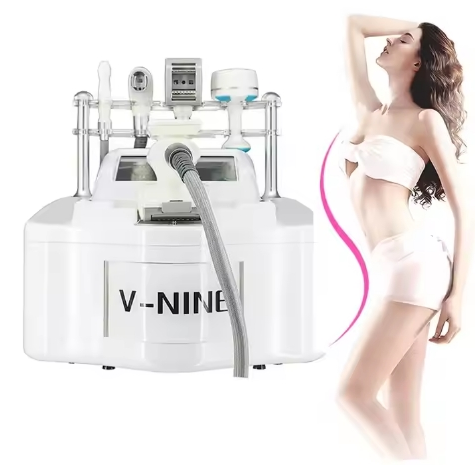
Let's first explore the differences between 40k and 80k cavitation machines from a functional perspective.
The 40k cavitation operates at a frequency of 40,000 times per second. In contrast, the 80k version is capable of emitting twice the amount of ultrasonic waves. While the 80K cavitation machine operates at a higher frequency than the 40K, it does not necessarily mean that a higher ultrasonic frequency equates to a superior machine.
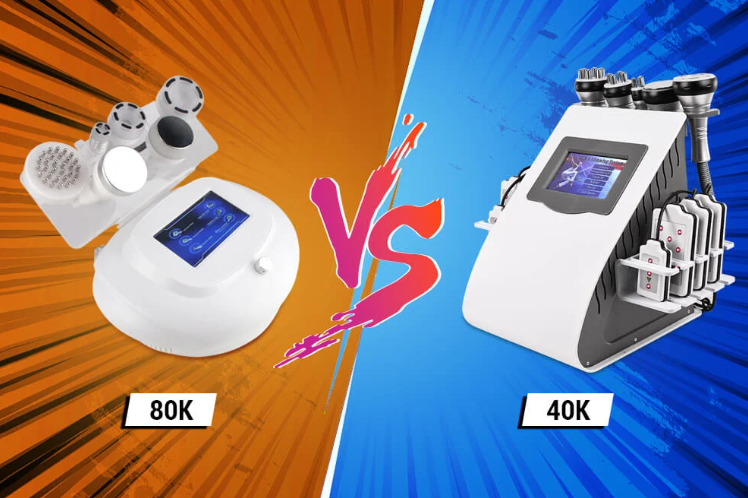
The choice of cavitation frequency is contingent upon the desired therapeutic effect and the thickness of fat in the treatment area. Lower-frequency ultrasonic waves, such as those employed by 30K and 40K cavitation machines, are more suitable for breaking down stubborn, deep-seated fat deposits. In other words, 30K and 40K cavitation machines tend to be more effective in helping clients dissolve deeper layers of fat compared to 80k ultrasonic cavitation devices.
Therefore, when selecting a cavitation machine, it's crucial to consider the specific needs and goals of each client, as well as the characteristics of the targeted fat tissue.
Are 40K cavitation treatments more effective than 80K cavitation treatments? The answer is "Not necessarily!" Both have their respective advantages and disadvantages. Let's compare the two to see which one might be the best fit for you.
80K Cavitation Machine
Features:
- Reduced noise levels
- Higher frequency
- The probe may experience some heat generation
40K Cavitation Machine
Features:
- Effective in dissolving deep-seated, stubborn fat
- Louder buzzing or hissing sound
- Lower frequency
- The probe does not generate heat
By evaluating these characteristics, you can determine which cavitation machine aligns better with your specific requirements and preferences.
Advantages of 80K Ultrasonic Cavitation Machine
Reduced Noise
A common question arises: Does my liposuction beauty device produce noise? If you've undergone a cavitation treatment, you'd be familiar with the hissing sound emitted by the cavitation probe, which is a result of the ultrasonic waves. The intensity of this sound varies depending on an individual's sensitivity to ultrasonic frequencies. Some clients may barely notice it, while others might find it uncomfortable.
Given that 30k, 40k, and 80k ultrasonic cavitation machines operate at different frequencies, they produce distinct sound levels. The 80k cavitation probe tends to be quieter than the 40k version. Hence, if your clients find the noise from a 40k probe intolerable, opting for an 80k machine could be a suitable alternative.
Thermal Effect
For those well-versed in cavitation machines, it's essential to understand that not all cavitation probes generate heat. Specifically, only 80K cavitation probes experience heat due to their higher frequency compared to 30K and 40K ultrasonic waves. Some clients prefer the 80K ultrasonic cavitation machine precisely because of this thermal effect.
Note: When using a 40K cavitation machine, you might notice that the probe does not heat up. This does not indicate a lack of efficacy. If you're concerned about potential damage to the cavitation probe, conducting a water test to ensure the handle functions correctly can alleviate your doubts.
How Do I Know if My Cavitation Machine is Operating Correctly?
To ascertain whether your cavitation machine is functioning properly, follow these steps:
5.1 Check the Power Source: Ensure that your cavitation machine is plugged into a power outlet and the power is turned on.
5.2 Inspect the Machine Display: Look at the machine's display screen to see if it's functioning normally. If no information is displayed or the screen is not illuminated, there might be an issue with the machine.
5.3 Review the Machine Settings: Assuming the display is operational, check if the settings are configured correctly. Ensure that the correct frequency, duration, and intensity are set for the type of treatment you intend to perform.
5.4 Examine the Ultrasonic Head: The ultrasonic head is the part of the machine that comes into contact with the skin. Verify that it's securely attached to the machine and free from any damage.
5.5 Test the Machine on a Small Skin Area: To check if the machine is functioning correctly, conduct a test on a small patch of skin. You should feel a slight vibration or buzzing sensation, but it should not be uncomfortable or painful.
Monitoring Results: Observe the skin and measure any changes in skin tone, texture, or firmness. These changes can indicate that the machine is indeed working.