
Introduction
The beauty and aesthetics industry is moving toward a more measurable, personalized, and technology-driven model of care. Clients no longer want generic skincare recommendations. They increasingly expect professionals to understand their individual skin condition, explain treatment options clearly, and demonstrate whether a treatment is actually producing results.
This is where AI skin analysis and smart beauty devices are becoming increasingly valuable.
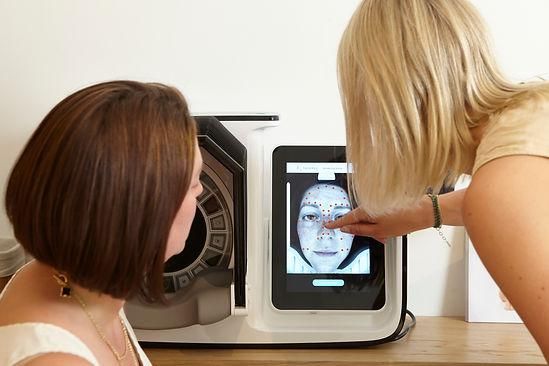
Modern skin analysis systems combine high-resolution imaging, multiple light sources, computer vision, artificial intelligence, and digital data management to evaluate a wide range of skin characteristics. Depending on the system, analysis may include wrinkles, pores, pigmentation, redness, acne, texture, oiliness, and other visible or subsurface indicators. Recent research on AI in aesthetic dermatology highlights the growing use of dedicated imaging hardware and AI algorithms for objective skin assessment and treatment monitoring.
For professional beauty clinics and aesthetic centers, however, the value of this technology goes beyond simply "scanning the skin." The real opportunity lies in connecting skin analysis, treatment planning, professional beauty equipment, and progress tracking into one continuous workflow.
That shift is helping clinics move from subjective consultations toward a more data-supported approach to aesthetic care
Background: Why Traditional Skin Assessment Is No Longer Enough
For many years, skin consultations relied heavily on visual inspection and professional experience. A trained aesthetician could observe dryness, enlarged pores, pigmentation, fine lines, oiliness, or uneven texture and then recommend an appropriate treatment.
Professional experience remains essential. However, visual observation has limitations.
Two clients may appear to have similar skin concerns while actually having very different underlying conditions. Pigmentation may be more extensive than what is immediately visible. Early signs of photoaging may not be obvious under normal lighting. Changes in hydration, texture, redness, or pore condition can also be difficult to quantify accurately with the naked eye.
This creates an important challenge for modern clinics:
How can professionals make consultations more objective while still maintaining the human expertise that clients expect?
AI skin analysis provides one answer.
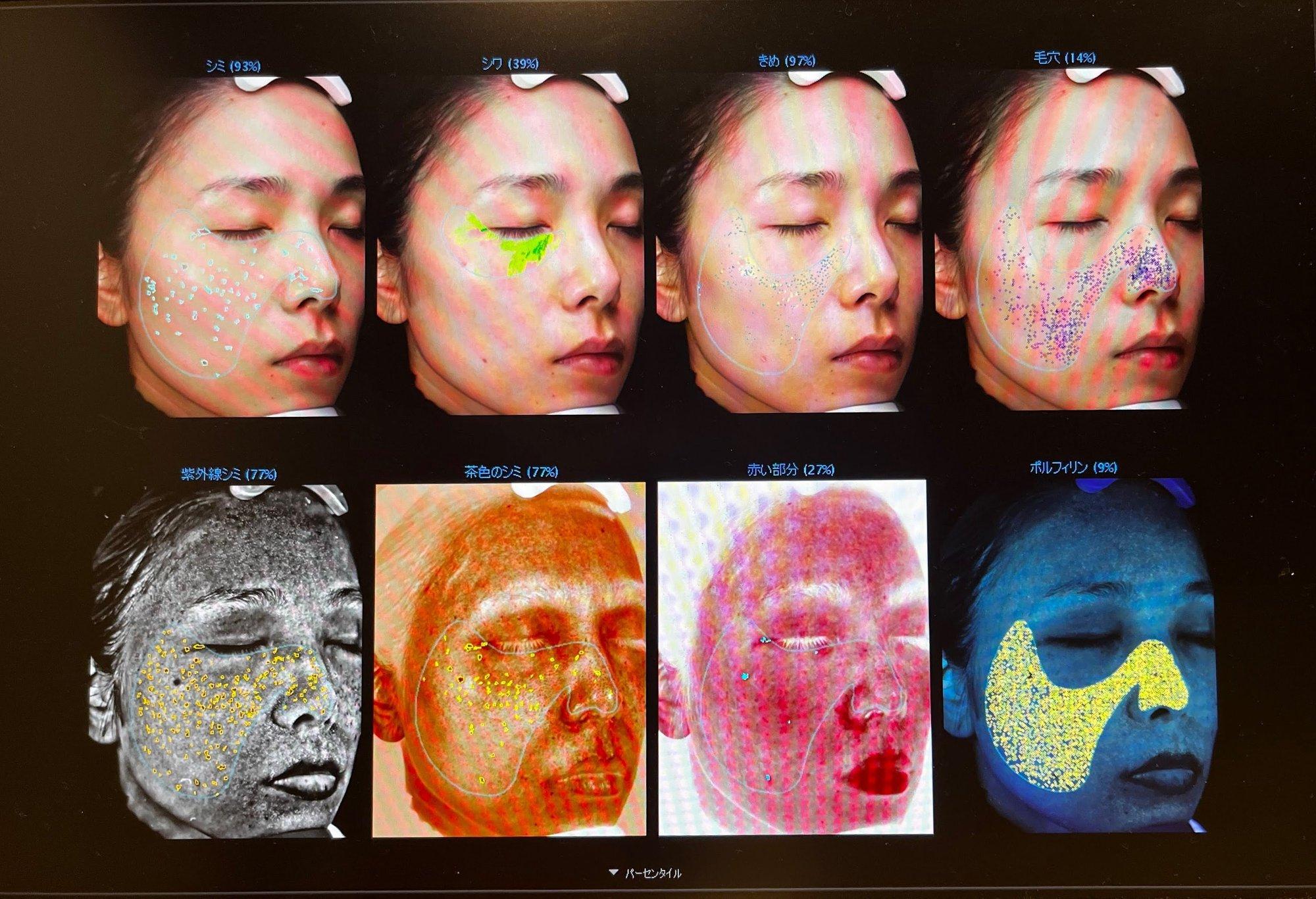
Instead of relying only on what the operator sees, an imaging system can capture standardized facial images and convert visual information into measurable data. Some systems use standard, polarized, UV, or multispectral imaging to reveal different characteristics of the skin. AI algorithms can then recognize patterns and organize the results into a structured skin report.
The goal is not to replace the aesthetic professional.
It is to give the professional better information to work with.
Technology and Mechanism: How AI Skin Analysis Works
A smart skin analysis system typically combines several technologies rather than relying on AI alone.
1. Standardized Image Capture
The first step is image acquisition.
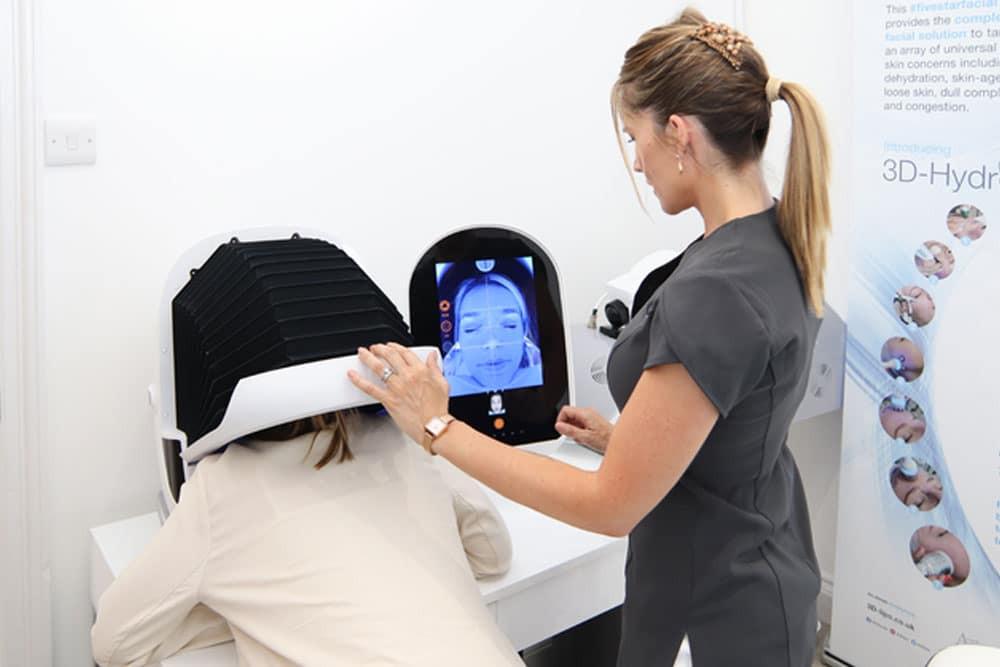
Professional skin analyzers are designed to capture consistent images of the client's face, often using controlled positioning, lighting, and multiple viewing angles. Consistency is particularly important when the clinic wants to compare the client's skin before and after a series of treatments.
A standardized image provides a more reliable baseline than a casual smartphone photograph taken under changing lighting conditions.
2. Multi-Spectral or Specialized Lighting
Different lighting conditions can reveal different characteristics of the skin.
Visible-light imaging can help evaluate surface appearance, texture, wrinkles, pores, and pigmentation. Polarized imaging can reduce surface reflection and make certain color variations easier to analyze. UV imaging may reveal features that are less apparent under ordinary illumination.
Advanced systems may combine several imaging modes to create a more comprehensive skin profile. Clinical and commercial systems currently use combinations of standard, UV, polarized, multispectral, and 3D imaging technologies.
3. AI and Computer Vision
Once images are captured, AI algorithms analyze visual patterns.
Computer vision can identify specific facial regions and evaluate characteristics such as wrinkles, pores, pigmentation, redness, acne, and texture. Depending on the system, AI can also categorize skin types or generate an overall skin assessment.
For example, current AI skin analysis platforms can evaluate multiple skin concerns in a single scan and provide structured results for professional consultation.
The important point is that AI does not simply produce a photograph.
It transforms an image into usable consultation data.
4. Data-Based Treatment Planning
The next step is where smart skin analysis becomes particularly valuable to professional clinics.
Instead of saying:
"Your skin looks a little dry and you have some pigmentation."
an operator can show the client measurable areas of concern and explain which treatment goals should be prioritized.
For example:
- Pigmentation → brightening and pigmentation-focused protocols
- Fine lines → skin rejuvenation and collagen-support treatments
- Enlarged pores → deep cleansing and skin-refining treatments
- Uneven texture → exfoliation and renewal treatments
- Redness → gentle, barrier-conscious treatment strategies
- Loss of firmness → professional tightening and rejuvenation technologies
The analysis itself does not determine the treatment automatically. Rather, it gives the professional a stronger foundation for selecting an appropriate combination of technologies and protocols
From Smart Diagnosis to Smart Treatment
The most interesting development is not AI skin analysis by itself.
It is the integration of diagnostic technology with professional beauty equipment.
A smart clinic can create a workflow such as:
Analyze → Plan → Treat → Monitor → Adjust
For example, a client may first undergo an AI-assisted skin analysis. The operator identifies pigmentation, uneven texture, enlarged pores, and early signs of loss of firmness.
Rather than offering a generic facial, the clinic can design a treatment program around those priorities.
Depending on the client's condition and professional assessment, the clinic may combine technologies such as:
- RF for professional skin tightening and rejuvenation protocols
- Ultrasound technologies for targeted aesthetic applications
- Hydradermabrasion or water-based facial systems for cleansing and hydration-focused treatments
- LED phototherapy for selected skincare protocols
- Vacuum technologies for cleansing, massage, or body-treatment applications
- Microcurrent or EMS technologies for selected facial and body applications
- Specialized laser or light-based equipment where professionally appropriate
The key advantage is not simply having more machines.
It is being able to match professional equipment with clearly identified client needs.
This makes the clinic's equipment portfolio more strategic and can help operators avoid treating every client with exactly the same protocol.
Advantages of AI Skin Analysis for Professional Clinics
More Personalized Consultations
Personalization is becoming a major differentiator in the aesthetics market.
Clients are more likely to engage with a treatment plan when they can see why a particular treatment has been recommended. An AI-generated skin report provides a visual starting point for the conversation.
Instead of discussing skin concerns only verbally, practitioners can use images and measurements to explain the condition in a more accessible way.
Better Treatment Documentation
Before-and-after photography has long been used in aesthetic clinics. Smart imaging takes this concept further by making comparisons more structured.
A clinic can establish a baseline before treatment, repeat the analysis after several sessions, and compare changes over time.
Some professional systems specifically provide progress tracking and digital client records, allowing clinics to document changes between visits.
This can be valuable for both the practitioner and the client.
Stronger Client Communication
A treatment consultation is also a communication process.
When clients can see their own skin in detail, the conversation becomes easier to understand. A practitioner can explain why hydration, pigmentation, texture, or firmness may be prioritized instead of simply presenting a list of products or procedures.
This visual approach can also make consultations more educational and transparent.
More Consistent Professional Workflows
Different operators may interpret the same skin condition differently.
Data-supported analysis can provide a common reference point for the team. This can be particularly useful for larger beauty clinics, medical spas, franchises, and multi-location businesses where consistency matters.
AI does not eliminate professional judgment, but it can help standardize part of the consultation process.
Better Use of Professional Beauty Equipment
A clinic that understands client needs more clearly can potentially use its equipment more effectively.
Instead of promoting a machine based only on its functions, the operator can connect the technology to a specific skin concern and treatment objective.
For equipment manufacturers, this also changes how professional devices can be positioned.
The future of beauty equipment is not simply about adding more functions.
It is about creating smarter treatment ecosystems.
AI Skin Analysis vs. Traditional Skin Consultation
Traditional consultation and AI-assisted consultation should not be viewed as competitors.
They work best together.
| Traditional Consultation | AI-Assisted Consultation |
|---|---|
| Relies heavily on visual observation | Combines visual observation with imaging data |
| Strongly dependent on operator experience | Adds standardized measurement and analysis |
| Difficult to quantify subtle changes | Enables more structured progress comparison |
| Limited documentation | Digital reports can support treatment records |
| Highly conversational | Combines conversation with visual evidence |
| Treatment recommendations may be more subjective | Recommendations can be supported by measurable findings |
The ideal professional workflow therefore remains technology + expertise, rather than technology replacing expertise.
Research into AI and imaging in aesthetic dermatology also emphasizes that these technologies are developing rapidly, while questions around standardization, clinical validation, and outcome measurement remain important.
Professional Devices vs. Consumer Skin Analysis Tools
Smartphones and consumer applications have made skin analysis more accessible. Some AI-based platforms can even operate through smartphones, tablets, smart mirrors, or web cameras.
This is useful for basic consumer engagement and remote consultations.
However, professional aesthetic environments have different requirements.
A clinic may need:
- More consistent image capture
- Controlled lighting conditions
- Higher-quality imaging
- Repeatable measurements
- Detailed client records
- Professional treatment documentation
- Integration with consultation workflows
- Trained operators who can interpret the results
Professional equipment is therefore valuable not merely because it produces a more impressive image, but because it can become part of a repeatable clinical or aesthetic workflow.
The best system is not necessarily the one with the most impressive AI interface.
It is the one that helps professionals make better-informed decisions consistently.
Applications: Where Smart Beauty Devices Create the Most Value
1. Initial Skin Consultation
The first consultation is an ideal point to introduce AI skin analysis.
A scan can provide a structured overview of the client's skin condition and help the practitioner identify priority areas.
This can make the consultation more professional and easier to personalize.
2. Customized Facial Programs
For beauty salons and skincare studios, AI analysis can help operators determine whether the client should prioritize cleansing, hydration, exfoliation, calming, brightening, or rejuvenation.
The professional can then combine appropriate facial technologies to build a more targeted service.
3. Anti-Aging Programs
Clients seeking anti-aging treatments often want visible and measurable improvement.
Skin imaging can establish a baseline for wrinkles, texture, pigmentation, and other relevant characteristics. Professional treatment devices can then be incorporated into a longer-term rejuvenation program.
4. Acne and Pore-Focused Programs
AI analysis can help identify acne-related features, pore characteristics, oiliness, and uneven texture. Some current systems are designed to analyze different types of acne and multiple skin attributes from facial images.
This can support more structured skincare and treatment planning.
5. Before-and-After Monitoring
Perhaps one of the strongest applications is progress tracking.
A client may not notice gradual improvement from one week to the next. A standardized imaging system can make changes easier to visualize and document.
This creates an important feedback loop:
Measurement → Treatment → Measurement → Optimization
6. Premium Aesthetic Clinics
For high-end clinics, technology itself can become part of the client experience.
A professional consultation room equipped with an advanced skin analyzer creates a more technology-driven environment. It also helps position the clinic around precision, personalization, and measurable care rather than generic beauty services.
What Should Clinics Look for in a Smart Skin Analysis System?
Not every AI skin analyzer is equally suitable for professional use.
When evaluating a system, clinics should consider several factors.
Imaging consistency is essential. If images cannot be captured under repeatable conditions, progress comparisons may become less meaningful.
Analysis capabilities should match the clinic's actual services. A system that measures many parameters is not automatically better if the information is not useful for treatment planning.
Ease of operation also matters. Professional equipment should support the workflow rather than slow it down.
Data management becomes increasingly important as a clinic builds a larger client base. Digital reports, historical comparisons, and client records can make long-term management more efficient.
Finally, AI should be treated as decision-support technology rather than an independent medical authority. AI skin analysis can support observation and treatment planning, but professional assessment remains essential, particularly when findings may indicate a medical skin condition.
The Future: From Smart Analysis to Connected Aesthetic Clinics
The next generation of aesthetic clinics is likely to become increasingly connected.
Imagine a workflow in which the client is first analyzed by an intelligent skin imaging system. The results are stored in a digital profile. The practitioner selects a personalized treatment plan. Professional beauty equipment performs the treatment. Follow-up scans compare the results. The system then helps the practitioner adjust the next session.
This creates a closed-loop approach:
Analyze → Personalize → Treat → Measure → Optimize
The value of individual devices becomes greater when they participate in this ecosystem.
For beauty equipment manufacturers, this represents an important direction for product development. Future devices can increasingly focus on intelligent interfaces, digital records, treatment parameter management, imaging integration, and data-supported workflows.
The result is not simply a "smart machine."
It is a smart clinic workflow.
Conclusion
AI skin analysis is changing the way professional aesthetic clinics understand and communicate skin conditions.
By combining imaging technology, computer vision, AI algorithms, and professional expertise, modern skin analysis systems can provide a more structured foundation for consultation, treatment planning, and progress tracking. Current research and commercial systems demonstrate the industry's rapid movement toward objective, image-based assessment, while also highlighting the importance of validation and professional interpretation.
But the real opportunity lies beyond diagnosis.
When AI skin analysis is connected with professional beauty devices, it can help clinics build a complete treatment journey—from the first consultation to personalized treatment and measurable follow-up.
For modern beauty salons, med spas, aesthetic centers, and professional clinics, the future is not simply about owning more advanced equipment.
It is about using better information to deliver more targeted treatments, stronger client experiences, and more consistent professional results.
That is the real potential of AI skin analysis and smart beauty devices: turning aesthetic care from a largely observation-based process into a more intelligent, measurable, and personalized experience
Founded in 2008, Guangzhou GLM Beauty Spa Equipment Factory specializes in research, development, manufacture and selling of beauty and slimming machines. Our production base is located in Guangzhou City, Guangdong Province, China. Since our foundation, we have introduced advanced technologies and equipment, to assure high quality and high performance of our products. With professional marketing guide and excellent after-sales service, our products have been exported to over 20 countries and regions, including Southeast Asia, the Middle East, Europe and the United States, won worldwide praises and gained a good reputation