1. Introduction: The Evolution of Professional Body Contouring in 2026
Body contouring continues to evolve as aesthetic clinics, medical spas, and professional beauty centers seek more targeted, non-surgical approaches to body shaping and skin improvement. In 2026, the industry is moving beyond the simple promise of fat reduction. Clients increasingly want personalized treatment plans that address localized fat, skin laxity, cellulite appearance, and overall body definition, while businesses need technologies that fit their service portfolios, operating budgets, and professional standards.
For beauty equipment distributors and clinic owners, this creates both an opportunity and a challenge. The growing range of body contouring technologies makes it possible to serve different client groups, but selecting equipment based solely on popularity or advertised functions can lead to disappointing commercial results.
The most effective investment strategy is to understand what each technology is designed to do, which clients may benefit from it, and how it fits into a professional treatment program. From radiofrequency (RF) skin tightening and electromagnetic muscle stimulation to vacuum roller massage and ultrasonic cavitation, each technology offers a different approach to body aesthetics.
The key question for 2026 is not simply which body contouring machine is trending. It is which technology can help your business deliver appropriate services, meet client expectations, and build a sustainable treatment offering.
2. Background and Industry Challenges: What Are Clients Looking for?
Moving Beyond a Single Treatment Goal
Body contouring is not one universal procedure. Different clients present different concerns, and those concerns may require different treatment approaches.
Some clients want to address localized fat deposits around the abdomen, flanks, thighs, or upper arms. Others are more concerned about loose-looking skin after weight changes, the appearance of cellulite, or a lack of visible muscle definition. A single device may not address all these goals equally well.
This distinction matters commercially. When a clinic promotes a device as a solution for every body concern, it can create unrealistic expectations and weaken client trust. A more professional approach begins with consultation, assessment, and clear communication about the intended purpose and limitations of each treatment.
The Demand for Personalized Treatment Plans
Clients increasingly expect aesthetic services to be tailored to their body areas, comfort preferences, schedules, and desired outcomes. This encourages clinics to develop treatment packages rather than rely on isolated appointments.
For example, a client concerned about skin laxity may need a different approach from someone primarily interested in muscle conditioning. Another client may be interested in the appearance of cellulite and the temporary improvement in tissue smoothness that massage-based treatments can provide.
Personalization does not necessarily mean purchasing every available technology. It means selecting complementary devices that address the most common needs within a clinic's target market.
Balancing Results, Safety, and Profitability
Equipment investment also involves operational considerations. Treatment duration, staff training, maintenance requirements, consumables, service support, and the number of clients a clinic can realistically accommodate all influence profitability.
A machine with many functions may appear attractive, but unused functions do not generate revenue. Conversely, a specialized device can be commercially valuable if it addresses a clear demand and supports a repeatable treatment protocol.
In 2026, successful body contouring businesses need to evaluate technology through three lenses: client suitability, professional safety, and long-term business value.
3. Body Contouring Technologies in 2026: Principles and Applications
3.1 Radiofrequency (RF): Supporting Skin Tightening
Radiofrequency technology delivers electrical energy into tissue, producing controlled heating according to the device design, applicator, settings, and treatment protocol. In appropriately selected applications, RF heating can support collagen remodeling and improve the appearance of skin laxity over time.
For professional beauty centers, RF is relevant when clients are concerned about the appearance of loose skin or want a skin-firming service as part of a broader body treatment program.
Common treatment areas include the abdomen, thighs, upper arms, and other areas specified by the equipment manufacturer. The appropriate treatment depth, temperature monitoring, session duration, and client selection depend on the particular device and its intended use.
RF should not be presented as interchangeable with fat-removal technologies. Improvements in skin firmness are different from reducing a measurable volume of subcutaneous fat. Clinics should communicate this distinction clearly when discussing expected outcomes.
When choosing an RF device, evaluate its energy controls, temperature-management features, applicator design, operating instructions, and manufacturer training. These factors matter more than the number of treatment modes listed in a brochure.
3.2 Electromagnetic Muscle Stimulation: Addressing Muscle Conditioning
High-intensity electromagnetic technologies are designed to stimulate muscle contractions through electromagnetic fields. Depending on the specific technology, these contractions may be used as part of a muscle-conditioning or body-contouring program.
This category appeals to clients interested in abdominal conditioning, buttock muscle development, or improved muscle definition. It can also provide clinics with a service that differs from traditional massage-based body treatments.
However, muscle stimulation and fat reduction are not the same outcome. A device's ability to induce muscle contractions does not automatically establish how much fat it can reduce or whether it will deliver a visible change for every client.
Professional operators should follow the manufacturer's contraindications, screening procedures, treatment parameters, and training requirements. Clinics should also verify the evidence supporting any specific claims made about muscle growth, body measurements, or fat reduction.
From a business perspective, electromagnetic muscle stimulation may be a useful addition when clients actively seek muscle-focused services and the clinic can support appropriate screening and follow-up.
3.3 Ultrasonic Cavitation: A Non-Invasive Approach to Localized Body Contouring
Ultrasonic cavitation devices use ultrasound energy to produce effects in tissue, with the intended mechanism depending on the device's frequency, intensity, applicator design, and regulatory classification. Some aesthetic devices are marketed for localized body contouring, but their performance and supporting evidence vary.
For beauty centers, these systems may form part of a service offering for clients concerned about selected body areas, such as the abdomen or thighs. They should not be positioned as a replacement for weight management or as a universal solution for obesity.
When comparing ultrasonic cavitation machines, assess the actual operating specifications, manufacturer instructions, treatment limitations, and available evidence. Do not assume that a higher wattage, a larger number of handles, or a more impressive display necessarily means better clinical or commercial performance.
The most useful device is one that matches the intended client group and can be operated consistently within a clearly defined treatment protocol.
3.4 Vacuum Roller Massage: Addressing the Appearance of Cellulite
Vacuum roller systems combine suction with mechanical rolling or massage. Depending on the device, this combination is intended to mobilize superficial tissues and temporarily improve the appearance of skin texture or cellulite.
These systems can be relevant to clinics offering body massage, contouring, and skin-smoothing services. They may also support structured treatment packages for clients who prefer a massage-based experience.
Vacuum roller massage should not be confused with permanent fat removal. Changes in the appearance of cellulite or tissue smoothness can vary between individuals and may require ongoing maintenance. Clinics should avoid promising permanent results or guaranteed changes in body measurements.
When selecting a system, consider adjustable suction, roller control, applicator ergonomics, ease of cleaning, and the suitability of the treatment head for different body areas. Operator technique is also important: excessive suction or inappropriate use may cause discomfort, bruising, or other adverse effects.
3.5 Multi-Technology Platforms: Convenience Versus Specialization
Multi-function body contouring platforms combine two or more technologies in one system. Depending on the model, they may integrate RF, vacuum massage, ultrasonic technology, or other modalities.
Their main business advantage is service flexibility. A clinic may be able to offer several types of treatments without purchasing a separate machine for every service. This can be especially attractive to new businesses, smaller treatment rooms, and distributors serving a broad customer base.
However, a multi-function platform is not automatically superior to a specialized device. Some systems may offer limited performance in individual modes, and additional functions can increase training complexity or maintenance requirements.
Before purchasing, verify which technologies are genuinely integrated, whether they can be used independently, and what evidence supports each advertised function. Also confirm whether the device's intended use permits the services you plan to offer in your market.
A practical rule is to prioritize functional quality, treatment suitability, and reliable after-sales support over the number of features advertised.
4. Advantages and Comparisons: Professional Equipment Versus Home-Use Devices
More Structured Treatment Delivery
Professional body contouring equipment is generally designed for trained operators and defined treatment environments. Depending on the product category, it may provide more configurable operating parameters, specialized applicators, service documentation, and manufacturer-led training than a typical consumer device.
These features can help clinics establish consistent procedures, document client responses, and integrate treatments into broader service plans. However, professional equipment still requires appropriate training, screening, maintenance, and adherence to its instructions for use.
Home-use devices serve a different purpose. They may be more accessible and convenient for personal routines, but their energy output, treatment coverage, controls, and intended applications can differ significantly from professional systems.
Neither category should be judged by appearance or marketing language alone. The relevant comparison is whether the device is appropriate for the intended user, treatment goal, and risk level.
Greater Flexibility for Business Service Design
A professional clinic may need to serve multiple client segments. One group may be interested in skin tightening, another in muscle conditioning, and another in the appearance of cellulite. A carefully selected professional portfolio can make it easier to build distinct services around these needs.
For example, an RF system may support a skin-firming service, while a vacuum roller system may be used for massage-based body treatments. A clinic may add muscle stimulation if there is sufficient demand and the technology fits its clinical or professional scope.
The goal is not to combine every technology into one package. It is to create a service menu in which each treatment has a clear purpose and a defensible explanation.
Commercial Value Depends on Utilization
A professional machine becomes a business asset only when it fits actual demand. A sophisticated system that is rarely booked may deliver less value than a simpler device that supports a popular, repeatable service.
Before investing, estimate realistic appointment volume, treatment duration, staffing needs, maintenance costs, financing expenses, and the likely price clients will accept. Calculate the break-even point using conservative assumptions rather than relying on a supplier's best-case revenue projection.
A supplier's role also extends beyond delivering the machine. Training, troubleshooting, replacement parts, warranty terms, and responsive technical support can influence how reliably a clinic operates.
5. Applications and Client Needs: How to Choose the Right Technology
Step 1: Identify Your Core Client Group
Start by defining the clients your business is best positioned to serve. A medical spa with established aesthetic services may have different needs from a new beauty studio or a distributor supplying multiple markets.
Review consultation records, customer enquiries, existing service demand, and competitor offerings. Determine whether your strongest opportunity is skin firming, muscle conditioning, massage-based cellulite services, or a broader body contouring program.
Do not select equipment solely because a technology is receiving attention online. Trend visibility can generate enquiries, but it does not guarantee repeat bookings.
Step 2: Match the Technology to the Intended Outcome
Create a clear distinction between treatment goals:
-
Skin firmness: Consider RF systems designed for the intended treatment area and use.
-
Muscle conditioning: Evaluate electromagnetic muscle stimulation technologies and their specific indications.
-
Localized body contouring: Investigate the evidence, limitations, and intended applications of suitable ultrasound-based systems.
-
Cellulite appearance and tissue smoothness: Consider vacuum roller massage where appropriate.
-
Multiple service categories: Evaluate multi-technology platforms, but verify the quality and suitability of each individual function.
These categories are starting points for equipment selection, not guarantees of a particular result. Client assessment and device-specific instructions remain essential.
Step 3: Evaluate Safety and Compliance
Before purchasing, confirm the manufacturer's identity, device specifications, intended use, contraindications, operating instructions, and applicable regulatory status in your target market.
Ask whether the supplier provides structured operator training, maintenance guidance, technical documentation, and a clear process for reporting problems. Verify certificates and regulatory claims independently where possible; do not assume that a CE mark, an FDA registration, or another document automatically proves every clinical or marketing claim.
Also consider insurance requirements, local professional rules, and whether the proposed service falls within your business's permitted scope.
Step 4: Compare the Total Cost of Ownership
The purchase price is only one part of the investment. A realistic budget should include:
-
Initial equipment and delivery costs.
-
Installation, staff training, and onboarding.
-
Consumables and routine maintenance.
-
Warranty coverage and out-of-warranty repairs.
-
Treatment time and staff capacity.
-
Marketing, client education, and service-launch costs.
Request a written quotation and confirm which accessories, applicators, training sessions, and service commitments are included. For OEM or private-label buyers, also assess product consistency, documentation, customization options, packaging, and long-term parts availability.
Step 5: Build a Treatment Program, Not Just a Machine Menu
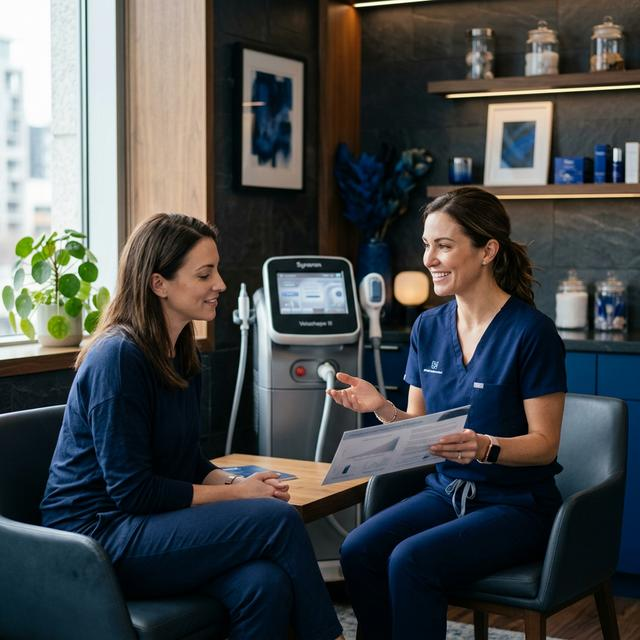
Equipment delivers greater commercial value when it supports a clear client journey. Begin with consultation and suitability screening, explain realistic expectations, establish a treatment plan consistent with the device instructions, and record relevant observations throughout the program.
Where appropriate, combine complementary services only when the combination is safe, justified, and within the operator's scope. Avoid assuming that more technologies automatically produce better outcomes.
Provide aftercare instructions, arrange follow-up when indicated, and evaluate client feedback alongside business metrics such as rebooking rates, treatment completion, utilization, and customer satisfaction.
6. Conclusion: Invest in the Right Technology for Sustainable Growth
Body contouring trends in 2026 point toward a more personalized and service-driven aesthetic market. RF skin tightening, electromagnetic muscle stimulation, ultrasound-based body contouring, vacuum roller massage, and multi-technology platforms each offer different possibilities for professional businesses.
The best choice depends on your target clients, treatment goals, operating model, budget, local requirements, and ability to deliver services consistently. A machine with more functions is not necessarily a better investment, and a popular technology is not automatically the right fit for every clinic.
For beauty equipment buyers, distributors, and aesthetic business owners, the priority should be to choose reliable equipment supported by clear documentation, appropriate training, and responsive after-sales service. When technology selection is aligned with real client needs and realistic commercial planning, body contouring can become a more coherent and sustainable part of a professional service portfolio.
The long-term opportunity is not simply to own the newest machine. It is to build a treatment offering that clients understand, operators can deliver responsibly, and the business can maintain over time
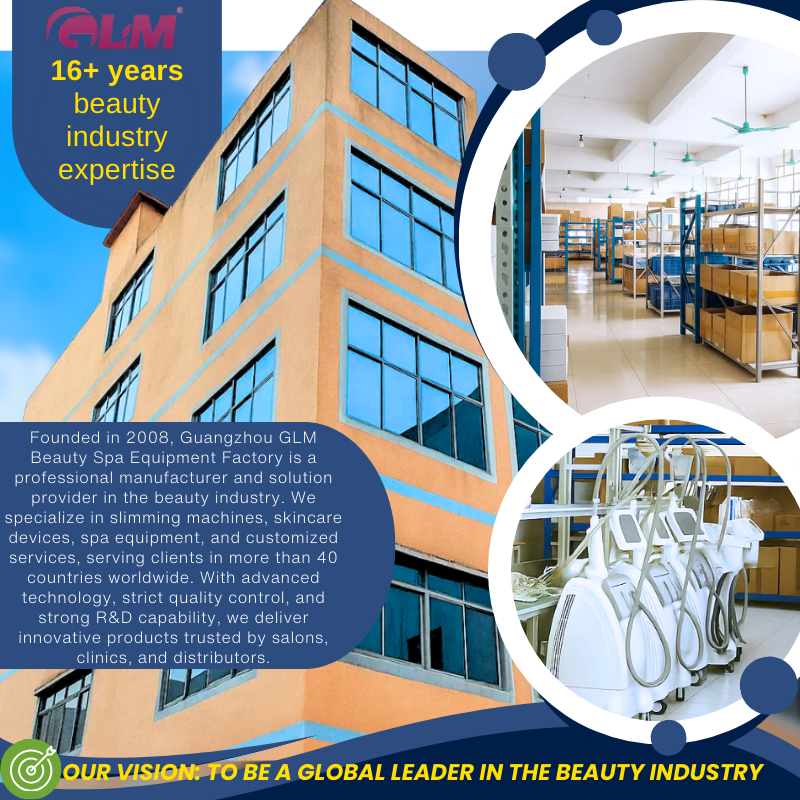
Founded in 2008, Guangzhou GLM Beauty Spa Equipment Factory specializes in research, development, manufacture and selling of beauty and slimming machines. Our production base is located in Guangzhou City, Guangdong Province, China. Since our foundation, we have introduced advanced technologies and equipment, to assure high quality and high performance of our products. With professional marketing guide and excellent after-sales service, our products have been exported to over 20 countries and regions, including Southeast Asia, the Middle East, Europe and the United States, won worldwide praises and gained a good reputation