

Can Laser Hair Removal Affect My Tattoo?
Introduction
In recent years, laser hair removal has surged in popularity, with many people choosing it as a preferred method for achieving smooth, hair-free skin. Its effectiveness and convenience have made it a staple in skincare routines worldwide. Concurrently, tattoos have become more mainstream, celebrated as personal expressions of art that adorn the skin. However, a common concern arises at the intersection of these two beauty treatments: could laser hair removal have unintended effects on tattoos? This blog delves into this significant issue, offering insights and advice on how to safeguard your body art while pursuing a sleek silhouette.
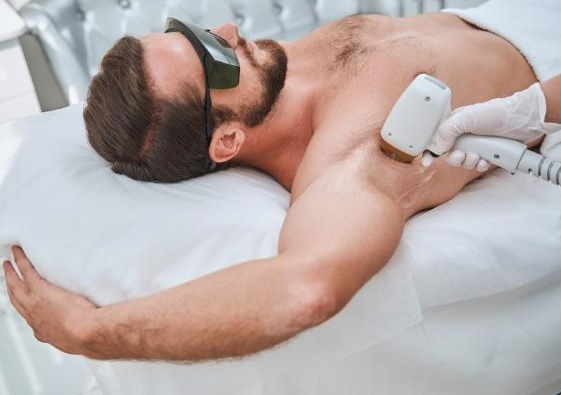
Comprehensive Guide: Laser Hair Removal and Its Interaction with Tattoos
Balancing Aesthetic Goals and Tattoo Preservation Through Evidence-Based Practices
1. Introduction: Laser Hair Removal (LHR) and Its Evolution
Laser hair removal leverages selective photothermolysis, a principle where specific wavelengths of light target melanin in hair follicles while sparing surrounding tissues. Modern LHR systems utilize:
- Alexandrite (755 nm): High melanin absorption; ideal for Fitzpatrick I–III skin.
- Diode (800–810 nm): Balanced penetration; suitable for Fitzpatrick IV–V skin.
- Nd:YAG (1064 nm): Deepest penetration; preferred for Fitzpatrick V–VI skin and tanned individuals.
Key Advantages:
- Precision: Targets pigmented hair, minimizing epidermal damage.
- Longevity: FDA-approved for "permanent hair reduction" (up to 90% efficacy after 6–8 sessions).
- Speed: Treats large areas (e.g., legs, back) in 15–30 minutes.
However, LHR’s reliance on pigment targeting poses risks when applied near or over tattoos, necessitating a nuanced understanding of tattoo physiology and laser-ink interactions.
2. The Physiology of Tattoos: Ink Deposition and Longevity
Tattoos are created by injecting ink nanoparticles (0.1–10 μm) into the dermal layer via mechanical punctures. Key factors influencing tattoo stability include:
- Ink Composition:
- Organic Pigments: Azo dyes (e.g., yellow, red) degrade faster due to photochemical reactions.
- Inorganic Pigments: Titanium dioxide (white), iron oxides (black/brown), and carbon black resist fading but may react with laser energy.
- Metallic Salts: Copper (green), cobalt (blue), and mercury (red) are prone to oxidation and color shifts.
- Depth of Penetration:
- Dermal Layer: Ink is trapped in fibroblasts and macrophages, preventing natural exfoliation.
- Epidermal Turnover: The epidermis renews every 28–40 days, but dermal ink persists unless disrupted.
- Immune Response:
- Macrophage Phagocytosis: Ingested ink particles are either stored or transported to lymph nodes.
- Chronic Inflammation: Persistent low-grade inflammation may alter ink stability over decades.
3. Laser-Tattoo Interactions: Mechanisms and Risks
LHR devices share wavelengths with tattoo removal lasers (e.g., Q-switched Nd:YAG, ruby, alexandrite), which rely on photomechanical fragmentation of ink particles. This overlap creates risks when LHR is applied near tattoos:
3.1 Key Risks
- Ink Fragmentation and Fading:
- Dark Inks (Black/Blue): Absorb laser energy efficiently, leading to particle breakdown and color loss.
- Colored Inks: May undergo photooxidation, altering hues (e.g., green → blue, red → orange).
- Thermal Injury:
- Localized Burns: High-fluence lasers can vaporize ink, causing epidermal blistering or scarring.
- Dermal Necrosis: Excessive heat may damage adjacent fibroblasts, compromising tattoo integrity.
- Textural Changes:
- Scarring: Deep thermal injury may result in hypopigmented or hypertrophic scars.
- Granuloma Formation: Foreign body reactions to fragmented ink particles.
3.2 Risk Factors
- Wavelength Overlap: Nd:YAG (1064 nm) lasers used for LHR on dark skin also target black/blue tattoo ink.
- Fluence: Higher energies increase fragmentation risk (tattoo removal lasers use 2–10 J/cm²; LHR uses 10–40 J/cm²).
- Spot Size: Larger spot sizes (e.g., 12–18 mm) amplify energy delivery, heightening risks.
4. Clinical Evidence: Case Studies and Expert Recommendations
4.1 Case Reports
- Study 1 (2018): A 32-year-old Fitzpatrick IV patient with a black arm tattoo underwent Nd:YAG LHR. Post-treatment, the tattooed area exhibited patchy hypopigmentation and blue hue shifts.
- Study 2 (2020): A 28-year-old with a colorful lower back tattoo received diode LHR. The red/yellow regions faded by 40%, while black outlines remained intact but appeared "smudged."
4.2 Expert Guidelines
- American Society for Laser Medicine & Surgery (ASLMS):
- "Avoid direct LHR over tattoos; if unavoidable, use low fluence (≤10 J/cm²) and test patches."
- "Consider Nd:YAG for dark-skinned patients with tattoos, as it minimizes epidermal melanin absorption."
- British Association of Dermatologists (BAD):
- "Inform patients of potential tattoo damage; document pre-treatment photos."
5. Precautions and Strategies for Tattoo Preservation
5.1 Pre-Treatment Assessment
- Tattoo Mapping:
- Identify tattooed areas and their proximity to treatment zones.
- Use dermoscopic imaging to assess ink density and depth.
- Patient Counseling:
- Discuss risks of ink fading, distortion, or scarring.
- Provide written consent outlining potential outcomes.
- Test Patches:
- Apply low-fluence LHR (5–8 J/cm²) to a small tattoo-adjacent area.
- Monitor for 2–4 weeks for adverse reactions.
5.2 Treatment Modifications
- Avoid Direct Application:
- Leave a 1–2 cm buffer zone between the laser spot and tattoo borders.
- Use manual shaving or electrolysis for hair removal in tattooed areas.
- Wavelength Selection:
- Diode Lasers: Preferred for Fitzpatrick I–III skin with tattoos (lower risk of ink interaction).
- Nd:YAG Lasers: Use with extreme caution in Fitzpatrick IV–VI skin; limit fluence to ≤12 J/cm².
- Cooling and Energy Modulation:
- Contact Cooling: Reduces epidermal heat buildup, minimizing ink interaction.
- Pulse Duration Adjustment: Longer pulses (e.g., 30–40 ms) may reduce thermal damage.
6. Alternative Hair Removal Methods for Tattooed Individuals
For those unwilling to risk tattoo damage, consider:
| Method | Mechanism | Pros | Cons | Tattoo Safety |
|---|---|---|---|---|
| Waxing | Removes hair from the root | Long-lasting (3–6 weeks) | Painful, may cause folliculitis | Safe if done by a trained professional |
| Shaving | Cuts hair at the surface | Quick, inexpensive | Prone to razor burn, ingrown hairs | 100% safe |
| Depilatory Creams | Dissolves hair keratin chemically | Painless, convenient | Strong odor, potential irritation | Safe if applied away from tattoos |
| Electrolysis | Destroys follicles with electric current | Permanent results | Time-consuming, expensive | Safe if electrodes avoid tattoos |
Best Practices:
- Waxing: Use hypoallergenic wax and avoid overheating the skin.
- Depilatory Creams: Patch-test 24 hours before full application.
- Electrolysis: Opt for a certified electrologist with tattoo-safe training.
7. Post-Treatment Care for Tattooed Areas
- Avoid Irritants:
- Refrain from using retinoids, AHAs, or abrasive scrubs near tattoos for 1 week post-LHR.
- Sun Protection:
- Apply SPF 50+ to prevent photo-oxidation of tattoo ink.
- Monitor for Reactions:
- Watch for blistering, crusting, or color shifts; report to a dermatologist immediately.
8. Future Directions: Tattoo-Safe LHR Technologies
- Fractional LHR: Uses microbeams to target follicles while sparing adjacent ink-laden skin.
- Dual-Wavelength Systems: Combines 810 nm (hair) and 532 nm (tattoo ink) to selectively heat follicles without fragmenting ink.
- AI-Guided Treatment Planning: Machine learning algorithms to optimize spot size, fluence, and cooling based on tattoo location and skin type.
Conclusion
The potential impact of laser hair removal on tattoos requires careful navigation. By understanding the interplay between laser technology and body art, you can make informed decisions that prioritize both aesthetic goals. Consulting professionals, exploring alternative methods, and adhering to precautionary measures can safeguard your tattoos while embracing effortless hair removal. We invite you to share your experiences or pose questions in the comments, letting this conversation continue as a source of collective wisdom and support.
GLM is a specialized beauty instrument factory that produces instruments for a variety of functions, including weight loss devices. We have vacuum negative press, radio frequency fat blasting equipment, frozen fat dissolving machine and EMS body shaping machine. GLM is a 14 year old supplier of beauty instruments with guaranteed quality.https://gdglmbeauty.com/