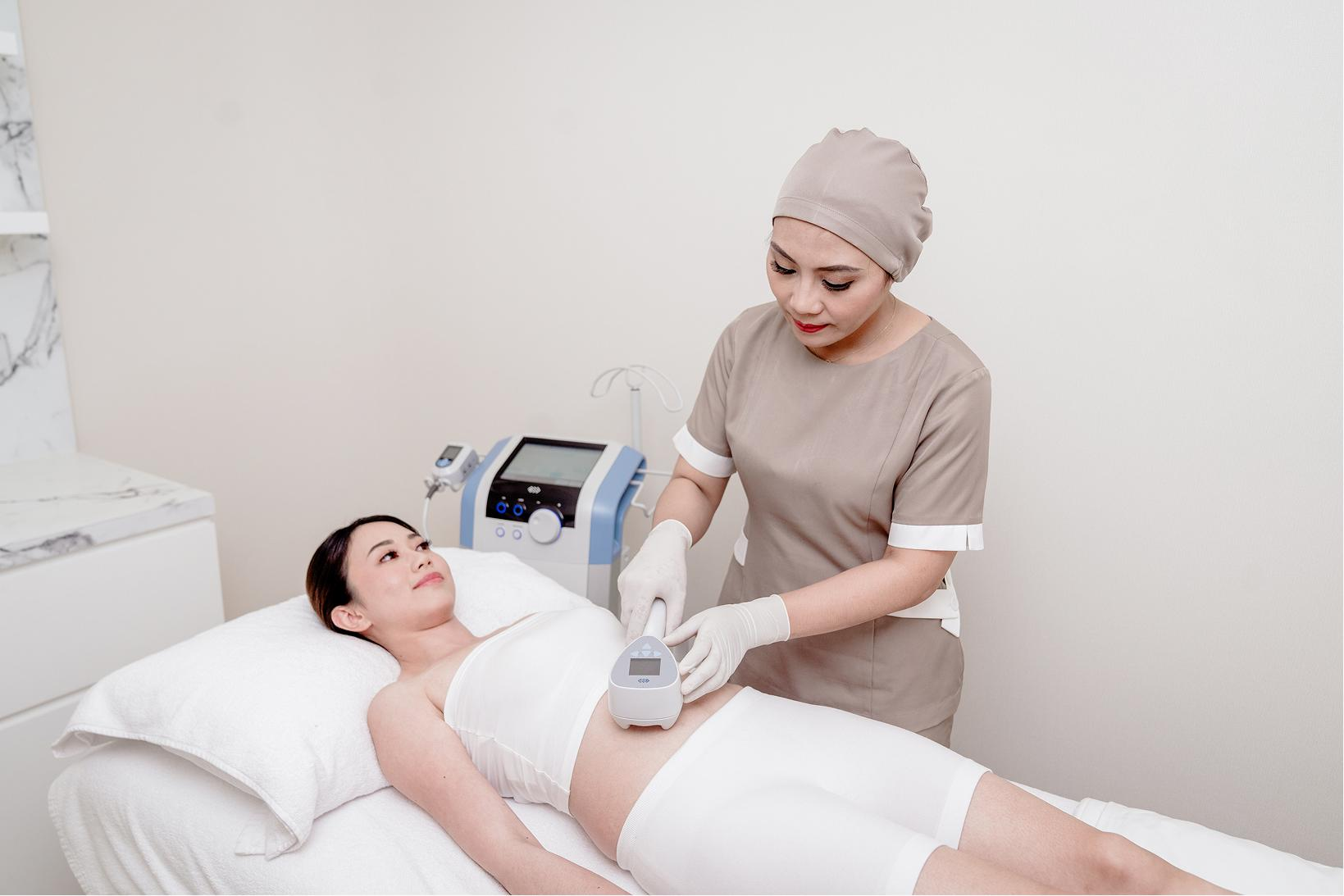
Introduction
In the professional beauty industry, effective technology is no longer judged only by how powerful a machine can be. Modern salons, aesthetic clinics, and professional treatment centers are looking for equipment that can deliver consistent results while maintaining a comfortable client experience and a controlled treatment process.
This is where comfort, precision, and safety become essential.
A professional beauty device may use radio frequency, ultrasound, vacuum, light energy, electrical stimulation, cooling, heating, or other controlled technologies. However, the technology itself is only part of the equation. The real value of professional equipment lies in how accurately that energy is delivered, how comfortably the client experiences the treatment, and how effectively the operator can control the treatment parameters.
For professional practitioners, these factors directly influence treatment quality, workflow efficiency, client confidence, and repeat visits.
Unlike many consumer beauty devices designed for simple home routines, professional systems are typically developed around operator control, adjustable parameters, treatment protocols, ergonomic handpieces, and repeatable performance. This makes them better suited to the more structured environment of salons and aesthetic clinics.
Background: Why Comfort, Precision and Safety Matter
Beauty treatments often involve direct contact between a device and the client's skin or body. Depending on the technology, the treatment may deliver heat, mechanical pressure, acoustic energy, suction, light, or electrical energy.
If the treatment experience is uncomfortable, clients may become nervous or find it difficult to complete a full treatment course. If the energy delivery is inconsistent, the practitioner may have difficulty achieving repeatable results. If safety controls are insufficient, treatment management becomes more complicated.
This creates three practical challenges for professional operators.
First is comfort.
Clients increasingly expect professional treatments to feel controlled and manageable rather than unnecessarily aggressive. A comfortable treatment experience can make it easier for clients to relax and communicate with the operator during the procedure.
Second is precision.
Different areas of the face and body have different treatment requirements. Facial skin, the jawline, abdomen, thighs, arms, and other body areas may require different operating parameters, applicators, energy levels, or treatment techniques.
Third is safety.
Professional treatment is not simply about delivering energy. Operators need to monitor parameters, follow appropriate protocols, use suitable accessories, and adjust the treatment according to the client and treatment area.
This is why professional beauty equipment increasingly focuses on controlled energy delivery rather than simply maximizing output.
Technology and Mechanism: How Professional Equipment Supports Better Control
The combination of comfort, precision, and safety begins with the design of the equipment itself.
1. Controlled Energy Delivery
Many professional aesthetic technologies work by delivering a controlled form of energy to a specific treatment area.
For example, radio frequency (RF) devices use electromagnetic energy to generate controlled heating within targeted tissue. Depending on the device design and treatment protocol, this controlled thermal effect can support professional skin-tightening and skin-conditioning treatments.
Ultrasound-based systems use acoustic energy, while vacuum-assisted equipment combines controlled suction with mechanical movement. Light-based systems use selected wavelengths to interact with specific chromophores or treatment targets.
The important point is that professional treatment is based on controlled application, not simply maximum intensity.
A well-designed machine should allow the operator to select suitable parameters for the treatment objective instead of relying on a single fixed setting.
2. Precision Through Adjustable Parameters
Precision is particularly important in professional environments because treatment areas are rarely identical.
A professional device may offer adjustable:
- Energy intensity
- Treatment duration
- Operating modes
- Pulse or frequency settings
- Temperature control
- Vacuum intensity
- Handpiece selection
- Treatment area settings
These controls allow trained operators to adapt the procedure according to the treatment area, client comfort, and selected protocol.
For example, a facial treatment may require a different approach from a body treatment. A smaller applicator can provide greater maneuverability around areas such as the jawline or cheeks, while a larger applicator may improve efficiency across larger body areas.
This combination of adjustable parameters and suitable applicators creates a more precise treatment workflow.
3. Comfort-Oriented Treatment Design
Comfort is not simply a matter of making a machine operate at a lower intensity.
It can also be influenced by handpiece design, energy distribution, cooling systems, movement techniques, treatment duration, and operator control.
Ergonomic handpieces can make it easier for practitioners to maintain consistent contact and movement. Some systems incorporate cooling or temperature monitoring to help manage the treatment experience when thermal energy is involved.
For vacuum-based equipment, adjustable suction can help practitioners select an appropriate level rather than applying unnecessarily strong pressure.
In professional practice, these features allow the operator to respond to client feedback during the treatment instead of following a rigid one-setting approach.
4. Safety Through Monitoring and Protocols
Safety should be considered at both the equipment level and the operator level.
Professional equipment may incorporate features such as temperature monitoring, automatic protection systems, parameter displays, timers, contact sensors, emergency controls, or preset treatment modes, depending on the technology.
However, machine features alone do not replace professional training.
The operator remains responsible for selecting suitable settings, preparing the treatment area, checking contraindications according to the applicable protocol, positioning the handpiece correctly, monitoring the client's response, and following the manufacturer's instructions.
Therefore, safety is best understood as a combination of device design + operator control + appropriate treatment protocols.
Advantages and Comparison: Professional Equipment vs. Home Devices
Home beauty devices and professional aesthetic systems serve different purposes.
Consumer devices are generally designed for convenience. They may emphasize compact size, simple controls, lower operating complexity, and easy daily use.
Professional systems, by contrast, are designed around treatment workflows.
| Feature | Home Beauty Devices | Professional Beauty Equipment |
|---|---|---|
| Primary focus | Convenience and personal use | Professional treatment workflow |
| Parameter control | Usually simplified | More adjustable |
| Applicators | Limited selection | Multiple professional handpieces |
| Treatment customization | More standardized | Adaptable to treatment areas |
| Operator control | Minimal | High |
| Treatment workflow | Individual use | Structured professional protocols |
| Client management | Not applicable | Important part of treatment |
| Maintenance/service | Consumer-oriented | Professional equipment support |
The distinction does not mean that every professional machine is automatically more effective for every purpose. Instead, professional equipment provides a different level of control, customization, and operational consistency.
For a salon or clinic, this difference matters because practitioners may perform multiple treatments every day and work with clients who have different expectations and treatment requirements.
A professional machine should therefore be evaluated not only by its advertised power, but also by its usability, parameter flexibility, handpiece design, control interface, treatment consistency, and safety features.
Applications: Where Comfort, Precision and Safety Come Together
The three principles can be applied across many professional beauty treatments.
Facial Skin Treatments
Facial treatments require careful control because practitioners often work around sensitive and anatomically detailed areas.
RF facial systems, for example, can be used in professional skin-conditioning and tightening-oriented protocols. Smaller treatment heads can provide better maneuverability around the cheeks, jawline, and other facial contours.
For the practitioner, precision means maintaining appropriate movement, contact, and energy settings throughout the treatment.
For the client, comfort means experiencing controlled warmth or sensation without unnecessary discomfort.
Body Contouring and Body Care
Body treatments often involve larger treatment areas, making efficiency an important consideration.
Vacuum roller systems, RF body equipment, ultrasound-based systems, and other professional body-treatment technologies may use larger applicators and adjustable parameters to accommodate different areas.
Here, precision can involve selecting suitable intensity and movement patterns for the treatment area, while comfort depends on controlled pressure, temperature, and treatment duration.
A professional operator can also communicate with the client throughout the session and make adjustments when necessary.
Professional Skin and Scalp Analysis
Precision is not limited to treatment delivery.
Analysis equipment can also support precision by helping practitioners observe skin or scalp conditions before developing a treatment plan.
High-magnification cameras and digital analysis systems can display enlarged images that help operators examine visible characteristics more systematically. This can make consultation more structured and provide a visual reference before and after a treatment program.
The value is not simply the image itself. It is the ability to integrate observation, consultation, treatment selection, and follow-up into a more professional workflow.
Multi-Functional Professional Platforms
Many modern beauty businesses also prefer multifunctional systems because they can support multiple treatment applications within one professional environment.
A multifunctional platform may combine technologies such as RF, vacuum, ultrasound, oxygen infusion, cooling, LED, or other treatment functions, depending on the system.
The advantage is not simply having more functions.
The real benefit comes from having controlled treatment options within a single workflow.
For a growing salon or clinic, this can simplify operator training, equipment management, treatment-room organization, and service development.
Client Needs: What Professional Operators Should Consider
When selecting beauty equipment, salons and clinics should look beyond appearance and headline specifications.
Several practical questions are worth considering.
Can the operator control the treatment precisely?
A machine with clearly adjustable parameters can provide greater flexibility than a system with limited settings.
Is the treatment comfortable for different client profiles?
Adjustable intensity, ergonomic applicators, temperature management, and controlled energy delivery can help operators manage different comfort levels.
Does the machine support consistent operation?
Professional equipment should be designed for repeated use within a structured workflow. Clear controls, stable performance, and easy parameter adjustment can improve operational consistency.
Are safety features integrated into the system?
Displays, timers, monitoring functions, automatic protection, and other safeguards can help operators manage treatments more systematically.
Is the equipment suitable for the intended business model?
A facial-focused salon may prioritize precision handpieces and facial treatment modes, while a body-contouring center may require larger applicators, stronger workflow efficiency, and broader parameter adjustment.
The right equipment should therefore be selected according to the actual treatments, operators, client expectations, and business applications.
Conclusion
The future of professional beauty equipment is not simply about increasing power.
It is about making technology more controllable, more adaptable, and more comfortable to use.
Comfort + Precision + Safety represents a practical framework for evaluating professional aesthetic equipment.
Comfort helps create a better treatment experience. Precision gives operators greater control over energy, parameters, and treatment areas. Safety combines appropriate equipment design with professional operation and established treatment protocols.
For salons, aesthetic clinics, and professional beauty centers, these three factors can turn advanced technology into a more practical treatment solution.
The most valuable professional device is not necessarily the machine with the highest specification on paper. It is the system that allows trained operators to deliver controlled, repeatable, and client-oriented treatments within a professional workflow.
As beauty technology continues to develop, the focus is shifting from “How powerful is the machine?” to a more meaningful question:
“How precisely, comfortably, and safely can the technology be used?”
That is where modern professional beauty equipment creates lasting value
Founded in 2008, Guangzhou GLM Beauty Spa Equipment Factory specializes in research, development, manufacture and selling of beauty and slimming machines. Our production base is located in Guangzhou City, Guangdong Province, China. Since our foundation, we have introduced advanced technologies and equipment, to assure high quality and high performance of our products. With professional marketing guide and excellent after-sales service, our products have been exported to over 20 countries and regions, including Southeast Asia, the Middle East, Europe and the United States, won worldwide praises and gained a good reputation