1. Introduction
The professional beauty industry is entering a new stage of equipment development in 2026. As beauty salons, medical spas, and aesthetic clinics face increasing competition, their investment decisions are becoming more strategic. Instead of purchasing a separate machine for every treatment category, many business owners are exploring compact multifunctional beauty machines that combine several aesthetic technologies within one professional platform.
This shift reflects a practical change in how modern beauty businesses operate. Treatment rooms are becoming more versatile, client expectations are increasing, and clinic owners need equipment that can support different treatment programs without creating unnecessary operational complexity.
All-in-one aesthetic devices offer a potential solution by integrating multiple functions into a single system. Depending on the configuration, these machines may combine hydrodermabrasion, radio frequency (RF), ultrasound, LED light therapy, oxygen infusion, vacuum technology, ultrasonic cavitation, EMS, or other professional treatment technologies.
For salon owners and clinic managers, the benefits extend beyond having more treatment options. A thoughtfully selected multifunctional device can help reduce equipment redundancy, improve treatment-room organization, simplify daily workflows, and create opportunities to expand service offerings.
However, choosing the right system requires more than comparing the number of handpieces or advertised functions. Understanding the technologies, evaluating practical performance, and calculating the long-term business value are essential steps toward making a profitable equipment investment.
2. Background: Why Are Beauty Clinics Choosing Compact Multifunctional Equipment?
Limited Space and Increasing Operating Costs
Treatment-room space is an important business resource. Independent beauty salons, boutique medspas, and smaller aesthetic clinics often operate within limited floor areas. Every additional machine requires space for installation, operation, accessory storage, and maintenance.
Traditional equipment purchasing usually involves selecting individual devices for different services. A clinic might purchase one machine for facial cleansing, another for skin tightening, a separate ultrasound system, and additional equipment for body contouring.
Although this approach provides specialized treatment capabilities, it can gradually create an overcrowded working environment.
Compact multifunctional beauty machines address this challenge by bringing several compatible treatment functions together. Instead of arranging multiple independent consoles, operators can access different treatment modes through one centralized platform.
This approach can improve room organization and make it easier to manage equipment in multi-purpose treatment rooms.
Growing Demand for Personalized Treatment Programs
Modern beauty clients increasingly expect treatments to reflect their individual skin conditions, aesthetic concerns, and personal goals.
Some clients prioritize deep cleansing and hydration, while others are interested in skin firmness, improved skin texture, or body-care treatments. A clinic that offers only one treatment category may struggle to accommodate this variety.
Multifunctional equipment provides greater service flexibility. For example, a professional facial platform may support cleansing, exfoliation, hydration, and selected skin-care technologies within a structured treatment program.
Similarly, certain body-contouring systems integrate multiple technologies to support different body-care applications.
This flexibility allows clinics to develop more varied treatment menus without purchasing a completely separate machine for every service.
The Need for Better Investment Efficiency
Equipment investment involves more than the purchase price. Clinic owners must also consider installation, staff training, maintenance, consumables, electricity, and the potential revenue generated by each machine.
Buying several single-function devices may create overlapping costs, especially when some machines are used infrequently.
A multifunctional system can potentially provide a more efficient starting point for businesses that want to expand their treatment capabilities while controlling initial equipment expenditure.
The objective is not simply to purchase fewer machines. It is to ensure that each investment has a clear commercial purpose and can contribute to the clinic's long-term development.
3. Technology and Mechanism: What Makes an All-in-One Beauty Machine Multifunctional?
A compact multifunctional aesthetic device generally integrates several treatment technologies into one equipment platform. Each function is designed to perform a specific task, while the central console manages the available treatment modes and connected handpieces.
The exact technologies depend on the manufacturer's design and the intended application of the device.
Radio Frequency (RF) Technology
Radio frequency is widely used in professional aesthetic equipment for skin-tightening applications.
RF systems deliver controlled electrical energy into targeted tissue, producing thermal effects according to the device design and treatment parameters. These thermal effects can support collagen remodeling and skin-firming treatment objectives.
Different RF configurations may include monopolar, bipolar, or multipolar systems, each with different energy-delivery characteristics.
In multifunctional facial devices, RF may be integrated with cleansing, hydration, or other complementary treatment technologies.
For professional operators, adjustable energy settings, appropriate applicators, and clear treatment protocols are important considerations when selecting an RF system.
Ultrasound and Ultrasonic Technologies
Ultrasound technologies are used in several categories of professional beauty equipment.
Depending on the frequency, applicator, and device configuration, ultrasonic systems may support facial treatment applications, product-delivery protocols, or body-care services.
Ultrasonic cavitation equipment, for example, is commonly positioned within non-invasive body-contouring service menus. It uses acoustic energy to create mechanical effects in the treatment area under specified operating conditions.
When combined with other compatible technologies, ultrasound-based systems can help clinics develop more varied treatment programs.
However, different ultrasonic applications should not be treated as interchangeable. Professional buyers should evaluate the intended use and technical specifications of each handpiece.
LED Light Therapy
LED light therapy uses specific wavelengths of light for different aesthetic applications.
Red light is commonly associated with skin-care protocols focused on skin appearance and recovery support, while blue light is often incorporated into acne-focused professional skincare programs.
Some multifunctional facial systems include LED panels or dedicated light-therapy attachments to provide an additional treatment option.
The advantage of integration is that operators can incorporate compatible LED applications into selected service programs without requiring another independent console.
Hydrodermabrasion and Oxygen Infusion
Hydrodermabrasion combines controlled exfoliation with liquid-based cleansing and hydration processes.
Depending on the equipment design, the system may use specialized solutions, water flow, suction, and dedicated applicators to remove surface impurities and support skin cleansing.
Oxygen infusion technology is another common feature in professional facial equipment. It is designed to deliver selected cosmetic formulations through a specialized application process.
When these functions are integrated into one platform, estheticians can organize several facial treatment steps within a single service workflow.
Vacuum and EMS Technologies
For body-care applications, multifunctional platforms may incorporate vacuum suction, mechanical massage, or electrical muscle stimulation (EMS).
Vacuum technology uses controlled suction through dedicated applicators. Depending on the design, it may support massage-oriented body-care protocols and mechanical tissue stimulation.
EMS uses electrical impulses to stimulate muscle contractions through appropriate electrodes or applicators.
Some systems integrate these technologies with other body-contouring functions, creating more flexible equipment configurations for professional salons and clinics.
The key consideration is whether each technology has an appropriate independent operating system, suitable applicators, adjustable parameters, and clearly defined treatment applications.
4. Advantages and Comparison: How Multifunctional Beauty Machines Improve Clinic Performance
4.1 Better Treatment-Room Space Utilization
One of the most immediate advantages of compact multifunctional equipment is its ability to consolidate several functions into a smaller equipment footprint.
A single integrated platform may reduce the need for multiple independent consoles, leaving more room for treatment beds, storage cabinets, consultation areas, and operator movement.
This is particularly valuable for boutique salons and clinics where treatment rooms serve multiple purposes.
Better space utilization can also improve the overall client experience. A clean, organized treatment environment creates a more professional impression and allows practitioners to prepare their equipment more efficiently.
4.2 More Flexible Treatment Menus
A multifunctional beauty machine can help a clinic introduce additional services without investing in an entirely separate device for every treatment category.
For example, a facial platform with cleansing, hydration, RF, and LED functions may support several service packages targeting different skincare needs.
A body-care platform combining selected vacuum, RF, or other compatible technologies may allow operators to develop different body-treatment programs.
This flexibility creates opportunities for:
-
Introducing new treatment services.
-
Developing premium treatment packages.
-
Offering complementary services during existing appointments.
-
Responding to different client preferences.
-
Testing demand for new service categories before purchasing specialized equipment.
A broader service menu can help clinics reach more customer segments, provided that each treatment is appropriate for the equipment and the operator's qualifications.
4.3 Improved Workflow and Staff Efficiency
Using several independent machines during one appointment can require repeated equipment preparation, cable management, parameter adjustments, and changes between treatment stations.
A centralized multifunctional system may simplify these processes.
Operators can access compatible treatment functions from one platform, reducing unnecessary equipment movement and helping maintain a more consistent working environment.
This can be especially useful for clinics with multiple practitioners who need standardized operating procedures.
However, equipment integration alone does not guarantee faster treatments. Staff still need proper training, knowledge of each technology, and a clear understanding of treatment sequencing.
4.4 Potentially Lower Total Equipment Costs
A multifunctional device may reduce the initial investment required to establish several treatment services.
Instead of purchasing multiple independent systems, a clinic can select one platform that covers several frequently requested applications.
There may also be opportunities to simplify equipment servicing, accessory management, and storage.
Nevertheless, buyers should compare the total cost of ownership rather than focusing only on the purchase price.
Important factors include:
-
Initial equipment cost.
-
Installation and transportation.
-
Staff training.
-
Maintenance and replacement accessories.
-
Consumables and treatment materials.
-
Warranty and technical support.
-
Expected service utilization.
A low-cost multifunctional machine is not necessarily a good investment if its individual functions are unreliable or unsuitable for the clinic's treatment requirements.
4.5 A Comparison of Multifunctional and Single-Function Devices
| Evaluation Factor | Multifunctional Beauty Machines | Single-Function Machines |
|---|---|---|
| Equipment footprint | Often more compact overall | May require multiple units |
| Treatment options | Several integrated functions | Primarily one application |
| Initial investment | Potentially lower for multiple services | Lower per unit, but costs accumulate |
| Workflow | Centralized operation in many designs | Separate setup for each machine |
| Specialization | Depends on individual function design | Often more focused |
| Staff training | Requires knowledge of multiple functions | More focused training |
| Ideal business | Growing salons and diversified clinics | Specialized treatment providers |
Neither equipment category is universally superior.
A specialized clinic with high treatment volumes may benefit more from dedicated professional systems that offer greater capacity or more advanced parameters for a specific application.
In contrast, a growing salon that wants to introduce several treatment categories may find an integrated platform more practical.
The correct decision depends on the business model, client demand, treatment frequency, available space, and budget.
5. Applications and Client Needs: Which Professional Businesses Benefit Most?
Professional Beauty Salons
Beauty salons frequently provide facial cleansing, hydration, skin maintenance, and selected body-care services.
A compact multifunctional facial machine can help estheticians perform several compatible treatment steps within one organized workflow.
For salons planning to expand their service menus, this can be a practical way to introduce additional treatments without significantly increasing the number of machines in the treatment room.
Medical Spas and Aesthetic Clinics
Medical spas and aesthetic clinics often require more structured treatment planning, consultation procedures, and consistent service delivery.
Multifunctional platforms can support selected complementary aesthetic applications, depending on their intended use and technical specifications.
For example, a clinic may use a combination facial platform for different non-invasive skincare services while reserving specialized medical-grade systems for procedures requiring dedicated equipment.
The equipment must always match the practitioner's qualifications, applicable regulations, and the clinic's treatment protocols.
Beauty Training Centers
Professional training centers can also benefit from multifunctional equipment.
A single platform with several treatment technologies allows students to become familiar with different handpieces, operating interfaces, and treatment workflows.
This can make equipment demonstrations and practical training sessions easier to organize.
Training should cover not only how to operate each function but also contraindications, hygiene procedures, equipment maintenance, and appropriate treatment selection.
Distributors and Beauty Equipment Resellers
For distributors, multifunctional beauty machines provide an opportunity to serve different types of professional buyers.
New salons may prioritize affordable equipment that supports several introductory services, while established clinics may look for flexible platforms that complement their existing treatment systems.
Manufacturers offering different configurations, OEM customization, technical documentation, and reliable after-sales support can provide additional value to international distributors.
6. How to Calculate ROI When Purchasing Multifunctional Aesthetic Equipment
Return on investment (ROI) is one of the most important factors when selecting professional beauty equipment.
A multifunctional device should be evaluated according to how effectively it can contribute to the clinic's revenue and operating efficiency.
A basic ROI formula is:
ROI = (Net Profit from Investment ÷ Total Investment Cost) × 100%
For example, consider a clinic purchasing a multifunctional beauty machine for $6,000.
Assume the equipment generates an average of $1,500 in monthly treatment revenue. After deducting $500 in monthly operating expenses, the estimated monthly contribution is $1,000.
Under these simplified assumptions, the equipment could recover its initial purchase cost in approximately six months.
This is an illustrative calculation rather than a guaranteed result. Actual performance depends on treatment pricing, appointment volume, consumables, staffing, maintenance, and customer retention.
Clinic owners should also consider equipment utilization.
A machine with eight available functions may appear attractive, but if clients regularly book only two of them, the remaining functions may contribute little to revenue.
Before purchasing, evaluate the following questions:
-
Which treatment services are already in demand?
-
Which additional services could realistically attract customers?
-
How many appointments can the machine support each week?
-
How much revenue can each treatment generate?
-
What are the ongoing operating and maintenance costs?
-
Can the equipment be used consistently by different trained operators?
The most profitable machine is not necessarily the one with the largest number of functions. It is the one that matches actual customer demand and can be used efficiently throughout the working week.
7. What Should Buyers Look for When Choosing a Compact Multifunctional Beauty Machine?
Selecting professional equipment requires careful evaluation of both technical and commercial factors.
First, examine the actual technologies. Check whether each advertised function has a dedicated handpiece, suitable operating parameters, and clearly defined applications.
Second, evaluate treatment performance. Do not judge a device solely by its function count. Consider output stability, parameter adjustment, applicator quality, usability, and consistency.
Third, check the machine's dimensions and layout. A compact design should provide convenient access to handpieces, controls, cables, and accessories without restricting operator movement.
Fourth, prioritize safety and compliance. Review the manufacturer's documentation, electrical safety information, applicable certifications, intended-use statements, and local regulatory requirements. Do not assume that one certification automatically authorizes every treatment application in every market.
Fifth, consider training and after-sales service. Professional equipment requires clear operating instructions, maintenance guidance, technical assistance, and access to replacement accessories.
For international buyers, OEM services, customized branding, packaging options, and dependable spare-parts supply may also influence long-term purchasing decisions.
8. Conclusion
Compact multifunctional beauty machines are becoming an important equipment option for professional beauty salons, medical spas, and aesthetic clinics in 2026.
By integrating several compatible treatment technologies into one platform, these devices can help businesses optimize treatment-room space, expand service offerings, organize workflows, and manage equipment investment more strategically.
Their commercial value, however, depends on more than compact design or an impressive list of functions. The most successful equipment choices are based on practical treatment requirements, reliable technical performance, appropriate operator training, and realistic revenue expectations.
For growing beauty businesses, an all-in-one aesthetic device can provide a flexible foundation for service expansion. For specialized clinics, dedicated professional systems may remain the better choice for high-demand procedures requiring advanced capabilities.
Ultimately, the goal is not to purchase the machine with the most functions. It is to invest in equipment that supports consistent professional services, meets real client needs, and contributes to sustainable business growth
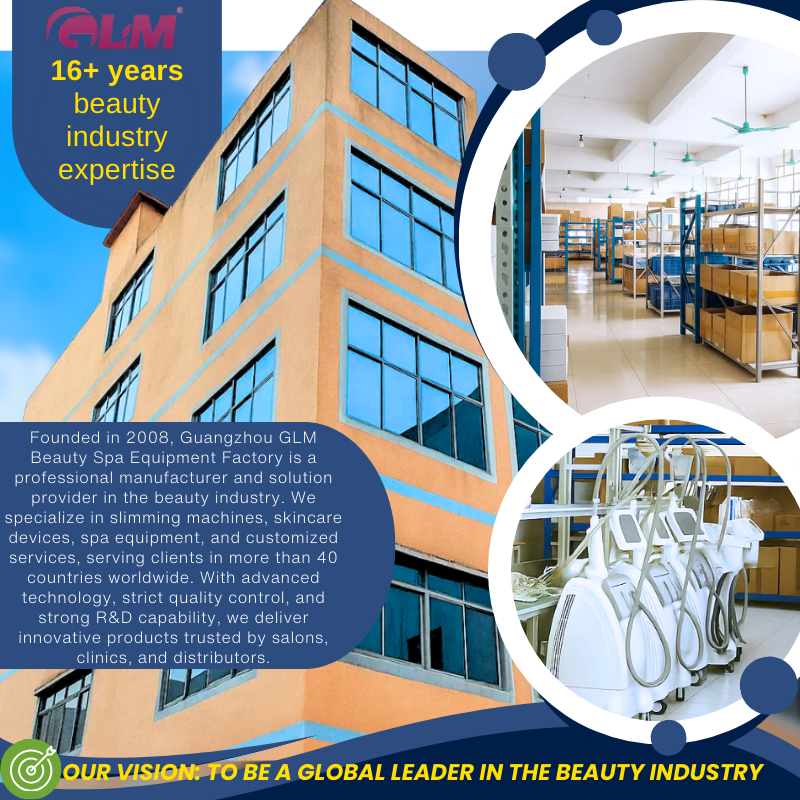
Founded in 2008, Guangzhou GLM Beauty Spa Equipment Factory specializes in research, development, manufacture and selling of beauty and slimming machines. Our production base is located in Guangzhou City, Guangdong Province, China. Since our foundation, we have introduced advanced technologies and equipment, to assure high quality and high performance of our products. With professional marketing guide and excellent after-sales service, our products have been exported to over 20 countries and regions, including Southeast Asia, the Middle East, Europe and the United States, won worldwide praises and gained a good reputation