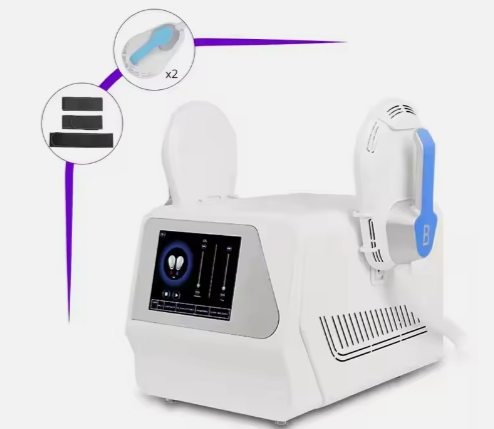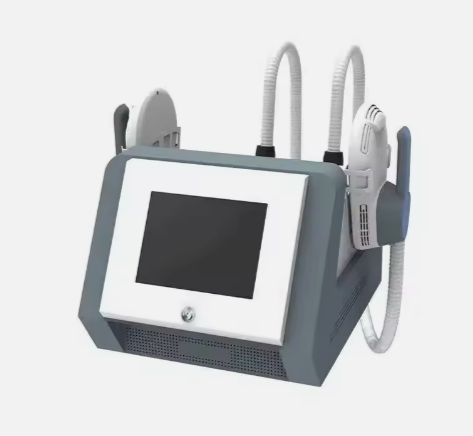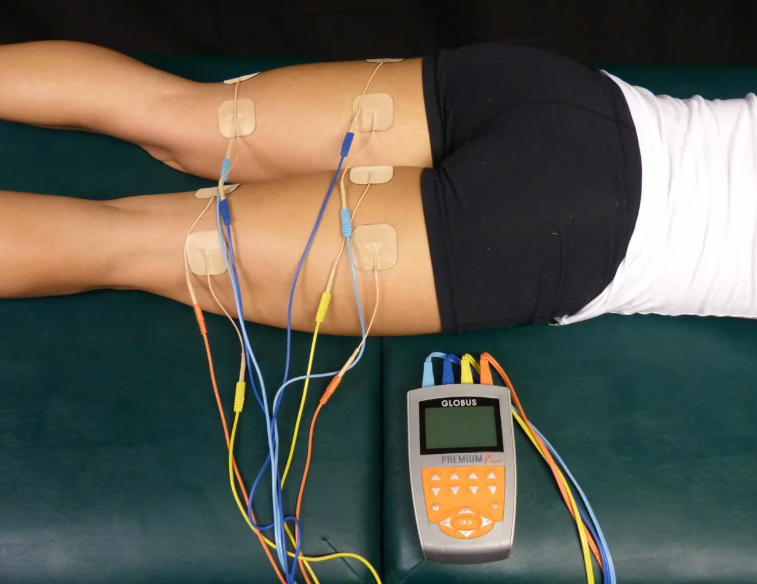
Electromyostimulation (EMS) is a technique of involuntarily activating muscle contraction by applying an electric current directly to muscle tissue, also known as neuromuscular electrical stimulation (NMES) or electrical stimulation therapy. In EMS treatment or training, specific electrodes are precisely placed on the skin surface of the target muscle group, and weak but precise pulses of electric current are subsequently delivered through these electrodes.
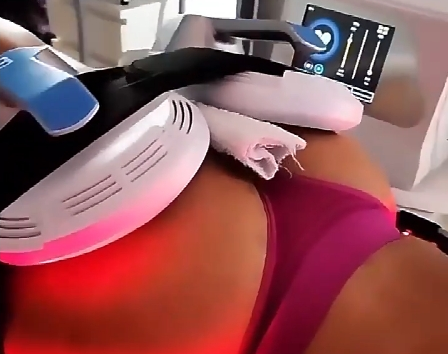
These pulses of electricity mimic nerve signals from the brain, triggering nerve endings that trigger connected muscle fibers to contract. By fine-tuning the intensity, frequency, duration, and waveform of electrical pulses, the therapist or user can control the different types and amounts of muscle fibers that are activated to achieve a specific training or therapeutic effect.
A significant advantage of EMS is its efficiency. Compared to traditional strength training, EMS is able to stimulate and activate more muscle fibers in a short period of time (usually minutes to tens of minutes), sometimes even approaching or reaching a state of full activation, which usually requires prolonged, intense voluntary exercise to achieve. This feature makes EMS show a wide range of application prospects in athlete training, rehabilitation training, body shaping and muscle maintenance for the elderly.
In addition, EMS can be tailored to individual needs, such as setting current parameters for different parts of the muscle, different exercise goals (such as increasing strength, endurance or promoting recovery) and individual tolerance, to provide a more personalized and efficient exercise experience.
Although scientists have yet to fully uncover the full mechanism of the benefits of EMS (muscle electrical stimulation) on muscles, several potential explanations have been proposed. First, EMS activates muscles in a way similar to regular exercise, involving moderate stimulation of muscle tissue that appears to trigger changes in protein synthesis associated with muscle growth. Specifically, EMS may promote the activation and proliferation of proteins such as myofibril and myosatellite cells, which are key processes in muscle repair and growth.
In addition, EMS also has a potentially positive effect on the neuromuscular system. Not only does it act directly on muscles, but it may also improve muscle strength by optimizing communication between the central nervous system and muscles. This includes enhancing the function of the neuromuscular junction, the point of connection between motor neurons and muscle fibres. This role of EMS is particularly important given that the degeneration of neuromuscular junctions is thought to be an important factor in the decline in muscle strength with age.
Going further, EMS may also promote plasticity changes in the brain by activating sensory neurons, those that feed information about muscle activity back to the central nervous system. This bidirectional, closed-loop feedback mechanism may help optimize the efficiency of the neuromuscular network, thus enhancing motor performance not only in healthy individuals, but also in people who need rehabilitation, such as those with spinal cord injuries, which may be a key means of restoring motor function. However, research in this field is still in its infancy, and more in-depth exploration is needed to clarify the specific mechanism of action and potential value of EMS in rehabilitation medicine
EMS (Electrical muscle stimulation) is suitable for a wide range of people, covering a number of fields and health conditions.
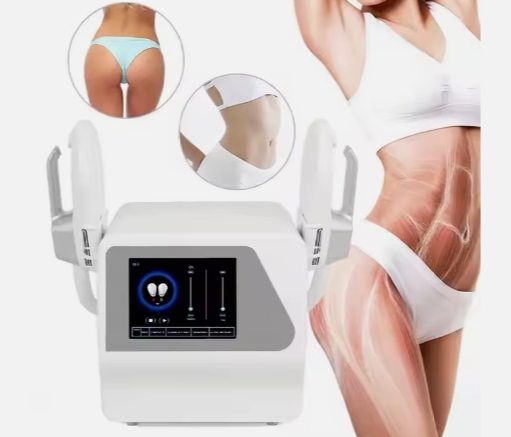
First of all, EMS plays an important role in the field of neurological rehabilitation, especially for patients with neurological injuries, such as spinal cord injury, stroke, and other motor dysfunction. With functional electrical stimulation (FES), EMS can customize the mode of stimulation to assist patients with specific movements, such as grasping, standing or even walking, thereby promoting the re-establishment of neuromuscular connections and the restoration of motor control.
Second, EMS also showed significant results in postoperative recovery and in the maintenance of muscle function in long-term bedridden patients. In the case of not using muscles for a long time, EMS can effectively prevent muscle atrophy, maintain or improve muscle strength and endurance, and accelerate the recovery process of patients.
For healthy aging groups, EMS is also of great significance. By stimulating muscle contractions, EMS not only helps older people build muscle strength, improve balance and stability, and reduce the risk of falls, but also serves as an effective supplement or alternative to traditional exercise, especially for older people who have difficulty performing high-intensity exercise due to poor health.
In addition, EMS is also favored by fitness enthusiasts. It is able to activate a larger proportion of muscle fibers than regular exercise, including "deep" or "auxiliary" muscle groups that are difficult to adequately stimulate with traditional training, thus promoting more comprehensive muscle development. At the same time, EMS training puts less stress on the joints and is suitable for use during injury recovery or when specific joint loads are avoided.
Finally, EMS also shows potential in the area of weight loss and fitness. Although EMS itself does not directly burn a lot of fat, it increases the basal metabolic rate by increasing muscle contraction and promoting calorie consumption. What's more, the increased muscle strength helps to increase daily activity and exercise efficiency, thereby indirectly promoting weight loss and improved body shape.
For healthy, active adults, the effects of using EMS (muscle electrical stimulation) as part of a daily training habit are still being studied. Although studies have suggested that incorporating EMS during specific exercise sessions may provide some benefits, these findings have been inconsistent, mainly due to the diversity of EMS equipment use and differences in experimental design.
The effects of EMS are influenced by several parameters, including the amplitude, frequency, and duration of the pulses delivered to the muscle, which directly affect the type of recruitment and contraction pattern of muscle fibers. In addition, individual exercise intensity, type, frequency and personal physiological conditions are also variables that cannot be ignored. However, many existing studies were not designed to adequately account for these factors, particularly the lack of comparisons with control groups that received a "sham" EMS (i.e. ineffective stimulus), which can lead to results being significantly influenced by the placebo effect.
A meta-analysis of 19 studies found that strength training combined with EMS did not show a significant advantage over strength training alone in young and healthy participants. This suggests that EMS may not directly provide additional gain for healthy adults who already have an effective training program. However, this does not mean that EMS is without value, especially when targeting specific populations (such as injury recoveries) or special training targets, whose potential remains to be further explored.
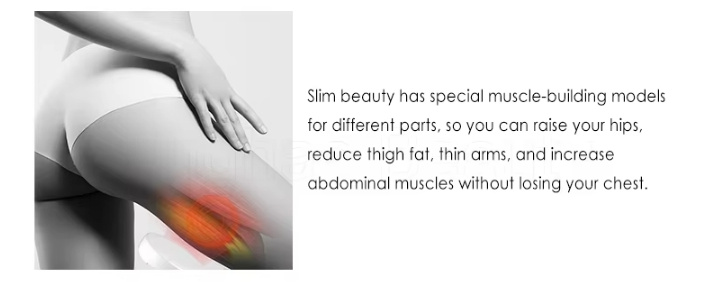
At the same time, it must be emphasized that the use of EMS muscle building is not risk-free. Similar to regular training, EMS can also cause muscle tissue damage, which raises the risk of overtraining. In extreme cases, there can even be serious complications such as rhabdomyolysis, a potentially fatal condition caused by damaged muscles releasing large amounts of protein into the blood, which can lead to kidney failure. Therefore, when using EMS, it is necessary to carefully control the stimulation parameters, follow professional guidance, and regularly monitor the physical condition to ensure the safety and effectiveness of training.
Weight loss with EMS:
When it comes to weight loss, EMS (electrical muscle stimulation) is gaining traction as an adjunctive. Although the research is still in its infancy, there are indications that EMS may have some potential to promote weight management and fat loss. By activating a wide range of muscle fibers, EMS is able to significantly increase muscle activity in a short period of time, thereby increasing calorie consumption. According to one study, EMS treatment targeting specific muscle groups, such as abs, glutes, quadriceps, and hamstrings, resulted in subjects burning approximately 75 extra calories in a short period of time. While this figure is low compared to moderate-intensity exercise (such as brisk walking, which burns about 200 calories per hour), it offers a new way to lose weight for people who struggle with high-intensity exercise.
Notably, several meta-analyses have found an association between EMS and body fat loss in non-active adults, although the association was not always statistically significant. This may be related to the fact that EMS is often used as part of a comprehensive weight loss program rather than as a monotherapy, making its effects alone difficult to quantify precisely. Therefore, combining EMS with traditional weight loss strategies such as rational diet control, aerobic exercise and strength training may produce more significant weight loss results.
In summary, EMS has broad application prospects in the field of weight loss, but further in-depth research is still needed to determine its best suitable population and best use. Future studies should focus on optimizing EMS parameter Settings, exploring synergies with other weight loss strategies, and evaluating its stability and sustainability in long-term weight loss programs.
We are a beauty instrument manufacturer with 15 years of experience, with great experience in fat reduction and beauty machines, if you need our instruments, please contact us