Introduction
Menopause is more than a hormonal transition. It is a new stage of life that can bring noticeable changes in skin quality, body composition, comfort, confidence, and overall wellness. For beauty clinics and aesthetic professionals, this creates an important opportunity: to move beyond conventional anti-aging treatments and develop more personalized, technology-driven care for women experiencing midlife changes.
As estrogen levels decline during perimenopause and menopause, the skin can become drier, thinner, less elastic, and more prone to visible lines and changes in texture. Research has linked declining estrogen with reduced collagen production, decreased elasticity, and changes in skin hydration.
This does not mean that every menopausal client needs an intensive aesthetic procedure. Instead, it highlights the value of professional assessment and carefully selected technologies. Radiofrequency, LED photobiomodulation, ultrasound, microcurrent, oxygen infusion, and other non-invasive or minimally invasive platforms can become useful components of a broader professional wellness strategy.
The future of menopausal aesthetic care is therefore not simply about looking younger. It is about helping clients maintain healthier-looking skin, improve visible signs of laxity and dryness, and feel more confident through personalized, professionally supervised treatment programs.
Background: Why Menopausal Skin Requires a Different Approach
Traditional anti-aging skincare often assumes that chronological age is the primary factor behind visible skin aging. Menopausal skin tells a more complicated story.
During perimenopause, changes in estrogen, progesterone, and other hormones can influence the extracellular matrix, collagen production, dermal blood supply, hydration, and sebum production. As a result, clients may notice several changes occurring relatively quickly: increased dryness, reduced firmness, fine lines, dullness, uneven texture, and loss of facial definition.
Collagen loss can be particularly significant. Dermatological literature reports that a rapid decline in collagen occurs following menopause, with approximately one-third potentially lost during the first five years after menopause.
For professional beauty clinics, this changes the treatment conversation.
Instead of asking only, “Which anti-aging product should we use?”, practitioners can ask:
- What is the client’s primary concern?
- Is the skin primarily dry, lax, dull, or uneven?
- How sensitive is the skin?
- Does the client want gradual improvement or a more intensive intervention?
- Which technologies are appropriate for the client’s condition?
- How can treatments be combined without unnecessarily stressing the skin?
This consultation-first approach creates a more sophisticated client experience while allowing clinics to use professional equipment as part of a structured treatment pathway.
Technology and Mechanism: How Aesthetic Devices Can Support Menopausal Skin
Technology-driven aesthetic care does not replace medical menopause management. Hormone therapy and other medical interventions belong under the supervision of qualified healthcare professionals. However, professional aesthetic technologies can address visible skin-quality concerns and complement a broader wellness program.
1. Radiofrequency for Firmness and Skin Quality
Radiofrequency, or RF, is one of the most established energy-based technologies used in professional aesthetic care.
RF devices deliver electromagnetic energy into targeted tissue, generating controlled thermal effects. Depending on the device configuration, frequency, energy level, treatment depth, and applicator design, RF can be used to support improvements in skin firmness, texture, and the appearance of laxity.
For menopausal clients, this is particularly relevant because reduced collagen and changes in dermal structure can contribute to a less firm appearance.
Professional RF systems can also provide operators with adjustable parameters, treatment modes, temperature monitoring, and different handpieces. This allows practitioners to tailor the treatment more precisely than a standardized home routine.
A professional treatment can therefore be designed around the client's specific concerns, such as the jawline, cheeks, neck, or décolletage, rather than applying the same protocol to every client.
Some clinics also combine RF with other technologies or topical delivery systems. The objective is not to maximize the number of technologies used in one session, but to create a logical treatment sequence based on skin condition and client goals.
2. LED Photobiomodulation for Gentle Skin Support
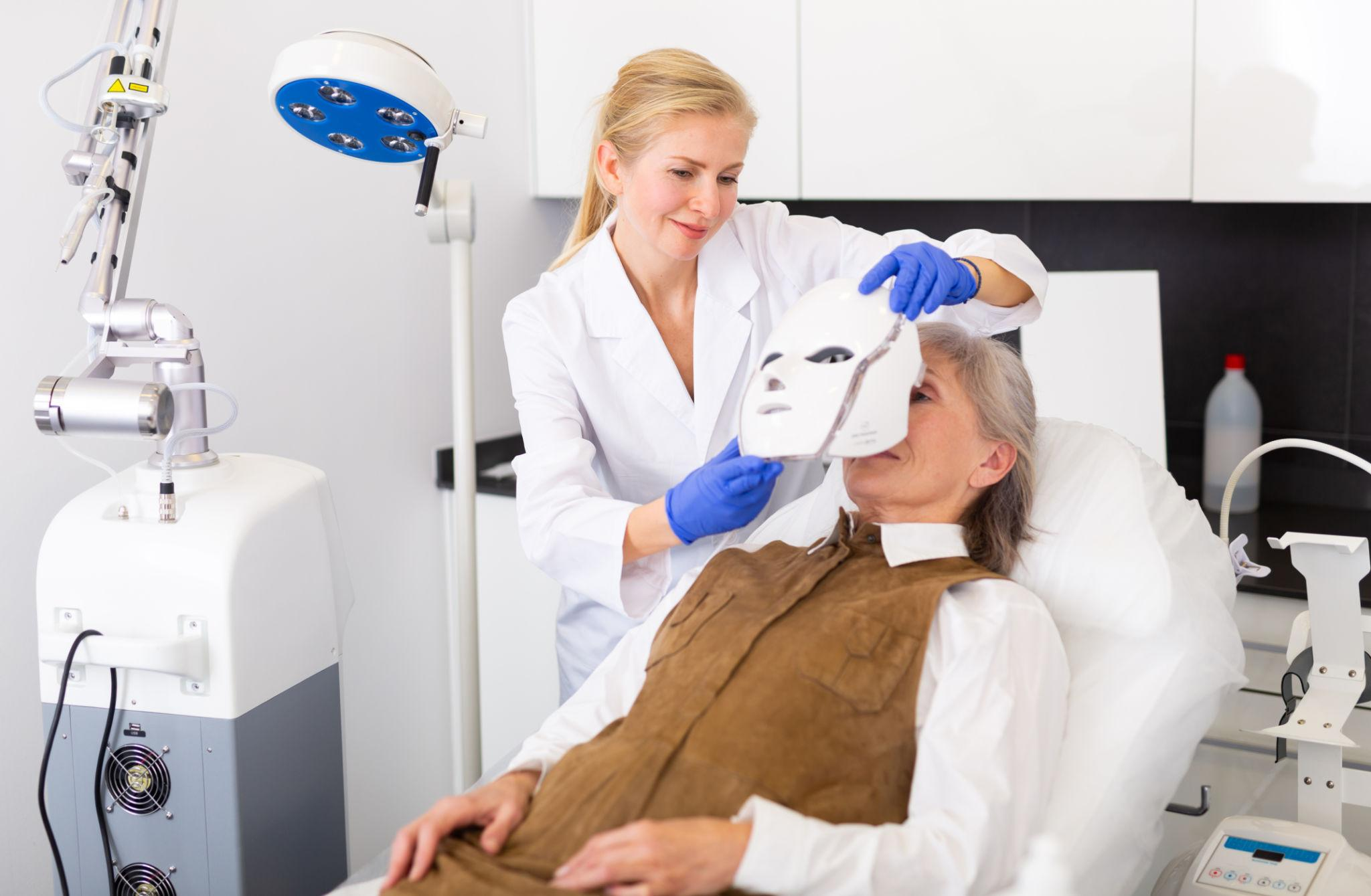
LED therapy provides another technology-driven option for clients who prefer gentle, non-invasive treatments.
Red and near-infrared wavelengths are commonly used in photobiomodulation approaches. These wavelengths interact with cellular processes and are used professionally to support skin recovery and overall skin quality.
This can make LED particularly attractive in menopausal wellness programs where the client may prioritize comfort, minimal downtime, and a relaxing treatment experience.
A professional LED system also offers advantages in treatment consistency. Operators can control exposure time, wavelength selection, treatment distance, and session frequency according to the device design and professional protocol.
Rather than positioning LED as a miracle solution, clinics can incorporate it as one part of a long-term skin maintenance strategy.
3. Microcurrent and Electromagnetic Stimulation
Another area of interest is electrical or electromagnetic stimulation.
Microcurrent technologies use low-level electrical currents, while some newer professional systems use stronger electromagnetic stimulation to target muscles and supporting tissues. These approaches are increasingly incorporated into non-invasive facial contouring and wellness programs.
For clients concerned about changes in facial definition, a professional operator can consider technologies that address more than the skin surface. In some systems, RF and muscle stimulation can be combined to approach both dermal and muscular components of facial appearance.
The key advantage is customization. A professional treatment can be adjusted according to facial anatomy, treatment area, tolerance, and desired outcome rather than relying on a single generic setting.
4. Ultrasound and Skin-Infusion Technologies
Menopausal skin may also become noticeably dry or less comfortable. This creates demand for treatments that focus on hydration, surface quality, and the delivery of suitable cosmetic formulations.
Professional ultrasound and infusion systems can be used in facial treatment protocols to support product application and skin conditioning. Depending on the technology, ultrasound may use mechanical effects or controlled energy to complement topical treatment.
Some professional platforms combine cleansing, exfoliation, infusion, oxygenation, or energy-based technologies within one treatment system.
For clinics, multifunctional equipment can be particularly valuable because it allows operators to build several treatment protocols around one platform instead of purchasing a separate machine for every client concern.
Advantages: Professional Technology vs. Home Beauty Devices
Home beauty devices have become increasingly popular, particularly among consumers seeking convenient maintenance routines. However, professional aesthetic equipment occupies a different position.
The main difference is not simply power.
Professional equipment is typically designed around operator control, treatment protocols, adjustable parameters, ergonomic handpieces, safety systems, and repeatable clinical workflows.
A professional can assess the client's skin before treatment and modify the procedure according to observed conditions. This is especially important for menopausal clients because skin sensitivity and tolerance can vary considerably.
Professional treatment also creates an opportunity for progression.
For example, a clinic may begin with hydration and gentle LED support, introduce RF when appropriate, and later incorporate other technologies according to the client's evolving goals. This creates a treatment journey rather than a one-time device experience.
The broader aesthetic market is already moving toward integrated treatment models. Professional clinics increasingly combine technologies such as RF, LED, ultrasound, microneedling, and advanced facial treatments within personalized programs.
For equipment manufacturers, this trend creates an important product-development direction: devices should not only deliver energy; they should help professional operators create flexible, repeatable, and client-centered treatment experiences.
Applications and Client Needs
A technology-driven menopausal wellness program can be designed around several common client needs.
Skin Firmness and Visible Laxity
For clients concerned about reduced firmness around the cheeks, jawline, neck, or décolletage, RF-based treatments may be incorporated into a professional skin-tightening program.
The goal should be realistic improvement in the appearance and quality of the skin rather than promising surgical-level lifting.
Dryness and Dullness
For clients experiencing dryness or a lack of radiance, clinics can consider hydration-focused facials, infusion technologies, LED, and gentle skin-conditioning protocols.
These treatments can also become useful maintenance sessions between more intensive procedures.
Fine Lines and Uneven Texture
Menopausal skin can show more noticeable fine lines and changes in texture. Depending on the client's skin condition and professional scope of practice, clinics may combine energy-based technologies with appropriate cosmetic or dermatological treatments.
A 2025 review emphasized that aesthetic treatment can potentially add value for menopausal patients, while also noting that evidence and treatment guidance specifically focused on menopausal populations remain limited.
This is an important distinction for professional operators: technology should support evidence-based decision-making rather than replace it.
Personalized Wellness Experiences
Perhaps the most valuable application is personalization itself.
A modern menopausal wellness program can begin with consultation and skin analysis, followed by treatment selection, controlled device application, post-treatment care, and scheduled follow-up.
For example:
Assessment → Skin Analysis → Treatment Selection → Professional Device Treatment → Recovery/Maintenance → Follow-Up
This workflow gives beauty clinics a clear opportunity to build recurring treatment programs instead of relying only on individual service purchases.
Building the Next Generation of Menopausal Aesthetic Care
The next stage of aesthetic technology will likely be defined by personalization, integration, and measurable treatment management.
Smart interfaces, skin-analysis systems, adjustable energy delivery, temperature monitoring, treatment records, and multifunctional platforms can help operators create more standardized treatment workflows.
For manufacturers, this means that the value of a beauty device increasingly extends beyond its core energy source.
A well-designed professional platform should consider:
- Precise and adjustable energy delivery
- Multiple treatment modes
- Ergonomic handpieces
- Real-time treatment monitoring where appropriate
- Clear operating interfaces
- Flexible treatment areas
- Professional safety features
- Easy integration into existing clinic workflows
- OEM and private-label flexibility for international markets
These characteristics can make equipment more practical for clinics serving a growing midlife clientele.
Most importantly, technology should remain a tool in the hands of trained professionals. Menopause is a complex physiological transition, and aesthetic equipment should not be presented as a treatment for menopause itself. Instead, it can address selected aesthetic concerns that arise during this stage of life.
Conclusion
Menopausal wellness is opening a new chapter for the professional beauty and aesthetic industry.
The opportunity is not to create another “anti-aging” category, but to develop more thoughtful, personalized, and technology-supported care for women whose skin and wellness needs are changing.
Radiofrequency can support professional skin-firming protocols. LED can provide gentle photobiomodulation-based care. Electrical and electromagnetic technologies can expand non-invasive facial treatment options. Ultrasound, infusion, and multifunctional platforms can support hydration, conditioning, and customized facial programs.
Together, these technologies can help clinics move from generic beauty treatments toward structured menopausal skin and wellness programs.
For professional beauty equipment manufacturers, this shift also represents a clear product opportunity. The future belongs to devices that combine effective technology with usability, personalization, safety, and professional workflow integration.
Menopause is not the end of beauty or confidence. It is a new stage that calls for a new approach—and technology can help professional clinics provide it with greater precision, flexibility, and care
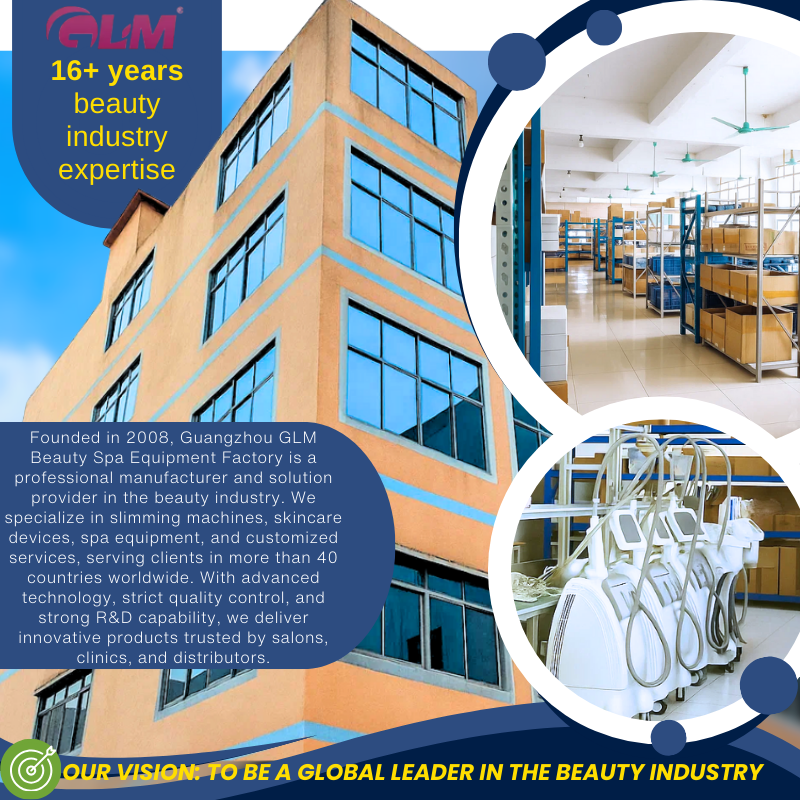
Founded in 2008, Guangzhou GLM Beauty Spa Equipment Factory specializes in research, development, manufacture and selling of beauty and slimming machines. Our production base is located in Guangzhou City, Guangdong Province, China. Since our foundation, we have introduced advanced technologies and equipment, to assure high quality and high performance of our products. With professional marketing guide and excellent after-sales service, our products have been exported to over 20 countries and regions, including Southeast Asia, the Middle East, Europe and the United States, won worldwide praises and gained a good reputation