1. Introduction
The professional aesthetic and rehabilitation industries are increasingly exploring non-invasive technologies that can complement conventional treatment approaches. Among these innovations, low-level laser therapy (LLLT) has attracted attention for its ability to deliver specific wavelengths of light without relying on the tissue-heating effects associated with many other energy-based devices.
The Erchonia GVL Laser represents a distinctive approach to this technology. By combining green and violet laser wavelengths in a single handheld system, it is designed for specific clinical applications involving temporary relief of certain musculoskeletal pain and the treatment of moderate inflammatory acne vulgaris using its violet diode.
In 2026, understanding the GVL Laser requires more than examining its technical specifications. Professional providers must also consider the clinical evidence, regulatory indications, treatment protocols, patient expectations, and practical demands of integrating a specialized device into an existing practice.
For medical clinics, chiropractic practices, sports rehabilitation facilities, and qualified aesthetic professionals, the key question is not simply whether a laser device is innovative. It is whether its technology and documented indications match the needs of the people being treated.
This article explores the Erchonia GVL Laser's dual-wavelength design, proposed biological mechanisms, clinical evidence, and potential role in professional treatment environments.
2. Background and the Clinical Problem
Why Are Non-Thermal Treatment Options Receiving Attention?
Musculoskeletal discomfort can affect daily activities, occupational performance, mobility, and exercise participation. Neck and shoulder discomfort, in particular, may be associated with prolonged desk work, repetitive movements, physical training, or other musculoskeletal factors.
Conventional management may include exercise-based rehabilitation, manual therapy, activity modification, medication when appropriate, and other clinician-directed interventions. However, individual responses vary, and some patients seek additional non-invasive options that can complement their existing care plans.
This has created interest in light-based technologies that aim to influence biological processes without cutting tissue or intentionally producing therapeutic heat.
Unlike surgical lasers, which can use concentrated energy to cut, ablate, or coagulate tissue, low-level laser systems operate with different power levels, delivery methods, and treatment objectives. The intended interaction is photochemical rather than primarily thermal.
Nevertheless, non-thermal does not mean risk-free, universally effective, or appropriate for every condition. Clinical suitability depends on the device's specific indications, patient characteristics, treatment parameters, and the provider's professional judgment.
Why Device Selection Matters
Professional clinics need equipment that fits their clinical objectives and operational workflows. A device designed for musculoskeletal pain management should not automatically be treated as interchangeable with a laser intended for cosmetic skin procedures or tissue ablation.
For equipment buyers, important considerations include:
-
The exact wavelengths and output characteristics.
-
The indications supported by clinical evidence and regulatory documentation.
-
The treatment area, session duration, and delivery method.
-
Training requirements and laser safety procedures.
-
Equipment cost, service support, and integration into existing treatment plans.
These considerations are especially important when a device is marketed across both aesthetic and medical settings. Clear distinctions between its approved applications and broader theoretical benefits help clinics make more informed purchasing decisions.
3. Dual-Wavelength Technology and Mechanism
What Makes the Erchonia GVL Laser Different?
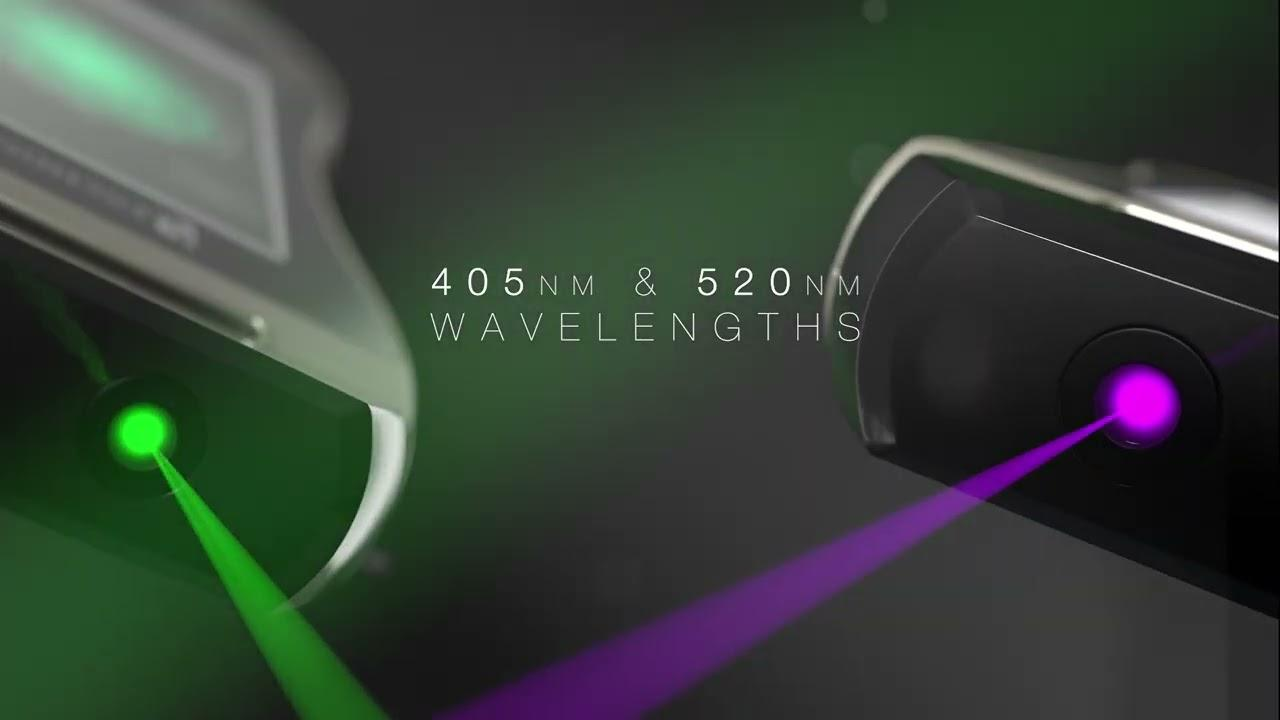
The Erchonia GVL Laser combines two visible-light wavelengths in a handheld, non-thermal laser platform:
-
520 nm green laser: Used as part of the simultaneous green-and-violet configuration for the device's cleared neck and shoulder pain indication.
-
405 nm violet laser: Used alongside the green diode for the pain indication and independently for the specified dermatological indication.
The system received FDA 510(k) clearance under K221987 on September 1, 2022. Its cleared uses are specific rather than universal: simultaneous green and violet output is indicated as an adjunct for temporary relief of minor chronic neck and shoulder pain of musculoskeletal origin, while the violet diode is indicated for moderate inflammatory acne vulgaris.
The combination is notable because it uses two different wavelengths rather than relying exclusively on a conventional red-light configuration. However, the presence of two wavelengths should not, by itself, be interpreted as proof that the system is superior to every single-wavelength device. Clinical performance must be evaluated against the evidence for the relevant application.
How Does Non-Thermal Laser Therapy Work?
Low-level laser therapy is commonly discussed within the broader field of photobiomodulation. This describes the interaction between light and biological tissues that may influence cellular signaling and function.
At the cellular level, certain light wavelengths can be absorbed by molecules known as chromophores. Research into photobiomodulation has investigated mitochondrial activity, cellular energy metabolism, nitric oxide signaling, and other biological pathways.
These mechanisms are biologically plausible, but the response depends on the wavelength, delivered dose, tissue characteristics, and treatment protocol. A proposed cellular mechanism does not automatically establish a clinical benefit for every condition.
The GVL's green wavelength has been discussed in relation to Complex III of the mitochondrial electron transport chain. Its violet wavelength has different photon-energy characteristics and is used for a separate dermatological indication. These distinctions provide a scientific rationale for studying different wavelengths for different clinical purposes.
Importantly, the GVL is designed to deliver low-level light without intentionally heating or destroying tissue. It is therefore fundamentally different from devices that depend on thermal injury to produce their intended effects.
Why Wavelength and Dose Both Matter
Wavelength is only one part of laser treatment design. Output power, exposure duration, beam geometry, pulse settings, distance from the treatment site, and the total delivered energy can all influence how light is delivered.
A higher-energy photon does not necessarily mean a better clinical result. Likewise, increasing power does not guarantee a stronger or more useful biological response. Photobiomodulation research has explored dose-dependent and sometimes biphasic responses, meaning that the relationship between dose and outcome may not be linear.
For professional operators, the practical priority is to follow the manufacturer's prescribed protocol and applicable safety instructions rather than improvising treatment parameters.
4. Advantages and Comparison with Other Technologies
A Non-Thermal Approach to Treatment
One of the GVL Laser's defining characteristics is its non-thermal operating principle. Unlike radiofrequency systems, thermal laser platforms, or devices designed to heat deeper tissues, the GVL is intended to produce a photochemical interaction without relying on therapeutic heating.
This distinction may make it relevant to clinics seeking an additional non-invasive modality for appropriately selected patients. However, the different technologies serve different purposes and should not be ranked as if they were interchangeable.
Radiofrequency devices are commonly used in aesthetic practice for selected skin-tightening applications, depending on the device's clearance and design. High-intensity or ablative lasers may be used for specific dermatological procedures. The GVL's documented applications focus instead on its particular pain-management and acne indications.
Handheld Design and Clinical Workflow
The handheld format allows the provider to position the device according to the prescribed treatment protocol. Compared with a fixed, stand-mounted scanner, a handheld instrument may offer greater flexibility when moving between treatment rooms or working with specific anatomical regions.
For a clinic, practical advantages may include:
-
A compact system that can be moved between suitable treatment spaces.
-
Integration into an existing clinical workflow.
-
No need to rely on deliberate tissue heating for the intended treatment.
-
Potential use as an adjunct rather than a replacement for comprehensive care.
The actual efficiency of a treatment session depends on the prescribed protocol, setup, patient preparation, documentation, and provider workflow. A compact design alone does not establish better outcomes or lower overall operating costs.
Professional Equipment Versus Consumer Devices
The distinction between professional and home-use equipment is not simply a matter of size or price. Professional medical devices may have defined indications, specific operating protocols, formal training requirements, and regulatory documentation that differ from those of consumer products.
The GVL is a prescription-use device intended for medical professionals under its US labeling. It should not be presented as a general-purpose home wellness laser.
For clinics evaluating professional equipment, the relevant comparison is between documented indications, evidence quality, safety requirements, service support, and suitability for the intended patient population—not marketing claims about power or the number of available functions.
5. Clinical Evidence: What Do We Know?
The GVL Clinical Study
A key source of evidence is the clinical performance documentation associated with the GVL's FDA clearance. The study evaluated the device's simultaneous green-and-violet mode for temporary relief of minor chronic neck and shoulder pain of musculoskeletal origin.
According to the FDA performance-testing summary, 43 subjects completed the GVL study. Each received a single 13-minute treatment. The study used a non-inferiority design, comparing the GVL results with data from an earlier trial of the Erchonia EVRL, which uses red and violet wavelengths.
The GVL study reported that 81.4% of subjects met the predefined individual success criterion of at least a 30% reduction in visual analogue scale pain ratings at the endpoint. The mean pain-rating reduction was 37.77 points, from 71.79 at baseline to 34.02 at the endpoint, and the within-study change was statistically significant.
These findings support further consideration of the GVL for its specified indication. However, the study design is important when interpreting the results.
Understanding the Evidence Limitations
The study was designed to assess non-inferiority against an earlier device trial, rather than to establish superiority over every available treatment. Its sample was relatively small, and the reported results should not be generalized to all types of pain, all patient groups, or all clinical settings.
A statistically significant change within a study also does not, on its own, prove that the device will provide the same benefit to every patient. Individual outcomes can vary, and longer-term effectiveness requires evidence appropriate to the specific treatment question.
Providers should therefore distinguish between three separate concepts:
-
Regulatory clearance: The device has received clearance for defined uses.
-
Clinical evidence: A particular study supports an outcome under its tested conditions.
-
Individual treatment response: A specific patient may experience a different degree of benefit.
Keeping these distinctions clear supports responsible clinical communication and more realistic patient expectations.
What About Acne Treatment?
The GVL's violet diode has a separate indication for moderate inflammatory acne vulgaris. This is distinct from the simultaneous green-and-violet pain-management indication.
Clinics considering this application should follow the applicable labeling, training, and treatment protocols. They should not assume that results demonstrated for neck and shoulder pain establish the effectiveness of the violet diode for every skin condition.
Similarly, the device should not be promoted as a universal solution for wrinkles, pigmentation, fat reduction, or skin tightening unless the relevant claims are supported by appropriate evidence and permitted under the applicable regulatory framework.
6. Applications and Client Needs
Medical and Musculoskeletal Care
The GVL may be considered by appropriately qualified providers working with patients who have minor chronic neck and shoulder pain of musculoskeletal origin. Within a broader care plan, the device may serve as an adjunct to other clinician-directed approaches.
Before treatment, providers should review the patient's history, assess whether the intended indication is appropriate, explain realistic expectations, and follow the device's safety instructions. Laser safety measures, including the required protective eyewear, should be observed.
Chiropractic and Rehabilitation Practices
Chiropractic and rehabilitation clinics often coordinate multiple approaches, such as exercise guidance, movement assessment, manual techniques, and patient education.
A handheld non-thermal laser may provide an additional treatment option for suitable patients when used within the device's cleared indication. Its practical value depends on whether it complements the clinic's established protocols and addresses a genuine patient need.
Providers should avoid suggesting that a laser replaces exercise, rehabilitation, or other clinically indicated interventions. A well-designed treatment plan considers the patient as a whole rather than relying on a single device.
Sports and Performance Environments
Sports-related settings may involve repeated assessments of movement, comfort, and functional performance. The GVL's handheld format may be convenient in these environments, provided its use is consistent with the device's indication and the provider's scope of practice.
Range of motion and pain ratings can be documented before and after treatment where clinically appropriate. Consistent records help providers evaluate individual responses without promising a predetermined result.
Professional Aesthetic Clinics
Aesthetic clinics may also encounter clients who ask about non-invasive technologies for skin concerns or discomfort. In such settings, staff must clearly distinguish the GVL's specified acne indication from its musculoskeletal pain application.
For clinics with a medical treatment offering, the device may be relevant where qualified professionals can evaluate suitability, follow prescription-use requirements, and provide appropriate follow-up. For beauty salons without the necessary medical authorization, the device's prescription status and local regulations must be checked before any consideration of purchase or use.
What Should Clinics Evaluate Before Purchasing?
A structured purchasing assessment can help determine whether the GVL fits a practice's needs.
Clinical suitability: Does the practice regularly see patients who may fall within the device's cleared indications?
Evidence and compliance: Are the available clinical documents, regulatory status, labeling, and safety requirements understood?
Workflow: Can the prescribed session length, preparation, protective equipment, and documentation be incorporated into appointments?
Training and support: Is appropriate training available, and can the supplier provide reliable technical assistance?
Business case: Can the practice estimate realistic utilization, acquisition cost, maintenance expenses, and the contribution of the device to its overall service offering?
Rather than assuming that advanced technology automatically produces a financial return, clinics should evaluate expected demand, appropriate pricing, staffing, and actual treatment utilization.
7. Conclusion
The Erchonia GVL Laser illustrates how wavelength-specific, non-thermal laser technology is being developed for defined clinical applications. Its combination of 520 nm green and 405 nm violet light differentiates it from conventional red-light systems, while its handheld design offers flexibility for suitable professional treatment environments.
Clinical documentation associated with the device's FDA clearance provides evidence supporting its specified use for temporary relief of minor chronic neck and shoulder pain of musculoskeletal origin. The violet diode also has a separate indication for moderate inflammatory acne vulgaris. These applications should remain distinct, and the available findings should not be extrapolated to unrelated conditions without appropriate evidence.
For medical, rehabilitation, chiropractic, and qualified aesthetic practices, the most useful purchasing decision begins with clinical need, regulatory compliance, evidence quality, training, and workflow—not novelty alone.
In 2026, the broader lesson for professional equipment buyers is clear: a valuable device is not simply one with advanced specifications. It is one whose technology, documented applications, safety requirements, and operational demands align with the practice's real clinical objectives
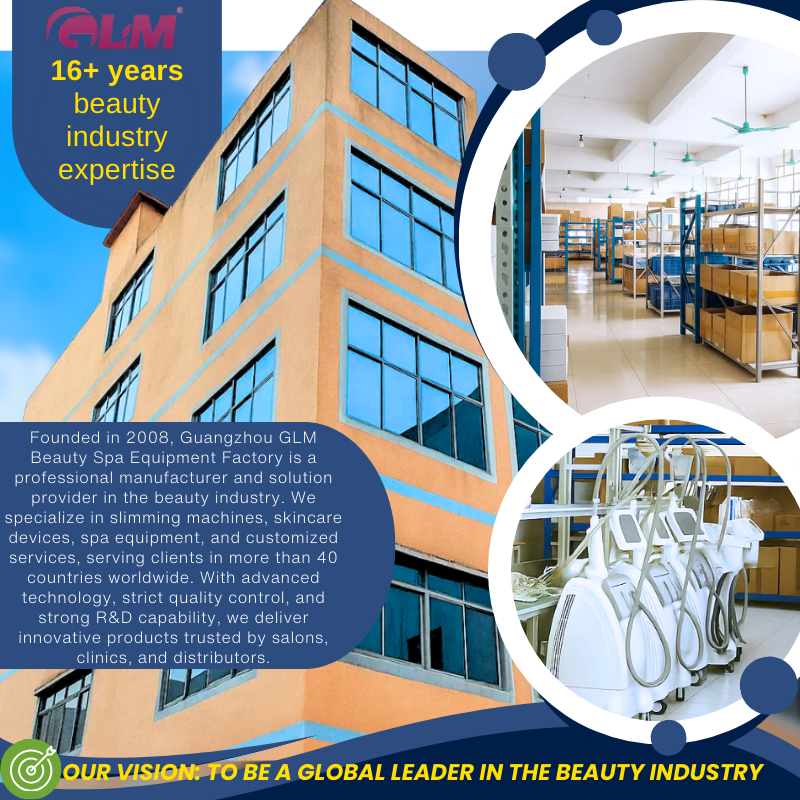
Founded in 2008, Guangzhou GLM Beauty Spa Equipment Factory specializes in research, development, manufacture and selling of beauty and slimming machines. Our production base is located in Guangzhou City, Guangdong Province, China. Since our foundation, we have introduced advanced technologies and equipment, to assure high quality and high performance of our products. With professional marketing guide and excellent after-sales service, our products have been exported to over 20 countries and regions, including Southeast Asia, the Middle East, Europe and the United States, won worldwide praises and gained a good reputation