
Exploring Effective Fat Loss Devices as Liposuction Alternatives
In recent years, the quest for the perfect body has led many to consider liposuction, a popular medical procedure aimed at eliminating unwanted fat. However, the prospect of undergoing surgery is daunting for many, leading to the rise of non-invasive fat loss devices. This blog explores these emerging alternatives to liposuction, evaluating their effectiveness, safety, and potential as reliable fat loss solutions.
Liposuction, a surgical procedure introduced in the late 1970s, remains the gold standard for subcutaneous fat removal in aesthetic medicine. By using suction-assisted aspiration (SAL), power-assisted liposuction (PAL), or ultrasound-assisted lipolysis (UAL), surgeons target localized fat deposits resistant to diet and exercise. However, its invasive nature carries inherent risks:
- Surgical Complications: Hematoma, seroma, infection, and nerve injury (0.5–3% incidence).
- Anesthesia Risks: General anesthesia-related morbidity (0.02–0.17% mortality).
- Downtime: 2–6 weeks of restricted activity; 3–6 months for full scar maturation.
- Cost: 15,000+ (variable by region and body area).
- Psychological Impact: Fear of surgery, postoperative pain, and body dysmorphia risks.
These limitations have driven the development of non-invasive fat reduction (NIFR) technologies, which now constitute a $2.3 billion global market (2023). This guide evaluates NIFR modalities, their mechanisms, efficacy, and safety profiles.
Non-Invasive Fat Reduction Technologies: A Comparative Analysis
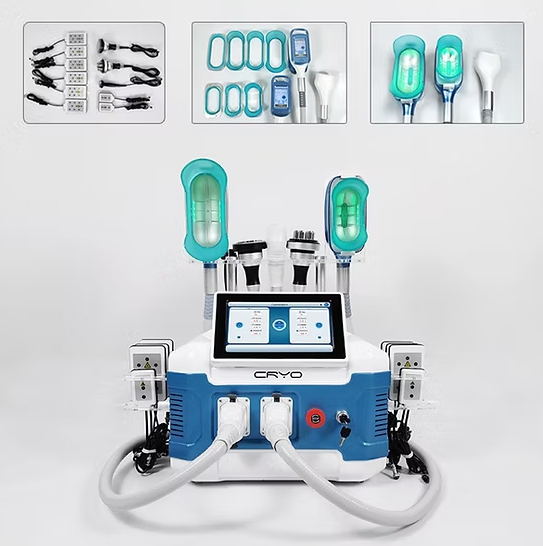
1. Cryolipolysis (CoolSculpting®, Clatuu®, CoolTech®)
Mechanism of Action
- Apoptosis Induction: Controlled cooling (4–5°C) triggers programmed cell death (apoptosis) in adipocytes via lipid crystallization.
- Selective Targeting: Adipocytes freeze at higher temperatures than skin, nerves, or blood vessels (Peltier effect).
- Lymphatic Clearance: Macrophages phagocytose dead adipocytes over 8–12 weeks.
Clinical Indications
- Localized Fat Pockets: Abdomen, flanks ("love handles"), thighs, submental ("double chin") fat.
- BMI Range: Ideal for patients with BMI <30; limited efficacy in obesity.
- Contraindications: Cold urticaria, cryoglobulinemia, paroxysmal cold hemoglobinuria.
Efficacy and Outcomes
- Fat Reduction: 20–25% reduction in fat layer thickness per treatment cycle (FDA-cleared for up to 4 cycles).
- Patient Satisfaction: 79% "satisfied" or "very satisfied" in 5-year post-marketing data (ZELTIQ Aesthetics).
- Downtime: Minimal; transient erythema, edema, and transient dysesthesia (1–2 weeks).
Limitations
- Slow Onset: Results manifest over 1–3 months.
- Paradoxical Adipose Hyperplasia (PAH): Rare (0.0051%) firm, non-painful mass requiring liposuction.
- Cost: 1,500 per treatment area.
2. Radiofrequency (RF)-Based Devices (Vanquish ME™, Exilis Ultra™, truSculpt iD®)
Mechanism of Action
- Thermolysis: Multipolar RF energy (400–600 kHz) heats dermal and subcutaneous tissues to 42–45°C, inducing:
- Adipocyte Lipolysis: Thermal stress disrupts cell membranes.
- Collagen Remodeling: Heat shock proteins (HSPs) stimulate fibroblast activity.
- Impedance-Based Control: Real-time tissue impedance monitoring ensures safety.
Clinical Indications
- Skin Laxity and Fat Reduction: Abdomen, thighs, arms, and submental regions.
- Combination Therapy: Often paired with ultrasound or cryolipolysis for synergistic effects.
Efficacy and Outcomes
- Fat Reduction: 18–24% circumferential reduction (ultrasound-verified) after 4–6 sessions.
- Skin Tightening: 30–40% improvement in elasticity (Cutometer® measurements).
- Downtime: None; mild erythema and warmth lasting 1–2 hours.
Limitations
- Depth Limitation: RF penetration (6–15 mm) restricts efficacy in deeper fat layers.
- Operator Dependency: Inconsistent handpiece pressure may affect outcomes.
- Cost: 3,000 per treatment series.
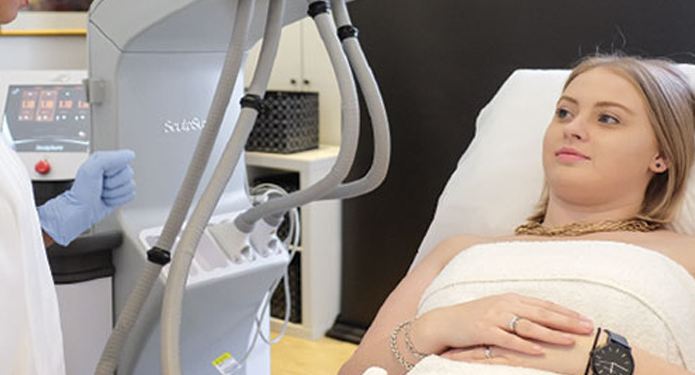
3. Laser Lipolysis (SculpSure®, WarmSculpting™, Strawberry Laser)
Mechanism of Action
- Selective Photothermolysis: 1060 nm diode laser targets adipocyte mitochondria, elevating intracellular temperature to 42–47°C.
- Cell Lysis: Thermal injury induces apoptosis and subsequent macrophage-mediated clearance.
- Contact Cooling: Simultaneous cryogen spray protects epidermis (4°C).
Clinical Indications
- Small to Medium Fat Deposits: Flanks, abdomen, thighs, and submental area.
- Post-Liposuction Contouring: Addresses residual irregularities.
Efficacy and Outcomes
- Fat Reduction: 24% mean reduction in fat layer thickness at 12 weeks (FDA-cleared).
- Multitreatment Efficacy: Up to 33% reduction with 3 sessions (6-week intervals).
- Downtime: None; transient tenderness and edema (1–3 days).
Limitations
- Pain Perception: 85% of patients report mild-to-moderate discomfort (VAS 3–5/10).
- Pigmentary Changes: Rare (0.5%) transient hyperpigmentation in Fitzpatrick IV–VI.
- Cost: 2,500 per treatment.
4. High-Intensity Focused Ultrasound (HIFU) (UltraShape Power®, LipoSonix®)
Mechanism of Action
- Mechanical Lipolysis: Focused ultrasound (1–3 MHz) creates cavitation bubbles in adipocytes, causing mechanical rupture.
- Thermal Coagulation: Simultaneous heating (56–60°C) denatures collagen and stimulates neocollagenesis.
- Real-Time Imaging: Ultrasound guidance ensures precise targeting.
Clinical Indications
- Fibrotic or Resistant Fat: Post-liposuction irregularities, gynecomastia, and "bra bulge."
- Combination with RF: Enhances skin tightening in patients with poor elasticity.
Efficacy and Outcomes
- Fat Reduction: 2.5–3 cm circumferential loss after 3 treatments (4-week intervals).
- Patient Tolerance: 92% report "minimal" to "no" discomfort (clinical trial data).
- Downtime: None; transient bruising and tenderness (3–5 days).
Limitations
- Operator Skill: Incorrect focal depth may cause dermal burns or nerve injury.
- Treatment Speed: Slower than laser or RF (20–60 minutes per area).
- Cost: 4,000 per treatment.
Comparative Metrics: NIFR vs. Liposuction
| Parameter | Liposuction | NIFR (Average) |
|---|---|---|
| Fat Reduction | 40–60% (single session) | 18–33% (multitreatment) |
| Skin Tightening | Moderate (requires concurrent RFAL) | Moderate (RF/HIFU) |
| Downtime | 2–6 weeks | None to minimal |
| Anesthesia | General/Local | None (topical for laser/RF) |
| Complications | Infection, seroma, contour irregularities | Mild erythema, transient dysesthesia |
| Cost (Abdomen) | 10,000 | 6,000 (series) |
| Patient Satisfaction | 85% (5-year follow-up) | 75–80% (multitreatment) |
Safety and Risk Mitigation
Common Adverse Events
- Erythema/Edema: Transient (1–3 days); managed with cool compresses.
- Bruising: Varies by device (laser > RF > HIFU > cryolipolysis).
- Paradoxical Fat Hyperplasia (PAH): Exclusive to cryolipolysis; treated with liposuction.
- Nerve Injury: Transient dysesthesia (HIFU/RF); rare permanent paresthesia.
Contraindications
- Pregnancy/Lactation: Hormonal fluctuations affect outcomes.
- Implanted Devices: Pacemakers, defibrillators, or metal implants.
- Bleeding Disorders: Hemophilia, thrombocytopenia, or anticoagulant therapy.
- Skin Conditions: Active infections, keloid scarring, or herpes zoster.
Patient Selection Criteria
- BMI: Ideal <30; >35 may require surgical intervention.
- Skin Elasticity: Poor elasticity favors RF/HIFU over cryolipolysis.
- Realistic Expectations: NIFR is not a weight-loss solution.
Emerging Technologies and Future Directions
- Cryo-Radiofrequency Hybrid Devices (e.g., Emsculpt NEO®):
- Combines cryolipolysis and RF for simultaneous fat reduction and muscle toning.
- FDA-cleared for abdomen, flanks, thighs, and buttocks.
- Injectable Lipolytic Agents (e.g., ATX-101/Deoxycholic Acid):
- Approved for submental fat; induces adipocyte lysis via detergent effect.
- Requires 2–4 treatments (4-week intervals).
- Nanoparticle-Mediated Photothermolysis:
- Gold nanoparticles target adipocytes for selective laser destruction.
- Preclinical studies show 40% fat reduction in murine models.
- AI-Guided Treatment Planning:
- Machine learning optimizes energy delivery based on 3D body scanning.
- Reduces operator variability and enhances outcomes.
Conclusion
The search for effective fat loss solutions has led to significant advancements in non-invasive technology. These devices offer viable alternatives to liposuction, providing effective fat reduction absent the risks and recovery associated with surgery. As technology continues to evolve, these methods may become even more popular, offering more comprehensive and reliable results. Evaluating your specific needs, goals, and preferences will guide you in choosing the best pathway to achieving the body shape you've always desired.
In conclusion, while non-invasive fat loss devices present promising results for those wary of surgical procedures, consulting with healthcare providers is crucial. Personalized advice ensures the chosen method suits your individual circumstances, leading to satisfying and safe fat loss experiences.