1. Introduction
In 2026, body contouring is no longer discussed solely in terms of treatment technologies. Clients are increasingly interested in a more complete approach to body management that combines professional aesthetic treatments, healthy lifestyle habits, realistic expectations, and long-term maintenance. For beauty salons, medical spas, and aesthetic clinics, understanding these connections can help practitioners deliver more informed consultations and develop treatment programs that better reflect individual client needs.
One important factor deserves greater attention: sleep.
Sleep influences appetite regulation, energy balance, daily activity, and the ability to maintain healthy lifestyle habits. Emerging research also suggests that insufficient sleep may interfere with fat loss during weight-management programs. A systematic review published in 2026 examined 30 studies involving 10,944 participants and found that sleep restriction could reduce fat loss in some behavioral weight-loss interventions, although findings across sleep-related factors were not entirely consistent.
At the same time, professional body contouring technologies, including ultrasound-based fat cavitation, continue to attract interest from clients seeking non-surgical options for localized body shaping.
These two topics are related, but they serve different purposes. Sleep supports overall weight management and healthy behavioral patterns, while professional body contouring devices are designed to address specific aesthetic concerns within their approved or intended uses.
The key message for 2026 is simple: fat cavitation should not be presented as a replacement for healthy sleep, nutrition, or physical activity. Instead, professional body contouring can be considered one component of a broader, individualized aesthetic plan.
For aesthetic businesses, this distinction creates an opportunity to move beyond selling individual treatments and toward providing more professional, education-led client experiences.
2. Background: Why Sleep Matters in Weight Management
The connection between sleep and body weight
Weight management involves more than the number of calories consumed. Appetite, food choices, energy expenditure, metabolic health, and the consistency of daily routines all contribute to long-term outcomes.
Sleep affects several of these factors.
When people regularly sleep too little or experience poor-quality sleep, they may feel more tired during the day, find it harder to remain physically active, or have greater difficulty maintaining structured eating habits. Sleep disruption may also influence the physiological processes involved in appetite regulation and glucose metabolism.
However, these relationships are complex. Not everyone who sleeps poorly gains weight, and improving sleep alone does not guarantee fat loss. The effects depend on individual health, existing habits, sleep disorders, and other factors.
A 2026 review in the Journal of Clinical Sleep Medicine examined the two-way relationship between sleep disorders and obesity, highlighting the interconnected nature of sleep health and metabolic health.
For body contouring professionals, the practical lesson is not to diagnose metabolic problems or prescribe sleep treatments. It is to recognize that clients' lifestyle habits may influence their overall weight-management journey and to communicate the role of aesthetic treatments accurately.
Why insufficient sleep may affect fat-loss goals
There are several possible explanations for the relationship between sleep and weight management.
-
Appetite and food choices: Insufficient sleep may affect hunger, food preferences, and the ability to maintain planned eating habits.
-
Energy and physical activity: Fatigue can make regular exercise and everyday movement more difficult.
-
Metabolic health: Sleep disruption has been associated with changes in glucose regulation and insulin sensitivity, although findings vary among studies.
-
Consistency: Poor sleep may make it harder to follow a long-term nutrition, exercise, and wellness plan.
The evidence does not support a simple formula in which every additional hour of sleep produces a predictable amount of fat loss. Instead, sleep quality and adequate rest should be viewed as supportive factors in a broader weight-management strategy.
For clients investing in body contouring, this distinction matters. A device-based treatment may target a localized aesthetic concern, but it cannot independently correct the behavioral and physiological factors that influence overall body weight.
Moving beyond the quick-fix mindset
Clients sometimes expect a single treatment to deliver substantial weight loss or permanent body transformation. Such expectations can lead to dissatisfaction, even when a treatment is performed appropriately.
A more professional approach begins with realistic goals. Practitioners should distinguish between reducing the appearance of a localized fat bulge, improving body contours, managing overall body weight, and addressing general health concerns.
These objectives overlap in some clients, but they are not interchangeable.
By explaining the role of sleep, nutrition, movement, and professional aesthetic technology, clinics can establish a more credible treatment relationship. This education-led approach also helps clients understand why a structured course of treatment, appropriate follow-up, and realistic maintenance expectations may be more useful than focusing on one appointment.
3. Technology and Mechanism: How Fat Cavitation Fits Into a Body Contouring Plan
What is ultrasonic fat cavitation?
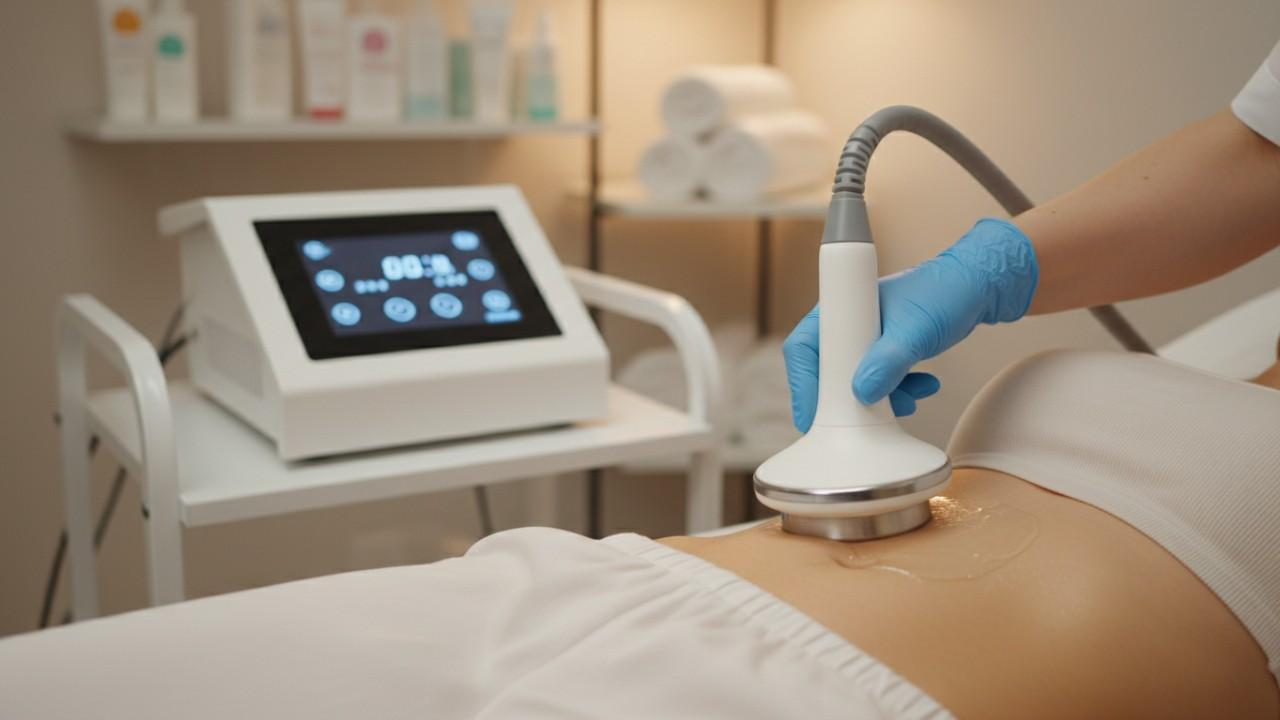
Ultrasonic fat cavitation is a non-surgical body contouring approach that uses ultrasound energy delivered through an applicator placed against the skin. Depending on the device design, operating parameters, and intended use, ultrasound energy can interact with tissue in ways that may contribute to localized fat reduction.
In aesthetic practice, the term fat cavitation is commonly used for devices designed to target subcutaneous fat in selected body areas. However, not all ultrasound technologies operate in the same way. Conventional cavitation equipment should not automatically be equated with high-intensity focused ultrasound (HIFU), diagnostic ultrasound, or other energy-based systems.
The US Food and Drug Administration (FDA) explains that therapeutic ultrasound used for non-invasive body contouring can affect fat tissue beneath the skin and may reduce the circumference of a treated area. It also warns that ultrasound can cause tissue burns and other complications if used inappropriately.
For clinics and professional beauty salons, understanding the specific technology behind a device is therefore more important than relying on broad marketing terms.
Understanding the mechanism
Ultrasound refers to sound waves above the range of human hearing. When applied to tissue, acoustic energy can produce different biological effects depending on its frequency, intensity, delivery pattern, and the characteristics of the tissue.
In ultrasound-based fat reduction, acoustic cavitation is one proposed mechanism. It involves the formation or oscillation of microscopic bubbles under suitable acoustic conditions. These effects can interact with surrounding tissue and may contribute to the intended treatment response.
However, the actual mechanism depends on the technology being used. It is not scientifically accurate to claim that every cavitation machine works identically or that all devices directly destroy fat cells in the same way.
Professional operators must follow the manufacturer's instructions, use the correct treatment settings, maintain appropriate contact between the applicator and skin, and observe the recommended movement and treatment duration.
Most importantly, ultrasound-based body contouring is not equivalent to whole-body weight loss. It is intended to address selected aesthetic concerns, rather than replace a balanced diet, physical activity, or medical weight-management care.
Why sleep and cavitation serve different roles
Sleep does not activate an aesthetic device, and there is currently insufficient evidence to claim that sleeping longer directly improves the clinical effectiveness of a fat cavitation session.
Instead, sleep and body contouring should be understood as complementary elements of a broader wellness context.
Sleep supports the behavioral and physiological conditions involved in maintaining a weight-management plan. Professional body contouring addresses specific concerns that may remain even when clients are actively managing their lifestyle.
For example, a client may be maintaining a regular exercise routine and balanced diet but still be concerned about the appearance of a localized abdominal or thigh bulge. After an appropriate assessment, a professional may determine whether a particular body contouring procedure is suitable for that concern.
Another client may primarily need help managing overall body weight. In this situation, an ultrasound-based aesthetic treatment should not be presented as the primary solution.
The professional value lies in matching the technology to the client's actual objective, not promising that one device can solve every body-related concern.
4. Advantages and Comparison: Professional Equipment Versus Home-Based Approaches
The value of professional treatment planning
For aesthetic businesses, professional equipment offers more than an additional treatment option. It provides a structured framework for assessment, treatment delivery, documentation, and follow-up.
When selecting a professional fat cavitation system, clinics should evaluate several factors:
-
Technology and intended use: Confirm the device's operating principle, intended treatment areas, indications, and applicable regulatory status.
-
Parameter control: Understand which settings can be adjusted and how the manufacturer defines safe operating ranges.
-
Applicator design: Check whether the handpiece is appropriate for the intended body area and treatment technique.
-
Operator training: Ensure staff understand contraindications, treatment protocols, patient positioning, and potential adverse effects.
-
Documentation: Establish a consistent process for recording baseline measurements, treatment settings, client feedback, and follow-up observations.
-
Manufacturer support: Consider training resources, technical assistance, warranty terms, and the availability of replacement components.
These factors can influence treatment consistency, operational efficiency, and the overall client experience.
A professional device should not be judged by the number of functions advertised on its screen alone. A system with clear protocols, appropriate controls, reliable support, and a well-defined intended use may be more valuable to a clinic than one offering numerous poorly documented features.
Professional equipment and home-use devices
Home-use beauty devices may appeal to consumers because of their convenience and accessibility. However, home-use and professional devices may differ in energy output, treatment design, intended users, and the level of supervision required.
Professional settings also allow trained operators to assess whether a client is an appropriate candidate, identify possible contraindications, explain realistic outcomes, and adjust the treatment plan when necessary.
This does not mean that every professional device is automatically safer or more effective than every home-use product. Performance and safety depend on the specific device, its authorization for the intended use, the quality of its design, and how it is operated.
The FDA emphasizes that non-invasive body contouring technologies have different benefits, limitations, and risks. Potential complications may include pain, redness, swelling, bruising, and, for certain technologies, burns or other tissue injuries.
For professional buyers, the practical priority is to select equipment supported by credible technical documentation and appropriate training rather than making decisions based solely on advertised power or low purchase cost.
Why lifestyle education adds value to a treatment service
Equipment is only one part of a professional service. The consultation, treatment protocol, aftercare guidance, and follow-up process also shape the client experience.
Sleep education provides a useful example. If a client reports persistent fatigue, irregular sleep, and difficulty maintaining healthy routines, an operator can acknowledge these challenges without making medical diagnoses or prescribing treatment.
The operator can encourage practical habits, such as maintaining a consistent sleep schedule, creating a suitable sleep environment, and discussing persistent sleep problems with a qualified healthcare professional.
This kind of guidance does not require the beauty clinic to become a weight-loss clinic. Instead, it helps practitioners communicate the boundaries of aesthetic treatment while supporting more informed client decisions.
For businesses, the result can be a more transparent service model built around individualized assessments, appropriate technology selection, and realistic expectations.
5. Applications and Client Needs: Building a More Complete Body Contouring Service
Scenario 1: Clients concerned about localized fat
Some clients are not seeking major weight loss. Their primary concern may be the appearance of a specific area, such as the abdomen, waist, flanks, or thighs.
For these clients, a professional consultation should establish the treatment objective, review relevant health information, and determine whether the selected device is appropriate for the intended area.
If a client is a suitable candidate, an ultrasound-based body contouring procedure may be considered within the device's intended use. Practitioners should explain that results vary and that treatment may not achieve the desired effect or may require maintenance.
Sleep can be discussed as part of the client's broader routine, particularly if fatigue makes physical activity or healthy eating habits difficult to maintain. It should not be presented as a way to guarantee better cavitation results.
Scenario 2: Clients who want to improve their overall body shape
Clients may be concerned about several areas simultaneously and expect a comprehensive body transformation.
A professional clinic can begin by separating the client's goals into distinct categories:
-
Localized body contouring.
-
Overall weight management.
-
Skin firmness or the appearance of cellulite.
-
Long-term lifestyle and wellness habits.
Different concerns may require different approaches. A device designed for localized fat reduction should not automatically be recommended for skin laxity, muscle conditioning, or general weight loss.
Depending on the client's needs, the service plan may involve an appropriate aesthetic procedure alongside general guidance on physical activity, balanced nutrition, and adequate sleep. Where medical weight management is needed, referral to a qualified healthcare provider may be appropriate.
This goal-based approach helps prevent unrealistic expectations and gives clients a clearer understanding of what the equipment can and cannot accomplish.
Scenario 3: Clients with inconsistent lifestyle habits
A client may purchase a series of treatments while struggling with late nights, irregular meals, and limited physical activity. In these circumstances, the practitioner should avoid promising that the treatment will compensate for these habits.
Instead, the consultation can focus on practical, manageable steps. The client might choose a consistent bedtime, schedule regular walks, or establish a more structured eating routine.
For adults who need approximately seven to nine hours of sleep, making adequate rest a priority may help support broader health and weight-management goals. Individual needs vary, and persistent sleep difficulties may require professional assessment.
The clinic can then evaluate the aesthetic treatment separately, using appropriate measurements, photographs where consent has been obtained, and follow-up appointments to document changes.
This separates observable treatment outcomes from lifestyle changes and helps create a more credible record of progress.
Scenario 4: Professional salons and clinics expanding their service portfolios
For salon owners and clinic managers, combining body contouring services with client education can strengthen service differentiation.
A well-designed service pathway may include:
-
Initial consultation: Understand the client's concerns, health background, expectations, and intended treatment areas.
-
Suitability assessment: Review contraindications and determine whether the selected technology is appropriate.
-
Individualized treatment plan: Explain the procedure, expected outcomes, limitations, potential risks, and estimated treatment schedule.
-
Professional treatment: Follow the device manufacturer's instructions and applicable professional requirements.
-
Progress review: Document observations consistently and discuss whether further treatment is appropriate.
-
Maintenance and education: Encourage sustainable lifestyle habits without suggesting that sleep or exercise guarantees a particular cosmetic result.
For equipment manufacturers and distributors, this creates an opportunity to support buyers with more than product specifications. Operator training, practical treatment guidance, clear technical documentation, and responsive after-sales service can all contribute to the value of a professional system.
6. Practical Recommendations: Connecting Sleep, Weight Management, and Aesthetic Care
Beauty professionals do not need to provide medical sleep therapy to discuss healthy routines responsibly. A few practical principles can help keep client communication evidence-informed.
Prioritize consistent sleep habits. Encourage clients to maintain a regular sleep and wake schedule where possible. Sleep duration alone does not capture every aspect of sleep health, and the evidence linking specific sleep patterns to weight-loss outcomes remains mixed.
Support realistic nutrition and activity goals. Balanced eating habits and regular physical activity remain central to weight management. Sleep should complement these behaviors rather than replace them.
Choose equipment based on the treatment objective. Confirm the technology, intended use, treatment area, and applicable safety requirements before recommending a procedure.
Avoid exaggerated claims. Do not claim that cavitation melts all body fat, produces guaranteed weight loss, permanently prevents weight regain, or becomes more effective simply because a client sleeps longer.
Recognize when referral is appropriate. Persistent insomnia, suspected sleep apnea, unexplained weight changes, or other significant health concerns fall outside the scope of a routine aesthetic consultation and may warrant evaluation by a qualified healthcare professional.
Measure progress appropriately. Use consistent measurement methods and follow-up intervals. Changes in body weight, circumference, skin appearance, and client satisfaction represent different outcomes and should not be treated as interchangeable.
These principles help position a professional body contouring service as a considered aesthetic intervention rather than a shortcut to weight loss.
7. Conclusion: Better Body Contouring Starts With Better-Informed Decisions
In 2026, the relationship between sleep and weight management is an important topic for the professional beauty industry. Research increasingly recognizes sleep health as one factor that may influence the success of broader weight-management efforts, although the strength and consistency of the evidence vary across sleep-related measures.
Ultrasound-based fat cavitation serves a different purpose. When an appropriate device is used for its intended application by a properly trained operator, it may offer a non-surgical option for addressing selected localized body contouring concerns. It is not a substitute for sleep, nutrition, physical activity, or medical care when needed.
For beauty salons, medical spas, and aesthetic clinics, the strongest approach is to combine appropriate technology with individualized assessment, transparent communication, and realistic treatment planning.
For manufacturers and professional equipment suppliers, the same principle applies: equipment quality, clear operating protocols, operator education, and dependable technical support are essential parts of the value offered to a business.
The most responsible approach to body contouring is not to promise that one treatment can do everything. It is to help each client understand which treatment may be suitable, what results are realistic, and how professional aesthetic care fits into a broader approach to personal well-being
Founded in 2008, Guangzhou GLM Beauty Spa Equipment Factory specializes in research, development, manufacture and selling of beauty and slimming machines. Our production base is located in Guangzhou City, Guangdong Province, China. Since our foundation, we have introduced advanced technologies and equipment, to assure high quality and high performance of our products. With professional marketing guide and excellent after-sales service, our products have been exported to over 20 countries and regions, including Southeast Asia, the Middle East, Europe and the United States, won worldwide praises and gained a good reputation