
Introduction
The aesthetics industry is moving into a new phase. Clients are no longer looking only for dramatic transformations. Increasingly, they want treatments that are precise, personalized, efficient, comfortable, and compatible with busy lifestyles. At the same time, beauty clinics and professional salons need technologies that can expand treatment menus, improve workflow, support consistent protocols, and create measurable value for every appointment.
This is where emerging aesthetic technology becomes important. Artificial intelligence, advanced energy-based devices, multi-technology platforms, real-time skin analysis, and increasingly personalized treatment planning are changing how professionals approach skin rejuvenation, body contouring, hair reduction, and overall appearance management. Recent reviews describe AI, augmented reality, robotics, lasers, ultrasound, radiofrequency, and other energy-based technologies as important directions in modern aesthetic practice.
The future, however, is not simply about buying the newest machine. It is about combining technology with professional assessment, appropriate parameters, operator training, and realistic client expectations. For salons and clinics, the most valuable innovations will be those that turn advanced technology into repeatable treatment experiences.
Background: Why Aesthetics Is Changing
Traditional aesthetic services often depended heavily on the operator's visual assessment and experience. That expertise remains essential, but technology is making the process more data-driven.
Modern clients may present with several concerns at the same time: uneven skin tone, fine lines, laxity, unwanted hair, localized fat, cellulite, dehydration, or loss of facial definition. A single treatment may not address all of these concerns effectively. As a result, professional providers are increasingly interested in platforms that can support multiple indications while allowing treatments to remain targeted.
Another major change is the demand for personalization. Two clients with similar concerns may have different skin types, tolerance levels, treatment histories, and expectations. The future of aesthetics therefore points toward systems that can help practitioners collect more information before treatment and adjust protocols more intelligently.
At the same time, safety and regulatory discipline are becoming more important as energy-based devices become more sophisticated. The FDA notes that technologies such as radiofrequency and therapeutic ultrasound can produce meaningful tissue effects and also carry risks when used incorrectly. Appropriate device selection, indications, contraindications, skin contact, protective measures, and operator training therefore remain central to professional treatment.
Technology and Mechanism: Five Technologies Shaping the Future
1. AI-Powered Skin Analysis and Treatment Planning
Artificial intelligence is likely to become one of the most visible changes in aesthetic consultations. AI-based systems can analyze photographs or imaging data to identify visible characteristics such as pigmentation, texture, pores, wrinkles, redness, and other skin features.
The practical value is not that AI replaces an aesthetic professional. Instead, it can support the consultation by creating a more structured baseline. A practitioner can use imaging results to explain concerns, compare progress over time, and develop a treatment pathway.
In a professional salon or clinic, this can improve the client experience before the actual device treatment begins. A consultation becomes more visual and measurable, while progress photography and digital records can support follow-up visits.
Future systems may increasingly connect analysis software with treatment platforms. In principle, this could allow a clinic to move from “analysis” to “recommended protocol” more efficiently, while the final treatment decision remains with the appropriately trained professional.
2. Smarter Radiofrequency and Thermal Technologies
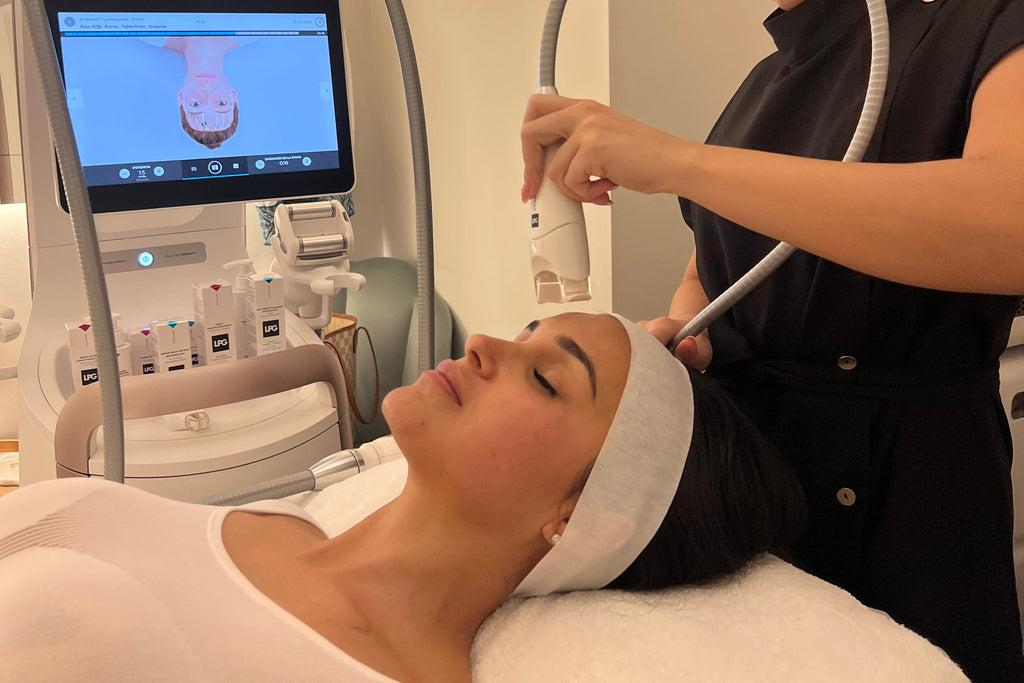
Radiofrequency is already widely used in professional aesthetics because controlled electromagnetic energy can create heating within targeted tissue. Depending on the device and its intended use, RF technologies can support applications such as skin tightening and body contouring.
The next generation is likely to focus less on simply delivering energy and more on controlling how that energy is delivered. Better temperature monitoring, improved energy distribution, adjustable treatment modes, and more ergonomic handpieces can help operators create consistent treatment protocols.
This is particularly valuable in clinics because consistency matters. A professional machine should not only have attractive specifications; it should provide practical control during real treatments. Easy parameter adjustment, clear displays, stable energy delivery, and treatment-area-specific handpieces can all influence workflow.
3. HIFU, Ultrasound, and Precision Energy Delivery
Focused ultrasound represents another important direction. HIFU systems use concentrated acoustic energy to create controlled effects at selected depths. Depending on the device and its authorized indication, focused ultrasound can be used for aesthetic applications involving tissue heating or mechanical effects.
The future of ultrasound technology is likely to emphasize precision. Instead of viewing energy delivery as a simple “higher power is better” equation, advanced systems can focus on depth selection, energy control, cartridge design, treatment mapping, and operator guidance.
This matters particularly for professional facial contouring and body treatments, where anatomy and treatment depth influence both outcomes and safety. FDA guidance for focused ultrasound emphasizes appropriate indications, contraindications, skin contact, warnings, and risk controls, reinforcing the importance of professional operation.
4. Multi-Technology and Hybrid Aesthetic Platforms
Another major trend is integration. Rather than purchasing separate machines for every treatment objective, clinics increasingly have reasons to consider multifunctional platforms that combine technologies such as RF, vacuum, cavitation, EMS, LED, ultrasound, or other modalities, depending on the device design and intended indications.
A hybrid platform can create a more flexible treatment menu. For example, a body-contouring workflow may incorporate different technologies for tissue warming, mechanical stimulation, or appearance-focused contouring. A facial platform may combine cleansing, infusion, RF, ultrasound, or light-based functions.
The commercial advantage is straightforward: one well-designed platform can potentially serve multiple treatment categories, improve room utilization, and support package-based services. However, multifunctionality should not mean “more features at any cost.” Each modality should have a clear purpose, appropriate controls, and a treatment protocol that professionals can understand.
5. Personalized and Connected Treatment Experiences
The next generation of aesthetic equipment will likely become more connected. Digital treatment records, cloud-based data, imaging systems, device software, and client management platforms can create a more continuous treatment journey.
Imagine a client returning for the fourth appointment. Instead of relying only on memory and subjective impressions, the practitioner may be able to review previous images, treatment settings, session dates, and documented responses. This creates a more professional consultation and can help the operator make better-informed adjustments.
Personalization may also influence device interfaces. Rather than presenting dozens of technical parameters without context, future systems could organize settings around treatment goals, body areas, skin characteristics, or standardized protocols.
Advantages and Comparison: Professional Technology vs. Basic Home Devices
The growing availability of home beauty devices does not eliminate the role of professional equipment. The two categories serve different purposes.
Home devices are generally designed around convenience, simplified operation, and lower-intensity use. They can be attractive to consumers who want basic maintenance between professional visits.
Professional systems, by contrast, are designed for trained operators working with defined treatment protocols. They can offer more specialized handpieces, broader parameter control, stronger treatment customization, integrated functions, and workflow features intended for repeated client use.
For a salon or clinic, the value of professional equipment is therefore not simply “more power.” It is control, versatility, repeatability, service capability, and the ability to build structured treatment programs.
Emerging technology also creates a new competitive advantage: differentiation. When many businesses offer similar basic facial or body services, advanced equipment can help a clinic create clearly defined treatment packages and consultation experiences. The machine becomes part of a broader service system rather than a standalone product.
Applications and Client Needs
The future of aesthetics will be shaped by how effectively technology responds to real client needs.
For facial rejuvenation, clinics can combine skin analysis with RF, ultrasound, LED, or other appropriate technologies to build personalized programs focused on concerns such as visible signs of aging, texture, or skin appearance.
For body contouring, energy-based platforms may support professional services addressing localized fat, cellulite appearance, skin firmness, or body shaping, depending on the technology and its authorized indications. Recent clinical reviews describe energy-based body contouring as a rapidly developing field involving targeted fat reduction, skin tightening, cellulite reduction, and related applications.
For hair reduction, advanced laser and light-based systems are likely to continue developing through better wavelength combinations, cooling, pulse control, ergonomics, and skin-type considerations. The direction is toward greater treatment flexibility and better operator control rather than simply increasing output.
For clinics serving diverse client groups, technology that supports parameter customization can also be valuable. Skin characteristics, treatment areas, comfort preferences, and previous treatment history all influence how a professional approaches a session.
Most importantly, emerging technologies should be viewed as tools within a professional system. No machine can replace proper consultation, contraindication screening, treatment knowledge, or informed client communication.
Conclusion
The future of aesthetics is not one single breakthrough technology. It is the convergence of intelligence, energy control, personalization, connectivity, and professional expertise.
AI can make assessment more structured. RF and ultrasound can offer controlled energy delivery. Multi-technology platforms can expand treatment possibilities. Connected systems can improve continuity and documentation. Together, these developments are moving aesthetic equipment from simple machines toward intelligent professional treatment platforms.
For beauty salons, aesthetic clinics, and equipment buyers, the key question is therefore not simply, “What is the newest technology?” A better question is, “Which technology can improve our treatment quality, client experience, operational efficiency, and long-term service value?”
That is where the future of aesthetics will be built: not around technology for its own sake, but around smarter devices, better-trained professionals, and more personalized treatment experiences
Founded in 2008, Guangzhou GLM Beauty Spa Equipment Factory specializes in research, development, manufacture and selling of beauty and slimming machines. Our production base is located in Guangzhou City, Guangdong Province, China. Since our foundation, we have introduced advanced technologies and equipment, to assure high quality and high performance of our products. With professional marketing guide and excellent after-sales service, our products have been exported to over 20 countries and regions, including Southeast Asia, the Middle East, Europe and the United States, won worldwide praises and gained a good reputation