Introduction
Pain management is becoming an increasingly important service category for professional clinics, rehabilitation centers, wellness practices, and advanced aesthetic facilities. Clients are looking for treatment options that are non-invasive, comfortable, and easy to integrate into their existing care plans. At the same time, professional operators need technologies that provide controlled energy delivery, repeatable treatment protocols, and a clear clinical workflow.
This is where GVL laser therapy and green-and-violet photobiomodulation are attracting attention.
Unlike high-intensity surgical or thermal lasers, low-level photobiomodulation uses controlled light energy to create a photochemical response rather than intentionally heating or damaging tissue. A GVL platform combines green light at approximately 520 nm with violet light at approximately 405 nm, creating a dual-wavelength approach that is different from conventional red or near-infrared photobiomodulation. The GVL system marketed by Erchonia, for example, is designed as a non-thermal handheld laser and has FDA clearance for adjunctive temporary relief of minor chronic neck and shoulder pain of musculoskeletal origin when the green and violet diodes are used simultaneously.
For professional clinics, the significance is not simply the color of the light. It is the combination of wavelength engineering, controlled dosage, targeted application, operator protocols, and non-invasive treatment delivery.
Background: Why Clinics Are Looking Beyond Conventional Pain Management
Musculoskeletal discomfort can affect the neck, shoulders, back, joints, and soft tissues. For many clients, the goal is not necessarily an aggressive intervention but a treatment that can complement rehabilitation, manual therapy, exercise, or other conservative approaches.
Traditional pain-management approaches can include medication, physical therapy, massage, exercise, injections, or more invasive procedures depending on the condition. However, each approach has different limitations. Some require recovery time, while others may not fit every client's preferences or treatment plan.
This has increased interest in non-pharmacological technologies such as photobiomodulation.
Photobiomodulation therapy, commonly abbreviated as PBM, uses specific wavelengths of light to influence biological processes. Research into PBM has expanded considerably, although the strength of evidence varies according to the wavelength, treatment parameters, condition, and delivery method. A 2026 systematic review of randomized clinical trials concluded that PBM shows potential for pain reduction and has generally demonstrated a favorable safety profile, while also emphasizing that differences in treatment parameters make standardization difficult.
That distinction is important for professional operators.
A laser device should not be positioned as a universal solution for every type of pain. Instead, it should be integrated into an appropriate clinical workflow, with patient assessment, contraindication screening, documented treatment parameters, and realistic expectations.
Technology and Mechanism: How Green and Violet Photobiomodulation Works
The central concept behind GVL laser therapy is photobiomodulation rather than thermal ablation.
In thermal laser systems, increasing energy can intentionally create heat in tissue. GVL-type low-level laser systems operate differently. The objective is to deliver controlled optical energy that interacts with cellular structures without relying on tissue heating.
520 nm Green Light
The green component of a GVL system typically operates around 520 nm.
According to the manufacturer's technical description, this wavelength is designed to interact with Complex III of the mitochondrial electron transport chain, providing a pathway that differs from the better-known mechanisms associated with red light.
Mitochondria are closely associated with cellular energy production. Photobiomodulation research proposes that appropriate light exposure can influence cellular signaling, energy metabolism, oxidative balance, and other biological pathways.
However, professional communication should avoid reducing PBM to the simplistic statement that "light creates more ATP and therefore eliminates pain." The biological response depends on wavelength, dose, irradiance, exposure time, target tissue, and individual factors.
405 nm Violet Light
The violet component is typically delivered at approximately 405 nm.
At this wavelength, photons carry more energy than those at longer visible wavelengths. The 405 nm wavelength is therefore not simply a stronger version of red light. It represents a different part of the optical spectrum and can have different biological interactions.
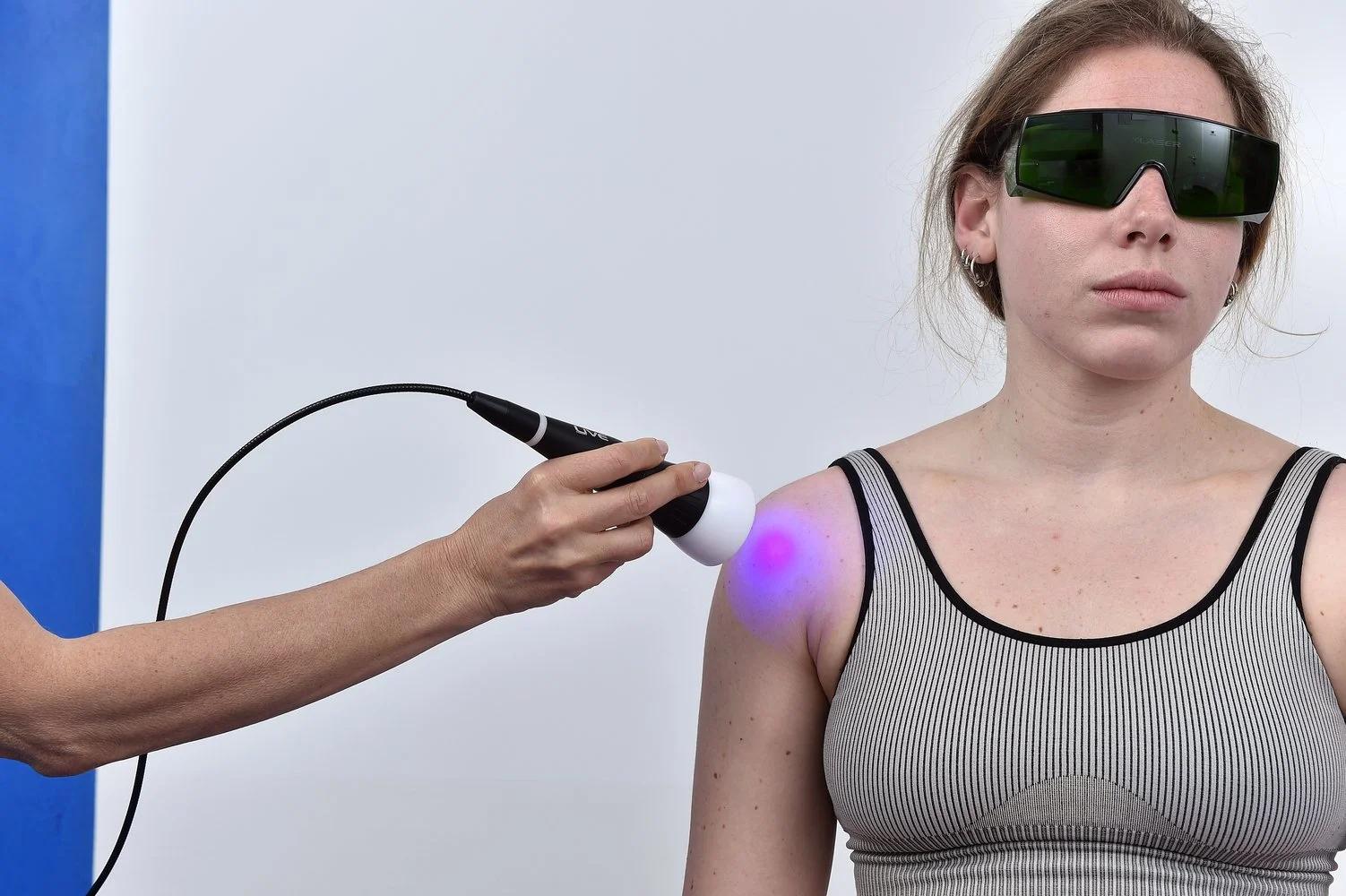
The GVL platform combines the 405 nm violet and 520 nm green wavelengths in a single handheld system. According to the device's FDA-cleared indication, the two wavelengths can be used simultaneously as an adjunct for temporary relief of minor chronic neck and shoulder pain of musculoskeletal origin.
Why Two Wavelengths?
The appeal of dual-wavelength technology is that practitioners are not limited to a single optical pathway.
Instead of treating "laser therapy" as one generic technology, professional operators can think in terms of:
Wavelength → energy characteristics → target tissue → treatment protocol → clinical objective
This approach is particularly relevant to professional equipment because treatment consistency depends on much more than simply switching on a light source
What Does the Clinical Evidence Show?
Interest in green and violet laser therapy has been supported by early clinical research, although the evidence base is still developing.
A clinical investigation of green and violet low-level laser therapy for chronic musculoskeletal pain included 43 participants who received a single 13-minute treatment session. The study reported a reduction in average visual analog pain scores and found that 81.4% of participants achieved at least a 30% reduction in pain scores shortly after treatment.
These findings helped support the FDA clearance associated with the GVL platform. ClinicalTrials.gov describes the relevant study as an evaluation of simultaneous 520 nm green and 405 nm violet laser application for temporary relief of minor chronic neck and shoulder pain of musculoskeletal origin.
At the same time, broader PBM research indicates that outcomes cannot be generalized from one wavelength or device to every light-based treatment. A 2026 review emphasized that wavelength alone does not determine the biological response; exposure route, dose, duration, target tissue, and baseline condition also matter.
For clinics, this is an important distinction: professional photobiomodulation is a protocol-driven technology, not simply colored light.
Advantages of GVL Laser Therapy for Professional Clinics
1. Non-Invasive Treatment
One of the most obvious advantages is the non-invasive nature of low-level laser therapy.
There are no needles, incisions, or intentional tissue destruction involved in the photobiomodulation process. Non-thermal operation can also make the treatment experience more comfortable for clients who are sensitive to heat.
This allows clinics to introduce laser therapy as a complementary service rather than positioning it as an aggressive intervention.
2. No Consumable-Based Treatment Model
Professional operators also benefit from a relatively simple treatment workflow.
Unlike injection-based services, laser photobiomodulation does not require treatment cartridges, needles, or topical anesthetic as part of the basic light-delivery process. The equipment itself becomes the primary technology asset.
For a clinic, this can simplify treatment-room preparation and make repeat sessions easier to standardize.
3. Targeted Application
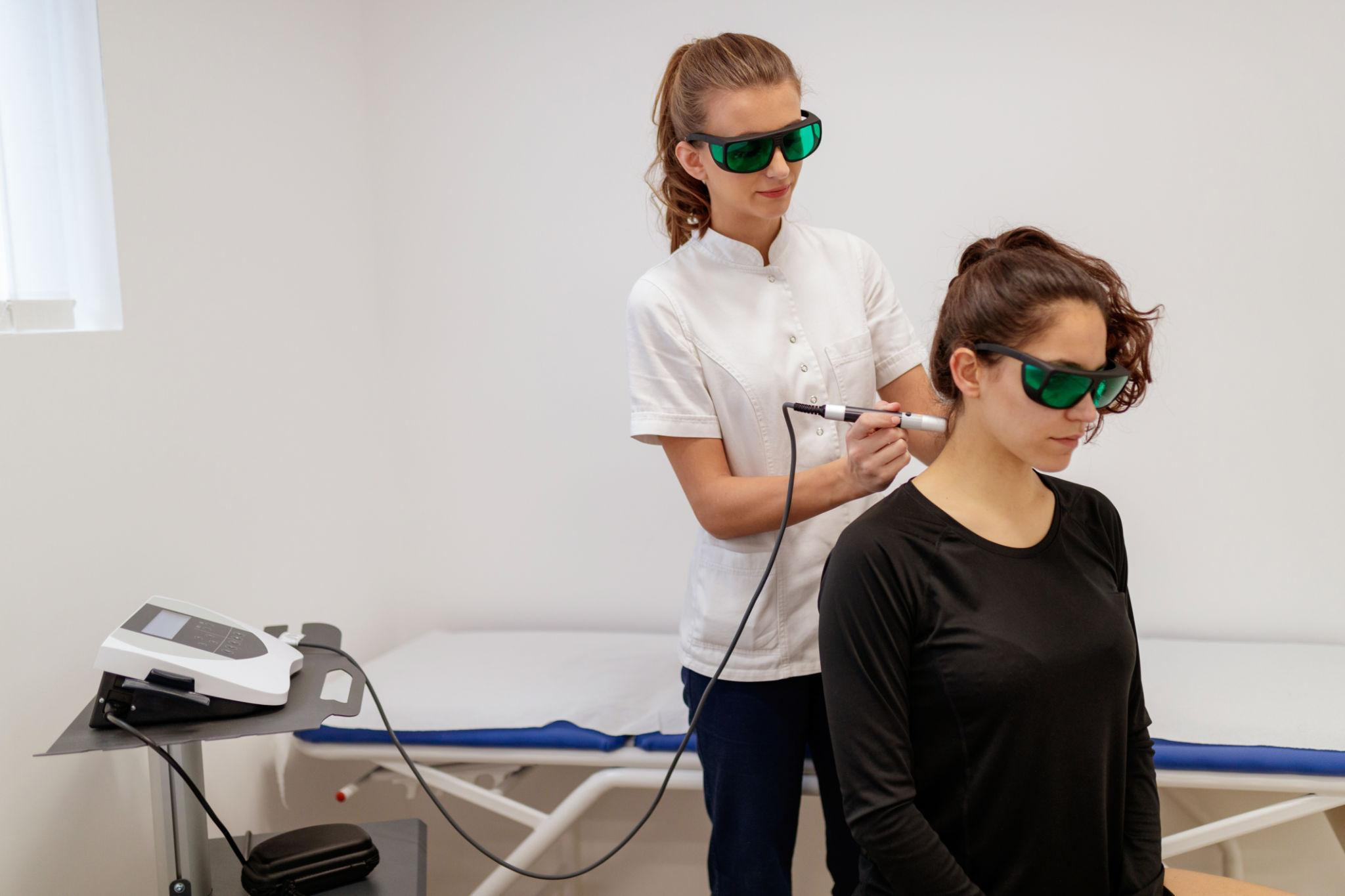
Handheld laser systems can provide precise positioning around anatomical areas such as the neck, shoulder, elbow, or other areas included within the device's intended use.
This is particularly useful when a practitioner wants to combine laser treatment with assessment, manual therapy, rehabilitation exercises, or other services.
4. Comfortable Client Experience
A non-thermal treatment can be attractive to clients who prefer a gentle procedure.
The treatment experience is fundamentally different from procedures that intentionally create heat, mechanical discomfort, or tissue injury. This can also make photobiomodulation easier to incorporate into wellness-oriented environments where comfort is an important part of the customer experience.
5. Professional Equipment Offers Greater Control
There is an important difference between a professional laser platform and a general-purpose home LED product.
Professional equipment is designed around factors such as wavelength accuracy, optical delivery, dosage, treatment distance, operating protocols, device calibration, and operator training.
Home devices may be convenient for general consumer use, but professional systems are intended to support a structured treatment environment where operators can document procedures and integrate technology into broader care plans.
Applications and Client Needs
The most appropriate application depends on the device's regulatory indications and the practitioner's professional scope.
For a GVL platform specifically, the manufacturer identifies simultaneous green-and-violet use as an adjunct for temporary relief of minor chronic neck and shoulder pain of musculoskeletal origin. The violet diode also has a separate dermatological indication on the cleared device.
Neck and Shoulder Care
Neck and shoulder discomfort is particularly relevant to modern wellness and rehabilitation services. Long periods of desk work, repetitive movements, sports activity, and physical strain can contribute to discomfort and reduced mobility.
A professional operator can incorporate photobiomodulation into a broader treatment pathway that may include assessment, stretching, mobility work, massage, or rehabilitation.
Sports and Recovery Settings
Athletes and physically active clients often want recovery options that do not interfere with training schedules.
A handheld non-thermal laser can be incorporated into recovery rooms, sports clinics, rehabilitation practices, or multidisciplinary facilities. The manufacturer's current positioning also highlights sports and rehabilitation as environments where handheld laser systems can be integrated into care programs.
Advanced Wellness and Aesthetic Clinics
For aesthetic clinics, pain-management technology can provide an opportunity to expand beyond traditional facial and body treatments.
The value is not necessarily that a beauty clinic should become a pain clinic. Instead, facilities with appropriately qualified professionals can consider whether photobiomodulation fits within their existing wellness, recovery, or complementary treatment services.
This creates a broader equipment portfolio while maintaining the central advantages of non-invasive technology.
GVL Laser vs. Conventional Home Light Devices
| Feature | Professional GVL Laser Platform | General Home Light Device |
|---|---|---|
| Wavelength control | Engineered specific wavelengths | Varies by product |
| Delivery method | Targeted laser delivery | Usually broad-area illumination |
| Treatment protocols | Designed for professional use | Generally simplified |
| Operator control | Higher | Limited |
| Clinical workflow | Can be integrated into professional treatment plans | Primarily self-use |
| Treatment positioning | Anatomically targeted | Often generalized |
| Regulatory indication | Device-specific | Varies significantly |
| Best suited for | Clinics and professional practices | Consumer home routines |
The comparison should not be interpreted as meaning that every professional laser is automatically more effective than every home device. Rather, professional equipment is designed for a different purpose.
A clinic needs repeatability, precision, documentation, workflow integration, and trained operation. These requirements are difficult to achieve with a consumer-oriented device designed primarily for convenience.
Building a Professional GVL Laser Treatment Workflow
A successful treatment service depends on more than the hardware.
A professional workflow can begin with client consultation and assessment, followed by identification of the treatment area and confirmation that the intended use is appropriate.
The operator can then establish baseline information, select the appropriate protocol, position the device accurately, and document the treatment parameters.
After treatment, the client can be reassessed according to the clinic's standard procedure. For ongoing programs, tracking subjective pain scores, mobility, treatment frequency, and other relevant outcomes can help the practitioner determine whether the service is providing meaningful value.
This approach also improves communication.
Instead of promising that a laser will "cure pain," professional operators can explain that photobiomodulation is a non-invasive adjunctive technology designed to support pain-management goals within an appropriate treatment plan.
That language is more accurate, more professional, and more sustainable for long-term clinic marketing.
Conclusion
GVL laser therapy represents an interesting development in professional photobiomodulation, particularly because it combines 520 nm green and 405 nm violet wavelengths in a targeted, non-thermal platform.
Its potential value lies not simply in using green or violet light, but in combining wavelength-specific technology with controlled delivery and professional treatment protocols.
Current evidence suggests that photobiomodulation has potential as an adjunctive approach for pain management, while research continues to clarify optimal wavelengths, dosages, treatment schedules, and patient selection. The specific GVL system has clinical evidence and an FDA-cleared indication for temporary relief of minor chronic neck and shoulder pain of musculoskeletal origin when used according to its cleared application.
For professional clinics, this makes GVL laser technology worth considering as part of a broader non-invasive service strategy. When combined with appropriate assessment, trained operation, consistent protocols, and realistic client communication, advanced photobiomodulation equipment can add another dimension to modern pain-management and recovery services.
The future of professional light-based therapy is unlikely to depend on simply using more power. Instead, the focus is increasingly moving toward the right wavelength, the right dose, the right target, and the right clinical application
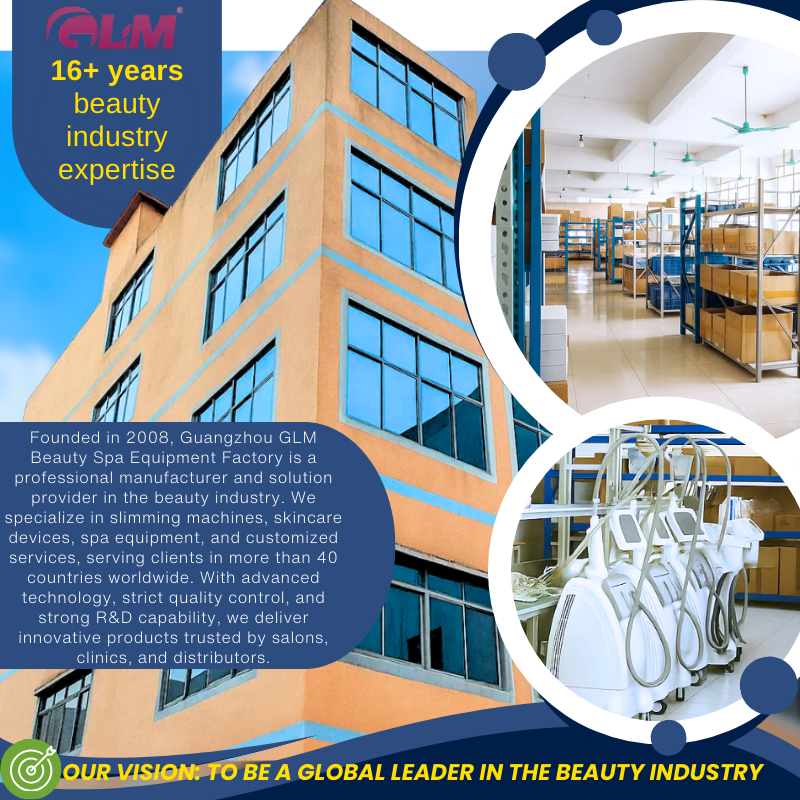
Founded in 2008, Guangzhou GLM Beauty Spa Equipment Factory specializes in research, development, manufacture and selling of beauty and slimming machines. Our production base is located in Guangzhou City, Guangdong Province, China. Since our foundation, we have introduced advanced technologies and equipment, to assure high quality and high performance of our products. With professional marketing guide and excellent after-sales service, our products have been exported to over 20 countries and regions, including Southeast Asia, the Middle East, Europe and the United States, won worldwide praises and gained a good reputation