
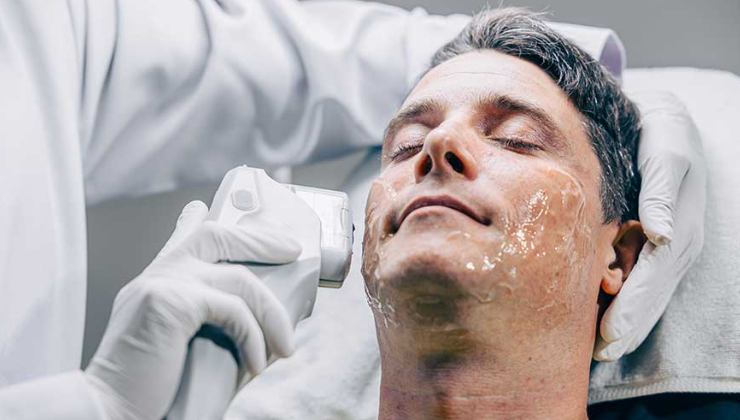
Analysis of the Comprehensive Treatment Plan of High-intensity Focused Ultrasound (HIFU) in Skin beauty
Introduction
High-Intensity Focused Ultrasound (HIFU) technology, as a non-invasive means of skin lifting and firming, has rapidly risen in the field of beauty in recent years and has already become the gold standard in this field. For professionals in beauty clinics, dermatologists and medical spas, a thorough understanding and precise implementation of HIFU treatment plans not only concerns customer satisfaction, but also directly affects the safety and long-term effectiveness of the treatment. This article will conduct a comprehensive and in-depth exploration of HIFU treatment plans, covering multiple key aspects such as indications, contraindications, marking of treatment areas, drawing of treatment lines, reference treatment parameters, key operation techniques, peri-treatment management, and post-treatment care. The aim is to assist professionals in providing patients with safe, effective, and scientific treatment plans.
Indications: Precise positioning of ideal candidates
Ideal indications
HIFU technology is most suitable for patients in the following situations:
Mild to moderate skin laxity on the face and neck: For patients with this condition, the skin elasticity has decreased, but severe laxity has not yet occurred. HIFU can effectively enhance skin firmness and improve laxity by stimulating the regeneration and reorganization of collagen.
Fine lines and early wrinkles: For fine lines and early wrinkles caused by factors such as skin aging and rich expressions, HIFU can promote the repair and regeneration of deep skin tissues, making the skin smoother and more delicate, and reducing the appearance of wrinkles.
Slight loss of the jawline or facial contours: As one ages, the jawline gradually blurs and the facial contours are no longer clear. HIFU can act on the SMAS layer (the superficial muscular aponeuromembrane system), lift the jawline, reshape the facial contour, and make the face more three-dimensional.
For those who wish to postpone surgical intervention: For patients who are concerned about surgical risks, have a long recovery period, but still hope to improve skin laxity and aging issues, HIFU offers a non-invasive alternative that can to some extent delay the need for surgery.
Absolute contraindications
Before implementing HIFU treatment, it is essential to strictly screen for absolute contraindications to ensure the patient's safety. Absolute contraindications include:
Patients with active herpesvirus infection in the treatment area: Active herpesvirus infection can cause a strong local skin inflammatory response. At this time, HIFU treatment may aggravate the infection and even cause the virus to spread, increasing the treatment risk.
Patients with highly sensitive facial skin: Highly sensitive skin reacts more strongly to stimuli. The heat generated by HIFU treatment may cause allergic reactions such as redness, swelling, itching, and pain, and may even lead to skin damage.
Patients with active skin diseases and Koebner's phenomenon: Koebner's phenomenon refers to the appearance of the same skin lesion as the original skin disease at the site of normal skin trauma. When such patients undergo HIFU treatment, new skin lesions may be induced in the treated area, thereby aggravating their condition.
Patients with unhealed local wounds, active systemic diseases or local infectious skin diseases that may affect healing: When wounds have not healed or there are infectious skin diseases, the skin's repair ability decreases. The heat generated by HIFU treatment may interfere with the wound healing process, increase the risk of infection, and even lead to wound deterioration. Patients with active systemic diseases have poor overall physical conditions and may not be able to tolerate the stress response brought about by HIFU treatment.
Pregnant or lactating women: Currently, there is insufficient research to confirm the safety of HIFU treatment for pregnant women and their fetuses. To avoid potential risks, pregnant or lactating women should avoid receiving HIFU treatment.
Patients with mental disorders or those who have unrealistic expectations for treatment outcomes: Patients with mental disorders may not be able to correctly understand the treatment process and possible results, and are prone to emotional fluctuations or poor cooperation during the treatment. Patients who have unrealistic expectations for the treatment outcome may experience dissatisfaction and disputes when the treatment fails to achieve the expected effect.
Patients with severe systemic diseases: The physical functions of patients with severe systemic diseases are impaired, and they may not be able to bear the physiological burden brought by HIFU treatment. The treatment may aggravate the condition or cause other complications.
Other contraindications determined by the doctor: The doctor should, based on the specific condition of the patient, comprehensively consider various factors to determine whether there are any other circumstances that are not suitable for HIFU treatment.
Relative contraindications
Relative contraindications do not mean that HIFU treatment is absolutely impossible, but before treatment, it is necessary to carefully assess the risks and benefits and take corresponding preventive measures. Relative contraindications include:
Metal implants in the treatment area: Metal implants may interfere with the propagation and focusing of HIFU ultrasound, affecting the treatment outcome and even causing damage to the surrounding tissues of the metal implants.
Severe or cystic acne in the treatment area: Severe or cystic acne can cause obvious inflammatory reactions in the local skin. HIFU treatment may aggravate the inflammation, lead to the spread of infection, and increase the treatment risk.
Patients seeking treatment are severely obese or have significant weight fluctuations (BMI over 30kg/m²) : The skin fat layer of severely obese patients is relatively thick, which may affect the penetration depth and focusing effect of HIFU ultrasound, reducing the treatment outcome. Large fluctuations in body weight may lead to changes in the degree of skin laxity, affecting the long-term effect of treatment.
Excessive facial skin with severe wrinkles and folds: For patients with excessive facial skin, severe wrinkles and folds, the improvement effect of HIFU treatment may be limited and may need to be combined with other treatment methods to achieve the desired effect.
Severe photoaging: Severe photoaging can cause significant changes in the structure and function of the skin. HIFU treatment may not be able to completely reverse the damage caused by photoaging, and the therapeutic effect may not be as expected.
Patients with severe elastic fibrosis or facial paralysis: The skin elastic fibers of patients with severe elastic fibrosis are severely damaged, and HIFU treatment may be difficult to effectively stimulate the regeneration and reorganization of collagen. The facial nerve function of patients with facial paralysis is impaired, and HIFU treatment may aggravate nerve damage or affect the therapeutic effect.
Patients who are prone to keloids or have a keloid-prone constitution: Patients with a keloid-prone constitution are likely to develop keloids after skin trauma. The heat generated by HIFU treatment may cause a certain degree of damage to the skin, increasing the risk of keloid formation.
Continuous use of systemic corticosteroids or receiving immunotherapy: Systemic corticosteroids and immunotherapy may affect the skin's repair ability and immune function, increase the risk of infection, and impact the efficacy and safety of HIFU treatment.
In the past two weeks, patients have used psychotropic drugs, warfarin or heparin: Psychotropic drugs may affect the patient's mental state and cooperation. Warfarin and heparin are anticoagulant drugs that increase the risk of bleeding and may cause local bleeding or hematoma formation during the treatment process.
Patients with implanted cardiac pacemakers or defibrillators should be treated with caution: Cardiac pacemakers and defibrillators may be interfered with by HIFU ultrasound, affecting their normal operation. Therefore, it is necessary to fully assess the risks and take corresponding protective measures before treatment.
Treatment area marking: Precise positioning to ensure safe and effective treatment
The frontal and periorbital regions
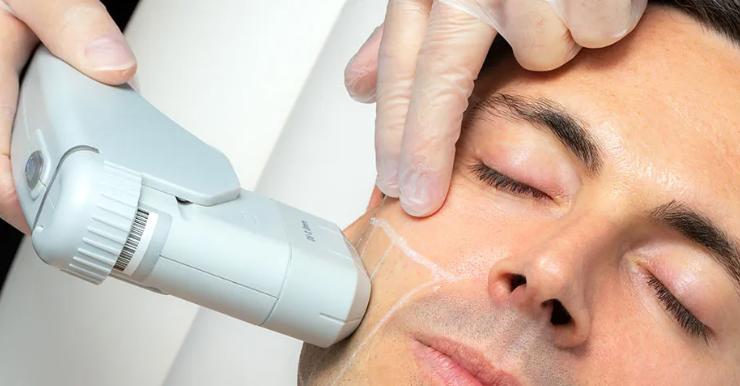
Draw an arc 1 centimeter from the corner of the mouth along the hairline from the outer corner of the eye. Mark vertical lines at intervals of 2.5 centimeters within this area. The marking of this area helps determine the scope and direction of HIFU treatment, avoiding damage to important nerves and blood vessels.
Submandibular area
Draw a line from the edge of the jaw to 1.5cm in front of the ear, draw a vertical line from the midpoint of the chin to the ear, and from the upper edge of the thyroid cartilage to the submandibular area. This area is the designated treatment area. Accurate marking of the submandibular area can ensure that HIFU treatment can effectively improve problems such as loose jawline.
Other key marking points
Make a mark 1.5 centimeters outside the corner of the mouth and in front of the ear. Draw a line connecting the alar nasi and the highest point below the ear, passing through the previously marked point. These marking points provide a reference for the line drawing of HIFU treatment and help form a complete and reasonable treatment area.
HIFU treatment line: Scientific planning to achieve precise treatment
The area for drawing the treatment line
The HIFU treatment line drawing area covers multiple key parts, including the bony orbital area (including the upper eyelid and periorbital area), the middle temporal region to below the cricoid cartilage and above the sternal incision (located within the lateral edge of the trachea). Avoid the Adam's apple, vocal cords and thyroid gland, areas with dense nerve branches (such as the infraorbital foramen, supraorbital foramen/incision, greater auricular nerve area and facial nerve area), 1.5 cm in front of the ear, 1.5 cm inward from the corner of the mouth, depressed facial areas (such as the cheeks and temples), and bony areas along the edge of the jaw. The reasonable planning of these areas can ensure that HIFU treatment covers the parts that need lifting and firming, while avoiding important structures and reducing treatment risks.
Treatment line marking and suggestions
The purpose of the therapeutic head
4.5mm: The treatment head at this depth is not suitable for the periorbital area, the forehead, the neck below the thyroid cartilage, or the sunken temple area. Because the tissue structure of these areas is rather special, the use of a 4.5mm treatment head may increase the risk of damaging important structures.
1.5mm and 2.0mm: Typically used for the entire forehead, face and neck (excluding the nose). These two depths of treatment heads are mainly used for epidermal firming and pore refinement, which can improve the texture and appearance of the skin.
3.0mm: Use according to the individual's tissue thickness and fat level. The 3.0mm treatment head can be used for skin tightening. For patients with different tissue thicknesses and fat levels, the treatment parameters need to be adjusted according to specific conditions.
Treatment suggestions for different areas of the face
The upper one-third of the face (forehead, upper face, outer corner of the eye, and suborbital area) : Usually 7 injections are given on each side, totaling approximately 30 to 50 injections. Please allocate according to the situation. A slight overexpansion is acceptable, but it is necessary to be careful to avoid skin damage caused by excessive treatment.
Middle and lower face (cheeks) : Use a 1.5-4.5 mm blade. Avoid using 5 mm and 7 mm blades. The knife heads of different depths can be selected according to the specific conditions of the cheeks to achieve the best therapeutic effect.
Submandibular area: Use the same or slightly lower head and energy levels as the cheeks. The skin and tissue structure of the submandibular area are similar to those of the cheek, so the treatment parameters of the cheek can be referred to and appropriately adjusted according to the actual situation.
Neck: Usually, a head of 1.5 to 2.0 millimeters is used, and a head of 3.0 millimeters or more should be avoided. The skin on the neck is relatively thin. Using a treatment head that is too deep may increase the risk of injury.
Reference treatment parameters: Precise Settings to ensure treatment effectiveness
The depth selection of ink cartridges for different parts
Regional ink cartridge depth notes
The forehead/temples are 1.5 mm /2.0 mm thin. Avoid high energy to prevent skin damage.
3.0mm / 4.5mm on the cheeks are used for deeper lifting treatments to stimulate the regeneration and reorganization of collagen and improve skin laxity.
For the jawline/chin 3.0mm / 4.5mm, apply light pressure to avoid excessive compression that may cause skin damage, while ensuring the treatment effect.
The neck should be 1.5mm / 2.0mm. Avoid using a head larger than 3.0mm to prevent damage to the important structures of the neck.
The guide suggests
Treatment sequence: Follow the principle of from deep to shallow, from bottom to top, and from inside to outside. Treating the deep tissues first can provide better support for the superficial tissues. The treatment sequence from bottom to top and from inside to outside helps to achieve a natural lifting effect.
The uses of treatment heads at different depths
1.5mm and 2.0mm: Mainly used for epidermal firming and pore refinement, they can improve the texture and appearance of the skin, making it smoother and more delicate.
3.0mm: Used for skin firming, it enhances skin elasticity by stimulating the contraction and regeneration of collagen.
4.5mm: It is used for SMAS lifting. The SMAS layer is a key layer for facial lifting. The 4.5mm treatment head can precisely act on this layer to achieve significant lifting effects.
Key operational techniques and peri-treatment management: Standardize operations to ensure treatment safety
The principle of consistency
Avoid treating sensitive areas: Avoid treating the upper eyelid, vocal cords and thyroid region. The skin of the upper eyelid is thin and rich in nerves, and the treatment is prone to cause complications. The structure of the vocal cords and thyroid regions is important, and treatment may affect their normal functions.
Avoid using high-energy treatments near the nerve plexus. Head over 3.0 millimeters: The tissues near the nerve plexus are sensitive, and high-energy treatments may damage the nerves, leading to abnormal sensations or motor dysfunction.
Avoid using a head larger than 3.0 millimeters in the sunken lip area: The skin and tissue in the sunken lip area are relatively thin. Using a treatment head that is too deep may cause damage, affecting the appearance and function of the lips.
Combining the "knife head" and the "gun head" : The knife head and the gun head have different characteristics and advantages. Their combined use can fully leverage their functions and enhance the therapeutic effect.
Suggestions on treatment depth
Subcutaneous fat thickness: Start with 4.5mm, then 3.0mm, and then 2.0mm/1.5mm. This gradually decreasing treatment depth can comprehensively stimulate the regeneration and reorganization of collagen from deep to shallow layers, achieving better lifting and firming effects.
Loose skin with little fat: Use 3.0mm, 2.0mm, 1.5mm. Based on the degree of skin laxity and fat distribution, select the appropriate treatment depth to achieve the best therapeutic effect.
For areas with thinner skin (such as the eyes, cheeks, neck, and sunken areas) : Use 2.0 mm and 1.5 mm. Avoid using a head area of 3.0mm or more in these regions to prevent excessive damage to the skin.
General technology
Standard sequence: from deep to shallow, from bottom to top, from inside to outside. It begins with the "tip of a knife" and ends with the "tip of a gun". This treatment sequence can achieve a natural lifting effect while fully leveraging the advantages of both the knife head and the gun head.
Ensure that the probe makes full contact with the skin and maintains a uniform distance: Full contact between the probe and the skin can ensure the effective transmission of ultrasound waves, and a uniform distance can guarantee the uniformity of the treatment and the consistency of the effect.
Before each point is completed, do not lift the probe off the skin: This can ensure the continuity and effectiveness of the treatment and avoid treatment interruption or poor results due to the lifting of the probe.
The operation mode of the knife head: It adopts the "constant height and variable direction" mode. After heating, it gradually increases from slow to fast to maintain smooth movement. When using 4.5 millimeters, press gently. Do not press hard. For 1.5mm / 2.0mm, use lower energy and ensure close contact with the skin to avoid burns. A reasonable operation method can ensure the safety and effectiveness of the treatment.
Peri-treatment period management plan
Apply coupling gel: Apply an adequate amount of coupling gel to the treatment area. The coupling gel can ensure the effective transmission of ultrasound and improve the therapeutic effect.
Avoid direct treatment of osteophytes: The tissue at the osteophyte site is hard, and direct treatment may cause pain or injury. If the patient feels numb or painful, the treatment should be stopped immediately and the treatment area and parameter Settings should be checked to see if they are appropriate.
Inform the patient in advance of possible situations: Inform the patient in advance that there may be swelling or a stinging sensation, so that the patient can be mentally prepared and avoid panic due to discomfort.
Pain management: For those who are sensitive to pain, oral painkillers should be provided 30 minutes before treatment to alleviate the patient's pain and enhance their tolerance to the treatment.
Evaluation: Take standard before-after photos (front/side / 45° Angle under consistent lighting) to compare the treatment effect. Consider using assessment tools such as f-tap or ultrasound to evaluate the skin changes before and after treatment more accurately.
Energy control: Use the lower energy of the 3.0mm/4.5mm head to avoid overtreatment. Excessive treatment may lead to complications such as skin damage and heat injury, affecting the treatment outcome and patient satisfaction.
Treatment frequency: Standard anti-aging treatment is administered once every 12 months; Low-energy or few-line treatment is administered once every 4 to 6 months; The key treatment for 1.5mm/2.0mm is once every 2-3 months. Maintenance or improvement of pores/skin texture every 4 to 5 weeks. A reasonable treatment frequency can ensure the persistence of the treatment effect and avoid over-treatment at the same time.
During the treatment period: Key points of applied technology
The use of coupling gel: Apply a large amount of coupling gel to ensure effective ultrasonic transmission. Insufficient coupling gel will affect the propagation effect of ultrasonic waves and reduce the quality of treatment.
Skin contact: Maintain continuous skin contact. The probe should not be lifted during shooting. Continuous skin contact can ensure the continuity and uniformity of the treatment, avoiding treatment interruption or uneven effects caused by the lifting of the probe.
Use of the indenter: Gently press with a 4.5mm indenter. For shallow depths, apply greater pressure. Appropriate pressure can ensure good contact between the treatment head and the skin, while avoiding excessive pressure that may cause skin damage.
Line distribution: Evenly distribute the lines at intervals of 2.5 centimeters, consistent with the skin's anatomical structure. Uniform line distribution can ensure the comprehensiveness of treatment and the consistency of effect, while conforming to the anatomical structure of the skin and reducing damage to surrounding tissues.
Avoid thermal damage: Avoid excessive shooting in one area to prevent thermal damage. Excessive shooting can cause local overheating, leading to thermal damage and affecting the repair and regeneration of the skin.
Pain monitoring: Remind patients that if they report excessive pain or numbness, they should immediately pause and be evaluated. Timely treatment of pain and numbness can prevent patients from experiencing serious discomfort and complications.
Post-treatment care and patient management: Meticulous care to promote recovery and optimize treatment outcomes
Post-treatment care
Cold compress: After treatment, cold compress is applied to reduce redness and swelling. Cold compress can constrict blood vessels, reduce local congestion and swelling, and relieve the patient's discomfort.
Avoid high-temperature environments: It is recommended that patients avoid saunas, hot baths and sun exposure within 48 hours. High-temperature environments may cause blood vessels to dilate, aggravate redness, swelling and inflammatory responses, and affect the recovery of the skin.
Moisturizing and sun protection: It is recommended to use a moisturizing mask and physical sunscreen for a week. Moisturizing masks can replenish the moisture of the skin and promote skin repair. Physical sunscreen can prevent ultraviolet rays from damaging the skin and reduce the risk of pigmentation.
Avoid irritating products: It is not recommended to use retinoic acid, fruit acid or irritating exfoliants after surgery. These products may irritate the skin and affect its recovery and treatment effect.
Side effect management
Common side effects
Redness, swelling, tightness and dryness: These symptoms usually subside on their own within 2 to 7 days. Symptoms can be relieved through methods such as cold compresses and moisturizing.
Mild soreness or tingling in the lower jaw: It usually lasts for 2 to 3 days and can be relieved by rest and appropriate massage.
Rare side effects
Blisters, pigmentation and nerve irritation: Usually subside within 1 to 2 weeks. If blisters occur, they should be handled with caution to avoid leaving depressed scars. For symptoms of nerve irritation, vitamin B12, steroids and neurotrophic agents can be used for treatment.
Scars or burns: Caused by improper use of energy/depth. Before treatment, the treatment parameters should be strictly controlled to avoid over-treatment. If scars or burns occur, corresponding treatment measures should be taken in a timely manner, such as using scar repair products or undergoing laser treatment.
Vision risk: Extremely rare. Please avoid the eye area unless there is proper occlusion. Strictly follow the treatment plan to avoid causing damage to the eyes. If eye injury occurs, active treatment should be carried out immediately.
Nerve injury management: Prevent nerve injury through energy control and standardized operation. If nerve damage occurs, vitamin B12, steroids and neurotrophic agents can be used for treatment. Most patients can recover within a month, but it is necessary to closely monitor the changes in their symptoms and adjust the treatment plan in a timely manner.
Treatment Frequency Guidelines
Anti-aging enhancement (standard) : Undergoing treatment every 12 months can maintain the firmness and elasticity of the skin and delay skin aging.
Light maintenance (low energy consumption) : Treatment is conducted every 4 to 6 months and is suitable for patients with good skin conditions who only require light maintenance.
Surface renewal (1.5/2.0mm) : Undergo treatment every 2-3 months, mainly to improve skin texture and pore issues, making the skin smoother and more delicate.
Improving skin texture/pores: Undergoing treatment every 4 to 5 weeks can continuously promote skin metabolism, improve skin texture and pore conditions. However, it is necessary to avoid over-treatment to prevent skin damage.
Conclusion
Mastering the HIFU machine treatment plan is crucial for beauty professionals. By thoroughly understanding each link such as indications, contraindications, marking of treatment areas, drawing of treatment lines, reference treatment parameters, key operation techniques, peri-treatment management, and post-treatment care, professionals can provide patients with safe, effective and scientifically based treatment outcomes. By following a structured and evidence-based approach and integrating the cutting-edge HIFU technology into services, it not only enhances the credibility of professionals but also improves the customer experience, providing patients with higher-quality skin beauty services. In future clinical practice, professionals should constantly accumulate experience, pay attention to the latest industry trends, and continuously optimize treatment plans to meet the growing aesthetic needs of patients.
GLM is a specialized beauty instrument factory that produces instruments for a variety of functions, including weight loss devices. We have vacuum negative press, radio frequency fat blasting equipment, frozen fat dissolving machine and EMS body shaping machine. GLM is a 14 year old supplier of beauty instruments with guaranteed quality.https://gdglmbeauty.com/