Introduction
In the evolving landscape of the beauty and aesthetics industry, hair restoration has moved far beyond generic solutions. Today, clients expect personalized, results-driven treatments—especially when addressing concerns such as thinning hair, hair loss, or scalp imbalance. For professional salons and clinics, delivering consistent and visible outcomes requires more than topical products or standard procedures. It demands precision.
This is where scalp analysis technology plays a transformative role. By integrating advanced diagnostic devices into treatment workflows, practitioners can better understand the root causes of hair and scalp conditions, enabling them to design targeted, effective hair growth programs.
Rather than being a supplementary step, scalp analysis is increasingly becoming the foundation of modern hair treatment protocols—bridging the gap between assumption-based care and data-driven solutions.
Background / Problem
Hair loss and scalp disorders are multifactorial issues. Factors such as genetics, hormonal imbalances, stress, poor circulation, environmental pollution, and improper hair care routines all contribute to the condition of the scalp and hair follicles. However, many traditional treatments fail because they rely on generalized assumptions rather than individualized diagnosis.
In a typical salon setting without diagnostic tools, practitioners may base their recommendations on visible symptoms alone—such as dryness, oiliness, or dandruff. While these observations are helpful, they do not provide a complete picture of underlying conditions like:
- Follicle blockage
- Scalp inflammation
- Microcirculation deficiencies
- Sebum imbalance at a microscopic level
- Early-stage miniaturization of hair follicles
As a result, treatments may be ineffective or slow to show results, leading to client dissatisfaction and reduced trust.
For clinics and professional beauty centers aiming to position themselves as advanced solution providers, this lack of precision represents a significant limitation. Clients today are more informed and expect transparency, scientific backing, and measurable progress.
Technology / Mechanism
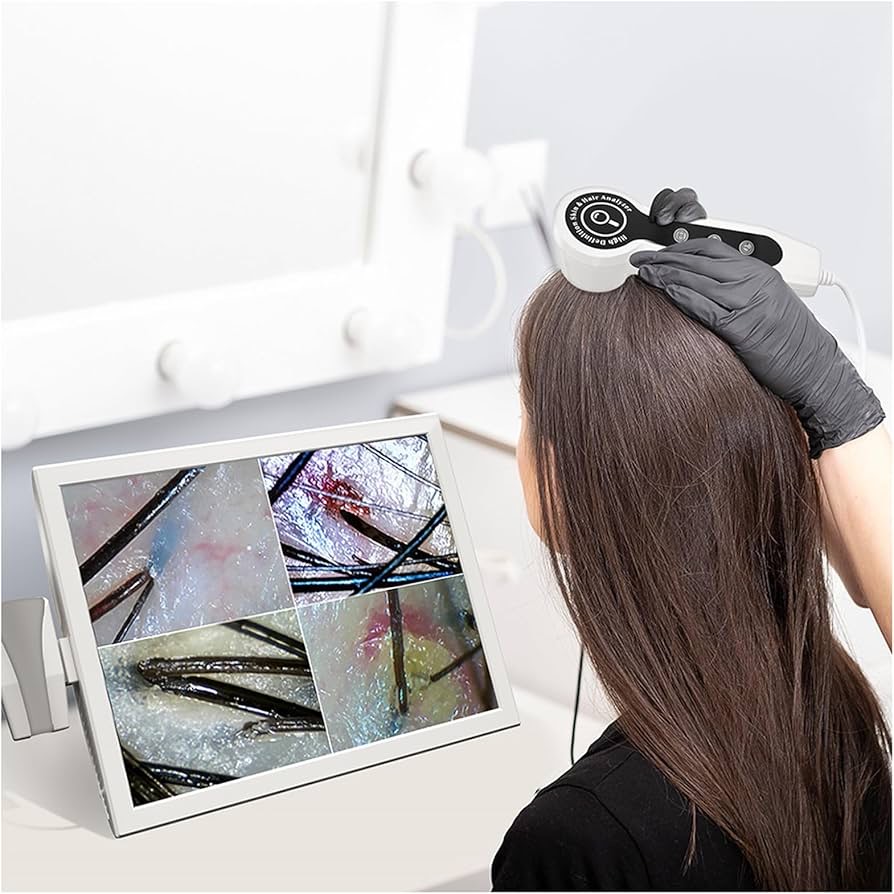
Scalp analysis devices utilize high-resolution imaging, magnification technology, and sometimes AI-assisted diagnostics to assess scalp and hair conditions in detail. These systems typically combine several key technologies:
1. High-Magnification Imaging
Using microscopic lenses (often 50x to 200x magnification), the device captures detailed images of the scalp surface and hair follicles. This allows practitioners to observe:
- Follicle density
- Hair shaft thickness
- Sebum accumulation
- Dead skin cells and buildup
- Signs of irritation or inflammation
2. Digital Analysis Software
Advanced systems integrate software that analyzes captured images and provides data-driven insights. Some platforms can automatically identify scalp conditions and categorize them into types such as oily, dry, sensitive, or aging scalp.
3. Moisture and Sebum Detection
Certain devices include sensors that measure scalp hydration levels and oil secretion, offering quantitative data to support treatment planning.
4. Comparative Tracking
One of the most valuable features is the ability to store and compare images over time. This enables practitioners and clients to visually track improvements, making treatment outcomes more tangible and credible.
By combining these technologies, scalp analysis devices transform subjective observation into objective evaluation—laying a scientific foundation for hair growth treatments.
Advantages / Comparison
1. Personalized Treatment Planning
Compared to traditional methods, scalp analysis allows practitioners to tailor treatments based on each client’s unique condition. Instead of applying a one-size-fits-all approach, professionals can select appropriate devices, serums, and protocols with greater accuracy.
2. Enhanced Treatment Effectiveness
When the root cause is clearly identified, treatments become more targeted and efficient. For example, a client with poor microcirculation may benefit more from therapies that stimulate blood flow, while someone with clogged follicles requires deep cleansing and exfoliation.
3. Improved Client Trust and Engagement
Visual evidence plays a powerful role in client communication. When clients can see magnified images of their scalp and track progress over time, they are more likely to trust the process and remain committed to treatment plans.
4. Professional Differentiation
In a competitive market, offering scalp analysis services positions a salon or clinic as technologically advanced and results-oriented. This not only attracts high-value clients but also justifies premium pricing.
5. Superiority Over Home Care Devices
While at-home scalp care tools have gained popularity, they lack the diagnostic precision and analytical capabilities of professional equipment. Home devices may provide basic stimulation or cleansing, but without accurate assessment, their effectiveness is limited.
Professional systems, on the other hand, integrate diagnostics with treatment planning—ensuring that every step is guided by data rather than guesswork.
Applications / Client Needs
Scalp analysis is not limited to a specific client group; its applications span a wide range of hair and scalp concerns commonly encountered in professional settings.
1. Hair Loss and Thinning
For clients experiencing early-stage hair loss, scalp analysis can detect miniaturization of hair follicles and reduced density before it becomes visibly severe. This allows for early intervention, significantly improving treatment outcomes.
2. Oily or Dry Scalp Conditions
By measuring sebum levels and hydration, practitioners can accurately diagnose imbalances and recommend appropriate treatments—such as oil control therapies or hydration-focused protocols.
3. Dandruff and Scalp Sensitivity
Scalp imaging helps distinguish between different types of dandruff (dry vs. oily) and identify signs of irritation or inflammation, enabling more precise treatment selection.
4. Post-Treatment Evaluation
After procedures such as microneedling, laser therapy, or scalp detox treatments, analysis devices can assess effectiveness and guide adjustments in subsequent sessions.
5. Customized Treatment Programs in Clinics
In medical aesthetics clinics or high-end salons, scalp analysis serves as the starting point for comprehensive hair restoration programs. It integrates seamlessly with other technologies such as:
- LED light therapy for scalp stimulation
- High-frequency treatments to improve circulation
- Nutrient infusion systems for follicle nourishment
By aligning diagnostics with advanced treatment devices, practitioners can deliver holistic and highly effective solutions.
Conclusion
As the demand for effective and personalized hair growth treatments continues to rise, scalp analysis is no longer an optional add-on—it is a critical component of modern professional practice.
By providing deep insights into scalp health and hair follicle conditions, this technology empowers practitioners to move from generalized care to precision-based treatment. The result is not only improved efficacy but also stronger client relationships built on transparency and trust.
For salons and clinics seeking to elevate their service offerings, integrating scalp analysis devices represents a strategic investment. It enhances treatment outcomes, strengthens professional credibility, and positions the business at the forefront of innovation in the beauty and aesthetics industry.
Ultimately, successful hair restoration begins with understanding—and scalp analysis is the key to unlocking that understanding.
Founded in 2008, Guangzhou GLM Beauty Spa Equipment Factory specializes in research, development, manufacture and selling of beauty and slimming machines. Our production base is located in Guangzhou City, Guangdong Province, China. Since our foundation, we have introduced advanced technologies and equipment, to assure high quality and high performance of our products. With professional marketing guide and excellent after-sales service, our products have been exported to over 20 countries and regions, including Southeast Asia, the Middle East, Europe and the United States, won worldwide praises and gained a good reputation.