
1. Introduction
Forehead wrinkles are among the most noticeable signs of facial aging. From subtle lines that appear when raising the eyebrows to deeper creases that remain visible at rest, these changes can influence how refreshed, relaxed, and youthful a person looks. In 2026, however, the goal of forehead rejuvenation is evolving. Rather than eliminating every line, many clients are looking for natural-looking results that preserve facial expression while improving skin texture and firmness.
For aesthetic clinics and professional beauty centers, this shift creates an opportunity to offer more personalized treatment strategies. Botox and other botulinum toxin injections remain established options for expression-related wrinkles, while radiofrequency (RF), ultrasound-based skin tightening, professional microneedling, and selected laser treatments address different aspects of skin aging. The most appropriate choice depends on the type of wrinkles, skin condition, treatment expectations, and the practitioner's qualifications.
Professional aesthetic devices are particularly relevant when the treatment objective extends beyond temporarily relaxing facial muscles. Depending on the technology and its indications, an in-clinic treatment may help improve skin texture, support collagen remodeling, or address mild skin laxity. Understanding what each approach can realistically achieve helps clinics build treatment plans around individual needs rather than promoting a single solution for every client.
2. Background and Problem: Why Do Forehead Wrinkles Develop?
Forehead wrinkles generally result from a combination of repeated facial movement, changes in the skin's structural proteins, and environmental exposure. Understanding these factors is the first step toward selecting an appropriate treatment.
Dynamic Wrinkles and Static Wrinkles
Dynamic wrinkles appear during facial movements, such as raising the eyebrows or expressing surprise. Repeated contraction of the frontalis muscle contributes to horizontal forehead lines. These wrinkles may become more pronounced over time as the skin gradually loses some of its elasticity.
Static wrinkles remain visible even when the face is relaxed. They are associated with longer-term changes in collagen, elastin, hydration, and skin structure. Sun exposure, smoking, natural aging, and individual differences in skin characteristics may contribute to their development.
This distinction matters because treatments do not all target the same mechanism. Botulinum toxin reduces the muscle activity responsible for certain expression lines. Skin-focused treatments, meanwhile, may help improve texture, firmness, or the appearance of fine lines, depending on the device and treatment protocol.
Why One Treatment Does Not Suit Everyone
A client with early expression lines may benefit from a different approach than someone with deeper, established creases and visible skin laxity. Skin sensitivity, medical history, previous aesthetic procedures, budget, recovery time, and willingness to undergo injections also influence treatment selection.
For professional clinics, an initial consultation should therefore assess the forehead at rest and during movement, review relevant medical history, and establish realistic goals. Standardized photographs and appropriate skin assessment tools can help practitioners document baseline conditions and monitor changes over time.
3. Technology and Mechanism: What Treatments Can Help Reduce Forehead Wrinkles?
3.1 Botox and Other Botulinum Toxin Injections
Botox is a well-known option for expression-related forehead wrinkles. Botulinum toxin temporarily reduces the activity of targeted muscles, limiting the repetitive contractions that make certain lines visible. Clinical guidance supports its use for appropriately selected patients with horizontal forehead lines and other expression-related wrinkles. Source: American Family Physician
Results are temporary, and maintenance treatments may be required. The outcome depends on facial anatomy, muscle activity, product selection, dosing, and injection technique.
Natural-looking treatment requires particular attention to facial movement and brow position. Over-treatment can create an overly restricted expression, while unsuitable injection placement may contribute to brow or eyelid drooping. Botulinum toxin injections should be performed by appropriately qualified healthcare professionals in accordance with local regulations and product instructions.
Importantly, Botox does not directly rebuild collagen or correct every aspect of skin texture. Clients whose main concern is roughness, fine surface lines, or mild laxity may need a different treatment approach or a professionally supervised combination plan.
3.2 Radiofrequency (RF) Skin Tightening
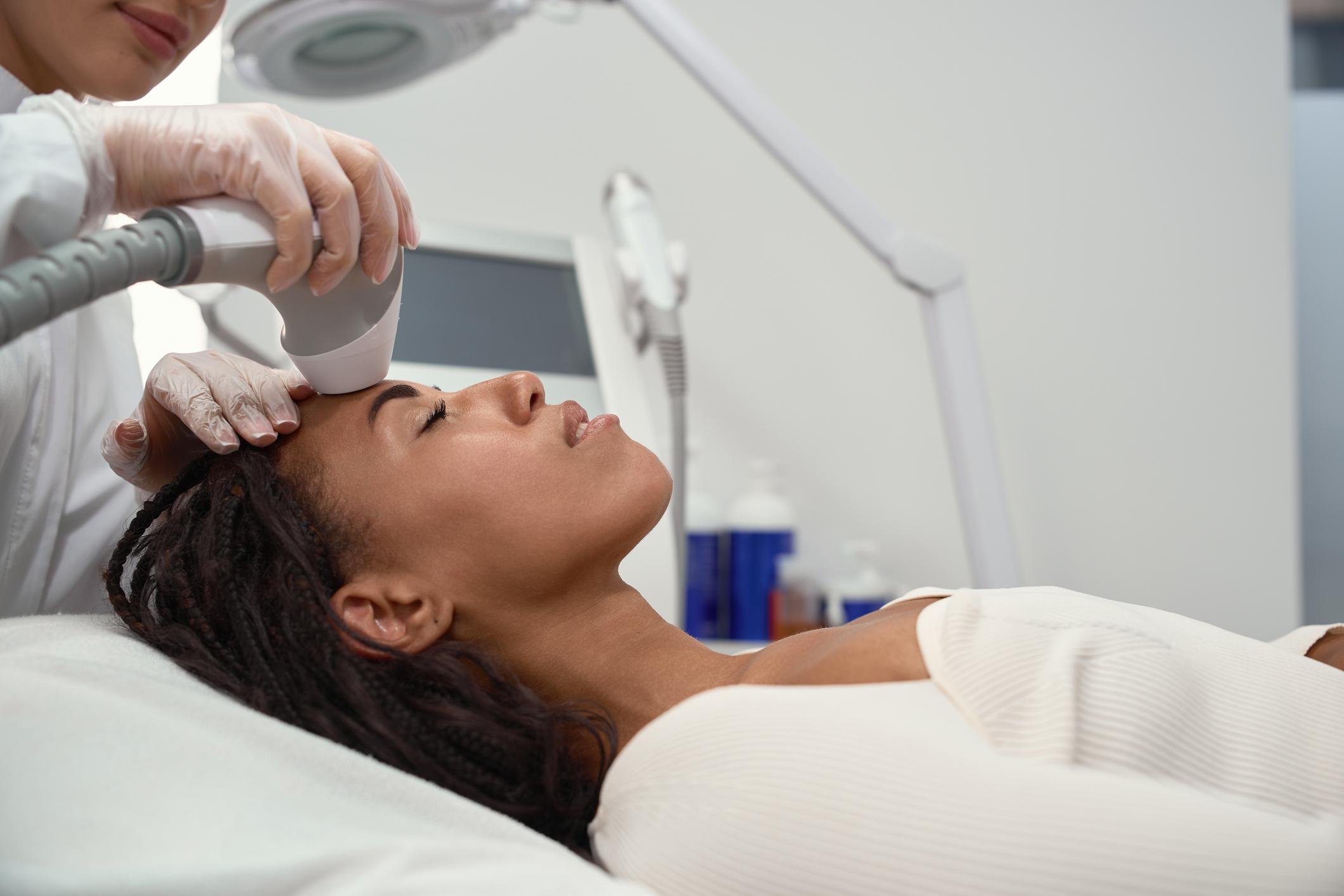
Radiofrequency technology is used in aesthetic treatments designed to improve skin firmness and selected signs of aging. Depending on the device, RF energy generates controlled heating in targeted tissue, which may support collagen remodeling and improve the appearance of skin laxity and wrinkles.
A 2026 study published in the Journal of Cosmetic Dermatology evaluated unipolar RF treatment for facial aging and skin laxity. Its findings contribute to the growing clinical discussion around energy-based facial rejuvenation, although results from a particular device or study should not be generalized to every RF platform. Read the study
For professional beauty clinics and aesthetic practices, RF devices can be relevant when clients seek gradual improvements in firmness and skin quality without injections. Depending on the technology, treatment may be suitable for selected areas of the face, but the forehead requires particular attention to anatomy, energy delivery, and device-specific safety instructions.
RF is not a direct substitute for Botox when the primary concern is strong muscle-driven movement. Instead, it addresses a different component of facial aging and may complement other treatments when clinically appropriate.
3.3 Ultrasound-Based Skin Tightening
Certain professional ultrasound technologies deliver focused acoustic energy to selected tissue depths. Their intended effects may include tissue remodeling and improvements in skin firmness, depending on the platform and indication.
Ultrasound-based treatments are not interchangeable with every other ultrasound device. Energy delivery, treatment depth, approved indications, and safety requirements vary. A recent randomized split-face study published in Scientific Reports examined microfocused ultrasound, microneedle RF, and their combination for facial tightening, illustrating the continuing investigation of energy-based treatment strategies. The study's sample size and protocol should be considered when interpreting its findings. Read the study
For forehead applications, suitability must be assessed carefully. Not every ultrasound platform is indicated for the forehead, and treatment should never extend beyond the manufacturer's approved treatment areas or the practitioner's scope of practice.
3.4 Professional Microneedling and Fractional Laser Treatments
Microneedling creates controlled micro-injuries in the skin to initiate a wound-healing response. Professional protocols may support improvements in selected textural concerns and fine lines over a course of treatments. Radiofrequency microneedling combines needle delivery with RF energy, creating an additional thermal effect in targeted tissue.
Fractional laser treatments use controlled light-based energy to target selected skin structures and stimulate a repair response. Depending on the laser, treatment settings, and skin characteristics, they may improve photodamage, texture, and certain fine wrinkles.
These procedures differ in invasiveness, recovery time, and risk. Microneedling and laser treatments may cause temporary redness, swelling, or irritation, while inappropriate treatment can lead to burns, infection, pigment changes, or scarring. Treatment selection and aftercare should be based on professional assessment, skin type, device instructions, and relevant clinical guidance.
3.5 Skincare and Daily Prevention
Professional treatments work best within a broader skin-maintenance strategy. Daily broad-spectrum sunscreen helps reduce ongoing ultraviolet damage, while a suitable moisturizer supports the skin barrier. Topical retinoids may improve the appearance of fine wrinkles over time, but irritation is possible and product choice should reflect individual skin tolerance.
Lifestyle measures, including avoiding smoking and maintaining consistent sun protection, can help limit additional skin damage. These steps will not immediately erase established forehead creases, but they can support longer-term skin quality and help maintain treatment results.
4. Advantages and Comparison: Choosing the Right Approach
The main advantage of a professional treatment plan is that it can distinguish between muscle-related wrinkles, skin-quality concerns, and mild laxity instead of treating them as one problem.
| Treatment | Primary target | Typical treatment objective | Key consideration |
|---|---|---|---|
| Botox and other botulinum toxins | Targeted muscle activity | Soften expression-related lines | Requires qualified injection practice; results are temporary |
| RF skin tightening | Selected tissue layers and skin firmness | Support collagen remodeling and improve selected signs of laxity | Outcomes depend on the device, protocol, and patient |
| Focused ultrasound | Selected tissue depths | Improve firmness in appropriately indicated areas | Not every platform is suitable for forehead treatment |
| Microneedling | Skin repair response | Improve selected texture concerns and fine lines | Requires appropriate technique, hygiene, and aftercare |
| Fractional laser | Targeted skin structures | Improve selected texture and photodamage concerns | Device-specific risks, recovery, and skin-type considerations |
| Sunscreen and skincare | Ongoing skin protection and maintenance | Help prevent further damage and support skin quality | Results are gradual and do not replace every clinical treatment |
Professional aesthetic devices offer several practical advantages over unsupervised home treatments when a procedure requires precise energy delivery, controlled treatment depth, clinical assessment, or specialized training. Professional platforms may also offer treatment parameters and applicators designed for particular indications.
However, professional equipment is not automatically safer or more effective simply because it is used in a clinic. Results depend on appropriate patient selection, practitioner competence, device quality, maintenance, and adherence to treatment instructions. Home-use devices also vary substantially in their capabilities and should only be used as directed.
For clinic owners, equipment selection should focus on verified indications, safety features, training requirements, service support, and the needs of the intended client base. A versatile device may support a broader service menu, but only when its actual functions and approved uses match the clinic's treatment goals.
5. Applications and Client Needs: Building a Natural-Looking Treatment Plan
A personalized approach begins with identifying what the client wants to improve.
For early dynamic forehead lines: A qualified healthcare professional may assess whether botulinum toxin treatment is appropriate. Skin protection and a consistent skincare routine remain important, while energy-based procedures should be considered according to the client's skin condition and actual treatment needs.
For fine lines and uneven skin texture: Professional microneedling, selected laser procedures, or suitable RF technologies may be considered after an assessment. The aim is to improve the relevant skin concern, not to promise complete wrinkle removal.
For forehead lines accompanied by mild skin laxity: A practitioner may evaluate whether a suitable skin-tightening treatment can address the laxity component. RF or certain ultrasound technologies may be options when their indications, treatment areas, and safety requirements support their use.
For clients who prefer to avoid injections: A non-injectable treatment plan may emphasize skin quality, texture, sun protection, and appropriately indicated energy-based procedures. Expectations should remain realistic: these approaches do not reproduce the muscle-relaxing effect of botulinum toxin.
For clients seeking comprehensive rejuvenation: In some cases, different treatments can address different concerns within a coordinated plan. Any combination should be selected by appropriately qualified professionals, with attention to treatment timing, cumulative risks, contraindications, and recovery.
Professional clinics can strengthen this process by documenting the client's goals, explaining expected outcomes, discussing possible adverse effects, and scheduling appropriate follow-up. Before-and-after photographs should use consistent lighting, facial positioning, and expression to avoid suggesting improvements that are mainly caused by photography differences.
For manufacturers and suppliers of professional aesthetic equipment, these clinical considerations also shape product value. Clear technical specifications, suitable applicators, reliable performance, operator training, maintenance support, and transparent documentation help clinics evaluate whether a device fits their actual practice. The strongest product positioning focuses on measurable capabilities and appropriate applications rather than promising that one machine can solve every wrinkle concern.
6. Conclusion
Reducing forehead wrinkles in 2026 is less about finding a single universal treatment and more about matching the technology to the underlying cause. Botox and other botulinum toxin injections can soften selected expression-related lines, while RF, appropriate ultrasound platforms, microneedling, and fractional lasers address different aspects of skin quality and aging.
For aesthetic clinics, the opportunity lies in combining sound assessment, realistic communication, professional-grade technology, and individualized treatment planning. The objective is not necessarily a completely line-free forehead. It is a refreshed appearance that preserves natural expression while improving the concerns that matter most to each client.
Choosing the right approach begins with understanding the skin, the muscles, the available technology, and the limits of each treatment. When safety and individual needs guide the decision, professional aesthetic services can offer a more considered path toward natural-looking forehead rejuvenation