1. Introduction
The aesthetic industry is continuing to move toward non-invasive treatments that support healthier-looking skin without requiring extensive downtime. In 2026, LED light therapy remains an important technology in professional skincare clinics, medical spas, and beauty salons. Among the different wavelengths used in phototherapy, red light and near-infrared (NIR) light have attracted particular attention for their potential to stimulate cellular activity, support collagen production, and improve visible signs of skin aging.
Unlike traditional treatments that rely on aggressive exfoliation or thermal damage, LED light therapy uses specific wavelengths of light to interact with skin cells through a process known as photobiomodulation (PBM). This non-invasive approach has made it an attractive option for professionals looking to incorporate gentle, technology-based skin rejuvenation treatments into their service portfolios.
For beauty professionals, the appeal of LED technology extends beyond its individual treatment benefits. Professional LED systems can be integrated into facial treatments, post-procedure care protocols, and customized anti-aging programs. By combining carefully selected wavelengths with consistent treatment schedules, clinics can offer clients a more comprehensive approach to maintaining skin quality.
Understanding how red and near-infrared light work is therefore essential for selecting suitable equipment and developing effective professional treatment programs.
2. Background: Why Does Aging Skin Need Collagen Support?
Collagen is one of the most important structural proteins in the skin. It provides firmness, strength, and support to the dermis, helping the skin maintain a smooth and youthful appearance. Elastin, another important structural protein, contributes to skin flexibility and its ability to return to its original shape.
However, natural collagen production gradually declines with age. External factors such as ultraviolet exposure, environmental pollution, oxidative stress, and lifestyle habits can further accelerate the breakdown of collagen and elastin.
As these structural components become less abundant, several visible changes may appear:
-
Fine lines and wrinkles become more noticeable.
-
Skin gradually loses firmness and elasticity.
-
Facial contours may appear less defined.
-
Skin texture becomes rougher and less uniform.
-
The complexion may look tired and less radiant.
Traditional skincare products can help maintain hydration and improve the appearance of the skin's surface, but they generally have limited ability to directly influence deeper dermal structures.
This has increased interest in professional aesthetic technologies that can support the skin's natural regenerative processes.
LED photobiomodulation offers one non-invasive approach. Rather than removing the outer skin layer, it delivers controlled light energy to stimulate biological responses within skin tissue. For clients who prefer gradual improvements and minimal treatment-related disruption, this technology can be a useful addition to a broader skin rejuvenation strategy.
3. Technology and Mechanism: How Red and Near-Infrared LED Light Work
3.1 Understanding Photobiomodulation
Photobiomodulation is the process through which specific wavelengths of light interact with cellular components and influence biological activity.
When red or near-infrared light reaches skin tissue, certain cellular photoacceptors absorb the light energy. Mitochondria, which are responsible for producing cellular energy, are considered important targets in this process.
One proposed mechanism involves cytochrome c oxidase, an enzyme in the mitochondrial respiratory chain. Light absorption may influence mitochondrial signaling, cellular energy production, and downstream biological responses.
These responses may contribute to:
-
Increased cellular activity and energy availability.
-
Modulation of oxidative stress and inflammatory signaling.
-
Support for fibroblast activity.
-
Regulation of extracellular matrix remodeling.
-
Improved conditions for collagen and elastin production.
Dermal fibroblasts are particularly important because they produce collagen and other components of the extracellular matrix. By influencing fibroblast activity and related signaling pathways, photobiomodulation may support the skin's natural structural maintenance and repair processes.
It is important to understand that these effects depend on treatment parameters. Wavelength, irradiance, energy density, exposure time, treatment frequency, and individual skin characteristics all influence the biological response.
3.2 Red Light: Supporting Collagen Production and Skin Texture
Red LED light commonly operates within the approximate wavelength range of 620–750 nm. It is widely investigated in aesthetic applications because it can interact with cellular components in the epidermis and dermis.
In professional skin rejuvenation treatments, red light is primarily associated with supporting fibroblast activity and extracellular matrix remodeling.
Potential aesthetic benefits include:
Collagen support: Red light may influence fibroblast signaling and collagen-related pathways, supporting the maintenance of dermal structure.
Fine-line improvement: With consistent treatments, improvements in skin texture and the appearance of fine wrinkles may be observed.
Skin firmness: Supporting collagen and elastin-related activity may contribute to better-looking skin elasticity and firmness.
Skin recovery: Red light is also investigated for its ability to modulate inflammatory responses and support recovery following selected aesthetic procedures.
For beauty salons and aesthetic clinics, red LED therapy can be incorporated into anti-aging facials, skin maintenance programs, and combination treatments.
3.3 Near-Infrared Light: Reaching Deeper Tissue Layers
Near-infrared light generally refers to wavelengths beginning around 750 nm and extending into the infrared spectrum, depending on the classification used.
Compared with visible red light, certain near-infrared wavelengths can penetrate tissue more deeply. This makes NIR particularly interesting for photobiomodulation applications involving deeper skin structures.
Near-infrared light is investigated for its potential to influence mitochondrial activity, cellular signaling, and tissue responses associated with regeneration.
In professional aesthetic applications, NIR may complement red light by providing a different optical penetration profile.
While red light is commonly selected for superficial-to-moderate dermal targets, near-infrared wavelengths may be used when treatment protocols are designed to address deeper tissue regions.
However, deeper penetration does not automatically mean better results. The appropriate wavelength and energy delivery must be selected according to the treatment objective and the device's specifications.
3.4 Why Combine Red and Near-Infrared Light?
Red and near-infrared light are often combined in professional LED systems because they offer complementary optical characteristics.
A dual-wavelength treatment can provide a broader photobiomodulation approach, targeting different tissue depths within one treatment session.
For example:
-
Red light can support skin texture and collagen-related activity.
-
Near-infrared light can provide additional photobiomodulation at greater tissue depths.
-
Combined protocols may be incorporated into customized skin rejuvenation programs.
The objective is not simply to use more wavelengths, but to deliver the appropriate light energy in a controlled and consistent manner.
4. Advantages and Comparison: Professional LED Systems vs. Home-Use Devices
LED light therapy has become increasingly accessible, with consumer masks and handheld devices appearing in the skincare market. However, professional LED equipment serves a different purpose within aesthetic businesses.
The main difference is not necessarily the technology itself, but the level of treatment control, equipment design, operational consistency, and suitability for professional service delivery.
4.1 More Controlled Treatment Parameters
Professional LED systems should provide clearly documented treatment specifications, including wavelength, irradiance, treatment distance, energy density, and exposure duration.
These parameters allow trained operators to develop more consistent treatment protocols.
By comparison, consumer devices may provide less detailed technical information, making it more difficult to evaluate actual light delivery and compare different products.
4.2 Larger Treatment Coverage and Operational Efficiency
Professional LED panels, masks, and full-body systems are designed for repeated use in clinical and salon environments.
Depending on the equipment configuration, they may cover the face, neck, décolletage, or larger body areas.
Larger treatment coverage can reduce the need for repeated repositioning and help professionals organize treatment sessions more efficiently.
This is particularly valuable for busy beauty salons and medical spas that need to manage multiple appointments throughout the day.
4.3 Integration Into Multi-Step Treatment Programs
Professional LED equipment can be incorporated into a variety of aesthetic services.
For example, a clinic may combine LED therapy with cleansing, hydration, facial massage, or selected non-ablative treatments.
LED therapy may also be used as an adjunct following certain procedures when appropriate for the procedure, device instructions, and client's skin condition.
This flexibility allows businesses to create different treatment packages rather than relying on a single standalone service.
4.4 Better Suitability for Professional Business Operations
Professional equipment is generally designed with repeated operation, adjustable treatment settings, operator convenience, and service workflow in mind.
Features such as adjustable positioning, treatment timers, wavelength selection, cooling systems where applicable, and ergonomic structures can improve daily usability.
For clinic owners, equipment selection should also consider manufacturer support, training resources, maintenance requirements, certifications, and after-sales service.
A professional system should be evaluated according to its actual technical specifications and documented performance rather than marketing claims alone.
5. Applications and Client Needs: Where Can Professional LED Therapy Be Used?
The versatility of LED photobiomodulation makes it suitable for several professional aesthetic treatment scenarios.
5.1 Anti-Aging and Facial Rejuvenation
Clients concerned about fine lines, reduced elasticity, and early signs of aging may benefit from LED-based skin rejuvenation programs.
Red and near-infrared wavelengths can be incorporated into regular facial maintenance treatments to support collagen-related activity and improve the overall appearance of skin texture.
For aesthetic clinics, LED therapy offers a non-invasive service that can complement other skin maintenance technologies.
5.2 Skin Recovery After Selected Aesthetic Procedures
LED therapy is also investigated as an adjunct in post-procedure skincare.
Depending on the procedure and clinical protocol, red or near-infrared light may be incorporated into recovery-oriented treatment programs to support tissue responses and help manage temporary redness or discomfort.
However, not every procedure is suitable for immediate LED exposure. Operators should follow device-specific instructions and assess the skin before treatment.
5.3 Dull and Uneven-Looking Skin
Environmental stress, dehydration, and accumulated skin damage can contribute to a dull complexion and uneven texture.
LED treatments may be incorporated into professional facial programs alongside cleansing and hydration procedures.
The combination of different treatment steps helps address multiple aspects of skin appearance while providing a more complete salon experience.
5.4 Customized Skin Management Programs
Different clients have different skin conditions and treatment expectations. Some are mainly concerned about early wrinkles, while others prioritize firmness, skin texture, or general skin maintenance.
Professional LED systems allow operators to develop customized programs based on suitable wavelengths, treatment frequency, and complementary services.
A structured treatment plan may include an initial assessment, a series of LED sessions, periodic progress evaluations, and appropriate home skincare recommendations.
This approach also creates opportunities for clinics to establish long-term client relationships rather than offering isolated treatments.
6. What Should Professionals Consider When Choosing an LED Therapy Machine?
As demand for non-invasive aesthetic treatments grows, selecting the right LED equipment becomes increasingly important for beauty businesses.
Several technical and operational factors should be considered.
Wavelength accuracy: Confirm the actual wavelengths emitted by the device. Red and near-infrared specifications should be clearly stated rather than described only as general color settings.
Irradiance and energy density: These values help determine how much optical energy reaches the treatment area. A reliable manufacturer should provide measurable technical information.
Treatment coverage: Consider whether the equipment is intended for facial treatments, upper-body applications, or larger treatment areas.
Adjustable settings: Different treatment programs may require different exposure times and operating configurations. Adjustable controls can improve treatment flexibility.
Equipment safety: Eye protection requirements, electrical safety, temperature management, and manufacturer operating instructions should all be evaluated.
Manufacturer reliability: Product documentation, quality management, warranty terms, technical support, and training resources are important considerations for professional buyers.
Most importantly, beauty professionals should avoid assuming that higher power automatically produces better results. Photobiomodulation follows a dose-dependent response, and excessive exposure may not improve outcomes.
7. Conclusion: The Growing Role of LED Technology in Professional Skin Rejuvenation
In 2026, red and near-infrared LED therapy continues to attract attention as a non-invasive technology for professional skin rejuvenation.
Through photobiomodulation, selected wavelengths can influence cellular signaling, support fibroblast activity, and contribute to collagen-related processes. These mechanisms provide a scientific foundation for exploring LED therapy in anti-aging treatments, skin maintenance programs, and selected post-procedure applications.
For beauty salons, dermatology clinics, and medical spas, professional LED systems offer more than an additional treatment option. They provide an opportunity to build structured skincare services, complement existing aesthetic technologies, and respond to growing demand for non-invasive treatments.
As the industry develops, successful LED applications will depend on more than simply selecting red or near-infrared light. Appropriate wavelengths, measurable energy delivery, standardized operating protocols, professional training, and realistic client expectations are all essential.
With the right equipment and treatment strategy, LED photobiomodulation can become a valuable part of a modern professional skin rejuvenation program.
For aesthetic professionals and clinic owners, investing in reliable LED technology is not simply about following a beauty trend. It is about expanding treatment capabilities with a technology that combines non-invasive operation, scientific investigation, and practical versatility
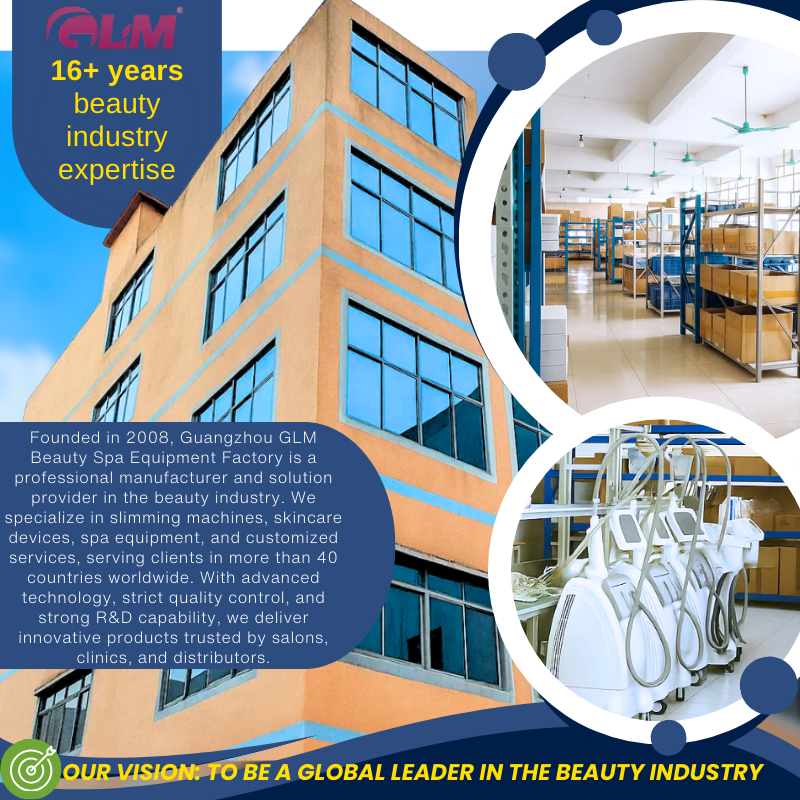
Founded in 2008, Guangzhou GLM Beauty Spa Equipment Factory specializes in research, development, manufacture and selling of beauty and slimming machines. Our production base is located in Guangzhou City, Guangdong Province, China. Since our foundation, we have introduced advanced technologies and equipment, to assure high quality and high performance of our products. With professional marketing guide and excellent after-sales service, our products have been exported to over 20 countries and regions, including Southeast Asia, the Middle East, Europe and the United States, won worldwide praises and gained a good reputation