1. Introduction
Fine lines around the mouth are among the most noticeable signs of facial aging. Often referred to as perioral wrinkles or lip lines, these small creases can develop gradually around the upper lip, lower lip, and corners of the mouth. Although they are a natural part of aging, they can become more pronounced due to collagen loss, repetitive facial movements, sun exposure, smoking, and changes in skin elasticity.
In 2026, professional skin rejuvenation is increasingly focused on addressing these concerns through targeted, technology-driven treatments. Rather than relying exclusively on topical skincare products, aesthetic clinics and professional beauty centers are incorporating advanced energy-based devices and collagen-stimulating procedures into their treatment programs.
Among the technologies attracting attention are Er:YAG laser resurfacing, radiofrequency (RF) skin rejuvenation, fractional laser treatments, and other collagen-supporting technologies. Each approach works differently, but they share a common objective: improving skin texture, supporting collagen remodeling, and reducing the visible appearance of fine lines.
For aesthetic professionals, understanding these technologies is essential when developing effective treatment protocols. Selecting appropriate equipment, evaluating individual skin conditions, and combining professional treatments with suitable aftercare can help clinics provide more comprehensive perioral rejuvenation services.
2. Background and Problem: Why Do Fine Lines Develop Around the Mouth?
The skin around the mouth is particularly vulnerable to premature aging. Compared with some other facial areas, it experiences frequent movement from speaking, smiling, eating, and other everyday expressions. Over time, repeated muscle activity can contribute to the formation of dynamic lines, which may eventually become visible even when the face is at rest.
Several biological and environmental factors contribute to perioral wrinkles.
Collagen and Elastin Reduction
Collagen provides structural support, while elastin helps the skin maintain flexibility. As people age, the natural production of these proteins gradually decreases. The skin becomes thinner, less elastic, and more susceptible to creasing.
This process is particularly noticeable around the lips, where the skin is relatively delicate. Reduced dermal support can make fine vertical lines more visible and contribute to a less smooth appearance.
Repeated Facial Movements
The orbicularis oris muscle surrounds the mouth and plays an important role in lip movement. Repeated contraction during speaking, drinking, and other facial expressions contributes to the development of expression-related wrinkles.
Over time, these repetitive movements can interact with age-related collagen loss, making lines more persistent.
Sun Exposure and Environmental Damage
Ultraviolet radiation accelerates collagen degradation and contributes to photoaging. Long-term exposure can lead to uneven texture, reduced elasticity, pigmentation changes, and deeper wrinkles around the lips.
Smoking, pollution, and inadequate skincare can further compromise the skin's natural repair mechanisms.
Changes in Skin Hydration and Volume
As the skin ages, its ability to retain moisture may decrease. Changes in facial fat distribution and structural support can also influence the appearance of the perioral area.
It is important to recognize that not all mouth wrinkles have the same underlying cause. Some are primarily associated with surface dehydration, while others involve deeper dermal changes, muscle activity, or volume loss.
For professional practitioners, identifying these differences is the first step toward selecting an appropriate rejuvenation strategy.
3. Technology and Mechanism: How Advanced Treatments Improve Perioral Wrinkles
Modern aesthetic technology offers several approaches to improving the appearance of fine lines around the mouth. These treatments focus on different skin structures and biological processes, allowing professionals to develop individualized treatment plans.
3.1 Er:YAG Laser Resurfacing: Precision Skin Renewal
Er:YAG laser technology, operating at a wavelength of approximately 2940 nm, is widely used in professional dermatological and aesthetic applications.
Its energy is strongly absorbed by water within the skin. This allows controlled removal of superficial tissue, making it particularly useful for skin resurfacing and improving textural irregularities.
When applied by appropriately trained professionals, Er:YAG laser treatments can help address:
-
Fine lines around the upper and lower lips.
-
Uneven skin texture and superficial wrinkles.
-
Certain types of photodamage.
-
Rough or aged-looking skin.
-
Selected superficial scars.
Depending on the equipment and treatment protocol, Er:YAG systems may operate in fully ablative or fractional modes.
Fully ablative resurfacing removes a controlled layer of the skin across the treated area. Fractional Er:YAG technology creates microscopic treatment zones while leaving surrounding tissue intact. These untreated areas support the skin's recovery process.
Following treatment, the body's natural wound-healing response stimulates tissue repair and collagen remodeling. Over time, this process can improve skin texture and reduce the visibility of selected fine wrinkles.
One important characteristic of Er:YAG technology is its relatively limited residual thermal damage compared with some other ablative laser approaches, particularly traditional CO2 resurfacing. However, treatment depth, energy settings, pulse characteristics, and practitioner technique all influence the final result.
For clinics, professional Er:YAG equipment offers a targeted approach to resurfacing delicate facial areas. Because the skin around the mouth requires careful treatment planning, accurate energy control and appropriate operator training are essential.
3.2 Radiofrequency Technology: Supporting Collagen Remodeling
Radiofrequency technology is another important option in professional skin rejuvenation.
Unlike ablative lasers, conventional RF systems deliver electrical energy into tissue, generating heat through tissue resistance. Depending on the device design, treatment depth, and energy delivery method, this controlled heating can stimulate collagen contraction and initiate remodeling processes.
As the skin responds to controlled thermal stimulation, collagen fibers undergo structural changes. Subsequent tissue remodeling may contribute to improved firmness and skin texture.
Professional RF treatments are commonly incorporated into facial rejuvenation programs targeting:
-
Mild skin laxity.
-
Reduced skin firmness.
-
Fine lines and early wrinkles.
-
Uneven skin texture.
-
Overall facial rejuvenation.
Different RF platforms offer different treatment approaches. Monopolar, bipolar, and multipolar systems vary in electrode configuration and energy distribution. Fractional RF microneedling combines radiofrequency delivery with controlled needle penetration, creating targeted treatment zones within the skin.
For perioral rejuvenation, the choice of RF technology should depend on the depth and characteristics of the wrinkles, the treatment area, and the client's skin condition.
RF treatments are not equivalent to laser resurfacing. They generally focus on thermal stimulation rather than controlled epidermal removal, making them complementary options rather than direct substitutes.
3.3 Collagen Stimulation: The Foundation of Long-Term Skin Rejuvenation
Collagen stimulation is a central concept in modern anti-aging treatments.
Rather than simply concealing wrinkles, collagen-focused procedures aim to improve the skin's underlying structural support. This is particularly relevant for perioral wrinkles associated with reduced dermal thickness and elasticity.
Several professional technologies can support collagen remodeling:
-
Fractional laser: Creates controlled treatment zones to initiate tissue repair and collagen remodeling.
-
Radiofrequency: Uses controlled thermal energy to stimulate changes in collagen structure.
-
RF microneedling: Combines mechanical micro-injury with targeted RF energy delivery.
-
Selected ultrasound technologies: Deliver focused acoustic energy to designated tissue depths, depending on the platform and indication.
These technologies differ in their mechanisms, treatment depth, recovery requirements, and suitability for individual clients.
For example, fractional laser resurfacing may be more appropriate when surface texture and fine lines are the primary concerns. RF-based treatments may be considered when reduced skin firmness is also present.
The most suitable approach depends on a professional assessment rather than the assumption that one technology can address every sign of aging.
3.4 Advanced Skin Rejuvenation: Combining Technology with Professional Skincare
Technology-based treatments are only one part of a comprehensive rejuvenation strategy.
Professional skin conditioning, hydration management, and appropriate post-treatment skincare can support skin comfort and recovery.
Depending on the procedure, clinics may incorporate gentle cleansing, barrier-supporting skincare, hydrating formulations, and broad-spectrum sun protection into their treatment programs.
For treatments involving epidermal disruption, practitioners must follow device-specific aftercare protocols and avoid introducing irritating products before the skin has adequately recovered.
This integrated approach allows clinics to provide more complete services instead of relying on a single treatment session or technology.
4. Advantages and Comparison: Professional Treatments vs. Home Skincare
The growing demand for non-surgical facial rejuvenation has created opportunities for aesthetic clinics to expand their treatment offerings. However, understanding the differences between professional equipment and home skincare is important for setting realistic client expectations.
Professional Er:YAG Laser Treatments
Er:YAG laser systems offer controlled resurfacing capabilities that cannot be replicated by ordinary skincare products. They are particularly relevant when clients have visible textural irregularities and superficial wrinkles requiring a more intensive approach.
Their main advantages include precise energy delivery, adjustable treatment parameters, and the ability to perform different resurfacing techniques according to professional assessment.
However, ablative laser treatments require appropriate clinical expertise, careful patient selection, and structured recovery management. Temporary redness, swelling, crusting, pigmentary changes, infection, and scarring are possible complications.
Professional RF Rejuvenation Devices
RF equipment offers another approach to skin rejuvenation without necessarily removing the skin's outermost layer.
Its advantages include adjustable energy delivery, multiple electrode configurations, and applications in skin-firming programs.
Depending on the system, RF treatments may involve less downtime than ablative laser resurfacing. Nevertheless, excessive or poorly controlled heating can cause burns, fat-related changes, or other complications.
Home Skincare and Beauty Devices
Home skincare products remain important for maintaining skin hydration and supporting the skin barrier.
Moisturizers, peptides, retinoids, and sunscreen can help improve the appearance of fine lines and protect against further environmental damage.
Some consumer beauty devices also provide low-intensity stimulation for cosmetic maintenance. However, their energy output, treatment depth, and operating capabilities are generally different from professional systems.
They should not be considered substitutes for medical-grade laser resurfacing or professionally administered energy-based procedures.
Comparison of Main Rejuvenation Approaches
| Technology | Primary Mechanism | Main Application |
|---|---|---|
| Er:YAG Laser | Controlled water absorption and tissue ablation | Skin resurfacing and fine-line improvement |
| Fractional Laser | Microscopic treatment zones and tissue repair | Texture irregularities and wrinkles |
| Radiofrequency | Controlled thermal energy | Skin firmness and collagen remodeling |
| RF Microneedling | Needle-based RF energy delivery | Selected wrinkles and skin texture concerns |
| Professional Skincare | Hydration and barrier support | Maintenance and complementary care |
| Home Beauty Devices | Device-dependent low-intensity stimulation | Cosmetic maintenance |
For aesthetic clinics, professional equipment provides greater treatment versatility and the opportunity to develop customized service programs. The value of a device, however, depends on its actual technical capabilities, safety features, regulatory status, and suitability for the intended treatment.
5. Applications and Client Needs: Developing Professional Perioral Rejuvenation Programs
Clients seeking improvement around the mouth often have different expectations. Some want to reduce fine vertical lip lines, while others are more concerned about rough texture, skin laxity, or early signs of aging.
Professional practitioners should evaluate these concerns individually before recommending a treatment.
For Clients with Early Fine Lines
Clients with mild lines and relatively good skin elasticity may benefit from a conservative rejuvenation plan.
Depending on the assessment, professional skincare, selected RF treatments, or suitable non-ablative procedures may help improve skin appearance without requiring aggressive resurfacing.
The goal is to support skin quality while minimizing unnecessary treatment intensity.
For Clients with Visible Perioral Wrinkles
When fine lines become more pronounced, particularly around the upper lip, a more targeted approach may be appropriate.
Er:YAG resurfacing can be considered for selected superficial wrinkles and textural concerns. Fractional delivery may offer a treatment option that preserves surrounding tissue and supports recovery.
Practitioners must assess skin type, pigmentation risk, medical history, previous procedures, and recovery expectations before treatment.
For Clients with Multiple Signs of Facial Aging
Some clients experience perioral wrinkles alongside skin laxity, uneven texture, and reduced facial volume.
In these cases, a combination of treatments may be considered. For example, laser resurfacing may address selected surface irregularities, while RF technology may target skin firmness.
Volume-related concerns may require separate assessment and treatment approaches. Energy-based devices should not be presented as replacements for every injectable or surgical procedure.
Why Professional Equipment Matters to Aesthetic Clinics
For beauty centers and aesthetic clinics, investing in professional rejuvenation equipment is not simply about adding another device to the treatment room.
A suitable platform can help practitioners expand their service portfolio, develop differentiated treatment programs, and address a wider range of skin concerns.
When evaluating equipment, professional buyers should consider several factors:
-
Energy control: Adjustable parameters and stable energy delivery are important for precise treatments.
-
Treatment versatility: Multiple modes or treatment configurations may support different skin rejuvenation applications.
-
Safety systems: Reliable cooling, temperature monitoring, and appropriate safety mechanisms can improve treatment management.
-
Operator training: Clear operating guidance and technical support are essential for consistent use.
-
Maintenance and service: Long-term reliability, replacement parts, and manufacturer support influence the overall investment.
-
Regulatory compliance: Equipment documentation and market-specific regulatory requirements should be verified before purchase.
For manufacturers and distributors, demonstrating these technical characteristics through product specifications, operating demonstrations, training resources, and after-sales support can help professional buyers make informed purchasing decisions.
6. Conclusion: A More Targeted Approach to Perioral Rejuvenation in 2026
Minimizing fine lines around the mouth requires more than addressing visible wrinkles at the skin's surface. Collagen reduction, repeated facial movements, environmental damage, and changes in skin structure all contribute to the aging of the perioral area.
In 2026, Er:YAG laser resurfacing, radiofrequency technology, fractional treatments, and collagen-supporting procedures provide aesthetic professionals with multiple approaches to improving skin texture and firmness.
Each technology serves a different purpose. Er:YAG laser systems offer precise resurfacing capabilities, while RF devices focus on controlled thermal stimulation and collagen remodeling. When selected appropriately, these approaches can become valuable components of comprehensive facial rejuvenation programs.
For aesthetic clinics, the future of professional skin rejuvenation lies in combining reliable equipment, individualized treatment planning, skilled operation, and appropriate aftercare.
By understanding the mechanisms and limitations of each technology, practitioners can develop more effective treatment strategies and deliver realistic, well-managed outcomes for clients seeking smoother, healthier-looking skin around the mouth
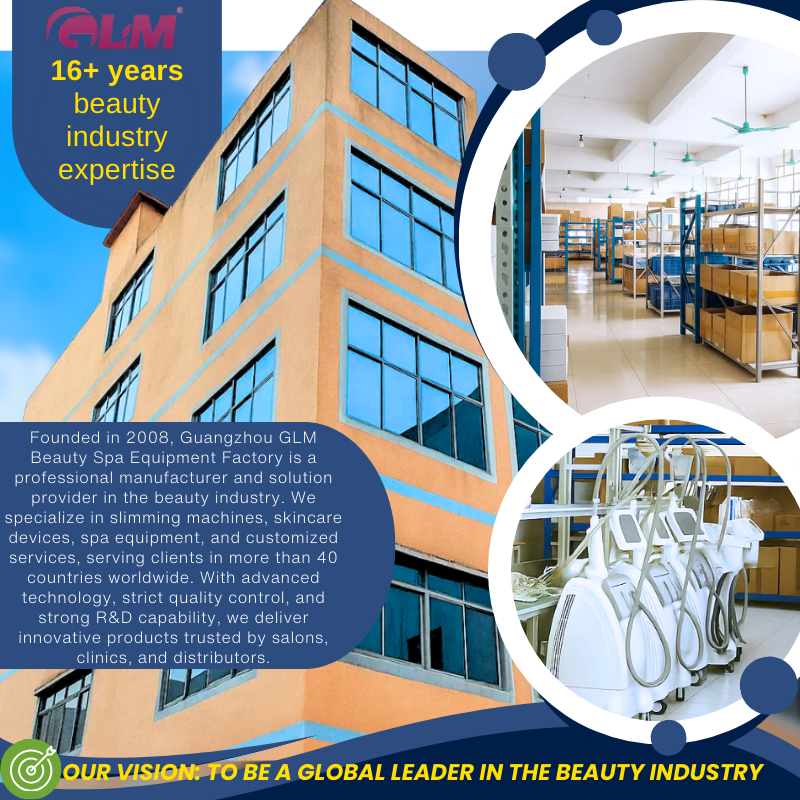
Founded in 2008, Guangzhou GLM Beauty Spa Equipment Factory specializes in research, development, manufacture and selling of beauty and slimming machines. Our production base is located in Guangzhou City, Guangdong Province, China. Since our foundation, we have introduced advanced technologies and equipment, to assure high quality and high performance of our products. With professional marketing guide and excellent after-sales service, our products have been exported to over 20 countries and regions, including Southeast Asia, the Middle East, Europe and the United States, won worldwide praises and gained a good reputation