Introduction
In today's competitive aesthetics market, investing in professional beauty equipment is no longer simply about purchasing new technology—it is about building a sustainable business model. Every equipment decision directly influences treatment capabilities, operational efficiency, customer satisfaction, and ultimately, profitability.
As aesthetic clinics and beauty salons continue expanding their service portfolios, owners face a common question:
Should they invest in one sophisticated multi-functional platform capable of performing multiple treatments, or purchase several specialized single-purpose devices?
The answer is not always straightforward. While single-function machines often excel at delivering highly focused treatments, multi-functional platforms offer flexibility, lower operating costs, and greater scalability. The optimal investment depends on clinic size, business strategy, treatment demand, and long-term growth objectives.
Understanding the return on investment (ROI) behind each option allows clinic owners to move beyond purchase price alone and evaluate equipment based on revenue generation, utilization rate, maintenance expenses, training requirements, and client retention.
This article explores both investment approaches from a practical business perspective, explaining the technologies behind modern aesthetic platforms, comparing operational advantages, and helping professionals determine which solution aligns best with their business goals.
Background: Why Equipment Strategy Matters More Than Ever
The professional beauty industry has changed dramatically over the past decade.
Clients no longer visit clinics for a single concern. Instead, many seek comprehensive treatment plans that combine skin rejuvenation, facial lifting, body contouring, cellulite reduction, pigmentation management, hydration therapy, and anti-aging solutions—all within one trusted provider.
This shift has increased expectations for clinics to deliver diverse services efficiently while maintaining high treatment quality.
Meanwhile, clinic operators face growing challenges:
- Rising equipment investment costs
- Limited treatment room space
- Increasing maintenance expenses
- Staff training requirements
- Faster technology updates
- Stronger local competition
Purchasing every individual machine needed for every treatment quickly becomes expensive—not only in terms of initial capital but also installation, maintenance, software upgrades, consumables, and operator training.
Consequently, manufacturers have increasingly developed multi-functional aesthetic platforms that integrate multiple technologies into a single system.
Instead of purchasing separate RF, cavitation, vacuum therapy, EMS, ultrasound, hydrodermabrasion, or LED systems, clinics can often perform multiple procedures using interchangeable handpieces controlled by one central platform.
However, specialized single-function devices continue to play an important role, particularly for high-volume clinics focusing on one flagship treatment.
The investment decision therefore becomes less about technology itself and more about maximizing operational efficiency and long-term ROI.
Technology & Mechanism
Modern professional aesthetic equipment generally falls into two categories.
1. Multi-Functional Platforms
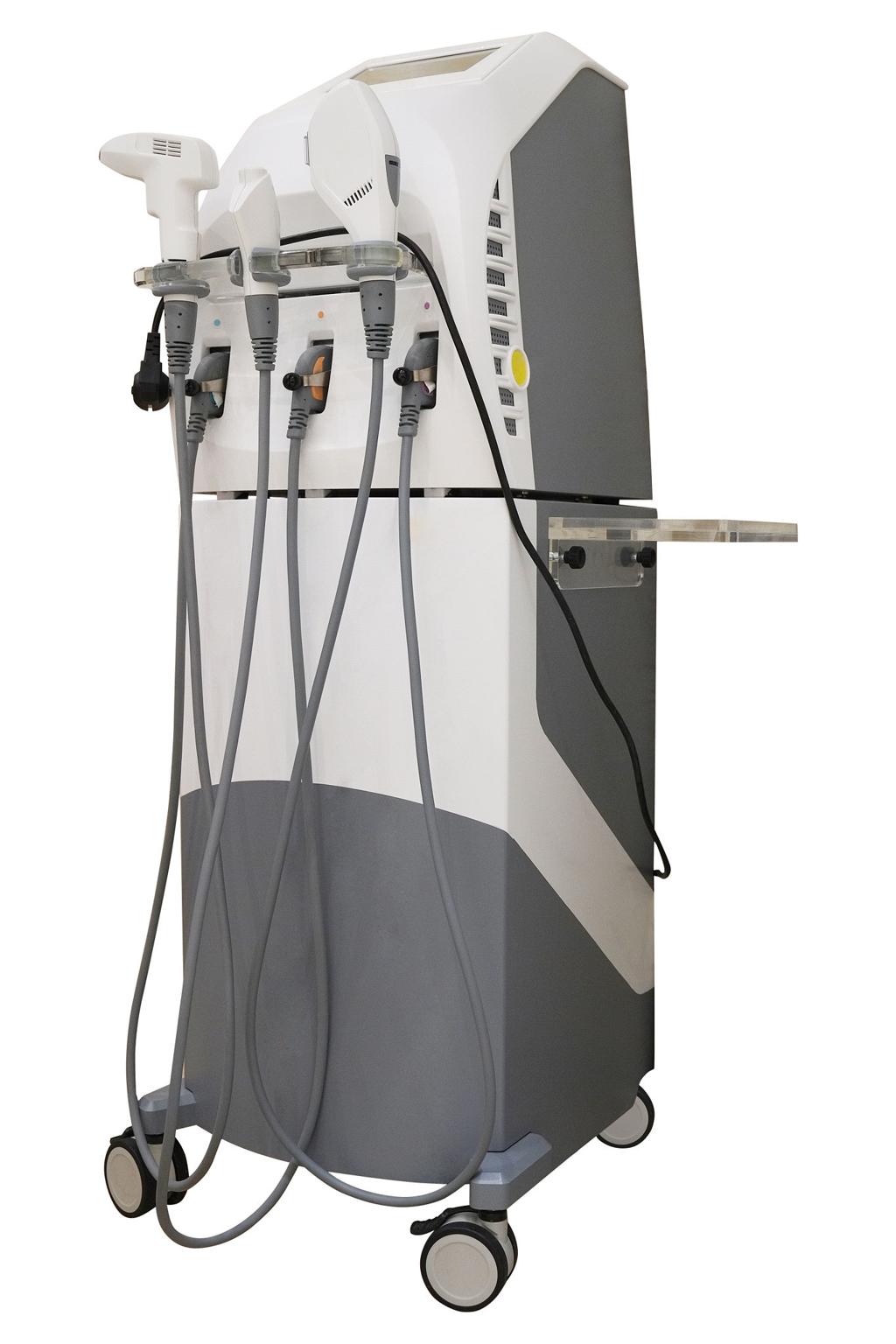
Multi-functional platforms integrate several energy-based technologies into one centralized system.
Depending on the manufacturer, a single platform may combine technologies such as:
- Radio Frequency (RF)
- Ultrasound Cavitation
- Vacuum Therapy
- EMS Muscle Stimulation
- LED Light Therapy
- Hydro Dermabrasion
- Oxygen Infusion
- Cold Hammer Therapy
- Microcurrent
- Electroporation
Rather than requiring independent control systems for each technology, these devices share one operating interface, one software platform, one power supply, and multiple interchangeable treatment handpieces.
This modular architecture significantly reduces equipment redundancy while expanding available treatment protocols.
For example, a body contouring session may combine:
- Vacuum therapy to improve lymphatic drainage
- RF energy for collagen remodeling
- Cavitation for localized fat disruption
- EMS for muscle stimulation
Instead of moving clients between several machines, practitioners can perform sequential treatments using one integrated platform.
The result is a smoother workflow, reduced treatment preparation time, and a more seamless client experience.
2. Single-Function Devices
Single-purpose equipment is engineered to perform one specific treatment exceptionally well.
Examples include:
- Dedicated HIFU lifting systems
- Standalone diode laser hair removal machines
- Professional pico laser systems
- Fractional CO₂ lasers
- Cryolipolysis devices
- Individual RF tightening systems
Because all engineering resources are focused on one technology, these devices often deliver:
- Higher maximum energy output
- Greater parameter customization
- Specialized applicator designs
- Advanced treatment algorithms
- Extensive clinical optimization
For clinics specializing in one signature service, dedicated equipment can provide outstanding consistency and performance.
For example, a clinic performing dozens of laser hair removal treatments daily may benefit from a dedicated diode laser rather than relying on a multifunction platform with limited laser capabilities.
The decision therefore depends not only on equipment specifications but also on patient volume, service diversity, and business positioning.
Why Integration Has Become an Industry Trend
Modern aesthetic treatments increasingly rely on combination protocols rather than isolated procedures.
Skin aging, for instance, is influenced by multiple biological factors, including collagen degradation, reduced elasticity, impaired circulation, dehydration, and changes in facial muscle tone.
No single technology addresses all of these mechanisms equally.
This is why practitioners frequently combine complementary technologies within the same treatment plan.
A typical facial rejuvenation protocol may include:
- Hydro dermabrasion for cleansing and exfoliation
- Radio Frequency for collagen stimulation
- Microcurrent for facial muscle toning
- Electroporation to enhance serum absorption
- LED therapy to calm post-treatment redness
Likewise, body contouring protocols often pair cavitation, vacuum massage, RF skin tightening, and EMS muscle stimulation to target fat, skin laxity, circulation, and muscle definition in a coordinated sequence.
By integrating multiple modalities into one platform, clinics can standardize these workflows, shorten setup time, and provide broader treatment options without requiring several separate machines.
This trend explains why many modern aesthetic equipment manufacturers increasingly focus on modular, upgradeable platforms rather than standalone devices alone
Although multi-functional platforms offer significant versatility, successful implementation depends on selecting technologies that complement one another rather than simply increasing the number of handpieces. A well-designed platform should allow practitioners to customize treatment sequences according to individual client concerns while maintaining consistent energy delivery and safety controls.
Modern software also contributes to treatment efficiency. Many professional platforms include preset protocols, adjustable parameters, treatment records, and intuitive user interfaces that reduce operator error and shorten staff training time. These features are especially valuable for clinics expanding their teams or introducing new services.
From an engineering perspective, modular platforms also simplify future upgrades. Instead of replacing an entire system when market demand changes, clinics may be able to add compatible handpieces or software modules, extending the equipment's service life and protecting the original investment.
Advantages & ROI Comparison
1. Initial Investment
The purchase price is often the first factor clinics evaluate, but it should not be the only one.
A professional multi-functional platform generally requires a higher upfront investment than a single-purpose device. However, when compared with purchasing several individual machines offering similar treatment capabilities, the total capital expenditure is frequently lower.
For example, purchasing separate systems for RF skin tightening, cavitation, vacuum therapy, EMS, LED therapy, and hydro dermabrasion may require multiple installations, power supplies, accessories, and operator training sessions. A multi-functional platform consolidates these resources into one integrated system.
For newly established clinics or businesses with limited budgets, this consolidation can reduce financial pressure while enabling a broader treatment menu from the beginning
2. Space Utilization
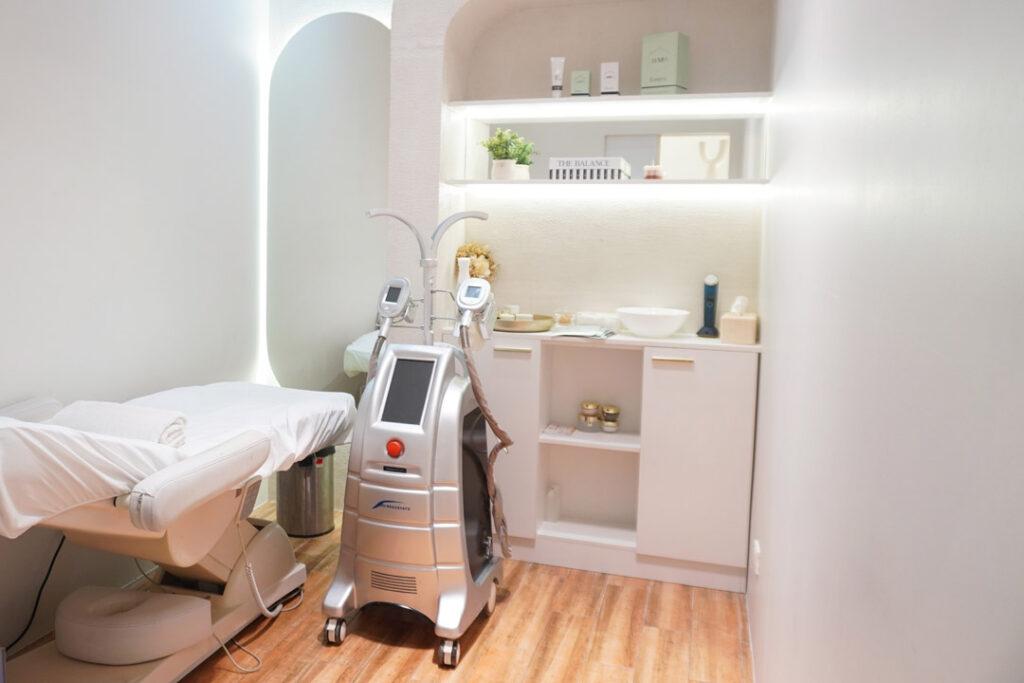
Treatment room space is one of the most valuable assets in any aesthetic practice.
Every additional machine occupies floor space, requires electrical connections, and affects workflow.
A multi-functional platform helps maximize room efficiency by replacing several standalone devices with one centralized system. This creates a cleaner treatment environment, improves mobility for practitioners, and leaves more space for client comfort or future equipment additions.
In contrast, clinics operating numerous single-purpose machines often need larger treatment rooms or multiple dedicated spaces, increasing operating costs over time.
3. Equipment Utilization Rate
One of the most overlooked ROI indicators is utilization.
A specialized device that performs only one treatment may remain idle for much of the day if demand for that procedure fluctuates.
Conversely, a multi-functional platform can be scheduled continuously for different services throughout the day. A practitioner might perform:
- Hydro facial treatments in the morning
- RF skin tightening in the afternoon
- Body contouring sessions later in the day
- LED recovery therapy between appointments
Higher utilization generally leads to faster cost recovery and improved profitability.
4. Maintenance and Operating Costs
Each additional machine introduces its own maintenance schedule, calibration requirements, replacement parts, and potential downtime.
Managing five separate devices often means:
- Multiple service contracts
- Additional preventive maintenance
- More software updates
- Separate consumable inventories
- Higher repair expenses
An integrated platform typically centralizes maintenance into one system, simplifying equipment management and reducing administrative workload.
However, clinics should also consider that if a multi-functional platform requires servicing, several treatment functions may become temporarily unavailable. This is why choosing equipment from a manufacturer with reliable technical support, readily available spare parts, and responsive after-sales service is particularly important.
5. Staff Training
Every technology requires operators to understand treatment principles, contraindications, parameter selection, and safety procedures.
Training staff on six independent machines often takes considerably longer than training them on one integrated platform with a unified interface.
Shorter learning curves can help clinics onboard new employees more efficiently while maintaining consistent treatment quality.
At the same time, specialized clinics with experienced practitioners may prefer dedicated systems that offer deeper parameter customization for advanced protocols.
6. Revenue Potential
ROI ultimately depends on the clinic's ability to generate revenue from its investment.
A multi-functional platform expands treatment offerings without requiring additional equipment purchases. This flexibility enables clinics to respond to changing market demand, seasonal trends, and evolving client preferences.
For example, the same platform may support facial rejuvenation, acne care, body sculpting, skin tightening, lymphatic drainage, and post-treatment recovery.
A wider service portfolio also creates opportunities for treatment packages, membership programs, and customized treatment plans that increase average client spending and encourage repeat visits.
By contrast, a single-function device often generates excellent returns when demand for one specific treatment remains consistently high. High-volume laser hair removal centers or clinics specializing in HIFU lifting may achieve stronger ROI with dedicated equipment because of greater throughput and optimized treatment performance.
Applications & Client Needs
The ideal investment strategy depends on the clinic's business model rather than on one technology being universally superior.
Multi-Functional Platforms Are Well Suited For:
- Newly established aesthetic clinics
- Medical spas expanding service portfolios
- Beauty salons introducing advanced treatments
- Practices with limited treatment room space
- Businesses seeking flexible treatment combinations
- Clinics serving clients with diverse aesthetic concerns
These platforms support continuous business growth by allowing practitioners to introduce new treatment protocols without purchasing an entirely new machine for every service.
Single-Function Devices Are Best Suited For:
- Clinics specializing in one flagship treatment
- High-volume treatment centers
- Medical practices requiring maximum energy performance
- Providers performing complex or highly customized procedures
- Businesses with consistent demand for one technology
In many successful aesthetic practices, the most effective strategy is not choosing one option exclusively but combining both approaches.
A clinic may begin with a versatile multi-functional platform to establish a broad client base and later invest in dedicated systems—such as HIFU, diode laser hair removal, or fractional laser equipment—as demand for specific treatments increases.
This phased investment strategy balances flexibility with specialization while reducing financial risk during business expansion.
Conclusion
Selecting professional aesthetic equipment should never be based solely on purchase price. The true return on investment comes from evaluating how effectively a device supports daily operations, improves treatment efficiency, expands service offerings, and contributes to long-term business growth.
Multi-functional platforms provide versatility, efficient space utilization, streamlined training, and the flexibility to deliver combination treatments that meet the evolving expectations of today's aesthetic clients. They are particularly valuable for clinics seeking to maximize equipment utilization and diversify services without excessive capital expenditure.
Single-function devices, meanwhile, continue to play an essential role in practices focused on high-volume, specialized procedures where maximum performance and advanced customization are critical.
Rather than viewing these options as competitors, clinic owners should consider them complementary tools within a broader investment strategy. By aligning equipment purchases with clinical objectives, target clientele, and projected growth, aesthetic professionals can build a technology portfolio that not only enhances treatment outcomes but also delivers sustainable, long-term ROI.
The most successful clinics are rarely those with the greatest number of machines—they are the ones that invest strategically, utilize their technology efficiently, and continually adapt their services to meet changing client needs
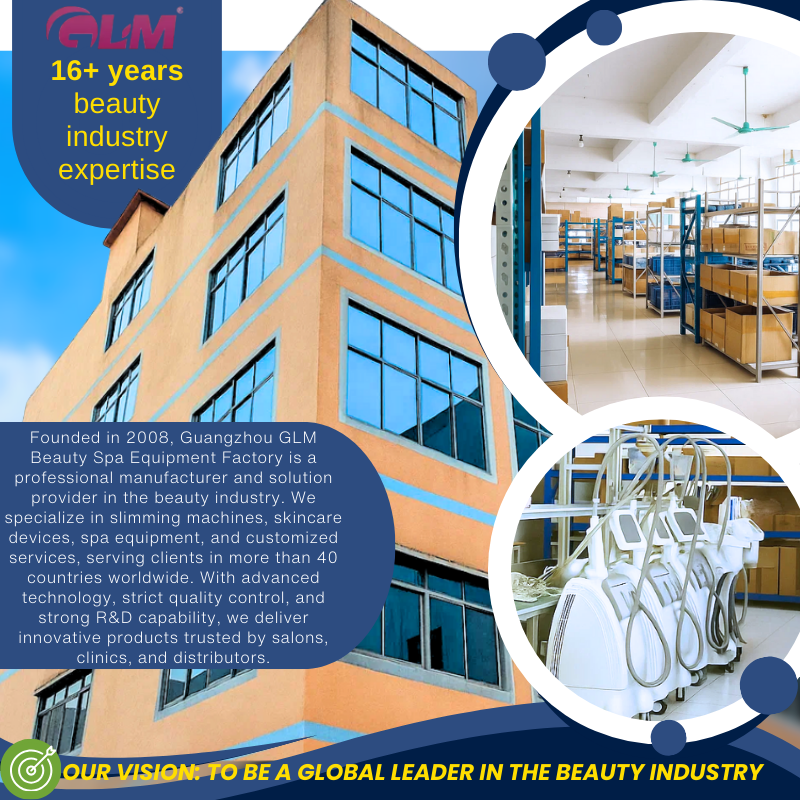
Founded in 2008, Guangzhou GLM Beauty Spa Equipment Factory specializes in research, development, manufacture and selling of beauty and slimming machines. Our production base is located in Guangzhou City, Guangdong Province, China. Since our foundation, we have introduced advanced technologies and equipment, to assure high quality and high performance of our products. With professional marketing guide and excellent after-sales service, our products have been exported to over 20 countries and regions, including Southeast Asia, the Middle East, Europe and the United States, won worldwide praises and gained a good reputation