
1. Introduction
The demand for non-surgical anti-ageing treatments continues to grow in 2026 as more consumers seek effective ways to maintain youthful-looking skin without undergoing invasive cosmetic procedures. Rather than choosing surgery, many clients now prefer treatments that improve skin firmness, reduce the appearance of wrinkles, refine skin texture, and support collagen production with minimal downtime.
This shift has created new opportunities for professional beauty salons, medical spas, and aesthetic clinics. Advanced energy-based beauty devices are becoming essential tools for practitioners who want to provide personalized skin rejuvenation services and expand their treatment portfolios.
Among the most widely used technologies are radiofrequency (RF), laser treatments, and light-emitting diode (LED) therapy. Although these technologies work through different mechanisms, they share a common objective: supporting healthier-looking skin and addressing visible signs of ageing.
For professional operators, understanding how these technologies function is important when selecting equipment, designing treatment protocols, and meeting different client expectations. This article explores the principles, advantages, and professional applications of RF, laser, and LED technologies in modern non-surgical anti-ageing treatments.
2. Background: Why Non-Surgical Anti-Ageing Treatments Are Growing
Skin ageing is a natural biological process influenced by genetics, environmental exposure, lifestyle, and changes in cellular activity. As the skin ages, collagen and elastin production gradually decline. These structural proteins are responsible for maintaining skin firmness, elasticity, and resilience.
Over time, reduced collagen support can contribute to fine lines, wrinkles, loose skin, uneven texture, and a less defined facial appearance. Sun exposure, pollution, smoking, and other environmental factors may accelerate these changes.
Traditional surgical procedures, such as facelifts, can address significant skin laxity and facial tissue changes. However, surgery involves greater financial investment, recovery time, medical considerations, and procedural risks. Not every client is willing or suitable to undergo an operation.
Non-surgical skin rejuvenation offers an alternative approach for individuals seeking gradual improvements without conventional surgery. Depending on the technology and treatment indication, professional devices can target different skin concerns through controlled energy delivery.
In 2026, clients increasingly expect treatments that are personalized, convenient, and supported by clear explanations of how the technology works. For aesthetic clinics, this means moving beyond one-size-fits-all facial treatments and building treatment programs around individual skin conditions.
Professional RF, laser, and LED systems help practitioners address different aspects of skin ageing. Their value lies not simply in the technology itself, but in the ability to combine suitable treatment methods into structured and adaptable service programs.
3. Technology and Mechanisms: How RF, Laser, and LED Rejuvenate the Skin
3.1 Radiofrequency (RF): Supporting Collagen Remodeling and Skin Firmness
Radiofrequency is one of the established energy-based technologies used in professional skin tightening and facial rejuvenation treatments.
RF devices deliver controlled electrical energy into targeted skin tissues. As the electrical current encounters tissue resistance, it generates heat. Depending on the device design and treatment parameters, this thermal effect can stimulate collagen remodeling and encourage new collagen formation over time.
Collagen fibers respond to controlled heating through structural changes and subsequent remodeling processes. These biological responses may help improve the appearance of mild to moderate skin laxity, fine lines, and uneven skin texture.
Different RF systems use different energy delivery configurations:
-
Monopolar RF: Uses an active electrode and a return electrode to create an electrical pathway through the treatment area.
-
Bipolar RF: Delivers energy between two electrodes, allowing treatment within a more defined tissue region.
-
Multipolar RF: Uses multiple electrodes to distribute energy across the treatment area.
-
Fractional RF: Delivers energy through multiple controlled treatment points to stimulate localized tissue remodeling.
-
RF Microneedling: Combines microneedle penetration with radiofrequency energy delivery. This is a minimally invasive procedure rather than a completely non-invasive treatment.
For professional beauty salons and aesthetic clinics, RF equipment can be incorporated into facial firming programs, skin texture improvement treatments, and selected anti-ageing protocols.
Its versatility makes RF particularly useful for clinics that want to offer treatments targeting skin firmness and visible ageing without relying exclusively on invasive procedures.
However, treatment depth, energy settings, electrode configuration, and client suitability must be considered carefully. Excessive heating or inappropriate operation may cause burns or other complications.
3.2 Laser Technology: Targeted Energy for Skin Resurfacing and Rejuvenation
Laser technology is another important component of modern aesthetic skin rejuvenation. Unlike RF, which primarily generates heat through electrical resistance, lasers use concentrated light energy at specific wavelengths to interact with selected skin structures.
Different wavelengths are absorbed by different chromophores, including melanin, hemoglobin, and water. This selective interaction allows laser systems to address particular skin concerns through carefully controlled treatment parameters.
In anti-ageing applications, laser technologies can be used for:
-
Improving the appearance of fine lines and wrinkles.
-
Refining uneven skin texture.
-
Reducing the appearance of certain pigmentation concerns.
-
Addressing selected signs of sun-related skin ageing.
-
Supporting skin resurfacing and collagen remodeling.
Fractional laser technology is particularly relevant to professional skin rejuvenation. It creates microscopic treatment zones while leaving surrounding tissue relatively intact. This approach can support the skin's natural repair response and stimulate collagen remodeling.
Ablative fractional lasers remove controlled portions of the skin surface, while non-ablative fractional lasers deliver thermal energy into targeted tissue without removing the outer skin layer.
The choice between different laser systems depends on the client's skin condition, treatment goals, skin phototype, expected recovery period, and the operator's qualifications.
For professional clinics, laser devices provide more targeted treatment options for concerns that may not respond sufficiently to general facial care or surface-level treatments.
Nevertheless, laser procedures require appropriate training, eye protection, parameter selection, and careful assessment of pigmentation risks. Some treatments involve redness, peeling, or downtime, depending on the laser type and intensity.
3.3 LED Light Therapy: Supporting Cellular Activity and Skin Recovery
LED light therapy, also known as photobiomodulation, uses specific wavelengths of light to interact with skin cells and influence biological processes.
Unlike many laser treatments, LED systems generally deliver non-ablative, low-intensity light without intentionally removing or damaging the skin surface.
Different wavelengths are associated with different treatment applications:
-
Red light: Commonly used in skin rejuvenation programs to support cellular activity and collagen-related processes.
-
Near-infrared light: Penetrates more deeply than visible red light and is used in protocols focused on tissue recovery and cellular responses.
-
Blue light: Primarily associated with acne-related applications rather than anti-ageing.
-
Other wavelengths: May be incorporated into specific professional protocols depending on the device design and intended indication.
At the cellular level, photobiomodulation is thought to influence mitochondrial activity and cellular signaling pathways. These responses may support processes associated with tissue recovery, inflammation regulation, and collagen synthesis.
For anti-ageing services, red and near-infrared LED treatments are particularly relevant. They can be incorporated into facial rejuvenation programs as standalone sessions or as complementary treatments alongside selected aesthetic procedures.
LED therapy is also attractive to professional operators because it is generally comfortable, non-invasive, and suitable for repeated treatment sessions when used according to the manufacturer's instructions.
However, LED treatments should not be presented as equivalent to surgical lifting or as a replacement for more intensive procedures when significant skin laxity is present. Results depend on wavelength, irradiance, treatment duration, frequency, and individual skin characteristics.
3.4 Combining RF, Laser, and LED: A More Comprehensive Rejuvenation Strategy
One important development in professional aesthetics is the growing interest in combination treatment strategies.
Ageing affects multiple skin structures and functions. A client may simultaneously experience reduced firmness, wrinkles, uneven pigmentation, rough texture, and a dull appearance. A single technology may not address every concern equally well.
RF, laser, and LED can serve different roles within a professionally designed treatment program:
-
RF focuses on thermal collagen remodeling and skin firmness.
-
Laser targets selected skin structures and supports resurfacing or pigmentation-related treatments.
-
LED complements treatment programs through photobiomodulation and skin recovery support.
For example, a clinic may use an appropriate laser treatment to address selected surface-level concerns, followed by a suitable LED protocol as part of its post-treatment care strategy. RF may be offered in a separate session to address skin laxity and firmness.
These treatments should not automatically be performed together in one session. Treatment sequencing, compatibility, recovery time, and contraindications must be assessed by qualified practitioners.
The objective is to create a coordinated treatment plan rather than simply combining multiple technologies for the sake of using more equipment.
4. Advantages and Comparison: Professional Devices vs. Home-Use Beauty Equipment
The expansion of home beauty devices has made basic skincare technologies more accessible. Consumers can now purchase compact RF devices, LED masks, and other beauty tools for personal use.
However, professional equipment serves a different purpose.
| Comparison | Professional Beauty Devices | Home-Use Devices |
|---|---|---|
| Intended users | Trained operators and qualified practitioners | Individual consumers |
| Treatment settings | Professional treatment protocols | Consumer-oriented settings |
| Energy delivery | Device-specific professional configurations | Generally designed for personal use |
| Treatment planning | Individual assessment and customized protocols | Primarily self-directed |
| Applications | Broader professional service options | More limited treatment purposes |
| Monitoring | Operator-supervised treatment | User-managed treatment |
Professional devices are generally designed with clinic workflows, treatment consistency, adjustable parameters, and specific application requirements in mind. Their configurations may provide practitioners with greater control over treatment delivery.
This does not mean every professional device automatically produces better results than every home-use product. Clinical effectiveness depends on the technology, device quality, treatment protocol, operator training, and individual client characteristics.
A 2026 review of home-based dermatologic devices also highlights differences in the quality of evidence across technologies, reinforcing the importance of evaluating specific devices rather than making broad assumptions about an entire product category.
For beauty salons and aesthetic clinics, the main advantage of professional equipment is the opportunity to provide structured services supported by operator expertise, individualized assessments, and appropriate treatment monitoring.
When selecting equipment, businesses should consider not only the technology but also device certification, operating instructions, safety features, after-sales support, training resources, and the manufacturer's technical capabilities.
5. Applications and Client Needs in Professional Aesthetic Clinics
Different clients have different ageing concerns, treatment expectations, and tolerance for downtime. Professional operators should therefore select technologies according to individual needs rather than following a fixed treatment routine.
5.1 Clients Concerned About Skin Laxity
Clients experiencing mild to moderate skin laxity may benefit from appropriately selected RF treatments.
Professional RF systems can be incorporated into facial firming programs targeting the cheeks, jawline, neck, and other suitable areas. Treatment plans should be based on skin condition, device specifications, and realistic expectations.
5.2 Clients Concerned About Wrinkles and Uneven Texture
Fine lines, rough skin texture, and visible signs of photoageing may require more targeted approaches.
Depending on the indication, fractional laser treatments may be considered for skin resurfacing and texture improvement. RF can also support collagen remodeling in suitable clients.
The selection of a laser or RF treatment should account for skin phototype, pigmentation history, recovery expectations, and potential adverse effects.
5.3 Clients Seeking Gentle Rejuvenation and Skin Maintenance
For clients who prefer comfortable treatments with little disruption to daily activities, LED light therapy can be incorporated into regular facial care programs.
Red and near-infrared LED treatments may complement broader skin rejuvenation strategies. They are particularly suitable for clinics looking to develop repeat-session services and supportive treatment packages.
5.4 Clients Requiring Personalized Combination Programs
Some clients present with several concerns at the same time. For example, reduced firmness may occur alongside uneven pigmentation and dull skin.
In these situations, practitioners can assess whether a combination of RF, laser, and LED technologies is appropriate. The treatment sequence should be designed around the client's primary concerns, recovery needs, and safety considerations.
Professional consultation is essential before treatment. A complete assessment should include medical history, skin condition, medication use, contraindications, and previous aesthetic procedures.
6. Conclusion: The Future of Non-Surgical Anti-Ageing in 2026
Non-surgical anti-ageing is becoming an important part of the modern aesthetic industry. As clients increasingly seek visible skin improvements without conventional surgery, professional beauty equipment offers clinics more ways to develop personalized rejuvenation services.
RF, laser, and LED technologies each provide distinct benefits. RF supports collagen remodeling and skin firmness, laser systems offer targeted solutions for resurfacing and selected skin concerns, while LED therapy complements rejuvenation programs through photobiomodulation.
Rather than viewing these technologies as competing solutions, professional operators can understand their different functions and incorporate suitable methods into comprehensive treatment strategies.
For beauty salons, medical spas, and aesthetic clinics, investing in reliable professional equipment is not simply about adding another machine to the treatment room. It is about improving service capabilities, expanding treatment options, and delivering more structured experiences that align with evolving client expectations.
As the industry continues to advance, the combination of appropriate technology, qualified operation, evidence-based protocols, and personalized consultation will remain central to successful non-surgical skin rejuvenation
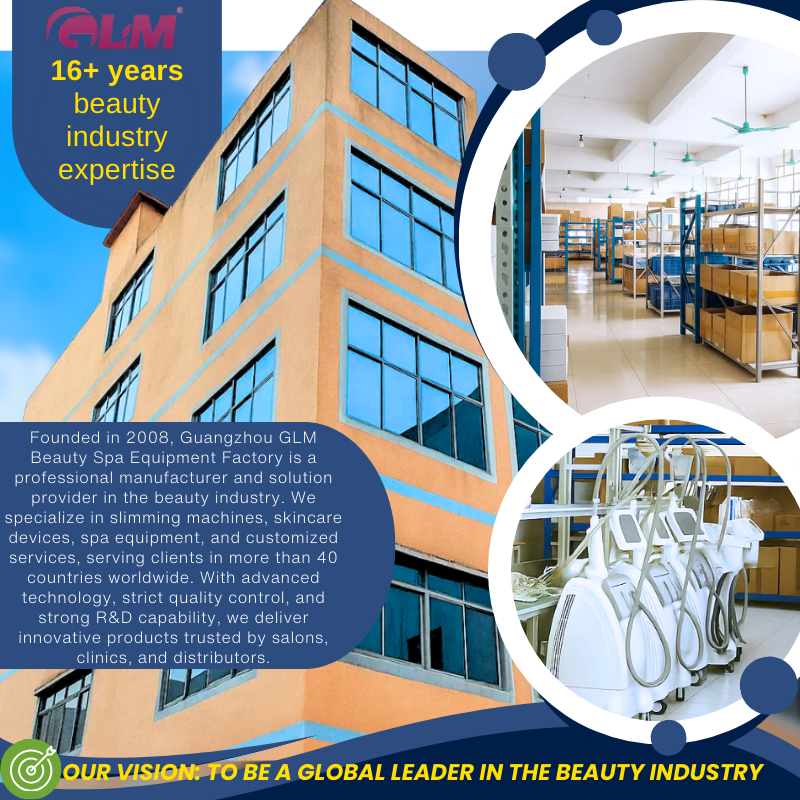
Founded in 2008, Guangzhou GLM Beauty Spa Equipment Factory specializes in research, development, manufacture and selling of beauty and slimming machines. Our production base is located in Guangzhou City, Guangdong Province, China. Since our foundation, we have introduced advanced technologies and equipment, to assure high quality and high performance of our products. With professional marketing guide and excellent after-sales service, our products have been exported to over 20 countries and regions, including Southeast Asia, the Middle East, Europe and the United States, won worldwide praises and gained a good reputation