Introduction
As demand for non-invasive body contouring continues to grow, beauty salons, aesthetic clinics, medical spas, and wellness centers are looking for technologies that can provide targeted body-shaping services without surgical procedures. Among the technologies used in professional aesthetic environments, the professional cavitation machine has become an important option for businesses building body-contouring treatment programs.
Unlike ordinary home-use beauty devices, professional cavitation equipment is designed around controlled energy delivery, professional handpieces, adjustable treatment parameters, and repeatable operating procedures. These characteristics allow trained practitioners to create more structured treatment protocols according to different body areas and client needs.
Ultrasonic cavitation is generally associated with low-frequency ultrasound energy. During treatment, an applicator delivers acoustic energy to the targeted area, producing alternating pressure cycles within the tissue. The technology is commonly used as part of non-invasive body-contouring services, particularly for localized areas where clients are seeking improvements in body shape and appearance.
For beauty professionals, however, the value of a cavitation machine is not simply the technology itself. The real value comes from how the equipment can be integrated into a complete treatment workflow, from client assessment and area selection to treatment parameter adjustment, aftercare, and progress tracking.
Background / Problem
Body contouring clients often have concerns that are different from conventional weight-management goals. A person may have a relatively stable body weight while still being concerned about localized areas such as the abdomen, waist, flanks, thighs, arms, back, or buttocks.
This distinction is important for professional operators. Ultrasonic cavitation should not be presented as a weight-loss treatment. Instead, it is generally positioned as a localized body-contouring technology designed to support improvements in selected treatment areas. Current professional guidance also emphasizes that outcomes can vary according to the device, treatment parameters, individual tissue characteristics, treatment consistency, and the overall protocol.
For a salon or clinic, this creates a practical challenge: clients want visible and personalized results, while practitioners need technology that can be incorporated into a consistent treatment process.
A professional cavitation machine addresses part of this challenge by providing a dedicated platform for controlled ultrasonic treatments. Instead of relying on a generic consumer device, professional operators can work with equipment designed for repeated clinical or salon use, appropriate handpiece movement, defined treatment areas, and manufacturer-specific operating protocols.
This professional approach also changes the client experience. A body-contouring service becomes more than simply applying an energy device to the skin. It can include consultation, body-area assessment, measurements, photography, treatment planning, equipment preparation, controlled application, and follow-up.
Technology / Mechanism
How Does a Professional Cavitation Machine Work?
A professional cavitation machine uses an ultrasonic handpiece to deliver acoustic energy into the selected treatment area. Depending on the specific device, common operating frequencies may include approximately 30 kHz or 40 kHz, although specifications vary significantly between manufacturers and models.
Ultrasound waves generate alternating phases of compression and rarefaction. Under suitable conditions, microscopic bubble activity can occur in the fluid environment surrounding tissues. This phenomenon is known as acoustic cavitation.
The mechanical effects generated by this process are the foundation of ultrasonic cavitation technology. The objective of aesthetic body-contouring equipment is to deliver energy to the intended area while maintaining controlled operation at the skin surface.
It is important to understand that “cavitation” is used broadly in the aesthetic industry, and different devices may use different frequencies, output levels, applicator designs, and treatment protocols. Therefore, a professional operator should always follow the specific manufacturer's instructions rather than assuming that every cavitation machine works in exactly the same way.
Why Frequency Matters
Frequency is one of the specifications commonly highlighted when comparing professional cavitation machines.
Lower-frequency systems are frequently marketed for body-contouring applications because of their mechanical interaction with tissue. For example, 30K and 40K systems are widely found in professional body-sculpting equipment. However, frequency alone does not determine treatment quality.
A professional machine should be evaluated as a complete system, including:
- Ultrasonic frequency and output
- Handpiece design
- Energy stability
- Control interface
- Treatment-area suitability
- Operator ergonomics
- Cooling and equipment protection
- Manufacturer protocols
- Training and technical support
This is particularly important for clinics that expect to use equipment repeatedly throughout the working day.
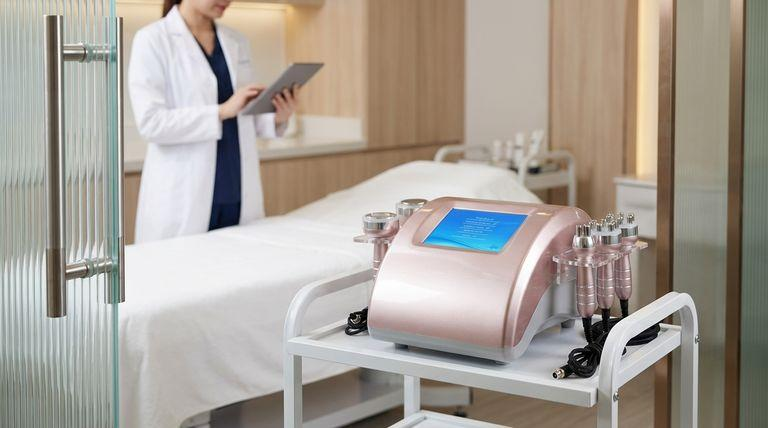
Suggested inline visual: Professional ultrasonic cavitation treatment in a clinic environment.
Professional Cavitation vs. Home-Use Devices
The difference between professional and home-use equipment is not simply a question of size.
Professional equipment is generally designed for trained operators and repeated commercial use. It can provide a more structured operating environment, with dedicated controls, professional applicators, and treatment protocols.
Home-use devices, by contrast, are typically designed around convenience and simplified operation. They may have fewer controls and lower energy delivery, depending on the product.
For a professional salon or clinic, the equipment must fit the entire service workflow. Operators need to consider treatment consistency, ergonomics, cleaning, maintenance, client comfort, training, and long-term reliability rather than focusing only on the headline specification.
The professional environment also allows practitioners to combine technology with consultation and individualized treatment planning. This is one of the main reasons professional equipment remains relevant even when consumer beauty devices are widely available.
Advantages / Comparison
1. Targeted Body-Contouring Applications
One of the primary advantages of professional cavitation technology is its suitability for localized body-contouring programs.
Common treatment areas may include:
- Abdomen
- Waist and flanks
- Thighs
- Arms
- Back
- Buttocks
The exact areas and treatment parameters should always follow the manufacturer's intended use and the practitioner's training.
Rather than applying the same protocol to every client, professional operators can assess the target area and create a treatment plan based on individual needs.
2. More Structured Treatment Protocols
A professional cavitation service can be incorporated into a standardized workflow.
A typical professional process may include:
Consultation → Body-area assessment → Treatment planning → Equipment preparation → Conductive medium application → Controlled handpiece movement → Post-treatment care → Progress monitoring
This structured process helps create a more consistent client experience.
3. Integration With Other Aesthetic Technologies
Many modern body-contouring platforms combine cavitation with other technologies, such as radio frequency, vacuum massage, LED, or other body-treatment modalities. Industry equipment guides increasingly highlight multifunctional systems because salons can use one platform to build different treatment combinations according to their service menu.
However, combination technology should not automatically be considered better. Each modality has a different purpose, and the treatment plan should determine which functions are appropriate.
For example, cavitation may be selected for a localized body-contouring objective, while RF may be incorporated when the service also focuses on skin appearance and firmness. Vacuum-based techniques may be used as a separate or complementary body-treatment step when appropriate.
The important point is protocol design, not simply the number of functions listed on the machine.
4. Professional Presentation and Client Experience
Equipment also contributes to the way a salon or clinic presents its body-contouring services.
A dedicated professional system with a touchscreen interface, organized handpieces, clear treatment controls, and a modern equipment design can create a more professional treatment-room environment.
For businesses, this matters because clients often evaluate an aesthetic service through the entire experience: consultation, equipment, practitioner communication, treatment process, and follow-up.
5. Operational Flexibility
For salons and clinics, equipment utilization is an important consideration.
A professional cavitation platform can support a body-contouring service menu without requiring surgical facilities. Depending on the device and local regulations, trained beauty professionals may incorporate the technology into non-invasive aesthetic services.
This can allow businesses to create different treatment packages, session plans, and body-area programs rather than relying on a single standardized service.
Applications / Client Needs
Abdomen and Waist
The abdomen and waist are among the most frequently discussed areas in body-contouring services. Clients may seek a more defined waistline or improvement in the appearance of localized fat deposits.
For professional operators, treatment should focus on the specific area rather than promising overall weight reduction.
Thighs and Buttocks
The thighs and buttocks are also common body-contouring areas. Depending on the equipment configuration, cavitation may be incorporated into a broader body-sculpting program.
A practitioner may evaluate the distribution of localized tissue, skin appearance, and the client's overall aesthetic objective before deciding whether cavitation is appropriate.
Arms and Back
The upper arms and back can be difficult areas for clients to address through lifestyle changes alone from an appearance perspective. Professional body-contouring equipment provides another non-invasive service option that can be integrated into a broader aesthetic program.
Building a Professional Treatment Program
The most effective way to use a professional cavitation machine is not to treat every client in the same way.
A professional treatment program can include:
Step 1: Client Consultation
Understand the client's aesthetic concerns, expectations, previous treatments, and relevant contraindications according to the applicable professional protocol.
Step 2: Target Area Selection
Identify the specific area that the client wants to address. Measurements and standardized photographs can help practitioners monitor changes over time.
Step 3: Parameter Selection
Choose the appropriate operating parameters according to the equipment manufacturer's instructions, treatment area, and practitioner training.
Step 4: Controlled Treatment
Apply the handpiece using the correct movement pattern, contact method, and treatment duration specified for the device.
Step 5: Post-Treatment Guidance
Provide appropriate aftercare and explain realistic expectations. Hydration and normal physical activity may form part of general post-treatment guidance, but they should not be presented as mechanisms that guarantee a particular result.
Step 6: Progress Tracking
Rather than relying exclusively on body weight, professional clinics can use measurements, photographs, garment fit, and client feedback to evaluate changes in the treated area.
This approach transforms a machine purchase into a structured professional service.
Suggested inline visual: Consultation and professional treatment workflow.
What Should Clinics Consider When Choosing a Professional Cavitation Machine?
For clinic owners, purchasing decisions should go beyond price and the number of handpieces included.
Important considerations include:
Technology: Check the actual ultrasonic frequency, output specifications, applicator design, and available treatment modes.
Usability: The interface should be easy for trained operators to understand and adjust.
Reliability: Commercial equipment needs to withstand repeated operation and routine maintenance.
Training: Manufacturer training and clear operating protocols can be valuable when introducing the technology to a professional team.
After-Sales Support: Technical assistance, replacement parts, warranty terms, and service response can influence the long-term operating cost.
Regulatory Compliance: Equipment should be used according to its intended purpose and the regulatory requirements applicable in the target market.
Treatment Portfolio: Consider whether cavitation complements the clinic's existing services rather than purchasing equipment simply because it has many functions.
Recent industry buying guides similarly emphasize that equipment selection should be based on the clinic's treatment menu, operator training, client profile, and operational requirements rather than specifications alone.
Conclusion
A professional cavitation machine is more than an ultrasonic device for body contouring. In a modern beauty salon, aesthetic clinic, or medical spa, it can become part of a structured treatment system built around targeted body areas, professional operation, individualized protocols, and measurable client progress.
The underlying technology is based on controlled ultrasonic energy and acoustic cavitation, while the practical value comes from how that technology is applied. Professional equipment provides the operating environment needed to build repeatable treatment workflows, while trained practitioners bring assessment, parameter selection, technique, and client communication into the process.
For businesses considering body-contouring equipment, the goal should not simply be to find the machine with the highest power or the largest number of functions. A more useful approach is to evaluate whether the equipment, technology, training, support, and treatment workflow match the needs of the clinic.
When technology and professional operation work together, cavitation can serve as a practical component of a modern non-invasive body-contouring service portfolio
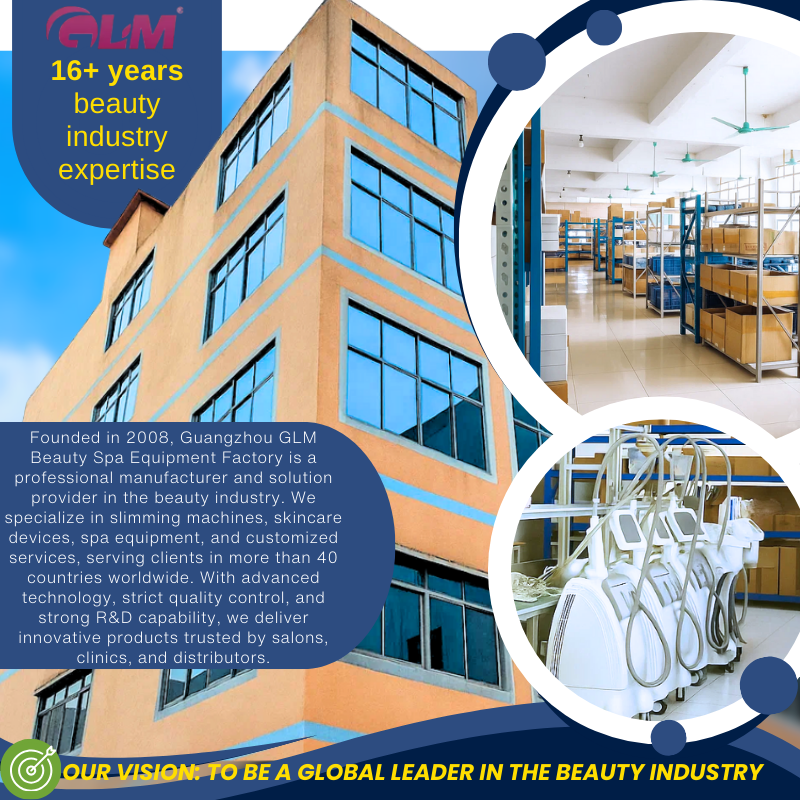
Founded in 2008, Guangzhou GLM Beauty Spa Equipment Factory specializes in research, development, manufacture and selling of beauty and slimming machines. Our production base is located in Guangzhou City, Guangdong Province, China. Since our foundation, we have introduced advanced technologies and equipment, to assure high quality and high performance of our products. With professional marketing guide and excellent after-sales service, our products have been exported to over 20 countries and regions, including Southeast Asia, the Middle East, Europe and the United States, won worldwide praises and gained a good reputation