
1. Introduction
As aesthetic treatments continue to evolve in 2026, treatment comfort and post-procedure skin care have become increasingly important considerations for professional beauty clinics and medical spas. Clients are no longer concerned only with visible results. They also pay attention to how a treatment feels, how their skin responds afterward, and how quickly they can return to their daily routines.
This growing demand has brought skin cooling technology into greater focus. From cryotherapy-inspired treatments to advanced contact cooling systems, modern cooling devices are becoming valuable additions to professional aesthetic equipment. By delivering controlled cooling to the skin, these technologies help manage temporary discomfort, reduce the sensation of heat, and support a more comfortable treatment experience.
Skin cooling is particularly relevant in procedures involving energy-based technologies, including radiofrequency (RF), laser treatments, intense pulsed light (IPL), and certain ultrasound-based procedures. These treatments may generate heat within targeted skin structures, making temperature management an important part of treatment planning.
For professional beauty clinics, cooling technology is not simply an additional feature. It can be an important component of treatment quality, client satisfaction, and post-treatment care. Understanding how different cooling methods work allows practitioners to select suitable equipment and develop more complete treatment protocols.
2. Background: Why Skin Cooling Matters in Modern Aesthetic Treatments
Many professional aesthetic procedures rely on controlled energy delivery to achieve specific treatment goals. Depending on the technology, energy may be used to heat targeted tissues, stimulate collagen remodeling, or address unwanted pigmentation and hair follicles.
Although these procedures are designed with specific treatment parameters, the surrounding skin may experience temporary warmth, redness, sensitivity, or discomfort. The intensity and duration of these responses depend on several factors, including the treatment method, energy settings, skin condition, and individual tolerance.
This creates an important challenge for professional practitioners: how can they maintain treatment effectiveness while improving the client's comfort?
Skin cooling offers one approach to this challenge.
2.1 Managing Treatment-Related Heat
During laser, IPL, and RF procedures, heat is an essential part of the treatment mechanism. However, excessive or poorly controlled heat exposure can increase the likelihood of unwanted skin reactions.
Appropriate cooling helps manage the temperature of the skin surface and, depending on the cooling method, may protect surrounding tissue from excessive thermal exposure. This is particularly important when working with sensitive areas or clients who are more susceptible to discomfort.
2.2 Improving the Client Experience
Comfort has a direct influence on how clients perceive professional treatments. A procedure that produces excessive heat or discomfort may make clients hesitant to continue with recommended treatment courses.
Cooling systems can help reduce the sensation of heat and improve tolerance during selected procedures. For clinics, this can contribute to a more controlled and client-focused service experience.
2.3 Supporting Post-Treatment Skin Care
Following certain aesthetic procedures, clients may experience temporary redness, warmth, or mild swelling. Appropriate cooling may help relieve these temporary sensations.
However, cooling should not be considered a universal solution for every post-treatment reaction. Practitioners should follow device instructions and procedure-specific aftercare protocols, particularly after treatments that intentionally create controlled thermal effects.
3. Technology and Mechanism: How Skin Cooling Devices Work
Skin cooling technologies use different physical mechanisms to transfer heat away from the skin. The main approaches include contact cooling, air cooling, cryotherapy-based cooling, and integrated cooling systems.
Each method offers different advantages depending on the treatment application.
3.1 Contact Cooling Technology
Contact cooling systems use a cooled treatment surface, commonly made from materials with good thermal conductivity, to absorb heat from the skin.
The cooling plate or contact tip is placed against the treatment area, allowing heat to transfer from the skin to the cooled surface. Some professional devices use temperature sensors and electronic control systems to maintain a more consistent cooling level.
Contact cooling is frequently incorporated into professional laser and IPL equipment. It may help protect the epidermis while energy is delivered to the intended treatment target.
For practitioners, the main advantage is controlled and localized cooling. The treatment area can receive cooling directly through the handpiece, reducing the need for separate cooling equipment in certain procedures.
3.2 Cryotherapy-Based Cooling
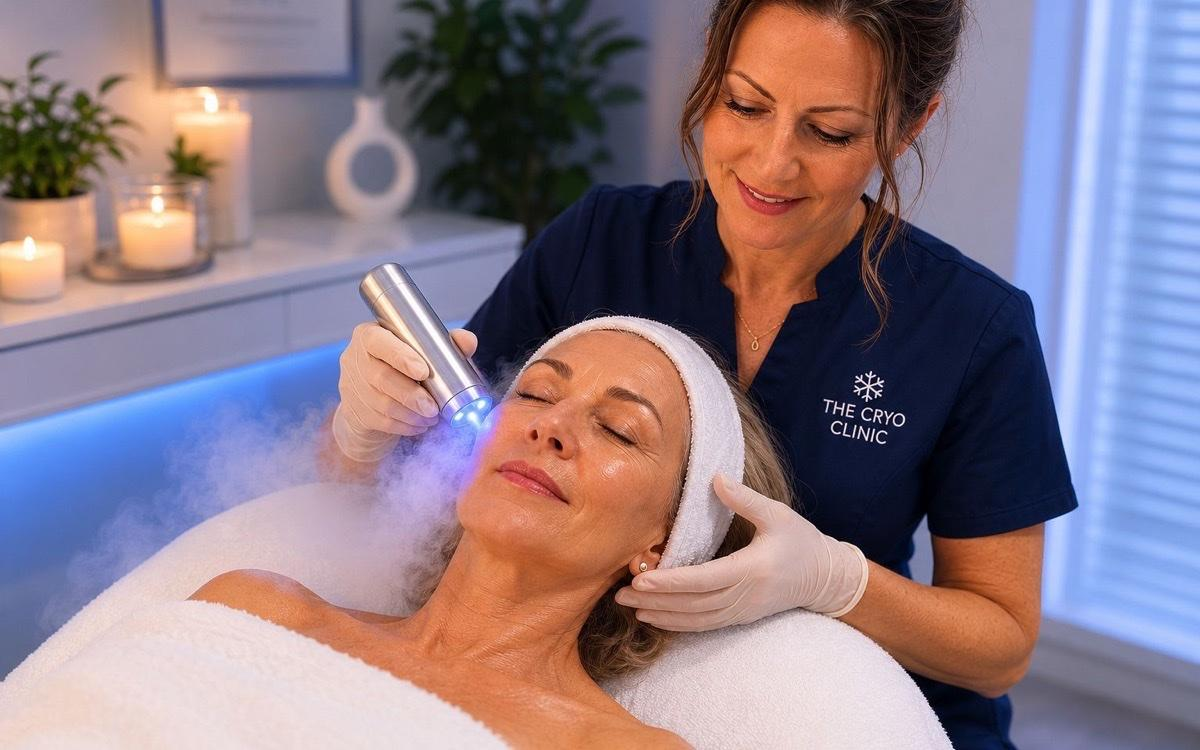
Cryotherapy refers broadly to the therapeutic application of cold temperatures. In aesthetic settings, cryotherapy-inspired devices may use cooled air, contact applicators, or other controlled cooling methods.
Unlike medical whole-body cryotherapy systems, professional facial and localized skin cooling equipment is generally designed to address specific treatment areas.
Depending on the device, cooling may help temporarily reduce the sensation of heat, soothe the skin, and provide a refreshing experience.
Some devices use refrigerated air circulation, while others rely on electronically cooled applicators. The actual temperature range, cooling intensity, and treatment duration vary by equipment design.
It is important to distinguish professional localized cooling from extreme-temperature cryotherapy. Not every aesthetic cooling device operates at freezing temperatures, and stronger cooling does not automatically mean better results.
3.3 Air Cooling Technology
Air cooling systems direct a controlled stream of cool air toward the skin during or after treatment.
A cooling unit typically draws in surrounding air, lowers its temperature through a refrigeration or heat-exchange system, and delivers the cooled airflow through a hose or specialized nozzle.
This approach offers several practical benefits:
-
Non-contact cooling reduces the need for direct pressure on sensitive skin.
-
Adjustable airflow allows practitioners to manage the cooling experience.
-
The cooling nozzle can be positioned around different treatment areas.
-
Continuous airflow can support comfort during selected energy-based procedures.
Air cooling is especially useful in treatments where direct contact with the skin is inconvenient or where a larger area needs to be cooled.
3.4 Integrated Cooling Systems in Professional Beauty Equipment
Many modern aesthetic devices combine treatment technology with built-in cooling functions.
For example, certain laser, RF, and IPL platforms incorporate cooling plates, sapphire contact tips, or controlled airflow into their handpieces.
This integrated approach helps coordinate energy delivery and skin cooling within one treatment system. Rather than requiring practitioners to operate separate devices for every step, integrated systems can streamline treatment workflows.
However, cooling performance depends on the specific device design, sensor accuracy, temperature stability, and maintenance condition. Clinics should evaluate actual technical specifications instead of relying only on marketing descriptions such as intelligent cooling or advanced temperature control.
4. Advantages and Comparison: Why Professional Cooling Devices Matter
Professional cooling equipment offers benefits that extend beyond the immediate sensation of cold. Its value is closely connected to treatment consistency, operational efficiency, and the ability to manage different client needs.
4.1 More Consistent Temperature Management
Manual cooling methods, such as cold towels or ordinary ice packs, are difficult to standardize. Their temperatures change over time, and the cooling effect may vary across different parts of the treatment area.
Professional cooling devices are designed to provide more controlled cooling through adjustable settings and dedicated delivery systems.
Depending on the equipment, temperature sensors, refrigeration modules, and automatic control functions can help maintain more consistent operating conditions.
For clinics performing multiple treatments each day, this level of control can make treatment procedures easier to standardize.
4.2 Better Integration with Aesthetic Procedures
Professional cooling equipment can be selected according to the treatment technology and clinical workflow.
For example:
-
Laser and IPL treatments may benefit from contact or air cooling, depending on the platform.
-
RF treatments may use integrated cooling or carefully managed external cooling when appropriate.
-
Facial treatments may incorporate gentle cooling after selected procedures.
-
Sensitive treatment areas may benefit from non-contact cooling methods.
The key is to match the cooling method with the treatment mechanism rather than applying the same cooling protocol to every procedure.
4.3 Improved Operational Efficiency
A dedicated cooling device can reduce dependence on frequently replaced cold packs and manual preparation.
Portable cooling systems are also useful for clinics that perform different procedures in separate treatment rooms. Integrated cooling functions can further simplify equipment arrangements and reduce unnecessary workflow interruptions.
For equipment distributors and clinic owners, these practical considerations can influence purchasing decisions just as much as the technical specifications.
4.4 Professional Equipment vs. Home Cooling Tools
Home cooling products, including reusable gel packs, ice rollers, and basic facial cooling tools, are primarily designed for simple personal care.
Professional cooling devices serve a different purpose. They are developed for repeated use in treatment environments and may include adjustable temperature settings, more powerful cooling systems, specialized handpieces, and continuous operating capabilities.
| Comparison | Home Cooling Tools | Professional Cooling Devices |
|---|---|---|
| Primary purpose | Personal skin comfort | Treatment support and temperature management |
| Temperature control | Usually limited | Often adjustable or electronically controlled |
| Cooling delivery | Manual contact | Contact, airflow, or integrated systems |
| Operating frequency | Occasional personal use | Designed for professional workflows |
| Treatment integration | Generally independent | May integrate with aesthetic equipment |
| Operation | Simple personal handling | Requires trained operation and protocols |
Professional devices are not automatically suitable for every skin condition or procedure. Their advantage lies in their equipment design, controllability, and compatibility with professional treatment workflows.
5. Applications and Client Needs: Where Cooling Technology Creates Value
Skin cooling technology has applications across several professional aesthetic treatment categories. Its role should always be determined by the specific procedure, device instructions, and the client's skin condition.
5.1 Laser and IPL Treatments
Laser and IPL procedures use light energy to target structures such as hair follicles or selected pigment-related targets.
Because these technologies involve energy absorption and heat generation, cooling may be used to improve epidermal comfort and help manage thermal exposure.
Contact cooling, sapphire tips, and cold-air systems are common approaches in professional equipment.
For clinics offering hair removal, pigmentation-related procedures, or selected skin rejuvenation services, cooling functions can be an important consideration when evaluating treatment platforms.
5.2 Radiofrequency Skin Treatments
RF treatments deliver electrical energy to generate heat in targeted tissue structures. Depending on the treatment design, this thermal effect may be used to support collagen remodeling and skin tightening applications.
Cooling may be incorporated to improve surface comfort while the intended treatment energy is delivered.
However, practitioners must understand the relationship between cooling and RF energy delivery. Excessive or incorrectly timed cooling may interfere with the intended thermal treatment effect. Cooling settings should therefore follow the manufacturer's protocol.
5.3 Professional Facial Treatments
Cooling devices are also used in facial treatment programs, particularly when clients want a refreshing and soothing step after cleansing, exfoliation, or selected non-invasive procedures.
A professional facial cooling device may help reduce the sensation of warmth and provide temporary comfort.
For skin management centers, cooling can be incorporated into customized facial programs alongside cleansing, hydration, and other suitable skin-care procedures.
It is important to avoid presenting cooling as a treatment for every form of inflammation or as a replacement for appropriate dermatological care.
5.4 Post-Treatment Comfort and Recovery Support
After selected aesthetic procedures, clients may experience temporary redness, warmth, or mild swelling.
When appropriate for the procedure, controlled cooling may help relieve these sensations and improve short-term comfort.
Practitioners should distinguish between normal temporary treatment responses and signs of complications. Persistent pain, blistering, unusual swelling, or worsening skin reactions require appropriate professional assessment rather than simply applying more cooling.
5.5 Supporting Different Client Preferences
Not all clients have the same tolerance for heat, pressure, or treatment sensations.
Some may prefer gentle non-contact cooling, while others may be comfortable with direct-contact cooling. Skin sensitivity, treatment location, and the procedure itself should all influence equipment selection.
Professional practitioners can use these considerations to develop more personalized treatment experiences without making unsupported promises about clinical outcomes.
6. Choosing the Right Professional Skin Cooling Device
For beauty clinics, medical spas, and equipment distributors, selecting a cooling device requires more than comparing its maximum cooling temperature.
Several factors deserve attention:
Temperature range and stability: Check the adjustable temperature range, cooling consistency, and whether the equipment has temperature monitoring or protective functions.
Cooling method: Determine whether contact cooling, cold-air delivery, or an integrated system is more suitable for the clinic's existing treatments.
Treatment compatibility: Confirm that the cooling device is appropriate for the intended procedure. External cooling should not be assumed compatible with every laser, RF, or ultrasound treatment.
Operating capacity: Consider whether the equipment can support continuous professional use and multiple treatment sessions.
Handpiece and accessory design: Look at the contact surface, nozzle structure, hose length, and ease of handling.
Safety features: Temperature protection, clear operating instructions, maintenance requirements, and appropriate emergency procedures are important considerations.
After-sales support: For professional equipment buyers, technical training, spare parts, warranty coverage, and manufacturer support can affect long-term operating costs.
A reliable supplier should be able to provide clear specifications, operating guidance, and documentation relevant to the intended market.
7. Conclusion
In 2026, skin cooling technology is becoming an increasingly relevant part of professional aesthetic treatment systems. From cryotherapy-inspired facial applications to advanced contact and air-cooling equipment, modern cooling solutions offer practitioners additional ways to manage treatment-related heat and improve client comfort.
Their value is not limited to creating a refreshing sensation. When selected and operated correctly, professional cooling systems can support treatment workflows, complement energy-based procedures, and provide a more controlled approach to post-treatment comfort.
For beauty clinics and medical spas, choosing the right cooling equipment means considering treatment compatibility, temperature stability, operating efficiency, and safety requirements.
As the professional beauty industry continues to prioritize both treatment performance and client experience, advanced skin cooling devices are likely to remain an important part of comprehensive aesthetic equipment solutions
Founded in 2008, Guangzhou GLM Beauty Spa Equipment Factory specializes in research, development, manufacture and selling of beauty and slimming machines. Our production base is located in Guangzhou City, Guangdong Province, China. Since our foundation, we have introduced advanced technologies and equipment, to assure high quality and high performance of our products. With professional marketing guide and excellent after-sales service, our products have been exported to over 20 countries and regions, including Southeast Asia, the Middle East, Europe and the United States, won worldwide praises and gained a good reputation
