Introduction
Temperature has always played an important role in professional aesthetic treatments. From warming the skin before a facial procedure to using controlled heat for skin tightening or cooling to improve treatment comfort, temperature can influence how energy is delivered and how the skin responds.
Today, temperature-based skin treatments have become increasingly integrated into professional beauty clinics, aesthetic centers, and dermatology practices. Modern equipment does more than simply heat or cool the skin. Advanced systems can combine energy delivery, temperature monitoring, cooling technology, adjustable intensity, and specialized applicators to create a more controlled treatment environment.
This development is particularly important as clients increasingly look for non-invasive procedures that fit into busy lifestyles. Treatments based on radiofrequency (RF), thermal energy, cooling systems, and temperature-controlled technologies can support professional treatment programs for concerns such as skin laxity, uneven texture, facial contouring, and treatment comfort.
For professional operators, the value of temperature-based technology is not simply the ability to make the skin warmer or cooler. The real advantage lies in controlled thermal management—delivering the appropriate level of energy to the intended treatment area while monitoring the skin throughout the procedure.
Background: Why Temperature Matters in Aesthetic Treatments
The skin is highly sensitive to changes in temperature. Controlled heating can influence tissue behavior, circulation, and collagen-related processes, while cooling can help protect the skin surface and improve comfort during energy-based procedures.
The challenge is that professional treatments require much greater precision than simply applying heat or cold.
Too little thermal energy may not provide the intended treatment effect. Excessive or poorly controlled heat, on the other hand, can increase discomfort and the risk of unwanted thermal effects. This is why modern professional equipment increasingly incorporates temperature monitoring and thermal regulation.
For example, research into temperature-controlled RF treatment has examined systems that use continuous feedback from skin-temperature sensors to regulate energy delivery. One published study described a system designed to maintain skin temperatures within a selected treatment range while reducing overheating and improving treatment consistency.
This principle is increasingly reflected in professional aesthetic equipment: temperature is treated as a controllable treatment parameter rather than simply a by-product of energy delivery.
For clinics and salons, this distinction matters. Professional operators need to consider skin condition, treatment area, device parameters, client comfort, and the intended treatment objective at the same time.
Technology and Mechanism: How Temperature-Based Treatments Work
Temperature-based skin treatments can use several different technologies. The exact mechanism depends on the device, but the most common approaches include controlled heating, cooling, or a combination of both.
1. Controlled Heating with Radiofrequency
Radiofrequency is one of the best-known technologies associated with temperature-based aesthetic treatments.
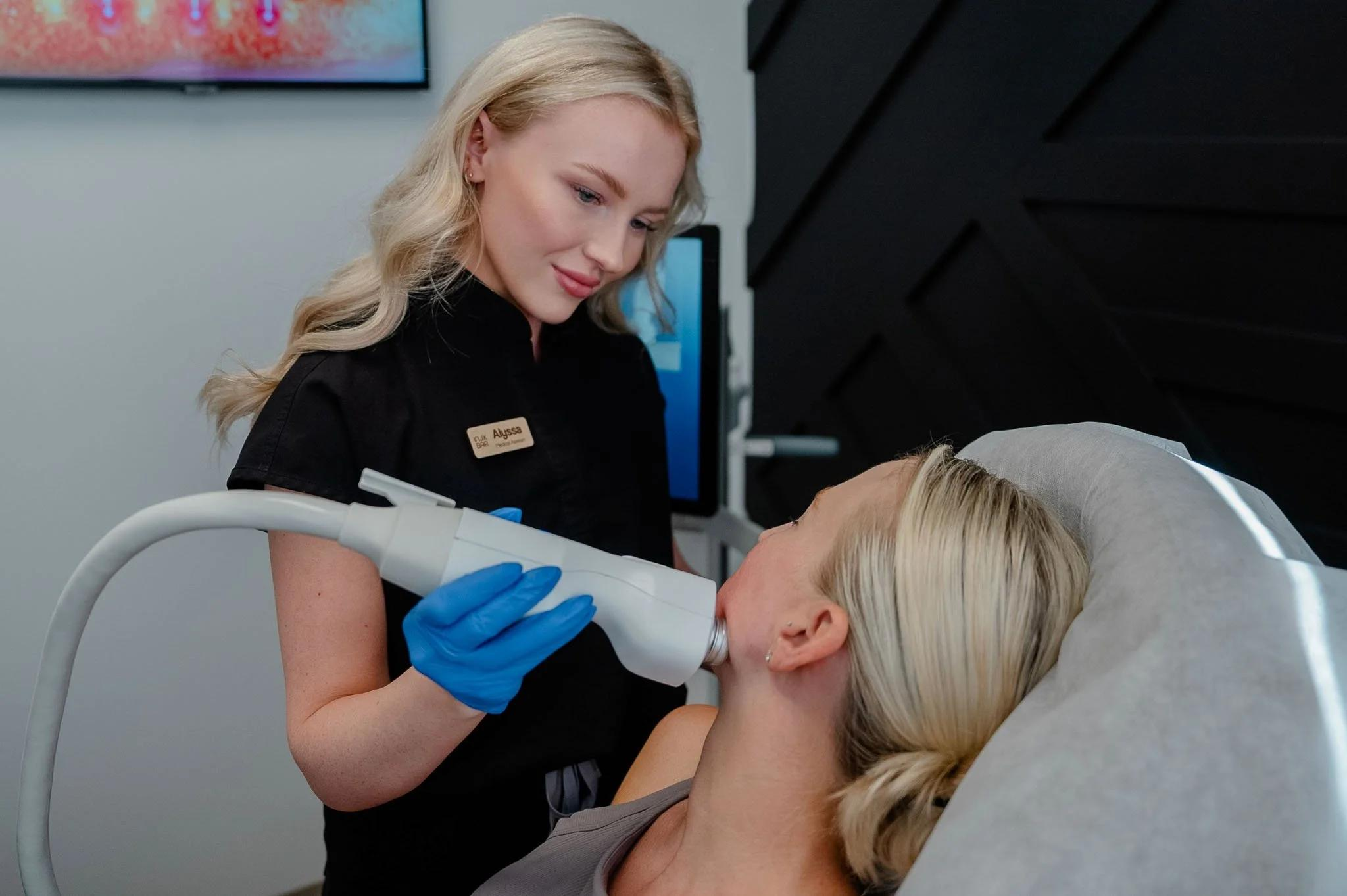
RF devices deliver electromagnetic energy into tissue, where resistance to the energy can generate heat. Depending on the device design and treatment parameters, this thermal effect can reach different tissue depths.
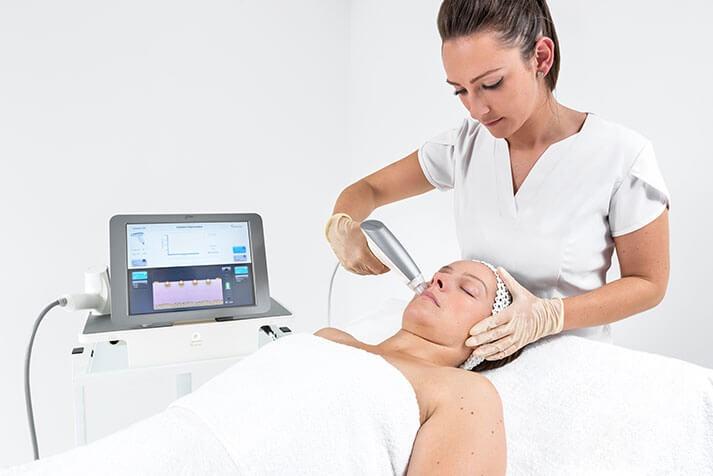
Professional RF systems may incorporate multiple frequencies, different handpiece designs, adjustable power levels, and temperature feedback. Some systems continuously monitor skin temperature and adjust energy delivery to maintain a defined treatment range.
Controlled heating is commonly incorporated into professional programs targeting:
- Skin firmness
- Fine lines and wrinkles
- Skin laxity
- Facial contouring
- Body skin tightening
- Uneven skin texture
The objective is not simply to achieve a high temperature. Instead, the operator aims to deliver controlled thermal energy consistently across the treatment area.
2. Cooling Technology for Skin Protection and Comfort
Cooling represents the opposite side of temperature-based treatment.
Cooling systems can help manage the temperature of the skin surface during energy-based procedures. This can be particularly useful when technologies such as RF, laser, IPL, or RF microneedling generate significant thermal energy.
Professional cooling systems may use cold air, water cooling, contact cooling, or other thermal-management approaches. For example, professional aesthetic cooling systems are designed to cool the skin during laser, IPL, and RF microneedling treatments, helping protect the surface and reduce discomfort.
This creates an important principle in modern aesthetic technology:
Heating can target deeper tissue, while cooling can help manage the surface.
Some advanced systems therefore combine energy delivery and cooling within the same treatment platform.
3. Temperature Monitoring and Feedback
One of the most important developments is real-time temperature monitoring.
Traditional equipment may require an operator to rely heavily on experience and manual adjustment. Modern systems can incorporate sensors and software that continuously monitor treatment conditions.
When temperature approaches a preset threshold, the system may automatically adjust or pause energy delivery. This can help make thermal exposure more consistent between treatment passes.
A published study of a temperature-controlled RF handpiece, for example, described automatic regulation designed to avoid exceeding a preset temperature threshold and promote more homogeneous heating.
For professional clinics, this type of feedback can support standardized treatment protocols while still allowing practitioners to customize settings according to the treatment area and client needs
Advantages: Why Professional Temperature Control Matters
The major advantage of temperature-based technology is control.
More Consistent Treatment Delivery
Professional equipment can provide adjustable energy levels and temperature monitoring, helping operators maintain a more consistent treatment process.
This is particularly valuable when a clinic performs the same treatment across different clients. Rather than relying only on subjective sensations such as “warm enough,” operators can work with defined parameters and treatment protocols.
Improved Treatment Comfort
Heat-based treatments can be effective while still requiring careful management of client comfort.
Cooling technology can help reduce excessive surface heat, while controlled energy delivery can avoid unnecessary temperature fluctuations. Some modern systems combine RF heating with integrated cooling specifically to maintain comfort while delivering thermal energy.
A comfortable treatment experience can also influence how clients perceive the professionalism of a clinic.
Greater Treatment Customization
Different areas of the face and body do not necessarily require identical treatment parameters.
The cheek, jawline, neck, abdomen, arms, and thighs have different anatomical characteristics and may require different applicators or settings.
Professional systems may therefore offer multiple handpieces or treatment heads designed for different areas. Some temperature-controlled RF systems have applicators in different sizes for facial and body areas, allowing treatment parameters to be adapted to the target area.
Better Integration into Professional Treatment Programs
Temperature-based technologies can also become part of broader treatment plans rather than functioning as isolated procedures.
For example, a clinic may use thermal treatments as part of a skin-firming program and combine them with other professional services according to the client's needs and the operator's assessment.
This creates opportunities for clinics to develop structured treatment courses instead of relying on one-off services.
Temperature-Based Devices vs. Basic Home Heating or Cooling Tools
There is an important difference between temperature-based professional equipment and simple home-use heating or cooling products.
A basic home device may provide warmth or cold, but professional aesthetic equipment is designed around controlled energy delivery, treatment parameters, monitoring, and repeatable operation.
A professional RF platform, for example, can incorporate specific frequencies, adjustable energy levels, dedicated applicators, temperature sensors, cooling systems, and software feedback. These features allow trained operators to adapt treatment parameters to different areas and treatment objectives.
The distinction is therefore not simply about whether a device becomes hotter or colder.
It is about how accurately the temperature is controlled, how the energy is delivered, and how the operator can monitor the treatment.
For professional clinics, this level of control can be particularly important when developing standardized treatment protocols and maintaining consistent service quality.
Applications and Client Needs
Temperature-based technology can support a wide range of professional aesthetic applications.
Facial Skin Firming
Controlled thermal energy is frequently incorporated into non-invasive facial treatments designed around skin firmness and visible signs of aging.
RF-based systems can deliver thermal energy to targeted tissue while temperature monitoring helps operators manage treatment intensity.
For clients who prefer non-invasive procedures, temperature-based treatments can become part of a longer-term skin-maintenance program.
Body Skin Tightening
Temperature-controlled RF technology can also be applied to larger body areas such as the abdomen, thighs, arms, and buttocks.
Professional systems designed for body treatments may use larger applicators and different energy parameters to accommodate larger treatment areas.
Some professional aesthetic practices use RF and ultrasound-based technologies for body treatments, with controlled surface temperatures and integrated cooling systems.
Skin Texture and Collagen-Focused Programs
Thermal treatments are also commonly positioned within professional programs targeting skin texture and firmness.
The underlying concept is that controlled thermal exposure can influence collagen-related tissue remodeling. However, treatment outcomes depend on the specific technology, treatment parameters, individual skin characteristics, and treatment protocol.
Therefore, professional operators should avoid treating temperature alone as a guarantee of a particular result.
Comfort Management During Energy-Based Treatments
Cooling technology has another important role: supporting treatment comfort.
For procedures involving lasers, IPL, RF, or other energy-based technologies, cooling may be used before, during, or after energy delivery depending on the equipment and protocol.
This makes cooling technology valuable not only as a standalone treatment approach but also as a supporting technology within a broader professional treatment system.
Personalized Treatment Programs
Modern clients increasingly expect treatments to be adapted to their individual needs.
Professional temperature-controlled devices can contribute to this approach by allowing operators to adjust:
- Treatment temperature
- Energy intensity
- Treatment duration
- Applicator size
- Treatment area
- Cooling level
- Treatment frequency
The exact settings should always follow the manufacturer's instructions, professional training, applicable regulations, and an appropriate client assessment.
Conclusion
Temperature-based skin treatments represent an important direction in modern aesthetic technology because they transform temperature from a simple physical effect into a controllable treatment parameter.
Controlled heating can support professional skin-firming and rejuvenation programs, while cooling technology can help manage surface temperature and treatment comfort. More advanced systems combine energy delivery, temperature sensors, cooling mechanisms, and software feedback to provide a more controlled treatment environment.
For beauty salons, aesthetic clinics, and professional treatment centers, the value of these technologies extends beyond individual treatment results. They can support standardized protocols, personalized treatment planning, comfortable client experiences, and a broader range of professional services.
As aesthetic equipment continues to evolve, temperature control is likely to become increasingly integrated with other technologies rather than functioning independently. The future of professional skin treatment is therefore not simply about producing more heat or stronger cooling—it is about delivering the right thermal effect, at the right area, with the right level of control
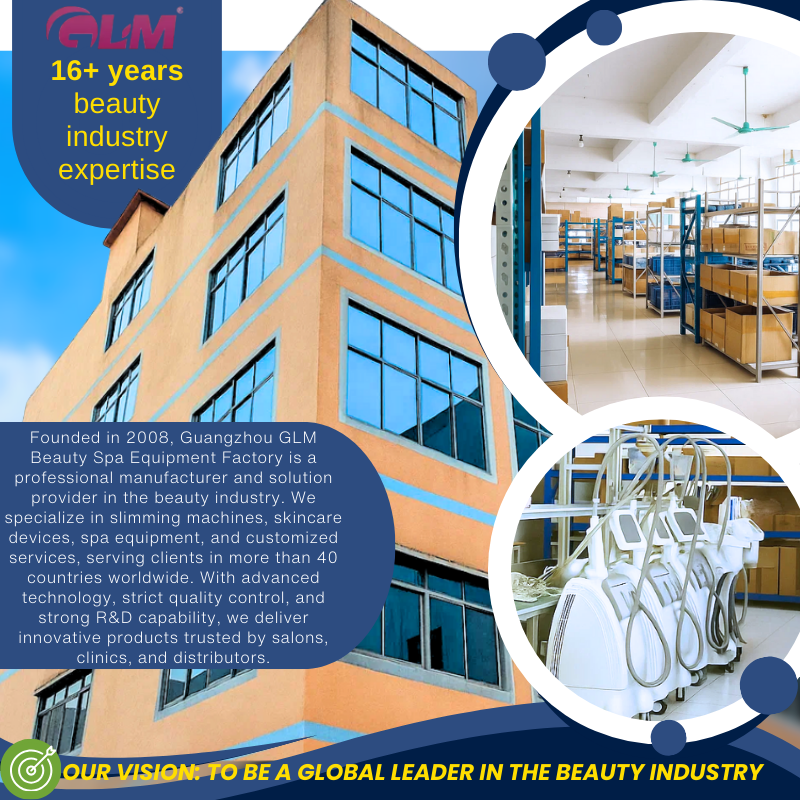
Founded in 2008, Guangzhou GLM Beauty Spa Equipment Factory specializes in research, development, manufacture and selling of beauty and slimming machines. Our production base is located in Guangzhou City, Guangdong Province, China. Since our foundation, we have introduced advanced technologies and equipment, to assure high quality and high performance of our products. With professional marketing guide and excellent after-sales service, our products have been exported to over 20 countries and regions, including Southeast Asia, the Middle East, Europe and the United States, won worldwide praises and gained a good reputation