
Introduction
Scalp care is becoming an increasingly important part of professional beauty and hair-care services. Clients are no longer satisfied with simply choosing a shampoo or treatment based on how their scalp feels. They want to understand why their scalp is oily, dry, flaky, sensitive, or showing signs of reduced hair density. More importantly, they want professional recommendations that are based on something more objective than visual observation alone.
This is where imaging technology is changing the scalp-care experience.
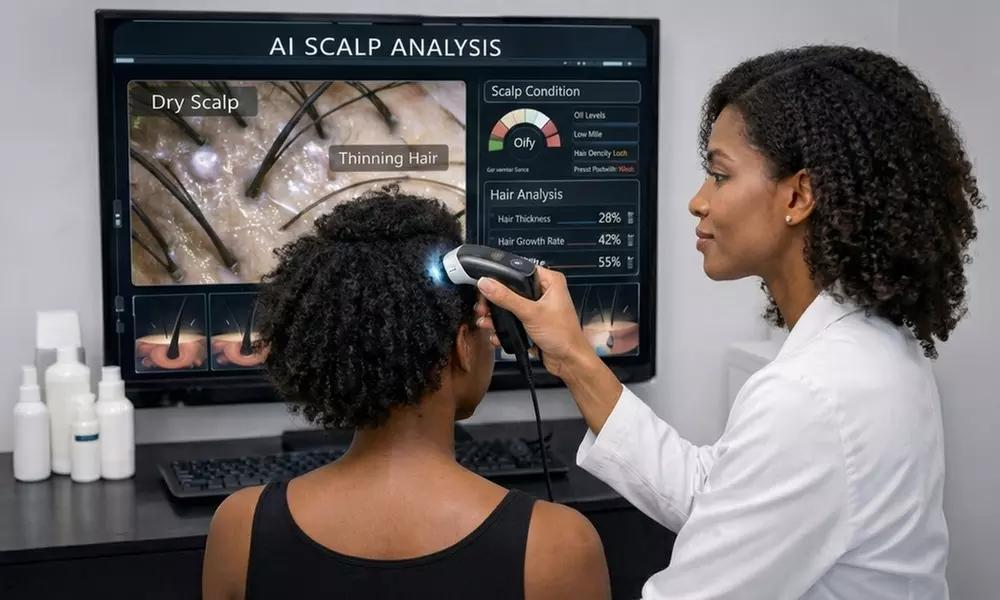
Modern scalp imaging systems combine high-resolution cameras, magnification, specialized illumination, digital image processing, and, in some systems, AI-assisted analysis. Instead of relying only on what can be seen from a normal distance, professional operators can examine enlarged images of the scalp and hair, document specific areas, and compare changes over time.
Trichoscopy and videodermoscopic imaging are already used in professional hair and scalp assessment because magnified imaging can reveal structures that are difficult to evaluate with the naked eye. These include follicular openings, hair shafts, perifollicular skin, surface scaling, and vascular patterns.
For beauty salons, scalp-care studios, hair clinics, and professional treatment centers, this technology offers more than a closer look. It creates a more structured consultation process and provides visual evidence that can connect scalp assessment with personalized care.
Background / Problem: Why Traditional Scalp Observation Is Not Enough
A scalp may look relatively normal from the outside while showing noticeable differences under magnification.
For example, a client may complain that their hair feels thinner or that their scalp becomes oily quickly. A basic visual inspection may confirm the complaint, but it cannot always show the distribution of follicles, the condition of the hair shafts, or subtle surface changes in sufficient detail.
This creates a challenge for professional operators.
Without imaging, consultations can become highly subjective. Different operators may describe the same scalp differently, and clients may find it difficult to understand why a particular treatment has been recommended.
Another problem is that scalp conditions can change over time. A client may complete several professional treatments but still ask, “Is my scalp actually improving?” If there is no baseline image, the answer may depend largely on personal perception.
Digital imaging addresses this problem by creating a visual record.
A professional scalp analysis device can capture standardized images of selected areas such as the frontal scalp, crown, temples, and occipital region. The images can then be reviewed during the consultation, stored for future comparison, and incorporated into a professional report depending on the system.
This changes the conversation from:
“My scalp seems unhealthy.”
to:
“Let us examine the scalp, identify the visible characteristics, establish a baseline, and monitor the changes.”
That shift is particularly valuable in professional environments where treatment planning and client communication are both important.
Technology / Mechanism: How Scalp Imaging Works
At the core of a scalp imaging system are four key technologies: magnification, illumination, image capture, and digital analysis.
1. High-Magnification Imaging
The first step is making the scalp visible in greater detail.
A specialized optical probe or digital camera can magnify the scalp and hair far beyond ordinary photography. Depending on the device, professional imaging may use different magnification levels for observing overall scalp conditions, follicular openings, hair shafts, or localized areas.
Trichoscopy can provide magnified views of follicular openings, surrounding skin, hair shafts, and vascular structures. Digital systems can display these images in real time on a monitor, allowing both the operator and client to see the same information during consultation.
This visual interaction is one of the major advantages of professional imaging.
Instead of explaining an invisible problem verbally, the operator can show the client what is being observed.
2. Specialized Lighting
Magnification alone is not enough. Lighting determines what the camera can actually capture.
Professional scalp imaging systems may combine white light with polarized or ultraviolet illumination. Different lighting modes can emphasize different visual characteristics of the scalp.
White light is useful for general observation of the scalp surface and hair.
Polarized illumination can reduce surface reflections and improve visualization of certain structures. Professional trichoscopy systems commonly use polarized and non-polarized light to improve examination of scalp and hair features.
Some advanced systems also incorporate UV illumination. UV-based imaging can reveal specific fluorescence-related characteristics that may not be obvious under normal lighting, although interpretation depends on the technology and professional expertise.
For a professional salon or clinic, multiple lighting modes can therefore make one imaging platform considerably more useful than a standard close-up camera.
3. Digital Image Processing
After an image is captured, digital processing can improve how the information is presented.
Modern scalp analysis devices may use image-processing technology to adjust clarity, enhance visual details, organize images by scalp region, and generate structured analysis reports.
Some systems also incorporate AI or computer-vision functions to analyze visible characteristics such as hair density, follicular patterns, sebum, dandruff, or signs associated with thinning. The exact parameters vary significantly between devices.
AI should be viewed as a supporting technology rather than a replacement for professional judgment. Imaging can reveal patterns, but the meaning of those patterns depends on the client’s history, symptoms, treatment background, and, when necessary, assessment by an appropriately qualified healthcare professional.
4. Data-Based Follow-Up
One of the most practical functions of imaging technology is documentation.
A professional operator can capture images before a treatment program and repeat the imaging at later appointments. Using consistent areas, magnification, lighting, and positioning makes visual comparison more meaningful.
This creates a simple treatment-management cycle:
Scan → Analyze → Recommend → Treat → Re-scan → Compare
The same principle is increasingly being used in professional hair-care environments to make progress easier to visualize. Digital scalp-analysis systems can create baseline reports and compare subsequent scans, while standardized image capture helps maintain consistency between visits.
Advantages / Comparison: Imaging Technology vs. Traditional Observation
The value of imaging technology becomes clearer when it is compared with conventional scalp observation.
More Objective Than Visual Inspection Alone
Traditional observation depends heavily on lighting, viewing distance, operator experience, and the visible condition of the hair.
Imaging provides a magnified and recordable view. This does not eliminate professional judgment, but it gives the operator more visual information to work with.
Easier for Clients to Understand
Professional scalp care is often difficult to explain because many scalp characteristics cannot be seen clearly in a normal mirror.
A large screen displaying a magnified scalp image changes that.
Clients can see the areas being discussed, understand why a treatment has been recommended, and become more involved in the consultation process.
For professional salons, this can also make consultations feel more structured and personalized rather than simply sales-oriented.
Better Treatment Documentation
A treatment program may last several weeks or months. Without visual records, clients may struggle to notice gradual changes.
Digital imaging allows professionals to establish a starting point and compare subsequent images.
The technology is therefore useful not only before treatment but also during follow-up.
More Professional Than Consumer-Level Cameras
A smartphone camera can take a photograph of the scalp, but professional imaging systems are designed around controlled observation.
They may provide dedicated optical magnification, specialized illumination, image processing, fixed capture procedures, analysis software, and professional reporting functions.
The difference is not simply image quality.
It is the difference between taking a photograph and building a repeatable assessment process.
This distinction is particularly important for clinics and salons that want to develop standardized consultation workflows.
Applications / Client Needs
Scalp imaging technology can support a wide range of professional service scenarios.
1. Initial Scalp Assessment
Before beginning a scalp-care program, an operator can use imaging to establish a visual baseline.
The assessment may focus on visible oiliness, dryness, scaling, follicular appearance, hair density, hair shaft characteristics, or other parameters supported by the device.
This provides a more structured starting point for selecting appropriate professional care.
2. Personalized Scalp Treatments
Not every client has the same scalp condition.
One person may primarily need oil-control care, while another may be more concerned about dryness, buildup, sensitivity, or the appearance of thinning hair.
Imaging can help professionals organize clients into more personalized care pathways rather than applying the same treatment routine to everyone.
For beauty businesses, this creates an opportunity to connect analysis with professional services such as scalp cleansing, hydration programs, LED-based care, massage, infusion treatments, or other non-invasive scalp-care procedures appropriate to the facility and operator qualifications.
3. Hair and Scalp Consultation
For many salons, the consultation itself is an important part of the customer experience.
A scalp analyzer can become the starting point of the consultation.
The operator can capture images, explain visible findings, discuss lifestyle and hair-care habits, and then create an individualized care plan.
This transforms the consultation from a simple conversation into a technology-supported professional service.
4. Treatment Progress Monitoring
Follow-up imaging is especially useful for long-term programs.
Rather than asking clients to judge changes from memory, professionals can compare images from different appointments.
Consistent documentation can help demonstrate changes in visible scalp characteristics and make treatment discussions more concrete. Trichoscopy is also recognized as useful for monitoring treatment response in professional and clinical settings.
5. Premium Salon and Clinic Services
Technology can also help businesses differentiate their services.
A basic scalp-care service and a technology-supported scalp-analysis program offer very different customer experiences.
When clients receive a digital assessment, visual explanation, personalized recommendations, and follow-up comparison, the service becomes easier to position as a professional program rather than a single treatment.
For clinics and advanced salons, this can support premium consultation packages and recurring care programs.
What Should Professionals Look for in a Scalp Imaging Device?
When selecting equipment, professionals should look beyond magnification alone.
A practical system should offer clear imaging, stable lighting, comfortable operation, and an efficient workflow.
Useful features may include:
- High-resolution digital imaging
- Multiple magnification levels
- White, polarized, or other specialized lighting modes
- Real-time image display
- Multiple scalp-area assessment
- Image storage and comparison
- Automated or AI-assisted analysis where appropriate
- Professional report generation
- Easy-to-use software
- Comfortable handheld probes
- Reliable construction for repeated salon or clinic use
The most important consideration is not how many features appear on the specification sheet, but whether the device can improve the actual consultation and treatment workflow.
A professional device should help operators see more clearly, explain more effectively, document more consistently, and manage clients more professionally.
Conclusion
Imaging technology is changing the way professional scalp care is delivered.
By combining magnification, specialized lighting, digital imaging, image processing, and increasingly sophisticated analysis software, scalp imaging systems can turn conditions that are difficult to observe with the naked eye into clear visual information.
For salons, scalp-care studios, hair clinics, and professional beauty businesses, this technology offers practical value at every stage of the client journey.
It can support the initial assessment, improve consultation quality, assist personalized treatment planning, and create visual records for follow-up. Most importantly, it helps bridge the gap between what a client feels and what a professional can actually observe.
The future of scalp care is not simply about adding more treatments. It is about making those treatments more informed, measurable, and personalized.
A professional scalp imaging device can become the first step in that process—helping operators move from observation to analysis, from analysis to targeted care, and from one-time services to long-term client management.
When used appropriately and interpreted by qualified professionals, imaging technology does more than magnify the scalp.
It makes professional scalp care easier to see, easier to explain, and easier to manage
Founded in 2008, Guangzhou GLM Beauty Spa Equipment Factory specializes in research, development, manufacture and selling of beauty and slimming machines. Our production base is located in Guangzhou City, Guangdong Province, China. Since our foundation, we have introduced advanced technologies and equipment, to assure high quality and high performance of our products. With professional marketing guide and excellent after-sales service, our products have been exported to over 20 countries and regions, including Southeast Asia, the Middle East, Europe and the United States, won worldwide praises and gained a good reputation