
Introduction
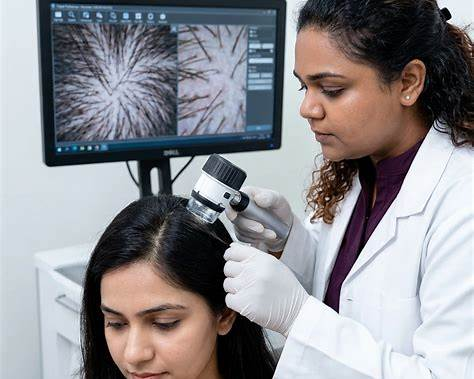
A healthy scalp is the foundation of healthy-looking hair, yet it is often one of the most overlooked areas in professional beauty care. Traditional scalp consultations frequently depend on visual inspection, client descriptions, and the operator’s experience. While these methods remain useful, modern scalp analysis technology is changing how professionals observe, explain, and manage scalp conditions.
Today’s professional scalp analyzers can combine high-magnification imaging, specialized lighting, digital photography, sensors, and increasingly, artificial intelligence (AI). Instead of simply looking at the scalp from a distance, practitioners can examine details that are difficult to see with the naked eye and convert those observations into visual records or structured reports.
This shift is particularly relevant for professional salons, scalp-care centers, and aesthetic clinics. A scalp analyzer is not simply an imaging camera. When integrated into a professional workflow, it can become a consultation tool, treatment-planning aid, and before-and-after documentation system.
Leading beauty-tech platforms are already combining multiple illumination modes, high-resolution imaging, and AI-based analysis to make professional scalp consultations more data-driven.
Background: Why Traditional Scalp Observation Has Limitations
Scalp conditions are not always obvious during a normal visual inspection.
A client may complain about excessive oiliness, visible flakes, itching, thinning hair, or reduced hair density. However, these symptoms do not necessarily reveal what is happening at the scalp surface or around individual follicles.
For a professional operator, one of the biggest challenges is therefore visibility.
The human eye can observe general characteristics such as redness, visible dandruff, hair density, and obvious irritation. It is much more difficult to consistently evaluate small changes in follicular openings, scalp texture, hair shaft characteristics, or localized buildup without magnification and controlled imaging.
This is where scalp analysis technology becomes valuable.
Instead of asking only, “What does the scalp look like?”, a professional can begin asking more specific questions:
- Is the scalp excessively oily?
- Is there visible buildup around follicular openings?
- Are flakes or surface debris present?
- Does the scalp show areas of redness or irritation?
- Does hair density appear different between scalp regions?
- Are individual hair shafts visibly different in thickness?
- How does the scalp look before and after a professional treatment?
The purpose is not to replace professional judgment. Rather, technology provides a more detailed visual reference that can support the operator’s assessment.
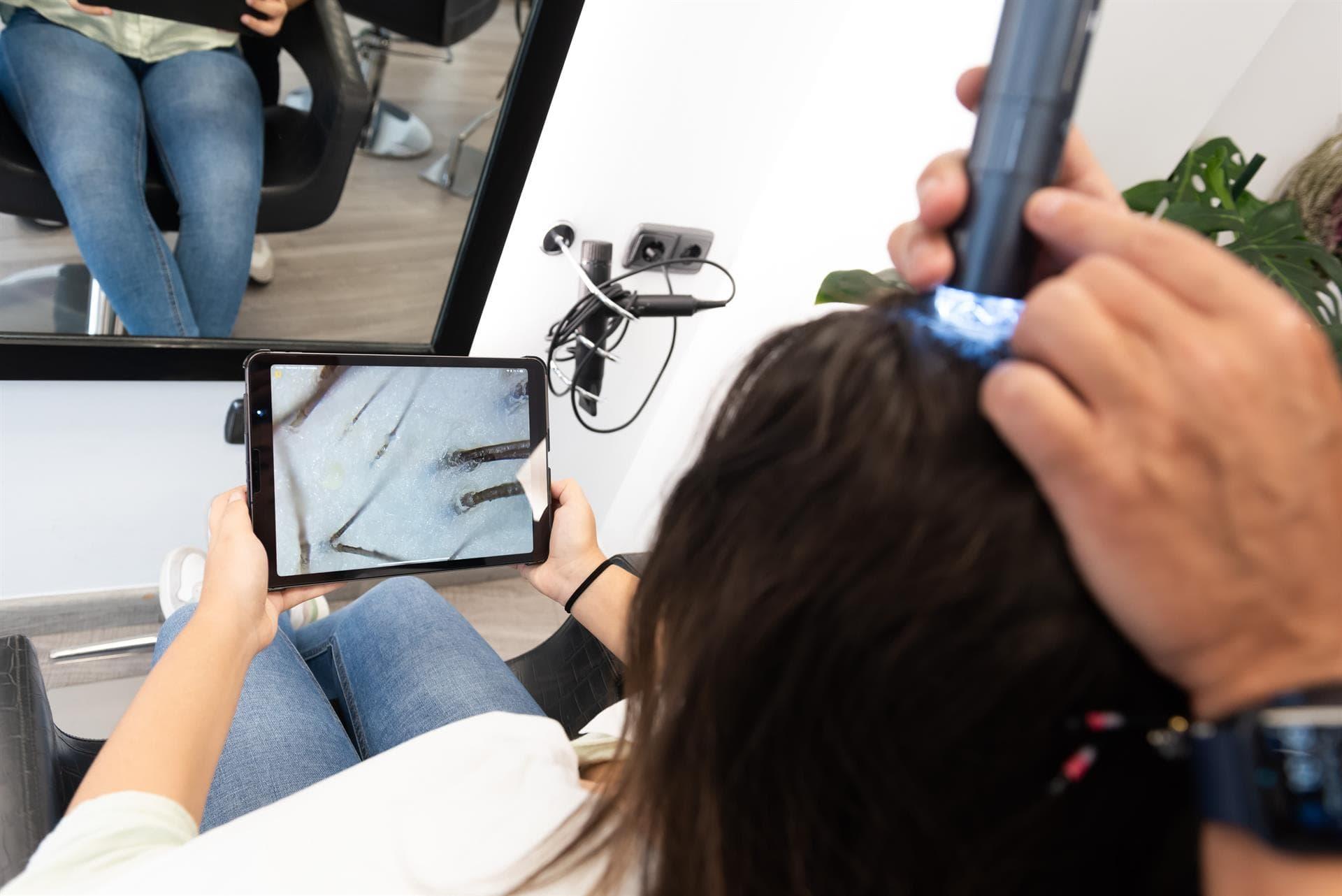
For salons and clinics, this also changes the consultation experience. Clients can see enlarged images of their own scalp rather than relying entirely on verbal explanations.
The Technology Behind Scalp Analysis
Modern scalp analysis systems generally rely on several technologies working together. The exact configuration varies between devices, but four components are particularly important: magnification, illumination, imaging sensors, and software analysis.
1. High-Magnification Imaging
At the most basic level, scalp analysis begins with magnification.
A specialized camera or optical probe can capture enlarged images of the scalp and hair. Some professional systems use digital microscopes or trichoscopy-style imaging to visualize the scalp at a much greater level of detail than ordinary photography.
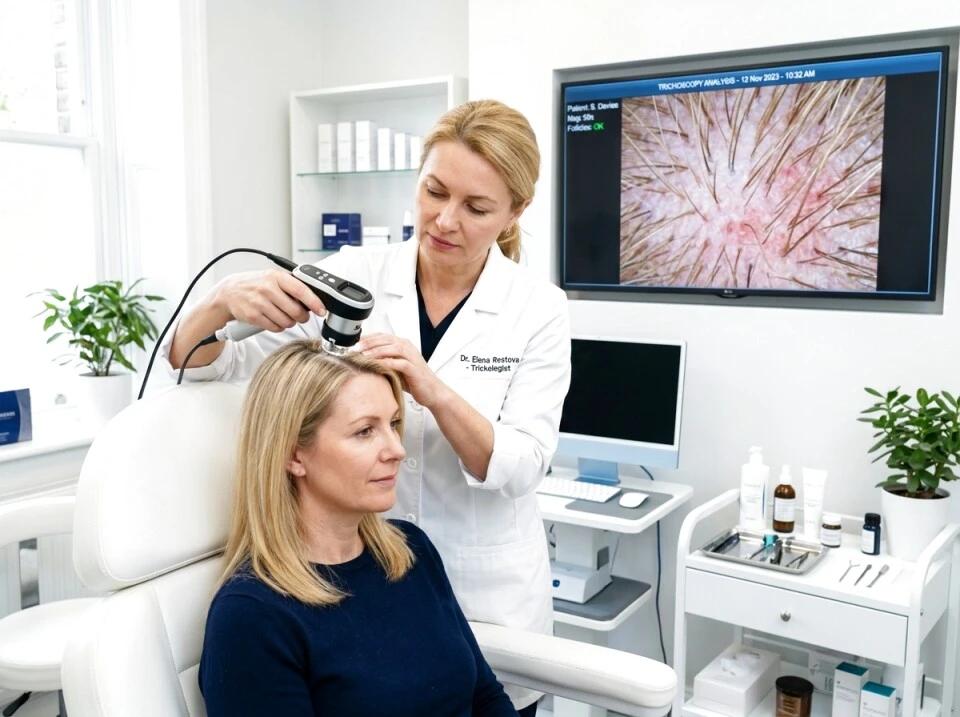
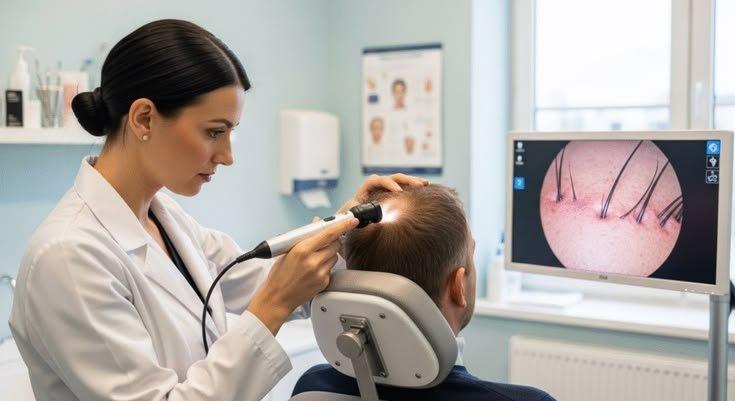
Magnification can help professionals observe characteristics such as follicular openings, surface buildup, flakes, redness, and variations in hair appearance.
The important point is that magnification does not automatically equal diagnosis. Instead, it provides better visual information for professional assessment.
For beauty salons and scalp-care centers, this can make consultations more concrete. Rather than simply telling a client that their scalp appears oily or congested, an operator can show the client an enlarged image and explain what they are seeing.
That visual communication can make professional recommendations easier to understand.
2. Multi-Light Imaging
Light is another major part of scalp analysis technology.
Different lighting conditions can emphasize different visual characteristics. Modern systems may incorporate white light, UV illumination, cross-polarized light, or other specialized illumination modes.
For example, current professional scalp-analysis platforms such as K-SCAN use white, UV, and cross-polarized illumination to capture different aspects of scalp and hair conditions.
White light can provide a natural view of the scalp surface, hair density, and general appearance.
UV illumination can highlight certain surface characteristics that may be difficult to distinguish under ordinary lighting.
Cross-polarized illumination can help reduce surface reflections and emphasize certain visual features such as redness and irritation.
The advantage is simple: one lighting condition does not have to tell the entire story.
By combining several imaging modes, professional equipment can provide a more comprehensive visual profile.
3. High-Resolution Digital Sensors
The quality of the camera sensor also matters.
A scalp analyzer needs to capture small structures clearly enough for professionals to compare images over time. High-resolution imaging can improve the visibility of individual hairs, scalp texture, and localized areas.
Some modern systems have moved beyond conventional cameras toward high-resolution imaging designed specifically for professional scalp analysis. K-SCAN, for example, combines 4K resolution with multiple lighting technologies.
For equipment manufacturers, this highlights an important design principle: image quality should serve the clinical or professional workflow, not simply increase specifications on a product sheet.
A useful system should make images easy to capture, view, compare, save, and explain.
4. AI and Digital Image Analysis
Artificial intelligence is becoming another important layer in scalp analysis.
Traditional scalp cameras primarily capture images. Newer systems can add software that analyzes those images and identifies visual patterns according to predefined algorithms.
For example, AI-assisted platforms can help organize observations related to scalp oiliness, visible flakes, hair density, or other measurable visual characteristics. Research into AI-based scalp analysis has also explored automated hair segmentation and extraction of features such as hair thickness and hair count.
Commercial beauty technology is moving in the same direction. L’Oréal describes K-SCAN as using AI algorithms to analyze scalp and hair images and support personalized professional recommendations.
However, AI should be viewed as an assistive technology, not an independent replacement for a qualified professional or medical diagnosis.
The strongest workflow is often:
Capture → Analyze → Interpret → Recommend → Treat → Compare
The technology supplies information. The professional supplies context and judgment.
From Images to Action: How a Professional Scalp Analysis Works
A professional scalp analysis typically follows a structured workflow.
Step 1: Initial Consultation
The operator first discusses the client’s concerns, such as oiliness, flakes, scalp discomfort, visible thinning, or changes in hair condition.
This establishes the purpose of the assessment.
Step 2: Standardized Imaging
The operator selects several scalp areas for examination, such as the frontal region, crown, temples, and sides.
Using consistent positioning, lighting, and magnification makes future comparisons more meaningful.
Step 3: Image Analysis
The system captures enlarged images and, where supported, analyzes specific visual characteristics.
Some professional platforms can generate structured results or reports, making it easier to document the assessment. Professional scalp-analysis systems on the market increasingly combine AI analysis with before-and-after comparison capabilities.
Step 4: Professional Interpretation
The operator reviews the images and explains the findings to the client.
This is an important stage because technology does not understand the entire client context by itself.
A professional can combine the visual information with consultation history, treatment history, lifestyle factors, and other relevant observations.
Step 5: Personalized Treatment Planning
Based on the assessment, the salon or clinic can recommend an appropriate scalp-care protocol.
Depending on the facility and the equipment available, this may include professional cleansing, exfoliation, hydration, massage, light-based treatments, or other scalp-care services.
The analyzer itself does not have to perform the treatment. Its value can come from helping the professional determine what the scalp appears to need and how to document the treatment process.
Step 6: Before-and-After Comparison
After treatment, the operator can capture images using similar conditions.
This creates a visual record that can be useful for evaluating changes and communicating progress to the client.
Advantages of Professional Scalp Analysis Technology
More Objective Consultations
One major advantage is the shift from subjective observation toward visual documentation.
An operator may notice that a scalp looks oily, but a magnified image provides something the client can actually see.
This can make consultations more transparent and easier to understand.
Better Treatment Personalization
Not every client has the same scalp characteristics.
A standardized analysis can help professionals distinguish between different visible concerns and adapt their treatment approach accordingly.
For example, one client may primarily require scalp cleansing, while another may benefit from a different combination of hydration, soothing care, or ongoing monitoring.
The technology does not create the treatment plan by itself. Instead, it gives the professional more information on which to base the plan.
Stronger Before-and-After Documentation
Professional beauty services increasingly depend on measurable and visible results.
Before-and-after imaging can help salons demonstrate changes more clearly and maintain treatment records.
This is particularly valuable for multi-session scalp-care programs, where changes may be gradual rather than immediately obvious.
Higher-Value Consultation Experience
A scalp analyzer can also change the perceived value of a professional service.
A basic consultation may involve a quick visual inspection. A technology-supported consultation can include imaging, analysis, explanation, recommendations, and documented follow-up.
This creates a more structured service experience.
Professional Equipment vs. Basic Home Inspection
Consumers can purchase inexpensive scalp cameras and USB microscopes for personal observation. These tools can be useful for simple visual inspection, but professional systems generally place greater emphasis on workflow consistency, image quality, multi-light imaging, software integration, reporting, and treatment documentation.
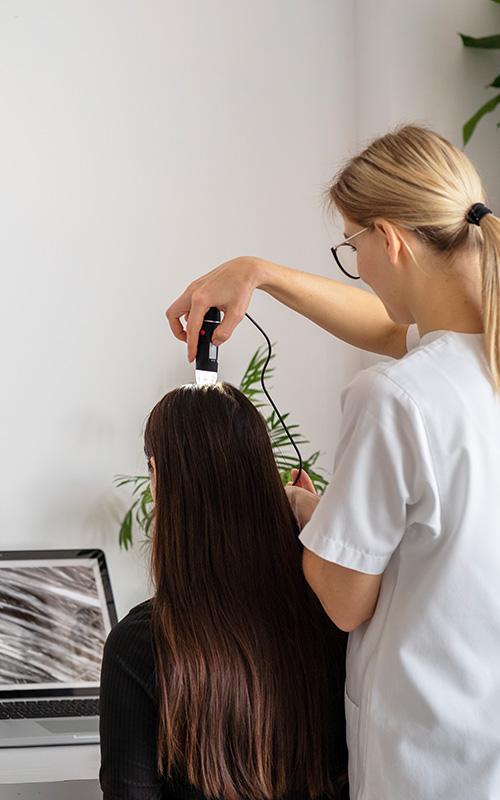
For a professional salon or clinic, the question is therefore not simply whether a camera can enlarge the scalp.
The more important question is whether the complete system can support a repeatable professional service.
Applications and Client Needs
Scalp analysis technology can be integrated into a variety of professional beauty scenarios.
Scalp Care Consultations
Before beginning a scalp treatment, professionals can use imaging to establish a baseline.
This can be especially useful for clients who are unsure what type of scalp care they need.
Hair and Scalp Wellness Programs
For salons offering recurring scalp-care packages, periodic analysis can help create a more structured customer journey.
The operator can document the scalp condition at different stages and adjust the service according to observed changes.
Hair Loss-Related Consultations
Scalp imaging can help professionals document visible hair and scalp characteristics associated with thinning or reduced density.
However, significant or unexplained hair loss can have medical causes. A beauty device should therefore support professional observation rather than be presented as a substitute for dermatological diagnosis.
Professional Treatment Demonstration
Scalp analysis can also become part of the treatment itself.
For example, an operator can show the client the scalp before cleansing, perform the professional service, and then capture another image afterward.
This creates a simple see → treat → compare experience.
Clinics and Advanced Beauty Centers
For clinics and higher-end beauty centers, scalp analysis can also be integrated into a broader technology ecosystem.
A professional workflow may combine analysis with other devices for cleansing, hydration, light therapy, massage, or targeted scalp treatments.
This reflects a broader trend in professional beauty technology: diagnostic information and treatment technology are increasingly being connected into one service journey.
Current professional beauty platforms demonstrate this direction by combining AI-powered scalp analysis with multi-technology treatment systems.
What Makes a Scalp Analyzer Valuable for a Professional Business?
From a business perspective, the value of scalp analysis technology extends beyond the camera itself.
A well-designed professional device can help a salon or clinic achieve several objectives:
Improve consultation quality.
Operators have visual information to support their recommendations.
Increase service personalization.
Treatment plans can be based on observed characteristics rather than generic packages.
Improve client communication.
Clients can see enlarged images and better understand why a particular service is being recommended.
Support treatment documentation.
Images can provide a visual reference for ongoing programs.
Create opportunities for premium services.
A technology-based consultation can become part of a higher-value scalp-care experience.
For manufacturers, this means a scalp analyzer should be designed around the complete professional workflow—not only around magnification.
Features such as adjustable lighting, high-resolution imaging, easy operation, intuitive software, image storage, reporting, and before-and-after comparison can all contribute to commercial usability.
Conclusion
The science behind scalp analysis technology is based on a relatively simple principle: better information can lead to better professional decisions.
Magnification reveals details that ordinary observation may miss. Multi-light imaging provides different visual perspectives. High-resolution sensors capture more precise images. Digital software organizes the information, while AI can assist with pattern analysis and reporting.
Together, these technologies are transforming scalp analysis from a quick visual inspection into a more structured, data-supported professional service.
For beauty salons, scalp-care centers, and aesthetic clinics, the opportunity is not simply to own another device. The real value lies in integrating scalp analysis into the consultation and treatment workflow.
As professional beauty continues to move toward personalization, documentation, and technology-assisted services, scalp analyzers can become an important bridge between what the professional sees, what the client understands, and how the treatment is delivered.
The future of scalp care is therefore not only about treating the scalp. It is also about seeing it more clearly
Founded in 2008, Guangzhou GLM Beauty Spa Equipment Factory specializes in research, development, manufacture and selling of beauty and slimming machines. Our production base is located in Guangzhou City, Guangdong Province, China. Since our foundation, we have introduced advanced technologies and equipment, to assure high quality and high performance of our products. With professional marketing guide and excellent after-sales service, our products have been exported to over 20 countries and regions, including Southeast Asia, the Middle East, Europe and the United States, won worldwide praises and gained a good reputation