
.jpg?w=2449&h=2157)
Introduction
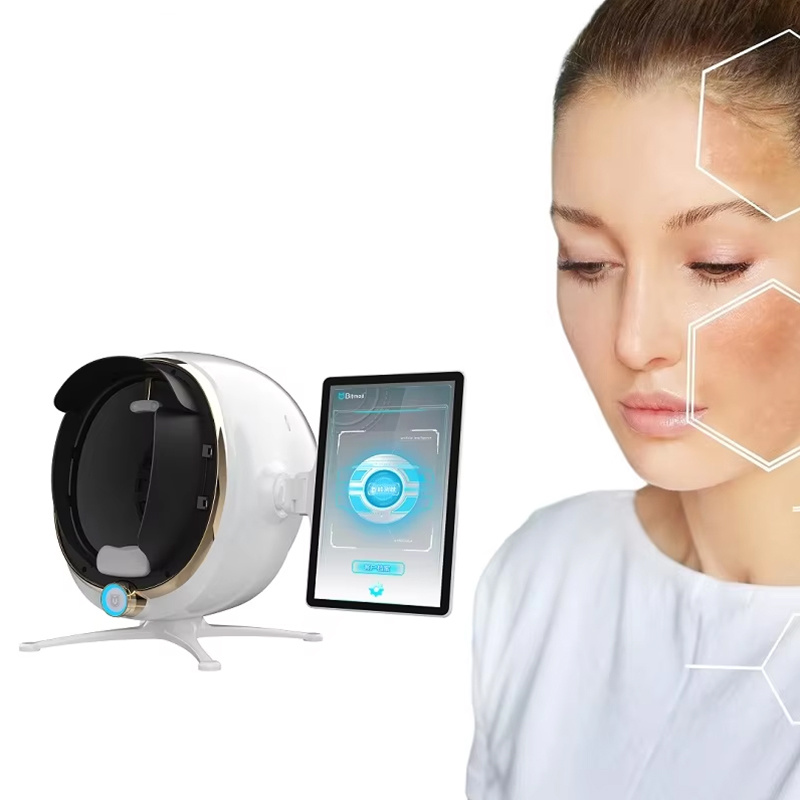
In today’s aesthetic industry, personalization has become the cornerstone of effective treatments. Clients no longer want generic solutions; they expect a tailored approach backed by scientific accuracy. Skin analyzers, powered by advanced imaging and artificial intelligence (AI), have redefined how practitioners assess skin health and recommend therapies. By combining UV light, high-resolution cameras, and machine learning, these devices offer deep insights that go far beyond the surface.
Background and Challenges
Traditionally, skin assessment relied heavily on visual inspection and patient self-reporting. While skilled practitioners could identify visible concerns like wrinkles or pigmentation, many underlying issues—such as hidden UV damage, early dehydration, or pore irregularities—remained invisible to the naked eye. This limited diagnostic ability often resulted in one-size-fits-all recommendations, sometimes misaligned with the client’s actual skin condition.
As aesthetic treatments diversify, ranging from lasers to injectables, the need for accurate pre-treatment evaluation has intensified. Without precise analysis, clinics face risks of suboptimal results, client dissatisfaction, and even potential complications.
Technology and Mechanisms
UV Light Imaging
Ultraviolet light reveals hidden damage beneath the skin’s surface, including sun-induced pigmentation, vascular irregularities, and early signs of photoaging. This allows practitioners to identify risks that might not be visible under standard lighting conditions, guiding preventive measures.
High-Resolution Cameras
Modern analyzers use multi-spectral cameras that capture images across visible, polarized, and fluorescence spectrums. These images highlight texture, pores, oil distribution, and even subdermal vascularity. The detailed visual data creates a comprehensive baseline of the client’s skin health.
Artificial Intelligence and Data Processing
AI algorithms process these images to detect subtle patterns that humans may overlook. Through deep learning, AI can classify severity levels of wrinkles, quantify pigmentation, and compare results with age- and ethnicity-matched databases. Over time, this enables trend tracking—so patients can see measurable progress across treatment cycles.
Advantages Compared to Traditional Assessment
-
Objectivity: Eliminates subjectivity inherent in visual inspections.
-
Early Detection: Identifies problems before they manifest on the surface.
-
Customization: Supports individualized treatment planning.
-
Client Engagement: Visual reports enhance communication and trust.
-
Tracking Outcomes: Provides before-and-after evidence, essential for monitoring progress.
Market Trends and Client Demands
The rise of data-driven healthcare has fueled demand for measurable outcomes in aesthetics. According to industry reports, skin analysis devices are expected to see double-digit growth over the next decade. Younger clients, accustomed to wearable health technology, are particularly receptive to objective measurements of skin wellness. Meanwhile, clinics view analyzers as strategic tools for differentiation and client retention.
Application Scenarios and Client Profiles
-
Preventive Care Clients: Early detection of UV damage or dryness helps maintain youthful skin.
-
Anti-Aging Patients: Tracking wrinkle depth and elasticity supports ongoing treatment plans.
-
Acne and Pigmentation Cases: Precise analysis guides tailored interventions like chemical peels or lasers.
-
Clinic Marketing and Education: Analyzers offer visual proof, building credibility and supporting treatment recommendations.
Conclusion
_AI_Skincare_Assistant_LUMINI_2.jpg&ehk=xY039oPzELkz4K0jI05NFNWoERyh8FMoAd3nnNMAcB8%3d&risl=&pid=ImgRaw&r=0)
Skin analyzers represent a significant evolution in aesthetic practice. By combining UV imaging, advanced cameras, and AI-driven analytics, they transform subjective evaluation into data-supported precision. As personalization becomes central to client expectations, these devices will continue to play a vital role in bridging science and aesthetics, ensuring treatments are safer, more effective, and better aligned with individual needs.
Founded in 2008, Guangzhou GLM Beauty Spa Equipment Factory specializes in research, development, manufacture and selling of beauty and slimming machines. Our production base is located in Guangzhou City, Guangdong Province, China. Since our foundation, we have introduced advanced technologies and equipment, to assure high quality and high performance of our products. With professional marketing guide and excellent after-sales service, our products have been exported to over 20 countries and regions, including Southeast Asia, the Middle East, Europe and the United States, won worldwide praises and gained a good reputation.