
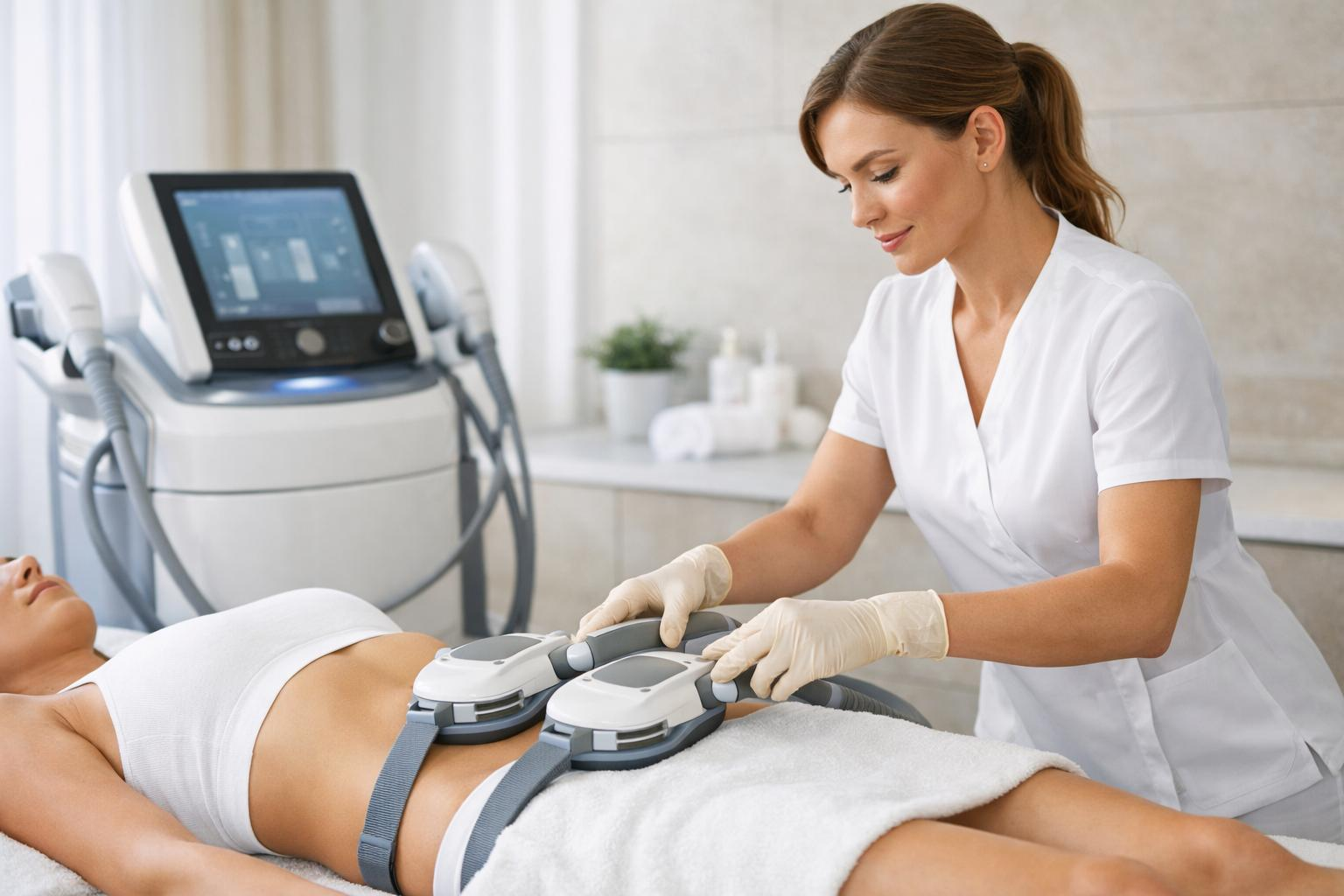
1. Introduction
Non-invasive fat reduction has become an important part of the professional aesthetics industry. Clients increasingly seek body contouring treatments that can address stubborn fat deposits, refine body proportions, and improve skin appearance without surgery or extensive downtime. For beauty salons, aesthetic clinics, and body contouring specialists, energy-based devices offer additional ways to develop personalized treatment programs around these needs.
However, not every treatment marketed as fat reduction works in the same way. Cryolipolysis uses controlled cooling, radiofrequency (RF) delivers thermal energy, focused ultrasound targets tissue with acoustic energy, and low-level light devices use different mechanisms that may produce more modest or temporary changes. Other technologies primarily address muscle definition, skin firmness, or the appearance of cellulite rather than directly reducing fat.
Understanding these differences is essential for choosing appropriate equipment, communicating accurately with clients, and setting realistic expectations.
The truth is that non-invasive fat reduction can provide visible improvements for selected clients, but it is not a substitute for weight loss or surgical liposuction. Results depend on the technology, device design, treatment protocol, individual anatomy, and the practitioner's ability to select suitable candidates.
2. Background: Why Is Stubborn Fat So Difficult to Treat?
Body fat distribution is influenced by genetics, hormones, age, lifestyle, and individual physiology. Even people who maintain relatively stable weight through balanced nutrition and regular exercise may notice localized fat deposits around the abdomen, flanks, thighs, or beneath the chin.
These concerns are not necessarily signs of poor health or inadequate effort. Different body areas respond differently to changes in overall body composition, and exercise cannot guarantee selective fat loss from one particular location.
Traditional liposuction physically removes fat through a surgical procedure. Non-invasive body contouring takes a different approach: depending on the technology, it may damage targeted fat cells, temporarily change tissue appearance, improve skin firmness, or reduce the visible prominence of a treated area.
This distinction matters because a smaller waist measurement, smoother-looking skin, and a reduction in fat-layer thickness are different outcomes. They should not be presented as interchangeable.
The U.S. Food and Drug Administration (FDA) emphasizes that non-invasive body contouring is not intended to treat obesity or produce weight loss. Some results may be temporary, and multiple sessions may be needed. These treatments are generally best positioned as options for localized contouring rather than comprehensive weight management.
For professional providers, the first step is therefore not selecting the most powerful machine. It is identifying the client's main concern and matching it with a technology designed for that purpose.
3. Technology and Mechanisms: How Do Different Treatments Work?
3.1 Cryolipolysis: Controlled Cooling for Localized Fat Reduction
Cryolipolysis, commonly called fat freezing, uses controlled cooling to target selected areas of subcutaneous fat. Fat cells are more sensitive to cold than some surrounding tissues, allowing appropriately designed systems to target fat under specific treatment conditions.
During treatment, an applicator may use vacuum-assisted suction to draw a fold of tissue into a cooling chamber. The controlled cooling process damages susceptible fat cells, which are subsequently processed and gradually cleared by the body's natural responses.
Results develop over time rather than appearing immediately. Changes may become noticeable over several weeks, with further improvement commonly assessed around two to three months after treatment. Individual outcomes vary, and additional sessions may be considered when appropriate.
Cryolipolysis may suit clients with localized, pinchable fat deposits who prefer a non-surgical approach. It is not a solution for obesity, substantial weight loss, or significant excess skin.
Safety is particularly important. Possible effects include redness, bruising, swelling, discomfort, and temporary changes in sensation. A rare but serious complication, paradoxical adipose hyperplasia, causes the treated fat area to enlarge rather than shrink. Proper screening, device-specific protocols, and qualified operation are essential.
3.2 Radiofrequency (RF): Heating for Contouring and Skin Firmness
Radiofrequency devices deliver electrical energy that generates heat within targeted tissue. Depending on the system's design and intended use, controlled heating may affect subcutaneous fat, connective tissue, and collagen-related processes.
RF is often selected when clients want to improve the appearance of skin laxity, localized fullness, or uneven body contours. Some systems combine RF with vacuum massage or mechanical rollers to support tissue manipulation and improve the overall treatment experience.
However, RF devices do not all deliver the same effects. Energy output, electrode configuration, treatment depth, temperature monitoring, and application technique can significantly influence performance. A device intended mainly for skin tightening should not automatically be described as a proven fat-destruction system.
In professional salons and clinics, RF may be incorporated into body contouring programs when the device's intended use and available evidence support the client's goals. Treatment settings should follow manufacturer instructions, and practitioners must consider thermal injury risks, implanted electronic devices, and other contraindications.
3.3 Focused Ultrasound: Delivering Energy into Targeted Tissue
Ultrasound-based body contouring uses acoustic energy to interact with tissue beneath the skin. Depending on the technology, the intended effect may involve localized heating or mechanical disruption within the targeted area.
Focused ultrasound systems can be designed for specific treatment depths and anatomical indications. Other ultrasound technologies operate differently and should not be assumed to have equivalent efficacy or safety profiles.
These treatments may appeal to clients seeking localized contour refinement without surgical incisions. Nevertheless, the actual outcome depends on the device, energy parameters, treatment area, and patient selection. Inadequate technique or inappropriate settings can cause burns or other tissue injuries.
Practitioners should verify the device's authorized indications and use only the protocols specified for that system. The term "ultrasound fat reduction" alone is not sufficient evidence that every device offers the same clinical results.
3.4 Low-Level Light and Laser-Based Approaches
Light-based body contouring covers several distinct technologies. Some use laser or infrared energy to heat tissue, while low-level light devices operate through different proposed mechanisms and may produce smaller or temporary changes in circumference.
These approaches should not be grouped together as though they deliver identical effects. A treatment that temporarily changes waist measurements is not necessarily destroying fat cells, and a temporary circumference change does not establish lasting fat reduction.
For providers evaluating light-based equipment, the important questions include the specific wavelength, energy delivery, intended use, clinical evidence, treatment schedule, and regulatory status.
3.5 Vacuum Massage, Mechanical Rolling, and Cellulite Treatments
Vacuum-assisted massage and mechanical roller systems manipulate soft tissue using suction, pressure, or rolling movements. Depending on the device and treatment protocol, they may temporarily improve the appearance of cellulite, support tissue mobility, or make treated areas look smoother.
These effects should be distinguished from permanent reductions in fat-cell numbers. A smoother surface or temporary change in circumference does not necessarily mean that fat has been eliminated.
For professional body contouring businesses, these systems may provide a useful service category for clients whose main concern is uneven skin texture or the appearance of cellulite. Their value depends on suitable indications, consistent protocols, and honest communication about how long results may last.
4. Advantages and Comparison: Which Technology Really Works?
There is no single technology that is best for every client. The right choice depends on whether the primary goal is reducing a localized fat bulge, improving skin firmness, or making cellulite less noticeable.
| Technology | Main mechanism | Potential treatment focus | Important limitation |
|---|---|---|---|
| Cryolipolysis | Controlled cooling | Localized, pinchable fat | Gradual results; specific cold-related risks |
| Radiofrequency | Controlled heating | Skin firmness and selected contouring goals | Effects vary by device and protocol |
| Focused ultrasound | Targeted acoustic energy | Selected localized contouring indications | Device-specific depth, settings, and risks |
| Laser or infrared systems | Light-based energy, often involving heat | Selected contouring or tissue-tightening goals | Not all light technologies have the same mechanism |
| Low-level light | Low-intensity light exposure | Modest or temporary circumference changes with some systems | Evidence and durability vary |
| Vacuum massage or rollers | Mechanical tissue manipulation | Cellulite appearance and surface smoothness | Does not necessarily remove fat cells |
The FDA's guidance on non-invasive body contouring and professional plastic surgery resources both emphasize that these procedures do not provide the same results as liposuction. Their effectiveness, durability, and suitability differ according to the technology and the individual.
For example, a client with a small, localized fat bulge may be more suitable for a device specifically intended for fat reduction. A client whose main concern is mild skin laxity may benefit more from a suitable skin-tightening approach. Someone primarily concerned with cellulite may need a different treatment plan altogether.
Combination treatments can be considered when their individual components are appropriate, but combining technologies does not automatically produce better results. Each device must be suitable for the intended treatment, and the practitioner must account for cumulative tissue stress, treatment intervals, contraindications, and supporting evidence.
Professional equipment can offer advantages in treatment consistency, adjustable parameters, applicator selection, temperature or energy monitoring, and workflow management. However, professional positioning alone does not prove superior effectiveness. Device specifications, evidence, training, maintenance, and compliance with local regulations remain essential.
5. Applications and Client Needs: Building a Professional Treatment Plan
A successful body contouring service begins with consultation rather than a machine demonstration.
Step 1: Identify the Primary Concern
Ask whether the client wants to reduce a localized fat bulge, improve skin firmness, address the appearance of cellulite, or refine overall body proportions. Establishing the main goal helps avoid choosing a technology that does not match the concern.
Step 2: Assess Suitability and Screen for Risks
Review medical history, medications, previous procedures, implanted devices, skin condition, and relevant contraindications. Pregnancy, certain cold-sensitivity disorders, impaired circulation, implanted electronic devices, and metal in the treatment area may affect whether particular procedures are appropriate.
The screening process must be specific to the technology. A client who is suitable for one treatment may not be suitable for another. When medical assessment is required, referral to an appropriately qualified healthcare professional is necessary.
Step 3: Match the Device to the Intended Outcome
Choose equipment according to its documented intended use, available clinical evidence, treatment depth, adjustable parameters, applicator design, and safety features.
For a professional clinic, reliable temperature control or energy delivery, clear operating instructions, appropriate applicators, and accessible technical support can matter as much as the headline power rating.
For salons and distributors, it is also important to verify local registration requirements, relevant certifications, service availability, spare parts, and operator training. Regulatory claims should be checked against the actual model and market; certifications or clearances must never be assumed to cover every device or indication.
Step 4: Establish a Realistic Treatment Schedule
Some technologies may require several sessions, while others may produce gradual changes following a single treatment. Session frequency, treatment duration, and maintenance requirements must follow the specific device's instructions and the client's response.
Avoid guaranteeing a fixed number of centimeters lost or promising a particular percentage of fat reduction to every client. Before-and-after photographs, standardized measurements, and consistent lighting can help document changes, provided client consent and privacy requirements are respected.
Step 5: Explain Results and Limitations Clearly
Clients should understand that body contouring is not a substitute for a balanced lifestyle or a treatment for obesity. Results may vary, may take weeks or months to become apparent, and may not meet every client's expectations.
A professional provider should also explain possible adverse effects, aftercare requirements, and when to seek medical attention. Transparent communication builds trust and reduces the risk of dissatisfied clients who expected immediate or dramatic weight loss.
Step 6: Evaluate the Service as a Business
For salon owners, the value of a body contouring machine is not determined by its feature count alone. Consider client demand, treatment time, staff training, consumables, maintenance, equipment reliability, expected utilization, and the ability to build appropriate treatment packages.
A well-matched device can expand a clinic's service portfolio and support repeat visits when follow-up sessions are clinically appropriate. Clear treatment records and realistic marketing claims can also strengthen long-term customer relationships.
6. What Results Should Clients Expect?
Results depend on the technology and the client's starting condition. Some changes may be subtle, while others become more visible over several weeks or months.
Cryolipolysis generally requires patience because the body gradually processes affected fat cells. RF and other heat-based treatments may produce changes in skin appearance or localized contours over time, depending on the system. Vacuum massage and some low-level light treatments may produce temporary improvements that require ongoing sessions.
No responsible provider should promise dramatic weight loss from non-invasive body contouring. These treatments target selected areas and cannot reliably control where the body loses fat overall. They also do not correct major excess skin or replace surgery when a large volume of fat removal is desired.
Maintenance may be necessary for some outcomes, particularly those involving temporary changes in fluid distribution, skin appearance, or cellulite. Even when targeted fat cells are permanently damaged or removed by a particular technology, remaining fat cells can still enlarge with weight gain.
A realistic consultation therefore explains what the device is designed to do, what evidence supports that use, how long results may take to appear, and which factors can influence the outcome.
7. Conclusion: The Best Technology Is the One That Fits the Goal
Non-invasive fat reduction is not a single treatment but a category of technologies with different mechanisms, indications, benefits, and limitations. Cryolipolysis, RF, focused ultrasound, light-based systems, and mechanical treatments should be evaluated according to their intended effects rather than marketing claims alone.
For professional beauty salons and aesthetic clinics, choosing the right equipment starts with understanding client needs, verifying device specifications, following appropriate protocols, and setting realistic expectations. A well-designed treatment plan can support localized contouring and selected improvements in skin appearance without overstating what a device can achieve.
For equipment manufacturers and distributors, the same principle applies: clear technical information, credible performance evidence, operator training, dependable service, and responsible marketing are stronger foundations for long-term business than exaggerated promises.
Ultimately, the most effective approach is not to search for a universal fat-reduction machine. It is to select a suitable, properly authorized technology for a clearly defined goal—and to measure success by safe practice, appropriate outcomes, and informed client satisfaction
Founded in 2008, Guangzhou GLM Beauty Spa Equipment Factory specializes in research, development, manufacture and selling of beauty and slimming machines. Our production base is located in Guangzhou City, Guangdong Province, China. Since our foundation, we have introduced advanced technologies and equipment, to assure high quality and high performance of our products. With professional marketing guide and excellent after-sales service, our products have been exported to over 20 countries and regions, including Southeast Asia, the Middle East, Europe and the United States, won worldwide praises and gained a good reputation