
Introduction
As clients become more interested in natural-looking facial rejuvenation, non-surgical skin tightening has become an important part of modern aesthetic treatments. Many clients are not necessarily looking for dramatic changes. Instead, they want a cleaner jawline, firmer-looking skin around the lower face, and a smoother, more defined neck—without undergoing surgery or taking significant time away from work and daily activities.
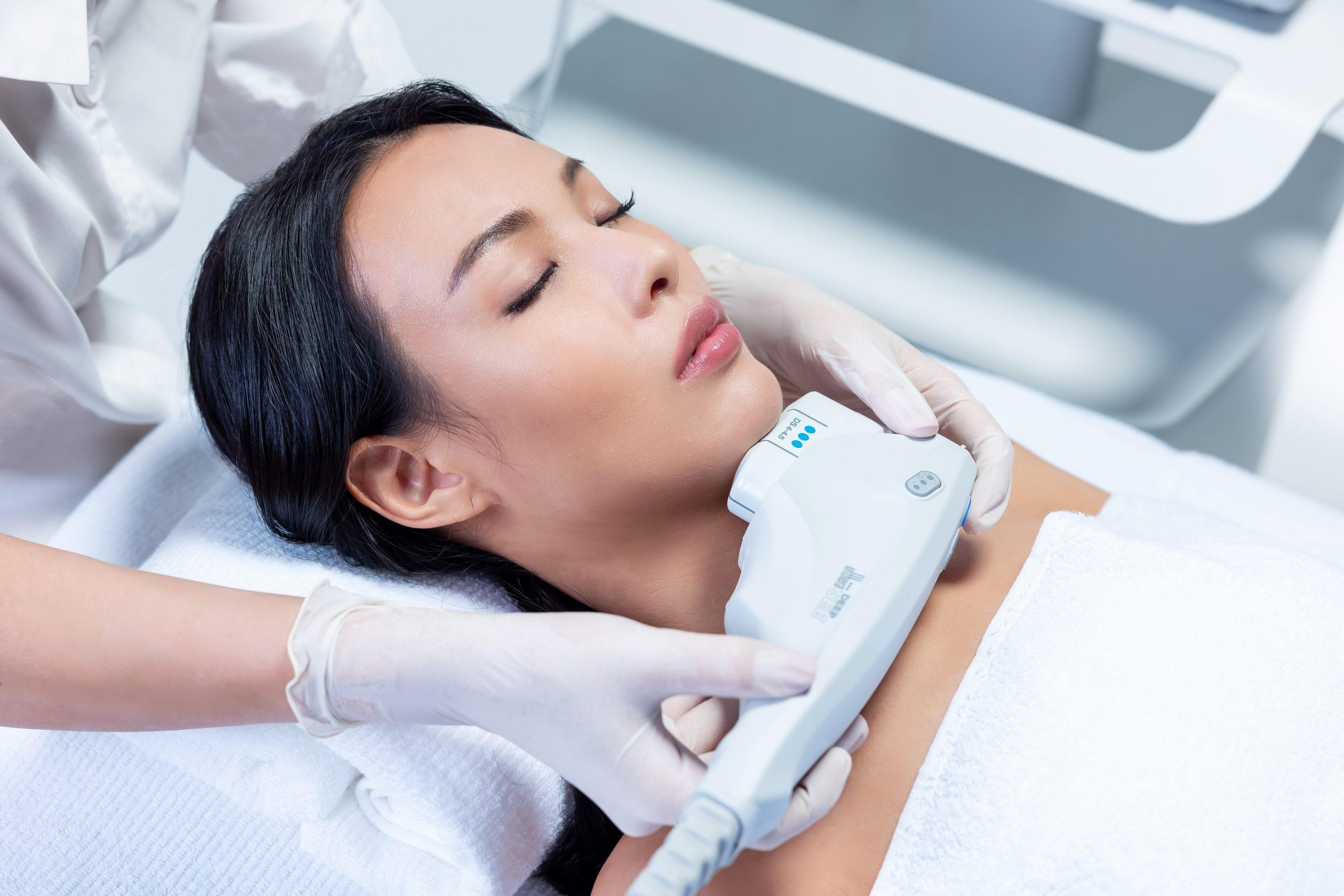
This is where ultrasound-based skin tightening treatments have gained attention. Ultherapy®, specifically, is a microfocused ultrasound technology with real-time visualization that is FDA-cleared in the United States to lift skin on the neck and under the chin, as well as the brow, and to improve lines and wrinkles on the décolleté.
For professional aesthetic clinics, the importance of this treatment goes beyond the technology itself. A high-quality ultrasound platform can provide practitioners with controlled energy delivery, treatment-depth options, ergonomic handpieces, and a more structured treatment workflow. These features can help clinics expand their non-invasive lifting services while offering clients a professional alternative to more invasive procedures.
Background / Problem: Why Do Jowls and Neck Skin Become Loose?
Jowls and neck laxity are common concerns associated with the aging process. As skin gradually loses collagen and elastin, its ability to maintain firmness and elasticity decreases. At the same time, changes in deeper soft tissues and facial support can contribute to a less defined lower face.
The result may appear as:
- A softer or less defined jawline
- Mild to moderate sagging around the jowls
- Loose-looking skin beneath the chin
- Horizontal neck lines
- Reduced firmness along the lower face
- A transition from a defined jawline to a heavier-looking neck
Traditional skincare can support hydration and surface skin quality, but topical products generally cannot deliver controlled energy to deeper structural layers. Surgical facelift and neck-lift procedures can address more significant laxity, but they also involve surgery, recovery, and greater patient commitment.
For clients with mild to moderate laxity who are not ready for surgery, professional ultrasound skin-tightening treatments can occupy an important middle ground.
The goal is not to recreate the result of surgery. Instead, the objective is to stimulate the skin's natural remodeling response and gradually improve the appearance of firmness and lifting.
Technology / Mechanism: How Does Ultherapy Work?
Ultherapy belongs to the category of microfocused ultrasound with visualization, commonly abbreviated as MFU-V. The technology uses focused ultrasound energy to create precisely positioned thermal coagulation points beneath the skin while leaving the surface skin largely unaffected. These controlled thermal zones initiate a wound-healing and remodeling response that can stimulate new collagen formation and contribute to tissue tightening over time.
One of the most important characteristics of professional MFU-V technology is treatment depth.
Ultherapy systems are designed to deliver focused ultrasound energy at specific depths, including approximately 1.5 mm, 3.0 mm, and 4.5 mm, depending on the transducer and treatment objective. The technology is also designed to visualize tissue layers in real time, helping the practitioner identify the treatment area and confirm appropriate tissue coupling and depth.
This "see and treat" approach is particularly valuable in professional practice.
Rather than simply applying energy across the skin surface, the practitioner can work according to the client's anatomy and treatment plan. Skin thickness and tissue distribution vary from person to person, so a standardized approach may not provide the same experience or outcome for every client.
What Happens Beneath the Skin?
The principle can be understood in three stages.
1. Focused ultrasound energy is delivered
Ultrasound energy is concentrated at selected depths rather than broadly heating the entire skin surface. In MFU-V systems, focused energy creates small thermal treatment zones within targeted tissue layers.
2. Controlled thermal stimulation triggers remodeling
The controlled thermal response can cause collagen fibers to contract and initiate a longer-term remodeling process. Research on microfocused ultrasound has demonstrated collagen and elastin remodeling following treatment.
3. Results develop progressively
Unlike a surgical facelift, ultrasound lifting does not physically reposition tissue with an incision. Instead, the aesthetic improvement develops progressively as the body's remodeling response takes place. This makes it particularly attractive to clients who prefer a gradual, natural-looking change.
For clinics, this also creates an opportunity to position ultrasound treatments as part of a broader skin-management strategy rather than as a one-dimensional "quick fix."
Advantages / Comparison: Why Professional Ultrasound Skin Tightening Matters
1. Non-Invasive Treatment Approach
One of the primary attractions of ultrasound lifting is that it does not require surgical incisions. Ultherapy is described by its manufacturer as a non-invasive treatment, with no surgical downtime, although temporary redness, swelling, tenderness, pain, or transient nerve-related effects have been reported and patients should receive appropriate safety screening and professional guidance.
For aesthetic clinics, this makes the treatment suitable for clients who want a lifting-focused procedure without committing to surgery.
2. Deeper Energy Delivery
Surface-level treatments and skincare primarily focus on the epidermis and superficial dermis. Professional focused ultrasound can target deeper tissue layers.
Ultherapy's established treatment depths include 1.5 mm, 3.0 mm, and 4.5 mm, allowing practitioners to select different depths according to the treatment area and clinical objective.
This is especially relevant when addressing the lower face, submental area, and neck, where skin laxity may involve more than the superficial skin surface.
3. Real-Time Visualization Can Improve Treatment Precision
Real-time visualization is one of the defining characteristics of MFU-V. Published expert consensus describes visualization as a tool that allows practitioners to assess tissue layers, confirm coupling, select treatment depth, and avoid non-target tissue.
This is an important distinction when comparing advanced professional systems with simpler energy-based devices.
For a clinic, precision is not simply a technical specification. It can influence operator confidence, treatment planning, patient communication, and overall workflow.
4. Gradual, Natural-Looking Improvement
Many clients do not want an obvious change in facial appearance. They want to look fresher, firmer, or more defined without appearing "over-treated."
Because ultrasound-induced remodeling develops over time, the treatment can fit this preference for gradual aesthetic improvement. Ultherapy's official information states that results can continue to improve over time and may last a year or more, although individual outcomes vary.
5. Professional Equipment Supports Customized Treatment
For beauty clinics and aesthetic practices, professional equipment should offer more than energy output. Important considerations include:
- Multiple treatment depths
- Stable energy delivery
- Appropriate transducer or handpiece selection
- Ergonomic operation
- Treatment-area mapping
- Clear parameter controls
- Professional safety features
- Operator training and treatment protocols
These elements can make a significant difference when a clinic performs repeated treatments across different clients.
A well-designed professional ultrasound platform can therefore become part of a clinic's broader facial contouring and skin-tightening service portfolio.
Applications / Client Needs
Treating Jowls and Lower-Face Laxity
Jowls are among the most common reasons clients seek non-surgical facial tightening. The treatment strategy may focus on improving the appearance of lax tissue along the lower face and supporting a more defined-looking jawline.
Professional practitioners should assess facial anatomy, skin laxity, tissue thickness, and client expectations before selecting treatment parameters.
The objective is not simply to "tighten everything." A customized treatment plan is generally more appropriate because facial anatomy varies considerably between individuals.
Improving the Appearance of Loose Neck Skin
The neck can be particularly challenging because its skin is thinner and constantly exposed to movement. Clients may notice laxity beneath the chin, horizontal lines, or a less defined transition between the jawline and neck.
Ultherapy is FDA-cleared in the United States for lifting skin on the neck and under the chin.
For professional clinics, neck treatment can also complement facial rejuvenation programs. A client may receive a lower-face treatment plan that considers the jawline, submental region, and neck as one visual area rather than treating them as completely separate concerns.
Clients Looking for Non-Surgical Alternatives
The ideal candidate for a non-invasive ultrasound lifting consultation is not necessarily someone seeking the strongest possible treatment.
Instead, professional consultation may be appropriate for clients who:
- Have mild to moderate skin laxity
- Notice early jowl formation
- Want a more defined-looking jawline
- Are concerned about loose neck skin
- Prefer non-surgical treatment options
- Want gradual and natural-looking improvement
- Have realistic expectations about the limitations of non-invasive procedures
Clients with substantial tissue laxity may require different treatment approaches, including surgical consultation. Professional assessment is therefore essential.
Ultherapy vs. Other Professional Energy-Based Treatments
Ultrasound is only one category within the professional aesthetic device market. Radiofrequency, laser, LED, microneedling, and other technologies may also be used for skin-quality and rejuvenation programs.
The key difference is the type of energy delivered and the target tissue.
Radiofrequency primarily uses electromagnetic energy to produce controlled thermal effects in tissue. Ultrasound uses acoustic energy and can be focused at specific depths. Microneedling mechanically creates controlled micro-injuries, while lasers use optical energy with different wavelengths and absorption characteristics.
For clinics, the question should therefore not simply be "Which technology is best?"
A better question is: Which technology is appropriate for this client's concern, anatomy, skin condition, expectations, and treatment plan?
This is where multi-functional professional beauty equipment can offer commercial value. A clinic can potentially combine ultrasound-based lifting with other skin-management technologies to create customized treatment programs instead of relying on a single device for every client.
It is also important to distinguish the branded Ultherapy® system from other HIFU or focused-ultrasound devices. Not every ultrasound device has the same visualization system, indications, transducers, energy characteristics, or regulatory clearances. Published consensus literature specifically identifies real-time visualization as an important differentiating feature of MFU-V.
Therefore, clinics evaluating professional ultrasound platforms should examine technical specifications, treatment depths, energy control, visualization capabilities where applicable, safety systems, training requirements, certifications, and local regulatory status rather than comparing devices based only on the word "HIFU."
Conclusion
Ultherapy represents an important development in non-invasive skin lifting, particularly for clients concerned about jowls, lower-face laxity, under-chin fullness, and loose-looking neck skin.
Its core concept is straightforward: deliver focused ultrasound energy to selected tissue depths, create controlled thermal stimulation, and encourage the body's natural collagen and elastin remodeling response. The defining advantage of MFU-V is the combination of focused ultrasound with real-time visualization, allowing professional practitioners to customize treatment according to individual anatomy.
For beauty clinics and aesthetic practices, the broader lesson is equally important. Modern clients increasingly expect treatments that are professional, personalized, non-surgical, and compatible with their lifestyles. Professional ultrasound platforms can help clinics respond to this demand while creating new opportunities for facial lifting, jawline definition, and neck rejuvenation services.
Ultimately, successful skin-tightening treatments depend not only on the technology but also on appropriate patient selection, professional assessment, device quality, operator training, treatment protocols, and realistic expectations.
When these elements work together, ultrasound-based skin tightening can become a valuable component of a modern professional aesthetic treatment portfolio.
Professional Note: Ultherapy® is a registered trademark and refers to a specific branded microfocused ultrasound technology. Other HIFU or ultrasound aesthetic devices may differ in technology, indications, visualization, treatment depths, regulatory status, and clinical evidence. Always follow the manufacturer's instructions, applicable local regulations, and appropriate professional training requirements
Founded in 2008, Guangzhou GLM Beauty Spa Equipment Factory specializes in research, development, manufacture and selling of beauty and slimming machines. Our production base is located in Guangzhou City, Guangdong Province, China. Since our foundation, we have introduced advanced technologies and equipment, to assure high quality and high performance of our products. With professional marketing guide and excellent after-sales service, our products have been exported to over 20 countries and regions, including Southeast Asia, the Middle East, Europe and the United States, won worldwide praises and gained a good reputation