
1. Introduction
Clean, smooth, and healthy-looking skin remains one of the most requested outcomes in professional facial treatments. However, daily cleansing is not always enough to remove accumulated dead skin cells, excess sebum, and impurities from the skin's surface. Blackheads, clogged pores, and uneven skin texture can persist even when clients follow regular skincare routines.
As aesthetic services continue to evolve in 2026, professional beauty salons and skin clinics are placing greater emphasis on technology-assisted cleansing treatments. Among the available options, the ultrasonic skin scrubber has become a practical tool for enhancing facial cleansing procedures without relying on aggressive manual extraction.
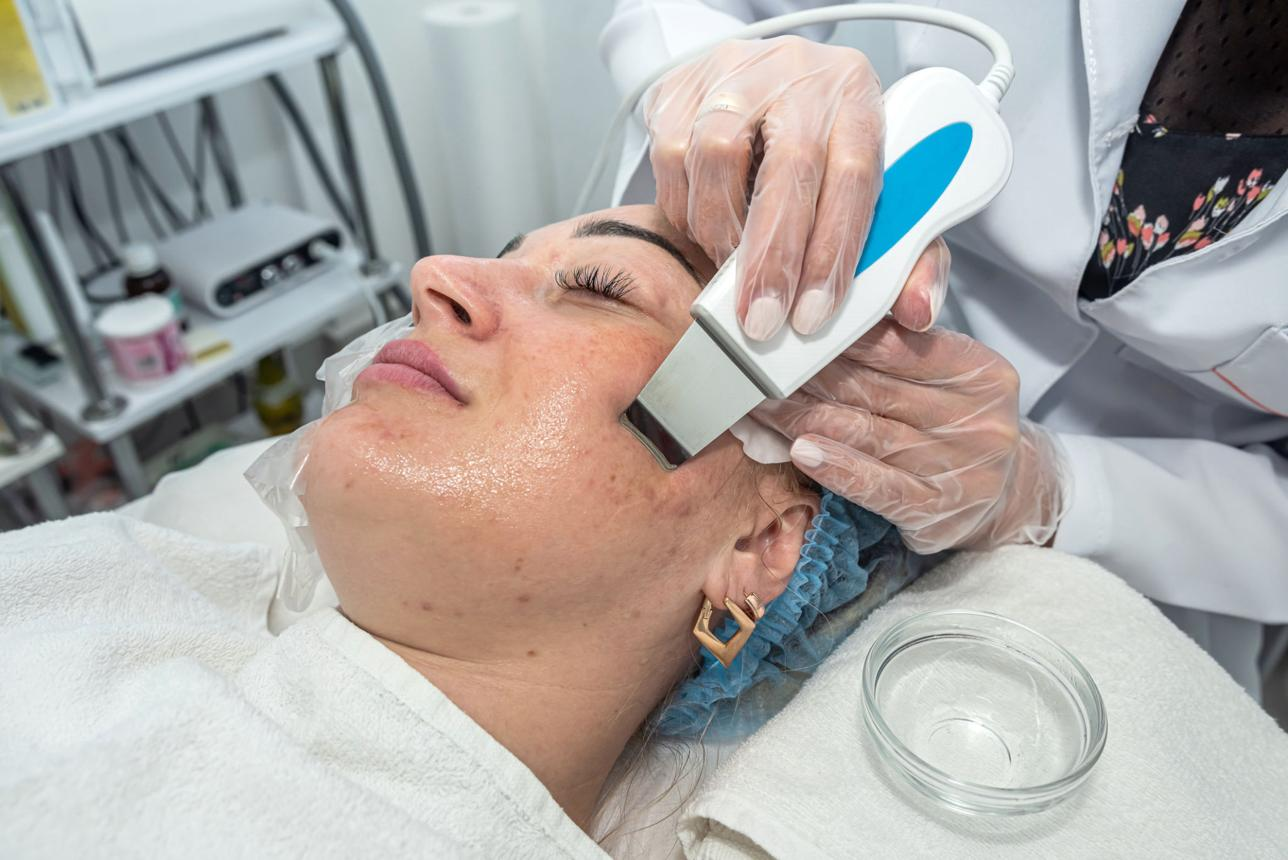
Using high-frequency mechanical vibrations, an ultrasonic skin scrubber helps loosen surface debris, support the removal of dead skin cells, and improve the overall cleansing experience. Its flat metal spatula is designed to work across the skin's surface, making it suitable for targeted facial treatments performed by trained professionals.
For beauty salons, spas, and aesthetic clinics, this technology offers more than an additional cleansing step. It provides an opportunity to create structured facial treatment protocols, improve service variety, and deliver a more technology-driven client experience.
This article explores how ultrasonic skin scrubbers work, how they help address blackheads and dead skin buildup, and why professional-grade equipment can be valuable in modern facial treatment environments.
2. Background: Why Traditional Facial Cleansing Is Not Always Enough
The skin naturally produces sebum and continuously sheds dead skin cells. Under normal conditions, these processes help maintain the skin's protective barrier. However, when sebum, dead cells, and environmental debris accumulate around hair follicles, pores can become congested.
Several common skin concerns are associated with this buildup:
-
Blackheads: Open comedones form when a pore becomes blocked with oil and dead skin cells. The dark appearance results from oxidation and other changes in the material exposed to air, rather than simply from dirt.
-
Whiteheads: Closed comedones develop when a blocked follicle remains covered by a thin layer of skin.
-
Rough skin texture: Uneven accumulation of dead surface cells can make the skin feel rough and appear dull.
-
Excess surface oil: Sebum buildup may contribute to a greasy appearance and make pores look more noticeable.
-
Makeup and skincare residue: Inadequate cleansing can leave residual products and impurities on the skin.
Traditional facial cleansing usually involves cleansing products, warm towels, manual techniques, and sometimes mechanical extraction. Although these methods remain important, they may not provide the same level of consistency for every client.
Manual extraction, in particular, requires considerable skill. Excessive pressure or incorrect technique can cause discomfort, irritation, and temporary redness. Clients with sensitive or reactive skin may also be less comfortable with intensive extraction procedures.
This creates an opportunity for ultrasonic cleansing technology.
Rather than depending entirely on manual pressure, an ultrasonic skin scrubber uses mechanical vibration to assist with surface cleansing. When incorporated into an appropriate facial protocol, it can help professionals perform a more controlled exfoliation and cleansing step.
It is important to understand that an ultrasonic scrubber does not permanently eliminate blackheads or prevent future pore congestion. Sebum production, skin characteristics, hormones, and skincare habits continue to influence pore conditions. The device is best understood as a professional cleansing and exfoliation tool rather than a permanent acne treatment.
3. Technology and Mechanism: How Does an Ultrasonic Skin Scrubber Work?
The central technology behind an ultrasonic skin scrubber is high-frequency mechanical vibration.
The device typically contains an ultrasonic transducer that converts electrical energy into mechanical oscillations. These vibrations are transferred to a specially designed stainless-steel spatula, which is placed against the skin during treatment.
When the spatula moves across appropriately prepared, moist skin, its rapid oscillations help loosen accumulated surface debris and dead skin cells.
3.1 High-Frequency Mechanical Vibrations
Unlike ordinary facial brushes that rely on direct brushing or rotating movement, ultrasonic skin scrubbers use rapid mechanical oscillations.
Depending on the device design, operating frequency, power output, and treatment conditions, the vibrating spatula can assist in loosening:
-
Surface dead skin cells.
-
Excess sebum around congested areas.
-
Residual cosmetic products.
-
Superficial impurities.
-
Material around visible pore congestion.
The technology is particularly useful for controlled surface cleansing. However, its effectiveness depends on the device's engineering, the condition of the skin, the moisture level, and the operator's technique.
3.2 The Role of Moisture During Treatment
Water or a suitable conductive skincare solution is generally applied before and during ultrasonic spatula treatment.
Moisture helps maintain contact between the spatula and the skin and supports the mechanical cleansing process. It also reduces unnecessary friction during movement.
This is why professional operators should avoid using the device on completely dry skin unless the manufacturer's instructions explicitly permit it.
During treatment, the professional holds the spatula at an appropriate angle and moves it gently across the designated areas. The pressure should remain controlled, and the spatula should not be forced into the skin.
3.3 How Does It Help Remove Blackheads?
Blackheads are formed when sebum and dead skin cells accumulate inside a hair follicle. The opening remains exposed to air, causing the surface material to darken.
An ultrasonic skin scrubber can help loosen superficial debris and material around congested pores. This may make subsequent cleansing easier and improve the appearance of the skin immediately after treatment.
However, there is an important distinction between surface cleansing and complete comedone removal.
A scrubber is not designed to extract every deeply embedded blackhead. Persistent or deeply congested comedones may require other professionally appropriate approaches, such as carefully selected extraction techniques or dermatologist-directed treatment.
For this reason, the best results often come from integrating ultrasonic cleansing into a broader facial protocol rather than treating it as a standalone solution.
3.4 Supporting Skin Preparation and Product Application
Beyond cleansing, ultrasonic skin scrubbers are sometimes incorporated into facial preparation procedures.
After removing surface buildup, professionals may continue with suitable hydrating products, masks, or other non-invasive facial treatments.
Some devices also feature a separate application or infusion mode. Depending on the model, this may use different operating principles from the cleansing function.
It is important not to assume that every ultrasonic scrubber improves serum absorption simply because it uses ultrasonic technology. Product delivery performance depends on the actual device design, mode, formulation, and supporting evidence.
4. Advantages and Comparison: Why Choose a Professional Ultrasonic Skin Scrubber?
For professional beauty businesses, equipment selection should be based on more than the number of functions a machine offers. Treatment consistency, operational efficiency, client comfort, and long-term service value are equally important.
An ultrasonic skin scrubber can complement traditional facial cleansing by introducing a technology-assisted exfoliation step.
4.1 More Controlled Surface Exfoliation
Manual exfoliation depends heavily on the pressure, movement, and experience of the operator. An ultrasonic skin scrubber provides a consistent mechanical vibration process that can assist with removing superficial buildup.
For professionals, this creates an additional option when designing facial cleansing protocols, particularly for clients who prefer a less abrasive approach to routine surface exfoliation.
Nevertheless, gentle operation remains essential. Excessive passes, pressure, or treatment frequency can compromise skin comfort and barrier function.
4.2 A More Comfortable Facial Experience
Many clients are concerned about painful extractions, prolonged redness, and aggressive exfoliation.
Ultrasonic cleansing can provide an alternative first step by loosening superficial impurities before any necessary manual extraction is considered.
Its non-invasive operating approach makes it suitable for facial treatment menus focused on cleansing, skin preparation, and routine maintenance.
However, it should not be marketed as completely irritation-free or suitable for every skin condition. Individual skin assessment is still necessary.
4.3 Improved Treatment Workflow
Professional facial treatments often involve multiple stages, including makeup removal, cleansing, exfoliation, extraction, hydration, and skin conditioning.
Integrating an ultrasonic skin scrubber can make the exfoliation and surface-cleansing stage more structured.
A professional operator can incorporate it into a treatment sequence without relying exclusively on manual scrubbing. This can help salons standardize procedures and create repeatable service experiences.
4.4 Professional Equipment vs. Home-Use Devices
Home-use ultrasonic scrubbers are generally designed for convenience and simple personal skincare routines. Professional equipment, by contrast, should be evaluated according to the requirements of a commercial treatment environment.
|
Comparison |
Home-Use Device |
Professional Device |
|---|---|---|
|
Primary purpose |
Personal skincare |
Salon and clinic treatments |
|
Operation |
Basic functions |
Treatment-oriented controls |
|
Treatment workflow |
Individual use |
Professional protocols |
|
Durability |
Household usage |
Frequent commercial operation |
|
Configuration |
Usually simplified |
May offer adjustable settings and multiple modes |
|
Service support |
Retail support |
Manufacturer and technical support |
A professional-grade device may provide more suitable operational controls, a more durable construction, and better support for repeated treatments.
For manufacturers and distributors, these characteristics are also important when positioning equipment for beauty salons, spas, and aesthetic clinics.
The most important consideration is not simply whether a device has a higher frequency or more operating modes. Its actual performance, safety features, build quality, and compliance documentation should be evaluated together.
5. Applications and Client Needs: Where Does Ultrasonic Cleansing Fit into Professional Treatments?
Ultrasonic skin scrubbers can be integrated into several types of professional facial services. Their role is generally to support surface cleansing and exfoliation rather than replace comprehensive skincare treatments.
5.1 Deep-Cleansing Facial Treatments
Deep-cleansing facials are among the most common applications.
A typical treatment sequence may include:
-
Skin assessment: Identify skin type, sensitivity, visible congestion, and any conditions requiring treatment modification.
-
Makeup removal: Remove foundation, sunscreen, and other cosmetic residues using appropriate cleansing products.
-
Skin preparation: Apply water or a suitable conductive solution to maintain surface moisture.
-
Ultrasonic cleansing: Gently move the spatula across selected facial areas, following the manufacturer's recommended technique.
-
Targeted extraction: If necessary, perform carefully selected extraction procedures using appropriate professional methods.
-
Hydration: Apply suitable moisturizers, serums, or masks.
-
Skin protection: Finish with appropriate skincare and daytime sun protection when relevant.
This structured approach helps professionals combine equipment-assisted cleansing with traditional facial techniques.
5.2 Blackhead and Congestion-Focused Treatments
Clients with visible blackheads, oily skin, and congested areas frequently seek professional cleansing services.
The ultrasonic spatula can be used around appropriate areas, such as the nose, chin, and forehead, to assist with loosening superficial buildup.
However, professionals should distinguish between open comedones, sebaceous filaments, and other skin conditions. Sebaceous filaments are normal structures that help transport sebum to the skin surface and should not be treated as defects that must be completely removed.
For persistent comedonal acne, a more comprehensive treatment plan may be needed. Salicylic acid-based products, retinoids, and dermatologist-guided care may be appropriate depending on the client's condition.
An ultrasonic scrubber is therefore best positioned as one component of a broader professional skincare service.
5.3 Skin Preparation Before Other Facial Procedures
Surface cleansing is also an important preparation step before selected non-invasive facial treatments.
For example, a professional may use an ultrasonic scrubber as part of a cleansing protocol before applying a hydrating mask or proceeding with another compatible skincare service.
This helps create a more organized treatment sequence and gives operators greater flexibility when designing customized facial packages.
Compatibility must always be checked. The device should not automatically be used before every energy-based, chemical, or invasive procedure. Manufacturer instructions and the requirements of the subsequent treatment take priority.
5.4 Suitable Client Groups and Treatment Limitations
Potential candidates include clients seeking:
-
Routine professional facial cleansing.
-
Gentle surface exfoliation.
-
Assistance with superficial oil and debris removal.
-
Skin preparation before selected facial services.
-
Maintenance treatments for dull or rough-looking skin.
Certain clients require additional caution or should avoid treatment depending on the device instructions and professional assessment. These may include people with active skin infections, open wounds, significant inflammation, compromised skin barriers, or recently treated skin.
Clients with severe acne, persistent irritation, rosacea, or unexplained skin lesions should receive appropriate medical assessment before undergoing mechanical exfoliation.
Professional operators should also follow electrical safety, device disinfection, and infection-control procedures. The metal spatula must be cleaned and disinfected according to the manufacturer's validated instructions between clients.
6. Conclusion: A Practical Technology for Modern Professional Facial Care
In 2026, professional facial treatments are increasingly focused on combining effective cleansing methods with better treatment experiences and more structured service delivery.
The ultrasonic skin scrubber offers a practical approach to surface exfoliation through high-frequency mechanical vibrations. By helping loosen superficial impurities and dead skin buildup, it can complement traditional cleansing procedures and support selected blackhead-focused facial services.
For beauty salons, spas, and aesthetic clinics, its value lies in its ability to add a technology-assisted cleansing stage to existing treatment menus. It can help professionals develop more varied facial packages while maintaining a clear focus on client assessment, controlled operation, and appropriate aftercare.
For beauty equipment manufacturers and distributors, professional ultrasonic skin scrubbers also represent an accessible equipment category for businesses looking to expand their facial treatment offerings.
Ultimately, successful professional cleansing is not about removing as much oil or as many impurities as possible. It is about balancing effective surface cleansing with skin-barrier protection.
When supported by suitable equipment, trained operators, and well-designed treatment protocols, ultrasonic skin scrubbers can become a useful part of modern professional facial care.
Founded in 2008, Guangzhou GLM Beauty Spa Equipment Factory specializes in research, development, manufacture and selling of beauty and slimming machines. Our production base is located in Guangzhou City, Guangdong Province, China. Since our foundation, we have introduced advanced technologies and equipment, to assure high quality and high performance of our products. With professional marketing guide and excellent after-sales service, our products have been exported to over 20 countries and regions, including Southeast Asia, the Middle East, Europe and the United States, won worldwide praises and gained a good reputation
