
1. Introduction
Ultrasound cavitation has become a recognizable technology in the non-invasive body contouring market. As beauty salons, aesthetic studios, and professional wellness centers expand their treatment menus, demand continues for equipment designed to support localized body contouring without surgery or extended recovery periods.
However, the growing popularity of ultrasound cavitation also makes treatment safety an essential consideration. Not every client is a suitable candidate, and even a well-designed machine requires appropriate screening, correct operating procedures, and realistic expectations.
Understanding ultrasound cavitation contraindications is therefore important for both treatment providers and beauty equipment buyers. For practitioners, it helps establish a responsible consultation process and reduce avoidable risks. For salon owners and clinic managers, it supports staff training, treatment consistency, and long-term business credibility.
This guide explains how ultrasound cavitation works, who should avoid treatment or obtain medical clearance, what risks professionals should understand, and how appropriate equipment selection can contribute to a more controlled treatment environment.
2. Background and Problem: Why Contraindication Screening Matters
Ultrasound cavitation is commonly marketed as a non-surgical body contouring treatment. Depending on the device and its intended use, it uses acoustic energy to produce effects in targeted tissue. Some systems are designed to generate cavitation effects in a liquid environment or tissue, while others use different ultrasound delivery mechanisms. These technologies should not automatically be treated as interchangeable.
Unlike a simple cosmetic massage, ultrasound treatment involves energy delivery. Its safety depends on the device's technical characteristics, treatment location, operating parameters, operator training, and the client's medical history.
A common misconception is that a non-invasive procedure is automatically safe for everyone. In practice, non-invasive does not mean risk-free. Incorrect application, unsuitable treatment candidates, excessive exposure, or inadequate training may contribute to adverse effects.
For professional salons and aesthetic centers, contraindication screening should be part of the standard client consultation rather than an optional administrative step. A structured assessment helps practitioners identify potential concerns before treatment, explain limitations clearly, and refer clients for medical advice when necessary.
It also helps protect the quality of the service. A client who receives an inappropriate treatment may experience discomfort, skin changes, or other complications that undermine confidence in both the practitioner and the equipment.
3. Technology and Mechanism: How Ultrasound Cavitation Works
Ultrasound refers to sound waves above the range of human hearing. In aesthetic applications, selected ultrasound frequencies and energy levels are used to produce specific effects in biological tissues.
In systems designed for cavitation-based body contouring, acoustic pressure variations may encourage the formation and oscillation of microscopic bubbles under appropriate conditions. These processes can create mechanical effects in the surrounding medium. The actual effects depend on frequency, intensity, pulse characteristics, coupling conditions, tissue properties, and the device's design.
It is important to distinguish cosmetic ultrasound cavitation from medical ultrasound procedures and other energy-based technologies. Different systems have different mechanisms, indications, treatment protocols, and risk profiles. A treatment protocol intended for one device should not be transferred automatically to another.
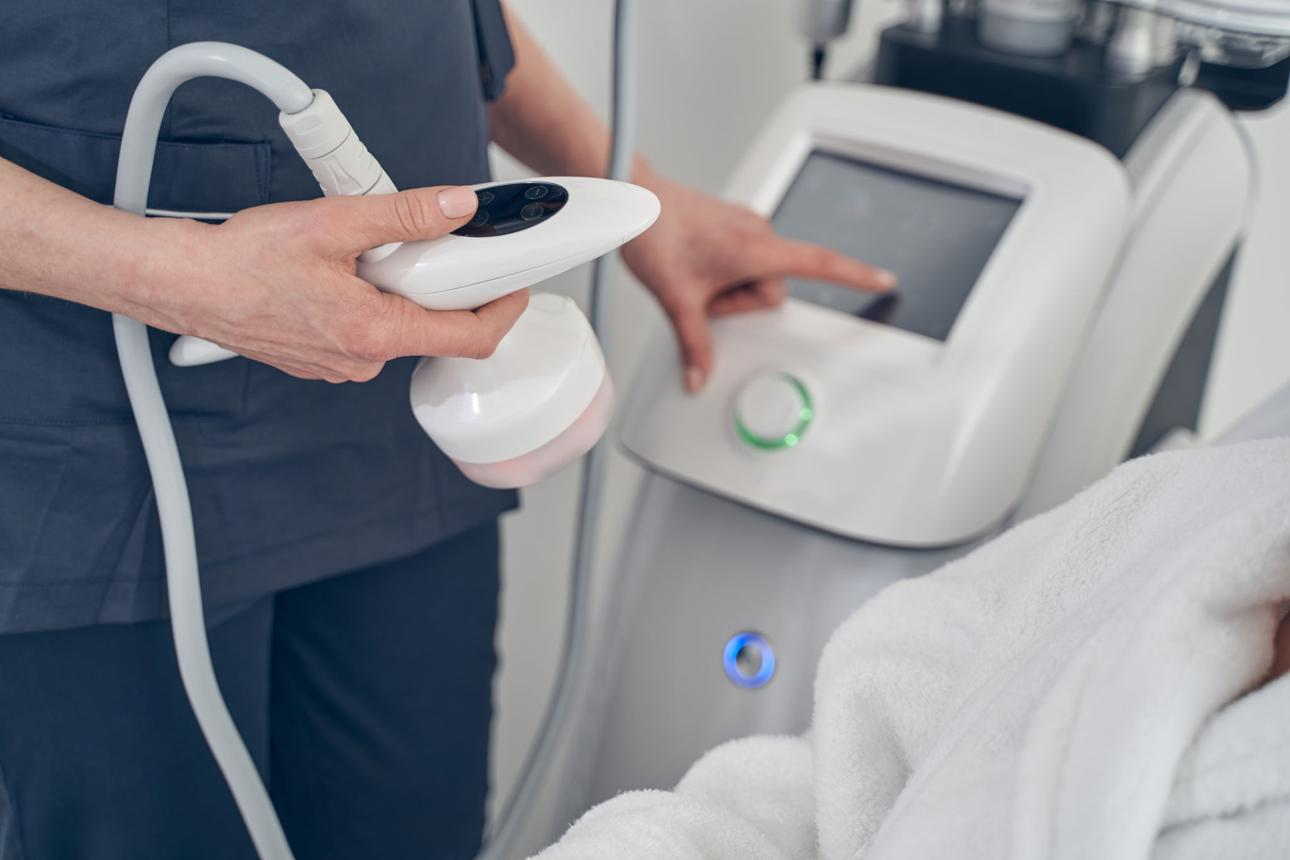
Professional equipment may provide adjustable parameters, defined operating modes, treatment timers, and manufacturer-specified applicators. These features can help trained operators follow a consistent protocol, but they do not independently guarantee safety or clinical effectiveness.
Before selecting a machine, professional buyers should confirm its intended use, technical specifications, user instructions, applicable regulatory status, maintenance requirements, and the training provided by the manufacturer. The operator should understand which tissues and body areas the device is designed to treat and which areas must be avoided.
4. Ultrasound Cavitation Contraindications: Who Should Avoid Treatment?
Contraindications vary by device, treatment area, intended use, and individual medical circumstances. The following categories are important screening considerations, not a substitute for the manufacturer's instructions or an individualized medical assessment.
4.1 Pregnancy
Elective ultrasound cavitation body contouring should be avoided during pregnancy. Pregnant clients should not undergo treatment over the abdomen or other areas without appropriate medical direction. Because cosmetic cavitation is not necessary during pregnancy and safety has not been established for this use, postponing treatment is the responsible approach.
Breastfeeding clients should also discuss treatment suitability with a qualified healthcare professional and follow the device manufacturer's guidance, especially when treatment involves the abdomen or other areas affected by pregnancy-related changes.
4.2 Pacemakers and Other Implanted Medical Devices
Clients with pacemakers, implantable cardioverter-defibrillators, or other implanted electronic devices should not receive treatment unless the device's instructions and the relevant medical professional explicitly establish that it is appropriate.
For clients with metal implants, joint replacements, or other implanted materials, suitability depends on the device's design, the implant's location, and the manufacturer's contraindications. Operators should not assume that every metal implant creates the same risk, nor should they treat near an implant without clear authorization.
When the instructions are unclear, postpone treatment and seek medical advice rather than relying on guesswork.
4.3 Active Cancer or a History of Cancer
Clients with active cancer, suspected malignancy, or a recent cancer diagnosis should not undergo elective treatment over or near the affected area without clearance from their treating medical team.
A history of cancer does not automatically mean that every cosmetic procedure is permanently prohibited. However, the type of cancer, current treatment, surgical history, affected body area, and overall health may all influence suitability. The treating clinician should determine whether treatment is appropriate.
4.4 Liver or Kidney Disease
The liver and kidneys play important roles in normal metabolism and waste processing. Clients with significant liver or kidney disease should obtain medical advice before undergoing body contouring treatments that may affect tissue or involve changes in local tissue metabolism.
It is not appropriate to claim that ultrasound cavitation necessarily overwhelms these organs or that a particular treatment will cause organ damage. The concern is that the safety and suitability of elective treatment may be uncertain in clients with relevant medical conditions. Their individual circumstances and the device's instructions should guide the decision.
4.5 Cardiovascular Conditions and Circulatory Disorders
Clients with unstable cardiovascular disease, serious circulation problems, or other significant medical conditions should receive medical clearance before treatment. Particular caution is appropriate when a client has a history of thrombosis, suspected deep vein thrombosis, or a condition associated with an elevated risk of blood clots.
Treatment should not be performed over an area with suspected thrombosis or unexplained acute swelling. Such symptoms require medical evaluation, not cosmetic treatment.
4.6 Active Skin Conditions, Wounds, and Infections
Avoid treating areas with open wounds, active skin infections, significant inflammation, unexplained lesions, or severely irritated skin.
Clients with impaired skin sensation may be less able to recognize excessive discomfort or abnormal tissue responses during treatment. Practitioners should therefore evaluate sensory impairment and other factors that could make safe feedback difficult.
If a client has a suspicious skin lesion, unexplained pain, or a persistent change in the treatment area, recommend medical assessment before proceeding.
4.7 Hernias and Recent Surgery
Avoid treating directly over a known or suspected hernia unless a qualified medical professional has specifically determined that treatment is appropriate and the device instructions permit it.
Clients recovering from surgery should wait until healing is complete and obtain clearance when indicated. The appropriate interval depends on the procedure, the treatment area, complications, and the device's intended use. A universal waiting period cannot safely be applied to every client.
4.8 Other Situations Requiring Additional Assessment
Additional caution or medical clearance may be appropriate for clients with:
-
Significant metabolic or systemic disease.
-
A history of abnormal bleeding or relevant clotting disorders.
-
Reduced sensation or difficulty communicating discomfort.
-
Recent invasive cosmetic procedures in the intended treatment area.
-
Unexplained swelling, persistent pain, or unusual tissue changes.
-
Any condition specifically listed in the device's contraindications.
A professional consultation should also clarify the client's goals. Ultrasound cavitation is not a weight-loss treatment for obesity, and it should not be presented as a substitute for medical care, healthy lifestyle changes, or clinically indicated weight management.
5. Safety Risks: What Can Go Wrong?
The risks associated with ultrasound cavitation depend on the specific technology, the energy delivered, the treatment protocol, and the client's condition. Potential adverse effects may include temporary redness, tenderness, discomfort, swelling, or bruising.
Excessive or inappropriate energy exposure may increase the risk of burns, unwanted tissue effects, or other injuries. The risk may be greater when an operator uses unsuitable settings, repeatedly treats the same area without adequate justification, fails to follow coupling requirements, or ignores abnormal client feedback.
Other problems arise when a practitioner treats an unsuitable candidate or overlooks symptoms that require medical evaluation. These are not simply equipment issues; they reflect the combined influence of screening, training, judgment, and treatment execution.
Clients should be told that results vary and that no device can guarantee a particular body contouring outcome. They should also understand that persistent or severe pain, blistering, marked swelling, skin discoloration, or other unexpected symptoms warrant prompt medical assessment.
Sudden shortness of breath, chest pain, fainting, or other signs of a serious acute condition require emergency medical attention. Such symptoms should never be managed as routine cosmetic treatment reactions.
6. Essential Precautions for Professional Treatment
A consistent safety process should cover the entire client journey, from the initial consultation to post-treatment follow-up.
Step 1: Complete a Client Screening Form
Record relevant medical history, medications, implanted devices, previous procedures, allergies when relevant to accompanying products, and the client's treatment goals. Ask about pregnancy, significant chronic disease, recent surgery, circulation problems, and any symptoms affecting the intended area.
A questionnaire is a screening tool, not a diagnosis. Refer uncertain or higher-risk cases to an appropriate healthcare professional.
Step 2: Confirm the Device's Intended Use
Read the manufacturer's instructions before treatment. Confirm the approved or specified treatment areas, contraindications, applicator requirements, operating modes, and any restrictions on treatment frequency or duration.
Do not assume that settings used successfully on one model are suitable for another machine.
Step 3: Use Appropriate Parameters and Technique
Follow the manufacturer's protocol for energy settings, treatment duration, movement speed, contact conditions, and coupling materials. Do not increase energy simply because a client wants faster results or because an initial session appears to produce little visible change.
Where the device requires continuous movement, correct coupling, or a particular applicator angle, these instructions should be followed consistently. Operators should stop when the client reports unusual pain, excessive heat, or other unexpected sensations.
Step 4: Maintain Hygiene and Equipment Quality
Clean and disinfect reusable applicators according to the manufacturer's instructions. Inspect cables, connectors, applicator surfaces, and controls before use. Equipment showing damage, unstable output, or signs of malfunction should be removed from service until it has been assessed.
A maintenance schedule, operator training record, and incident log can support quality management in busy professional environments.
Step 5: Provide Clear Aftercare Instructions
Explain expected temporary effects, appropriate skin care, and when the client should contact the clinic. Avoid unsupported promises about detoxification, guaranteed fat loss, or immediate permanent results.
If unexpected symptoms develop, document the situation, arrange appropriate follow-up, and refer the client for medical assessment when necessary.
7. Professional Equipment vs. Home Devices: Why Control Matters
Professional ultrasound cavitation equipment is intended for use within a defined operating framework. Depending on the model, it may offer more detailed parameter controls, dedicated applicators, treatment timers, user documentation, and manufacturer training.
These features can support consistent service delivery when the equipment is properly designed, maintained, and operated by trained personnel. However, a professional label alone does not prove that a device is safer or more effective than every home-use product. Performance and safety depend on the actual specifications, intended use, quality controls, and supporting evidence.
Home-use devices may have different power levels, operating modes, instructions, and limitations. Consumers may also have less training in contraindication screening, anatomical considerations, and the recognition of adverse reactions.
For salon owners and clinic managers, the key purchasing question is therefore not simply whether a machine has more functions. It is whether the equipment's specifications, usability, documentation, training support, and service arrangements match the needs of the intended professional environment.
When comparing suppliers, buyers should examine:
-
Clear technical specifications and intended-use documentation.
-
Readable operating instructions and contraindication lists.
-
Applicator design and the availability of replacement parts.
-
Appropriate safety testing and relevant regulatory documentation.
-
Staff training, troubleshooting guidance, and maintenance support.
-
Warranty terms and the supplier's ability to provide ongoing service.
For manufacturers and distributors, transparent technical communication is a commercial advantage. Clear limitations and realistic claims help buyers evaluate products accurately and build more sustainable customer relationships.
8. Applications and Client Needs: Building a Responsible Treatment Service
Ultrasound cavitation may form part of a non-surgical body contouring service for appropriately screened clients, depending on the device's intended use and local regulations. Potential clients often want to address localized contour concerns and understand what a treatment can realistically achieve.
A professional consultation should explain the device's intended purpose, the limits of available evidence, the expected treatment experience, the possibility of temporary adverse effects, and the fact that individual results vary. It should also clarify that body contouring does not replace a balanced diet, physical activity, or medically supervised weight management when needed.
For business owners, a well-managed treatment service involves more than purchasing equipment. It requires trained staff, a repeatable screening process, documented protocols, suitable hygiene procedures, and a plan for responding to unexpected reactions.
Manufacturers can support these needs by supplying practical user manuals, clear technical information, structured training, maintenance guidance, and responsive after-sales service. These resources help professional buyers assess whether a device fits their service model and support more consistent day-to-day operation.
A responsible approach also strengthens customer trust. Clients are more likely to make informed decisions when practitioners explain both the potential benefits and the limitations instead of promising dramatic or guaranteed outcomes.
9. Conclusion
Ultrasound cavitation can be a useful option within professional body contouring services, but appropriate client selection and safe operation must come before treatment results or commercial targets.
Pregnancy, certain implanted devices, active cancer, significant medical conditions, skin problems, hernias, and recent surgery may require treatment avoidance, postponement, or medical clearance. The exact restrictions depend on the equipment, intended use, treatment area, and individual circumstances.
For practitioners, the essential steps are straightforward: screen clients carefully, follow the manufacturer's instructions, use the specified parameters, maintain equipment properly, document treatments, and respond promptly to unexpected symptoms.
For beauty salon owners, clinic managers, and equipment buyers, choosing a machine should involve more than comparing functions or prices. Technical transparency, operator training, appropriate safety documentation, and dependable after-sales support are important parts of a professional equipment investment.
In 2026, responsible ultrasound cavitation practice is not simply about offering a popular body contouring technology. It is about matching the right equipment and protocol to the right client, while keeping safety, realistic expectations, and professional standards at the center of every treatment
Founded in 2008, Guangzhou GLM Beauty Spa Equipment Factory specializes in research, development, manufacture and selling of beauty and slimming machines. Our production base is located in Guangzhou City, Guangdong Province, China. Since our foundation, we have introduced advanced technologies and equipment, to assure high quality and high performance of our products. With professional marketing guide and excellent after-sales service, our products have been exported to over 20 countries and regions, including Southeast Asia, the Middle East, Europe and the United States, won worldwide praises and gained a good reputation
