
Introduction
Under-eye wrinkles are among the most visible signs of facial aging. The skin around the eyes is thin, delicate, and highly expressive, making it especially sensitive to changes in collagen, hydration, facial movement, and soft-tissue volume. As a result, two people with similar ages may develop very different under-eye concerns.
Some clients primarily notice fine lines that become more obvious when smiling. Others have deeper creases, hollow areas beneath the eyes, or a combination of wrinkles, laxity, pigmentation, and volume loss.
For professional aesthetic clinics, choosing the appropriate treatment is therefore not simply a question of asking whether filler or anti-wrinkle injections are “better.” The more useful approach is to identify what is creating the visible concern and then select the treatment modality that addresses that specific mechanism.
Dermal fillers and botulinum toxin injections work in fundamentally different ways. Fillers can restore lost volume and improve certain hollow areas, while botulinum toxin temporarily reduces muscle activity responsible for dynamic expression lines. Professional aesthetic devices operate through other mechanisms, including controlled thermal energy, radiofrequency, ultrasound, light-based energy, or other non-invasive technologies designed to support skin quality.
A well-designed professional treatment plan may therefore involve one technology, or a carefully selected combination of modalities, depending on the client's anatomy, skin condition, expectations, and treatment goals.
Background: Why Do Under-Eye Wrinkles Develop?
The appearance of under-eye wrinkles is rarely caused by one factor.
With age, the skin gradually loses structural proteins and becomes less resilient. Reduced hydration can make fine lines more visible, while repeated facial expressions create dynamic creases over time. Changes in facial fat distribution and soft-tissue volume can also contribute to hollowness beneath the eyes.
Sun exposure and environmental stress can further accelerate visible skin aging. Lifestyle factors such as insufficient sleep, smoking, and repeated exposure to ultraviolet radiation may also influence overall skin quality.
From a professional operator's perspective, this means that “under-eye wrinkles” should not automatically be treated as a single condition.
A client may present with:
- Fine dehydration lines
- Dynamic wrinkles caused by facial expression
- Static wrinkles visible even when the face is relaxed
- Tear-trough or under-eye hollowness
- Mild skin laxity
- Reduced skin elasticity
- Uneven texture or pigmentation
- A combination of volume loss and skin-quality changes
This distinction is particularly important around the eyes because the area has delicate anatomy and limited tolerance for aggressive treatment.
For this reason, professional assessment should come before treatment selection. Dermal filler and botulinum toxin are medical procedures, and professional medical assessment and appropriate injection expertise are essential for their safe use. The American Academy of Dermatology specifically emphasizes the importance of trained providers for both fillers and botulinum toxin treatments.
Technology and Mechanism: Filler vs. Anti-Wrinkle Injections
1. How Dermal Fillers Work
Dermal fillers are primarily designed to restore or add volume.
When under-eye aging is associated with volume deficiency or hollowing, a qualified medical professional may consider a filler-based approach. Depending on the product and treatment area, fillers can physically add volume beneath the skin and soften the transition between different facial contours.
Hyaluronic acid fillers are among the commonly used filler materials in aesthetic medicine. Many fillers can provide relatively immediate visible changes, although the exact onset, duration, and suitability depend on the specific product and treatment area.
For an aesthetic clinic, the key consideration is that filler does not simply “erase every wrinkle.” Its primary value is related to volume restoration and contour correction.
This makes filler conceptually different from treatments designed primarily to improve skin texture or reduce muscle activity.
Under-eye filler also requires particular expertise. The anatomy around the eyes is complex, and inappropriate product selection, placement, or excessive volume can produce undesirable results. The AAD notes that complications are more likely when fillers are administered without adequate medical training and experience, particularly around the eyes.
2. How Anti-Wrinkle Injections Work
Anti-wrinkle injections commonly refer to botulinum toxin treatments.
Instead of adding volume, botulinum toxin temporarily reduces the activity of targeted muscles. This can soften dynamic wrinkles created by repeated facial movement.
For example, botulinum toxin is commonly used to reduce the appearance of crow's feet around the outer corners of the eyes. The AAD explains that the treatment works by temporarily relaxing targeted muscles, with visible improvement commonly developing within several days and lasting approximately three to four months, although individual results vary.
This mechanism makes anti-wrinkle injections fundamentally different from fillers.
If a client has a hollow under-eye contour caused primarily by volume loss, reducing muscle activity does not replace the missing volume. Conversely, adding filler does not directly reduce the muscle contractions responsible for dynamic expression lines.
3. Where Professional Aesthetic Devices Fit In
Professional beauty and aesthetic devices approach the problem from another direction.
Depending on the technology, professional equipment may use controlled radiofrequency, ultrasound, LED, cooling, or other energy-based mechanisms to support skin appearance and treatment protocols.
For example, controlled thermal technologies are commonly incorporated into professional skin-tightening and skin-conditioning treatments. The objective is not to mechanically replace lost volume or paralyze facial muscles. Instead, these technologies can be used as part of broader skin-quality programs focused on texture, firmness, hydration support, and overall facial rejuvenation.
The exact effect depends heavily on the technology, energy parameters, applicator design, treatment area, and manufacturer's intended use.
For clinics, this distinction is valuable because it allows operators to position professional equipment as part of a broader treatment strategy rather than presenting one device as a universal solution.
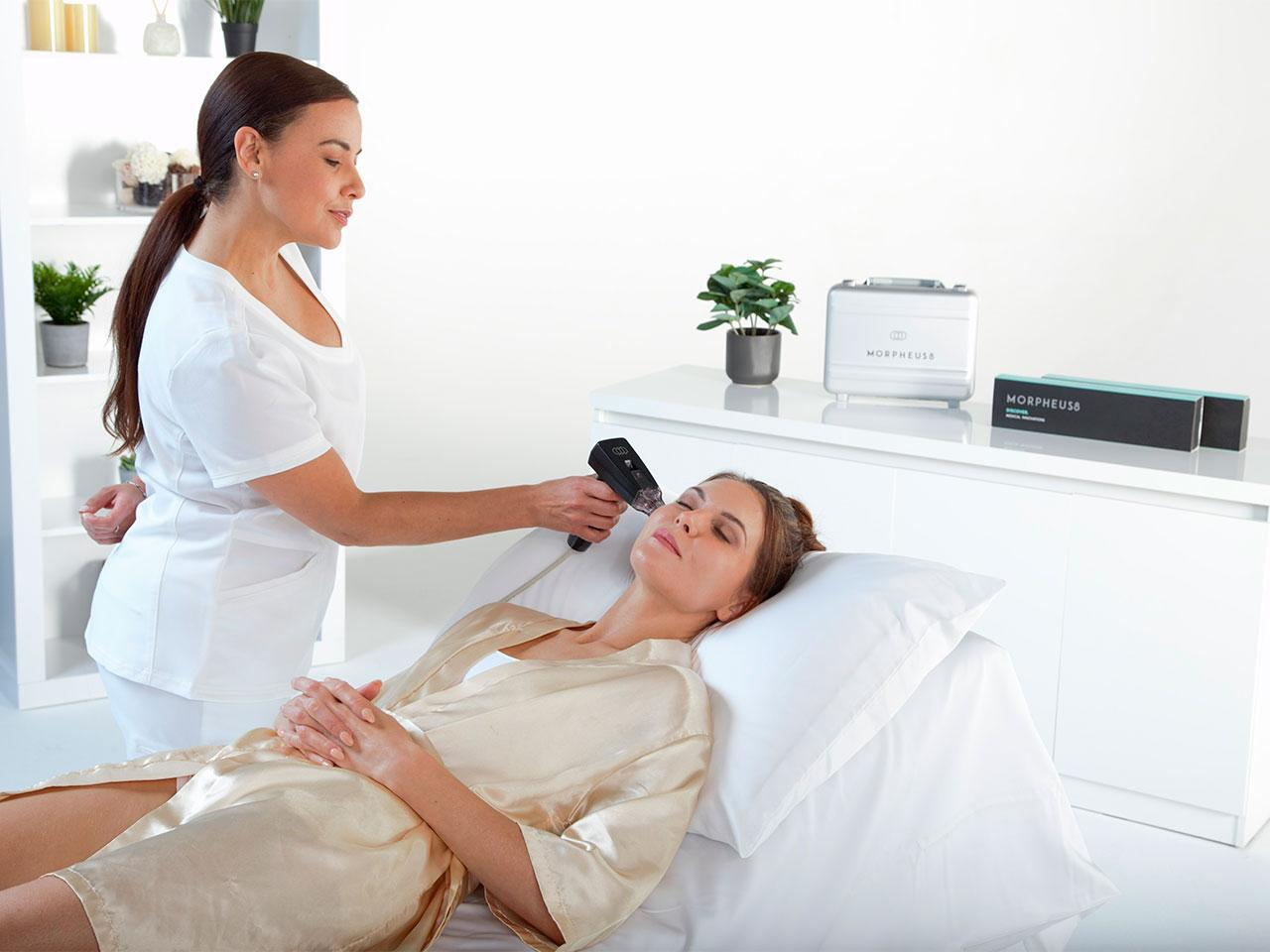
[INSERT IMAGE HERE — Professional aesthetic clinic treatment of the eye area, showing a trained practitioner assessing a client's under-eye skin with a professional facial device. Keep the device and client's face clearly visible, with a clean clinical background.]
A Practical Mechanism Comparison
| Treatment | Primary Mechanism | Typical Concern Addressed | Professional Consideration |
|---|---|---|---|
| Dermal Filler | Adds/restores volume | Hollowing, volume-related contour changes, selected lines | Requires medical expertise and precise placement |
| Botulinum Toxin | Temporarily reduces targeted muscle activity | Dynamic expression wrinkles | Requires anatomical knowledge and controlled dosing |
| Professional RF/Other Energy Devices | Delivers controlled energy to the skin/tissue according to device design | Skin quality, firmness, texture, rejuvenation support | Requires correct parameters and appropriate treatment protocols |
| LED-Based Treatments | Uses specific wavelengths of light | Skin-conditioning and appearance support | Device wavelength, dose, and indication matter |
| Cooling/Soothing Technologies | Controlled cooling according to device design | Comfort and post-treatment skin support | Must be used according to device protocol |
Advantages and Comparison: Which Approach Addresses Which Concern?
The most useful comparison is not “filler versus injections” in isolation. It is matching the treatment mechanism to the client's actual concern.
When Volume Is the Main Concern
If a client has noticeable under-eye hollowness or a contour transition associated with volume loss, filler may be considered by a qualified medical injector.
The objective is structural: restoring volume where appropriate rather than simply relaxing facial muscles.
When Dynamic Wrinkles Are the Main Concern
If wrinkles become significantly more visible during smiling or squinting, muscle activity may play an important role.
In such cases, botulinum toxin may be considered by an appropriately qualified medical professional. The goal is controlled reduction of muscle activity while maintaining a natural appearance.
When Skin Quality Is the Main Concern
Some clients have relatively little volume loss but complain about thin, dry, crepey, or uneven-looking skin.
This is where professional aesthetic devices can become particularly relevant.
Instead of adding volume or modifying muscle activity, a clinic may design a skin-quality program using appropriate non-invasive technologies. Depending on the device, treatments may focus on improving the appearance of firmness, texture, hydration, or overall skin condition.
This is also where professional equipment can offer value beyond what a typical home skincare routine can provide. Professional systems may offer controlled energy delivery, specialized applicators, adjustable parameters, treatment records, and protocols designed for trained operators.
When Several Concerns Exist Together
Real clients rarely fit perfectly into one category.
A mature client might have:
- Dynamic crow's feet
- Mild under-eye hollowness
- Reduced elasticity
- Fine surface lines
- Uneven skin texture
A clinic may therefore use a staged approach rather than relying on one treatment.
For example, a medical professional may evaluate whether an injectable treatment is appropriate for structural or dynamic concerns, while a professional aesthetic device can be incorporated into a broader skin-conditioning program.
This combination-based approach reflects an important trend in modern aesthetic practice: treating the overall appearance rather than focusing on one isolated wrinkle.
Applications and Client Needs in Professional Clinics
From the perspective of a professional beauty clinic or aesthetic practice, under-eye rejuvenation is not only about treatment technology. It is also about consultation quality and client expectations.
Before treatment, operators should assess the visible characteristics of the eye area under appropriate lighting and consider the client's primary concern.
Useful consultation questions include:
- Are the wrinkles visible when the face is relaxed?
- Do they become deeper during smiling?
- Is there visible hollowness beneath the eyes?
- Is the main complaint texture, laxity, volume, or expression lines?
- Has the client previously received filler, botulinum toxin, laser, or energy-based treatments?
- What level of improvement does the client realistically expect?
For injectable procedures, medical history, previous treatments, medications, contraindications, and individual risk factors also need to be assessed by the appropriate medical professional.
Professional devices can complement this consultation-driven model by giving clinics additional options for clients who are seeking non-invasive or minimally invasive skin-quality treatments.
For example, a clinic equipped with professional RF, LED, ultrasound, or other approved aesthetic technologies can create structured treatment programs for different skin concerns rather than offering only one type of service.
The advantage is not simply having “more machines.” It is having technology that can be matched to different client needs.
Professional Equipment vs. Home Devices
Home beauty devices can be useful for routine personal skincare, but professional equipment is designed for a different service environment.
Professional systems may provide more sophisticated control over treatment parameters, specialized applicators, larger treatment areas, professional protocols, and operator-guided procedures.
This difference becomes particularly important when treating delicate areas such as the face and eye contour.
However, professional does not automatically mean that every device is suitable for the under-eye area. Clinics should always follow the manufacturer's intended use, contraindications, operating parameters, and local regulatory requirements.
For manufacturers, this also creates an opportunity to develop devices with clear treatment protocols, ergonomic applicators, adjustable settings, safety features, and training resources that help professional operators integrate equipment into their existing service menu.
Building a Professional Under-Eye Treatment Strategy
A modern aesthetic clinic can think about under-eye rejuvenation in three layers.
Layer 1: Structural Assessment
Determine whether visible changes are primarily related to volume loss, contour changes, or anatomy.
Layer 2: Dynamic Assessment
Observe how the eye area changes during smiling, squinting, and other facial expressions.
Layer 3: Skin-Quality Assessment
Evaluate texture, firmness, hydration appearance, elasticity, and overall skin condition.
This framework prevents a common mistake: using one treatment mechanism for every type of wrinkle.
A professional skin analyzer can also support this process by documenting visible skin characteristics and helping operators track changes over a series of treatments. When combined with consultation records and standardized photography, this creates a more systematic approach to treatment planning and follow-up.
For aesthetic equipment manufacturers, these supporting technologies are increasingly important because clinics are not simply purchasing machines. They are building repeatable treatment workflows.
Conclusion
Under-eye wrinkles are not a single cosmetic problem, and filler and anti-wrinkle injections do not work in the same way.
Dermal fillers primarily address volume-related concerns by restoring fullness or improving contour. Botulinum toxin works by temporarily reducing targeted muscle activity and is commonly used for dynamic expression lines such as crow's feet. Professional aesthetic devices approach rejuvenation from another direction, using technologies such as radiofrequency, LED, ultrasound, or other controlled energy systems to support skin-quality and non-invasive treatment programs.
The most appropriate approach depends on the client's anatomy, wrinkle type, skin condition, treatment goals, medical history, and professional assessment.
For clinics, the future of under-eye rejuvenation is therefore less about choosing one “best” technology and more about building a precise treatment strategy around individual client needs.
For aesthetic equipment manufacturers, professional-grade devices can play an important supporting role in this strategy by giving clinics additional tools for skin-quality management, treatment customization, documentation, and long-term client care.
When technology, professional assessment, and realistic expectations are combined, under-eye rejuvenation can become a more structured and comprehensive part of a modern aesthetic clinic's service portfolio
Founded in 2008, Guangzhou GLM Beauty Spa Equipment Factory specializes in research, development, manufacture and selling of beauty and slimming machines. Our production base is located in Guangzhou City, Guangdong Province, China. Since our foundation, we have introduced advanced technologies and equipment, to assure high quality and high performance of our products. With professional marketing guide and excellent after-sales service, our products have been exported to over 20 countries and regions, including Southeast Asia, the Middle East, Europe and the United States, won worldwide praises and gained a good reputation