Introduction
Light-based technologies are becoming an increasingly important part of modern aesthetic, wellness, rehabilitation, and professional treatment environments. Among the newest areas of interest is photobiomodulation (PBM), a non-invasive approach that uses controlled light energy to influence biological processes at the cellular and tissue level.
While red and near-infrared wavelengths have traditionally received most of the attention in PBM research, interest is expanding toward shorter wavelengths, including green and violet light. This has opened the door to new discussions around cellular signaling, inflammation modulation, tissue recovery, and nervous-system-related applications.
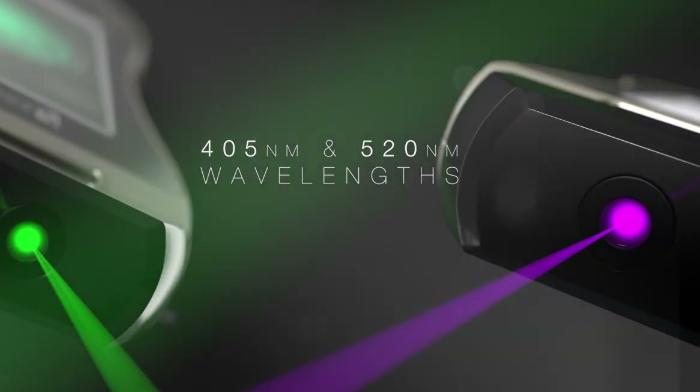
The GVL Laser, which combines green and violet wavelengths in a professional laser platform, represents this emerging direction in light-based technology. Commercial GVL systems have been developed for professional clinical use, including applications involving pain and inflammatory acne, while the broader scientific literature continues to investigate how different wavelengths may influence biological processes.
Importantly, neurological recovery is still an evolving research area. Current evidence supports the broader potential of photobiomodulation in neurological and peripheral nerve applications, but it does not mean that every green-and-violet laser protocol has been clinically proven to restore neurological function. For professional operators, understanding this distinction is essential.
The opportunity, however, is significant: as aesthetic clinics and wellness centers expand beyond conventional beauty treatments, advanced light-based platforms can provide another technology pathway for creating professional, non-invasive recovery and wellness protocols.
Background: Why Is Neurological Recovery Becoming a Focus for Light-Based Technology?
Neurological recovery is complex because the nervous system depends on highly coordinated interactions between neurons, mitochondria, blood vessels, immune responses, and surrounding tissues.
When tissue experiences injury, inflammation, oxidative stress, or impaired circulation, cellular energy demand can increase while normal biological functions become more difficult to maintain. This has encouraged researchers to investigate technologies that can influence cellular metabolism without relying on invasive procedures.
Photobiomodulation is one such approach.
PBM uses relatively low-intensity light to trigger biological responses rather than intentionally heating or ablating tissue. Research has associated PBM with processes involving mitochondrial activity, ATP production, nitric oxide signaling, oxidative stress, inflammation, and cellular communication.
This is particularly interesting from a recovery perspective because mitochondria play an essential role in supplying energy to cells. Neurons are especially energy-demanding cells, which makes cellular energy metabolism an important area of neurological research.
Studies have investigated PBM in areas including traumatic brain injury, stroke, neurodegenerative conditions, peripheral nerve injuries, neuropathy, and other neurological applications. However, the quality and consistency of the evidence vary considerably between conditions and treatment protocols. A 2024 systematic review identified clinical and preclinical research across nerve injury, neuropathy, pain, ischemia, neurodegenerative disease, and other neurological categories, while also emphasizing the variability of protocols.
This is why professional equipment matters.
A professional light-based platform is not simply a stronger version of a home beauty device. Treatment wavelength, optical output, dosage, exposure time, delivery method, treatment area, and operator control all influence the protocol.
For clinics looking to introduce advanced light-based services, these technical considerations can make the difference between a basic light treatment and a structured professional photobiomodulation program.
Technology and Mechanism: How Green and Violet Wavelengths Work
The fundamental concept behind wavelength-based therapy is straightforward: different wavelengths interact with biological tissues in different ways.
Rather than viewing light as a single treatment category, professional PBM systems can be understood as wavelength-specific platforms.
Green Wavelengths: A Different Biological Pathway
Green light occupies a shorter wavelength range than the red and near-infrared wavelengths commonly associated with traditional PBM.
Research into green-light photobiomodulation suggests that green wavelengths can interact with biological signaling systems, including pathways associated with ion channels, nitric oxide-related mechanisms, and cellular signaling. However, green light generally has more limited penetration into tissue than longer wavelengths, making treatment depth an important consideration.
This distinction is important for professional operators.
A green laser should not simply be marketed as a replacement for near-infrared technology. Instead, its value lies in offering a different wavelength profile that can complement a broader treatment strategy.
Violet Wavelengths: Emerging Photobiomodulation Potential
Violet light is even shorter in wavelength and has attracted growing scientific interest.
A 2025 review of violet photobiomodulation examined 51 studies and reported potential biological effects involving antimicrobial activity, wound healing, vasodilation, and neurogenesis-related research. At the same time, the authors emphasized that much of the existing evidence remains preclinical and that more robust clinical research is needed before standardized therapeutic protocols can be established.
This makes violet light particularly interesting for the future of professional equipment development.
Rather than positioning violet wavelengths as a proven neurological treatment on their own, manufacturers and clinics can view them as part of an emerging photobiomodulation platform where wavelength-specific effects are being actively studied.
Why Combine Green and Violet?
The concept behind a dual-wavelength system is not simply to provide “more light.”
The goal is to create a platform capable of delivering different wavelengths with different optical and biological characteristics.
A professional GVL-type system can therefore be designed around controlled wavelength delivery, defined treatment protocols, operator guidance, and repeatable treatment conditions.
This is especially valuable in professional environments where consistency is essential.
For example, a clinic may need to document treatment parameters, maintain standardized protocols, train multiple operators, and provide a repeatable client experience. A professionally engineered device can support these operational requirements much more effectively than an inexpensive consumer light source.
What Does Photobiomodulation Have to Do With Neurological Recovery?
The connection between PBM and neurological recovery is primarily based on its potential influence on cellular metabolism and tissue signaling.
One commonly discussed mechanism involves mitochondrial photoreception and subsequent changes in ATP production, reactive oxygen species, calcium signaling, and nitric oxide pathways. These downstream processes may influence inflammation, oxidative stress, cellular survival, and tissue repair.
Research has also investigated PBM in peripheral nerve regeneration. A systematic review of peripheral nerve studies reported potential effects involving nerve regeneration, myelinated fiber development, electrophysiological function, inflammation, and functional recovery, although treatment parameters varied significantly among studies.
Transcranial photobiomodulation is another important research direction.
Human studies have explored whether light delivered to the head can influence brain activity, cerebral blood flow, and functional connectivity. A systematic review found evidence that transcranial PBM can influence brain activity in healthy individuals, while evidence in neurological patients remains more limited and heterogeneous.
Therefore, the most responsible way to describe GVL-related neurological applications is as an emerging research and technology direction, rather than claiming established neurological rehabilitation outcomes.
This distinction also creates a stronger long-term marketing position. Professional buyers increasingly value equipment that is supported by credible technology rather than exaggerated claims.
Advantages of Professional Green and Violet Laser Technology
1. Non-Invasive Treatment Concept
One of the most attractive characteristics of PBM is its non-invasive nature.
Unlike surgical procedures or aggressive thermal treatments, low-level photobiomodulation is designed to deliver controlled optical energy without intentionally producing tissue ablation.
For wellness clinics and aesthetic practices, this creates opportunities for treatments that can be integrated into broader client-care programs without the downtime associated with invasive procedures.
2. Precise Wavelength Delivery
A professional laser system allows the operator to work with defined wavelengths rather than relying on broad-spectrum household lighting.
This makes it easier to develop standardized protocols and align treatment parameters with the intended application.
The difference becomes particularly important when comparing professional equipment with generic home LED masks or inexpensive light panels. Consumer devices may provide convenience, but professional systems can offer greater control over wavelength, delivery, treatment duration, and workflow.
3. Controlled and Repeatable Treatment
Professional clinics need repeatability.
If several practitioners provide the same service, treatment consistency becomes a critical part of quality control.
A professionally designed device can incorporate preset protocols, user-defined settings, treatment timers, displays, and other operational features that help practitioners reproduce treatment conditions.
This is one of the strongest commercial advantages of professional equipment: the technology becomes part of a structured service rather than simply an accessory.
4. Potential for Multi-Disciplinary Applications
Light-based technology can be positioned across several professional categories.
Depending on local regulations, device indications, and practitioner qualifications, clinics may explore applications related to aesthetic skin care, inflammatory concerns, pain management, wellness, recovery, or adjunctive protocols.
For equipment manufacturers, this versatility can make dual-wavelength systems attractive to a broader B2B customer base.
GVL Laser vs. Traditional Red and Near-Infrared PBM
Red and near-infrared wavelengths remain the most extensively studied areas of photobiomodulation, particularly in neurological research. Recent reviews continue to identify red-to-near-infrared light as the dominant range in clinical PBM research.
Green and violet wavelengths should therefore be viewed as complementary rather than automatically superior.
| Technology | Typical Strength | Key Consideration |
|---|---|---|
| Red PBM | Strong research base in cellular and tissue applications | Often used for broader PBM protocols |
| Near-Infrared PBM | Greater tissue penetration | Frequently studied in neurological PBM |
| Green PBM | Distinct wavelength-dependent signaling potential | Shallower penetration requires careful application |
| Violet PBM | Emerging antimicrobial and signaling research | Clinical evidence is still developing |
| Green + Violet | Multi-wavelength platform | Requires appropriate protocols and professional control |
The commercial advantage of a GVL-style system is therefore not necessarily that it replaces every other PBM wavelength.
Its value lies in expanding the technological toolkit available to professional practitioners.
Applications and Client Needs in Professional Settings
For beauty clinics, wellness centers, rehabilitation-oriented facilities, and professional aesthetic practices, the future of light-based technology may increasingly involve combination protocols.
A client may not necessarily visit a clinic because they want “a laser treatment.” They may be looking for a comprehensive experience involving skin appearance, comfort, recovery, relaxation, or wellness.
This is where professional equipment can become strategically valuable.
Aesthetic and Skin-Focused Clinics
Violet light has attracted particular interest in skin-related applications, including antimicrobial and acne-related research. Commercial GVL systems are already positioned for professional applications involving moderate inflammatory acne and temporary relief of certain minor chronic pain conditions, demonstrating how green-and-violet technology can bridge aesthetic and therapeutic-oriented markets.
For aesthetic businesses, this creates an opportunity to build light-based services around skin quality and professional care rather than competing only on conventional facial treatments.
Wellness and Recovery Centers
Recovery-focused businesses are increasingly interested in non-invasive technologies that can complement physical recovery and wellness programs.
PBM may be incorporated as an adjunctive technology alongside stretching, massage, exercise, physiotherapy, or other professional services, depending on local regulations and clinical scope.
Research on combined PBM approaches has explored combinations with exercise, physiotherapy, pharmacological approaches, and other interventions, suggesting that PBM is increasingly being investigated as an adjunct rather than necessarily a standalone solution.
Clinics Exploring Advanced Technology
For clinics investing in new equipment, wavelength diversity can be an important consideration.
A device that offers more than one wavelength can potentially support multiple protocols and customer segments. This can improve equipment utilization and allow a clinic to develop different service packages around the same technological platform.
However, operators should always follow the manufacturer's intended use, local regulatory requirements, safety protocols, and evidence-based treatment parameters.
What Should Professional Buyers Look for in a GVL-Style Laser?
When evaluating a green-and-violet laser platform, buyers should look beyond wavelength names.
Important considerations include:
- Wavelength accuracy: The delivered wavelength should correspond reliably to the manufacturer's specifications.
- Optical output stability: Consistent energy delivery is essential for repeatable protocols.
- Treatment control: Adjustable or preset protocols can simplify professional workflows.
- Operator interface: A clear display and intuitive controls reduce training complexity.
- Safety design: Eye protection, treatment indicators, and appropriate safeguards are critical.
- Documentation: Professional buyers should be able to access technical specifications, intended-use information, and appropriate regulatory documentation.
- Service and support: Training, maintenance, spare parts, and after-sales support can significantly affect long-term equipment value.
- Protocol flexibility: Clinics may benefit from equipment that can accommodate different professional applications while remaining within approved indications.
These factors transform a laser from a simple hardware purchase into a professional treatment platform.
Conclusion
Green and violet wavelengths represent an intriguing new chapter in the development of professional photobiomodulation technology.
The scientific foundation of PBM continues to focus heavily on red and near-infrared wavelengths, particularly in neurological research. At the same time, research into green and violet light is expanding, revealing wavelength-specific biological effects and potential applications in inflammation, tissue recovery, cellular signaling, skin care, and neurological research.
The GVL Laser concept demonstrates how this emerging science can be translated into a professional device platform: controlled wavelengths, structured treatment delivery, and a design intended for professional environments.
For beauty clinics, aesthetic centers, wellness facilities, and technology-focused practices, the opportunity is not simply to add another laser to the equipment list. It is to expand the range of non-invasive, technology-driven services that can be developed around modern photobiomodulation.
At the same time, neurological recovery remains an area where evidence is developing. Current research should encourage further investigation rather than unsupported promises. For professional operators and manufacturers, combining credible science with precise engineering, appropriate protocols, and responsible marketing is the strongest path toward the next generation of light-based treatment technology.
As research continues to clarify how different wavelengths interact with cells, tissues, and neural systems, green and violet laser technology may become an increasingly interesting component of the professional aesthetics, wellness, and recovery equipment landscape
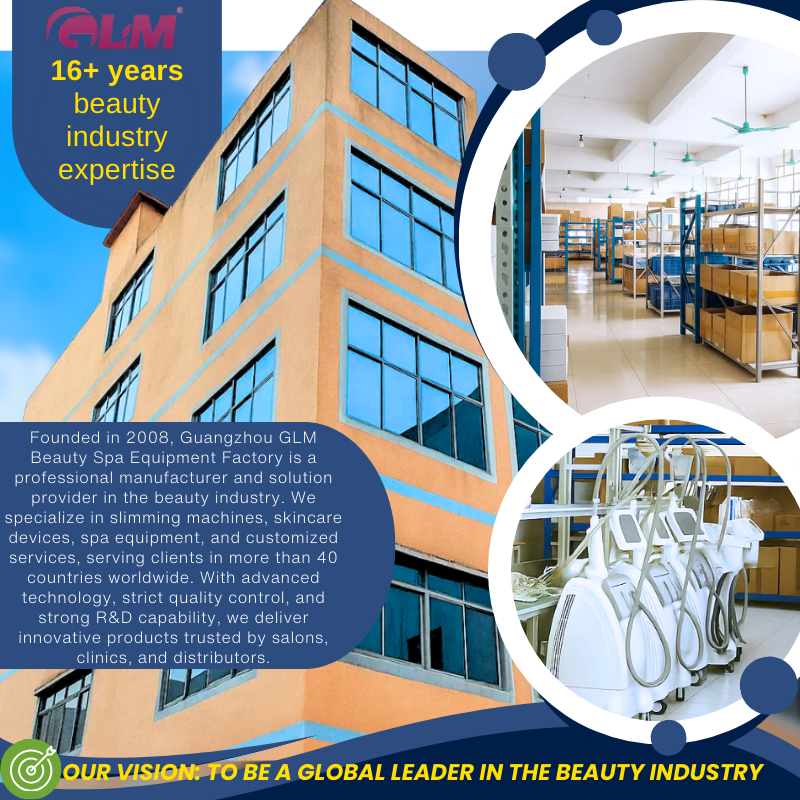
Founded in 2008, Guangzhou GLM Beauty Spa Equipment Factory specializes in research, development, manufacture and selling of beauty and slimming machines. Our production base is located in Guangzhou City, Guangdong Province, China. Since our foundation, we have introduced advanced technologies and equipment, to assure high quality and high performance of our products. With professional marketing guide and excellent after-sales service, our products have been exported to over 20 countries and regions, including Southeast Asia, the Middle East, Europe and the United States, won worldwide praises and gained a good reputation