
Title: Fade Age Spots with Carbon Dioxide Laser Treatment: Understanding Process, Benefits, and Side Effects
Introduction:
Age spots can make us feel self-conscious about our appearance as they become more prominent over time. Carbon dioxide laser treatment offers a promising solution to eliminate these stubborn spots. In this blog post, we will delve into the effectiveness of carbon dioxide laser treatment, its process, benefits, and the potential side effects to help you make an informed decision.
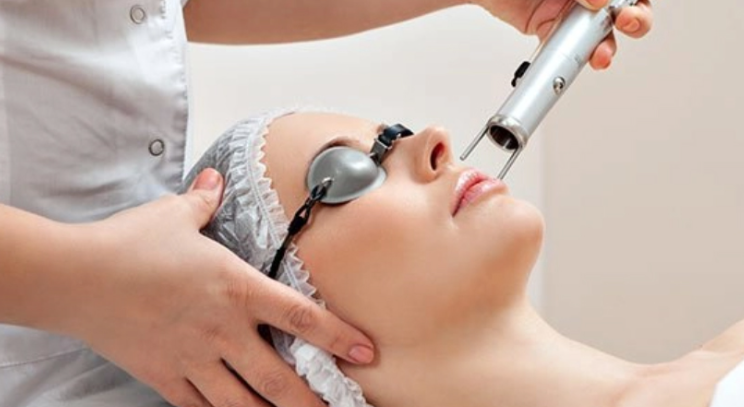
Advanced Age Spot Removal with Carbon Dioxide Laser Therapy: A Comprehensive Guide
Introduction to Carbon Dioxide Laser Treatment
Carbon dioxide (CO₂) laser therapy represents a cutting-edge solution for addressing age-related skin concerns, particularly age spots. This advanced treatment leverages the precise energy delivery of CO₂ lasers to target and eliminate hyperpigmented areas while preserving surrounding skin integrity. With over four decades of clinical application, CO₂ laser technology has established itself as a gold standard in dermatological procedures, offering unparalleled precision and efficacy.
Mechanism of Action: How CO₂ Lasers Eliminate Age Spots
1. Selective Photothermolysis
CO₂ lasers emit infrared energy at a wavelength of 10,600nm, which is highly absorbed by water molecules in skin tissue. Age spots, also known as solar lentigines, contain concentrated melanin deposits. The laser's affinity for water allows precise targeting of these pigmented structures through:
- Chromophore Selectivity: Melanin's high absorption coefficient at this wavelength enables selective destruction of hyperpigmented cells
- Micro-Ablation: Laser-tissue interaction creates micro-zones of thermal damage (0.1-0.5mm diameter) that disrupt melanosome-containing keratinocytes
2. Cellular Remodeling Process
The laser-induced micro-injuries trigger a cascade of wound healing responses:
- Immediate Response: Vaporization of epidermal layers containing melanin deposits
- Inflammatory Phase: Release of cytokines (IL-1, TNF-α) initiates neutrophil chemotaxis
- Proliferative Phase: Fibroblast activation stimulates collagen synthesis and angiogenesis
- Remodeling Phase: New epidermal layer forms with normalized melanocyte distribution
Clinical Procedure Overview
Treatment Protocol
- Pre-treatment Assessment:
- Wood's lamp examination to confirm diagnosis
- Fitzpatrick skin typing for parameter adjustment
- Topical anesthesia (EMLA cream) applied 30 minutes prior
- Laser Delivery:
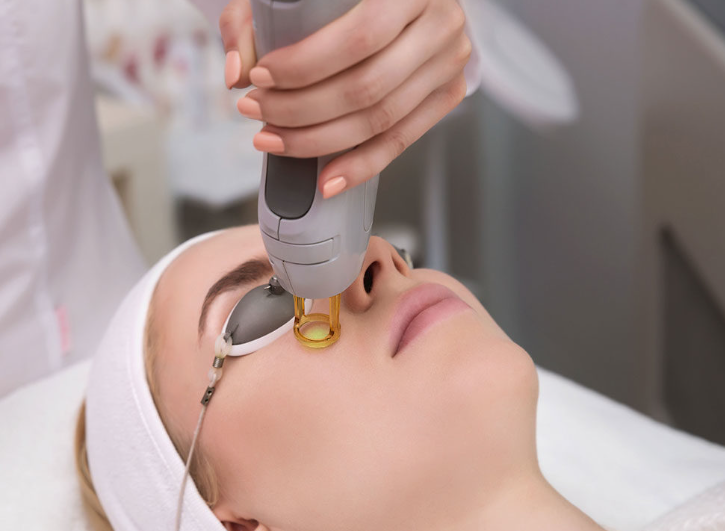
- UltraPulse® or fractional CO₂ systems used at 20-50mJ/pulse
- Computer-guided scanning patterns ensure uniform energy distribution
- Dynamic cooling device ( Zimmer Cryo ) maintains epidermal temperature <40℃
- Post-treatment Care:
- Application of petrolatum-based ointment
- Strict sun avoidance protocol (SPF50+ sunscreen)
- Follow-up at 2-4 week intervals
Therapeutic Advantages
| Feature | CO₂ Laser | Chemical Peels | IPL |
|---|---|---|---|
| Precision | Micron-level targeting | Diffuse penetration | Variable depth |
| Downtime | 7-14 days (ablative) | 2-5 days | Minimal |
| Efficacy | >90% clearance in 1-2 sessions | 40-60% improvement | 50-70% improvement |
| Collateral Damage | Minimal with proper technique | Risk of uneven peeling | Potential thermal injury |
| Longevity of Results | Permanent removal of treated spots | Temporary (3-6 months) | Semi-permanent |
Side Effect Management
Common Reactions (Expected in >80% of patients)
- Erythema & Edema:
- Onset: Immediate post-treatment
- Duration: Resolves in 3-7 days
- Management: Cold compresses, topical corticosteroids
- Xerosis & Pruritus:
- Mechanism: Transient epidermal barrier disruption
- Duration: Peaks at day 3-5 post-treatment
- Management: Emollient creams (urea 10%, glycerin)
- Post-Inflammatory Hyperpigmentation (PIH):
- Risk Factors: Fitzpatrick IV-VI skin types, history of PIH
- Prevention: Pre-treatment hydroquinone 4%, strict sun avoidance
- Treatment: Topical retinoids + hydroquinone if occurs
Rare Complications (<2% incidence)
- Scarring:
- Risk Factors: Excessive energy delivery, poor wound care
- Prevention: Operator experience, pulsed-mode delivery
- Treatment: Silicone gel sheeting, intralesional corticosteroids
- Infection:
- Pathogens: Staphylococcus aureus, HSV-1 reactivation
- Prevention: Pre-treatment antiviral prophylaxis in HSV+ patients
- Treatment: Mupirocin ointment, oral antivirals
Advanced Treatment Strategies
Combination Therapies
- Fractional CO₂ + Topical Rapamycin:
- Mechanism: mTOR inhibition enhances autophagic clearance of melanin
- Protocol: Apply rapamycin 1% ointment post-laser for 2 weeks
- Outcome: 25% faster resolution of PIH in clinical trials
- Pre-treatment with Q-switched Nd:YAG:
- Indication: Deep dermal melanin deposits
- Sequence: Q-switched laser 4 weeks prior to CO₂ treatment
- Advantage: Reduces required CO₂ energy density by 30%
Customized Treatment Algorithms
- Superficial Lentigines:
- Parameters: 10mJ/pulse, 2 passes, 1-month interval
- Adjunctive Care: Tranexamic acid serum
- Deep Dermal Melanosis:
- Parameters: 30mJ/pulse, fractional mode, 3 passes
- Adjunctive Care: Oral polypodium leucotomos extract
Patient Selection and Counseling
Ideal Candidates
- Fitzpatrick I-III skin types
- Well-defined age spots >5mm diameter
- Realistic expectations regarding downtime and outcomes
Contraindications
- Active herpes labialis outbreaks
- Isotretinoin use within 6 months
- Keloidal scar history
- Uncontrolled diabetes mellitus
Conclusion:
Carbon dioxide laser treatment offers an effective solution for fading age spots, providing clear and even-toned skin. Understanding the treatment process, benefits, and potential side effects is essential in making an informed decision. Consult with a professional healthcare provider to assess your suitability for the procedure and weigh the potential side effects against the desired benefits. Embrace the opportunity to regain your confidence and enjoy a more radiant complexion.
GLM is a specialized beauty instrument factory that produces instruments for a variety of functions, including weight loss devices. We have vacuum negative press, radio frequency fat blasting equipment, frozen fat dissolving machine and EMS body shaping machine. GLM is a 14 year old supplier of beauty instruments with guaranteed quality.https://gdglmbeauty.com/