
Laser Tattoo Removal: A Comprehensive Analysis of Principles, Techniques, Equipment and Treatment Planning
Introduction
In recent years, with the gradual opening up of social concepts, tattoos, as a form of personal expression, have been accepted by more and more people. However, changes in life stages, career demands or aesthetic concepts have led some people to have the need to remove tattoos. Relevant data shows that the global tattoo removal market size was approximately 990.46 million US dollars in 2023 and is expected to grow to about 3.57 billion US dollars by 2032, with a compound annual growth rate (CAGR) as high as 15.46%. In this trend, the younger group stands out particularly, as they are eager to correct or remove tattoos that do not match their current identities or lifestyles. Laser tattoo removal, as an efficient and safe method, is gradually becoming the mainstream choice.
The Importance and selection criteria of laser tattoo removal
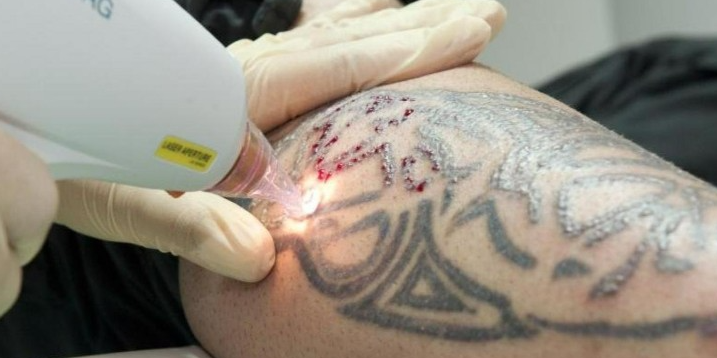
Choosing the right laser equipment is crucial for achieving the ideal tattoo removal effect. Advanced laser technologies, such as picosecond lasers, have made remarkable progress in terms of safety and effectiveness. Picosecond laser can precisely target tattoos of different colors while minimizing damage to the surrounding normal skin tissue to the greatest extent. The therapeutic effect largely depends on the quality of the laser equipment. Those clinics that invest in advanced technologies are often able to achieve the complete removal of tattoos in fewer treatment sessions by taking advantage of the equipment. Therefore, a thorough understanding of the various available laser options and consulting experienced professionals are of crucial significance for enhancing the success rate of the tattoo removal process.
The working principle of laser tattoo removal
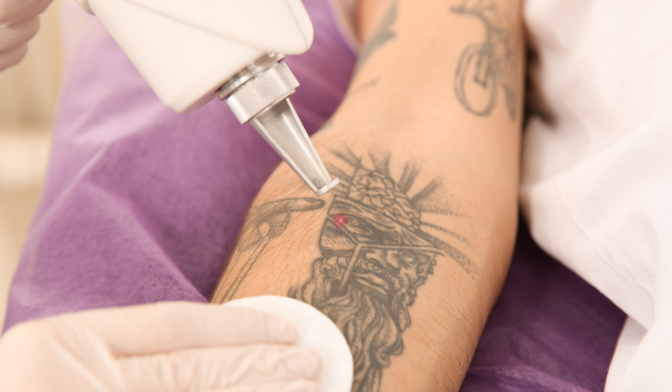
Laser tattoo removal is a widely recognized and effective method for removing unwanted tattoos. The basic principle is to use light of specific wavelengths to precisely target and break down ink particles embedded in the skin.
During the operation, well-trained technicians will precisely direct the laser beam onto the tattooed area. The laser emits high-intensity light pulses, which can penetrate the surface of the skin and be absorbed by the tattoo ink. When the ink absorbs the laser energy, it will heat up rapidly and break into tiny fragments. Over time, the human immune system will naturally remove these smaller ink particles, thus causing the tattoo to gradually fade.
Inks of different colors have different responses to laser treatment. Black ink, due to its unique absorption properties, can absorb lasers of all wavelengths, making it the easiest color to remove. However, for other colors of ink, such as red or green and other bright colors, due to their different absorption characteristics of laser energy, specific wavelengths of laser may be required to achieve the best effect.
The key factors influencing the selection of lasers
Ink color
The type of ink used for tattoos has a significant impact on the removal effect. Darker inks, such as black and blue, are relatively easier to remove because they can better absorb laser energy. However, for inks with lighter or brighter colors, such as red and green, specialized laser technology may be required to effectively decompose their pigments. This is because inks of different colors have different absorption capabilities for lasers of different wavelengths. Choosing the appropriate laser wavelength is the key to ensuring effective tattoo removal.
Skin type
Personal skin type is of vital importance in tattoo removal treatment. People with darker skin tones contain more melanin in their bodies, and melanin competes with tattoo ink to absorb laser energy. This requires a lower energy setting during the treatment process to avoid causing damage to the skin. However, a lower energy setting may lead to prolonged treatment time and increased costs. Therefore, personalized treatment plans need to be formulated for patients with different skin types.
Tattoo age
As time goes by, tattoos will gradually fade naturally. This is because the body constantly breaks down ink particles. Compared with new tattoos where the ink is usually deeper, older tattoos may require fewer treatments to be completely removed as the ink particles have partially decomposed. However, this is not absolute. Other factors also need to be comprehensively considered, such as ink color, skin type, etc.
The size and depth of the tattoo
Larger tattoos usually contain more ink, which means more treatments are needed to effectively remove them. In addition, the depth to which the ink is embedded in the skin can also affect the effectiveness of laser treatment. If the ink is embedded too deeply, the laser energy needs to penetrate deeper into the skin to reach the ink particles, which will increase the difficulty and frequency of treatment.
Immune response
An individual's immune response plays a significant role in the process of tattoo removal. A powerful immune system can more effectively remove the ink particles remaining after treatment, thereby enhancing the overall removal effect. Therefore, when evaluating tattoo removal plans, the patient's immune system status also needs to be taken into consideration.
A Detailed explanation of the Principle of Laser Tattoo Removal
Laser tattoo removal is a widely recognized and effective method for removing unwanted tattoos. The core principle is to use light of specific wavelengths to target and break down ink particles embedded in the skin.
During the operation, well-trained technicians will precisely direct the laser beam onto the tattooed area. The laser emits high-intensity light pulses, which can penetrate the surface of the skin and be absorbed by the tattoo ink. When the ink absorbs the laser energy, it will heat up rapidly and break into tiny fragments. Over time, the human immune system will naturally remove these smaller ink particles, eventually leading to the gradual fading of tattoos.
Inks of different colors have different responses to laser treatment. Black ink, due to its unique physical properties, can absorb lasers of all wavelengths, making it the easiest color to remove. However, for other colored inks, such as bright colors like red or green, due to their different absorption characteristics for lasers of different wavelengths, specific types of lasers may be required to effectively decompose their pigments. For example, red ink has a better absorption effect on lasers with a wavelength of 532 nm, while green ink may be more suitable for lasers with a wavelength of 755 nm.
Introduction to Top Lasers
Laser tattoo removal technology is constantly evolving. Currently, a variety of laser technologies have been developed, each with unique functions, suitable for different tattoo colors and skin types. The following will provide a detailed introduction to the most commonly used Q-switched lasers and picosecond lasers in tattoo removal.
Q-switched laser
Nd:YAG laser
Effect: The Nd:YAG laser has two wavelengths, namely 1064 nm and 532 nm. The 1064nm wavelength has a particularly good removal effect on dark ink, including black and blue, and is suitable for all types of tattoos. The wavelength of 532 nm is suitable for warm-colored tattoos such as red and yellow.
Skin type: This laser has a wide range of applications and can be used for various skin types, including dark skin tones. It can penetrate deeper into the skin while minimizing damage to surrounding tissues, and has high safety and effectiveness.
Ruby laser
Effect: The working wavelength of the ruby laser is 694 nm, making it highly suitable for processing green and blue inks, which are usually difficult to remove. It can precisely target these colors and achieve effective decomposition.
Skin type: Ruby laser is usually recommended for lighter skin tones. Due to its absorption characteristics, it may not be very effective for darker skin, as melanin in dark skin competes with tattoo ink for laser absorption, which may affect the treatment outcome.
Purple jade laser
Effectiveness: The working wavelength of the purple jadeite laser is 755 nm, which can effectively target green and black ink, but its effectiveness against other colors is average. It can decompose the ink particles of these colors to a certain extent, but it may not achieve the best effect like a laser targeting a specific color.
Skin type: This laser is most suitable for fairer skin types. For darker skin tones, due to their higher melanin content, the best effect may not be achieved, as melanin can interfere with the precise action of the laser on the tattoo ink.
Picosecond laser
PicoSure
Function: PicoSure employs ultra-short pulse technology, which can effectively break down tattoos of various colors, including stubborn green and blue ones. Compared with traditional techniques, it is particularly renowned for its ability to reduce the number of treatment sessions to remove tattoos. Its ultrashort pulses can generate high energy in an instant and shatter ink particles more precisely.
Recovery: Due to the precision of picosecond technology, patients will experience the least discomfort during the treatment process, and the recovery time is significantly shortened. This has greatly improved the treatment experience of patients.
PicoWay
Effectiveness: Similar to PicoSure, PicoWay is also renowned for its high efficiency in quickly removing various ink colors. It can quickly and effectively break down tattoo ink and reduce the number of treatments.
Recovery: This type of laser can shorten the treatment time and accelerate the healing process, thus becoming a popular choice for doctors. Patients can return to normal life more quickly after treatment.
Enlighten
Effectiveness: Enlighten combines nanosecond and picosecond pulse technologies and can effectively handle a wider range of colors. It has two wavelengths (532nm and 1064nm), enhancing its ability to handle both dark and bright inks.
Versatility: This laser is particularly effective for all skin types, making it an integrated solution for tattoo removal. It can provide personalized treatment plans based on the skin types and tattoo characteristics of different patients.
The optimal laser wavelengths corresponding to tattoos of different colors
Tattoos of different colors require specific laser wavelengths to achieve the best removal effect. The following are the recommended laser wavelengths for tattoos of different colors:
Black tattoo
1064nm wavelength: This laser is highly effective in removing black tattoos, especially on darker skin tones. It can penetrate deep into the skin and precisely shatter black ink particles.
755nm wavelength: Also suitable for black tattoos and particularly effective for lighter skin tones. It can ensure the therapeutic effect while reducing the damage to the surrounding skin.
Red tattoo
532 nm wavelength: This wavelength is highly suitable for removing red tattoos as red ink can absorb it most effectively. It can decompose red ink particles quickly and effectively.
785 nm wavelength: This laser can also be used to treat red tattoos, providing practitioners with another option. Lasers of different wavelengths can be used to treat red tattoos in different situations.
Green tattoo
755nm wavelength: It can effectively remove green tattoos, especially for light skin. It can precisely act on green ink to achieve effective decomposition.
694 nm wavelength: This wavelength is also suitable for treating green tattoos. It can achieve a better removal effect in response to the characteristics of green ink.
Blue tattoo
1064nm wavelength: This laser works well for blue tattoos and is especially effective for dark skin tones. It can penetrate the skin and precisely shatter the blue ink particles.
755nm wavelength: It can also effectively treat blue tattoos. Choosing the appropriate wavelength based on the specific circumstances of the tattoo can enhance the therapeutic effect.
Treatment plan for laser tattoo removal
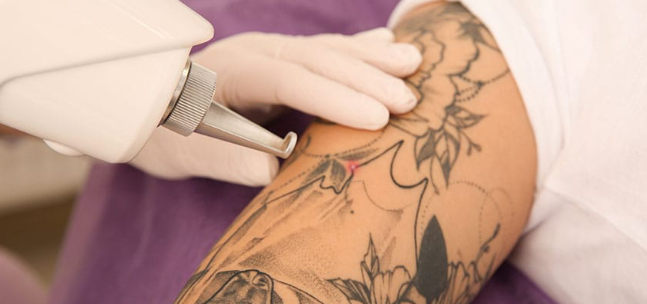
The number of treatments required for laser tattoo removal usually varies depending on factors such as the color and depth of the tattoo, as well as the individual's response to the laser treatment. The following is the treatment plan under general circumstances:
A single dark tattoo: Generally, 3 to 8 treatments are needed to completely remove it. Dark tattoos usually contain a large number of ink particles and require multiple treatments to completely break them down.
Professional color tattoos: These may require more laser treatments, usually 6 to 10 sessions. Professional colored tattoos usually use ink of multiple colors. Different colors of ink react differently to lasers, so more treatment sessions are required.
Amateur tattoos: Usually require 3 to 5 treatments to be effectively removed. Amateur tattoos usually have relatively few ink particles and the treatment difficulty is relatively low, so the number of treatments is relatively small.
Special tattoos: Some special tattoos may require more than 10 treatments. Special tattoos may have a large area, deep ink inlays or special ink components, and require more treatment to achieve the desired effect.
Picosecond laser: Picosecond laser usually only requires 2 to 3 treatments to achieve similar effects. Picosecond laser technology is advanced and can more precisely break ink particles, thereby reducing the number of treatments.
To sum up, laser tattoo removal is a scientific and effective method for getting rid of unwanted tattoos. By choosing the appropriate laser equipment and technology and combining it with personalized treatment plans, safe and efficient tattoo removal services can be provided for patients.
GLM is a specialized beauty instrument factory that produces instruments for a variety of functions, including weight loss devices. We have vacuum negative press, radio frequency fat blasting equipment, frozen fat dissolving machine and EMS body shaping machine. GLM is a 14 year old supplier of beauty instruments with guaranteed quality.https://gdglmbeauty.com/