Introduction
In today's aesthetic industry, clients are looking for more than visible results—they want treatments that fit seamlessly into their lifestyles. Busy schedules, growing awareness of preventive skincare, and concerns about surgical risks have all contributed to a significant shift in the beauty market. Rather than choosing invasive cosmetic procedures that require anesthesia, extended recovery, and higher costs, many people now prefer non-invasive lifting treatments that offer gradual, natural-looking improvements with minimal interruption to daily life.
This trend has created new opportunities for professional beauty clinics, medical spas, and aesthetic centers. Advanced technologies such as radio frequency (RF), high-intensity focused ultrasound (HIFU), microcurrent therapy, and combination facial rejuvenation systems enable practitioners to deliver effective skin tightening and lifting treatments without surgery.
Unlike home-use beauty devices, professional aesthetic equipment provides higher energy output, greater treatment precision, multiple safety monitoring systems, and customizable treatment protocols. These advantages allow experienced practitioners to address different skin concerns while maintaining consistent treatment quality.
For clinic owners, investing in professional lifting technology is no longer simply about expanding treatment options—it is about meeting changing client expectations and building long-term customer loyalty. Clients increasingly seek solutions that deliver visible improvements while preserving natural facial expressions and avoiding the dramatic appearance sometimes associated with surgical procedures.
Understanding why non-invasive lifting has become one of the fastest-growing categories in aesthetic medicine helps professionals choose appropriate equipment, educate clients effectively, and design treatment programs that align with modern beauty trends.
The Changing Beauty Industry: Why Clients Are Moving Away from Surgery
Consumer attitudes toward anti-aging have changed dramatically over the past decade. While surgical facelifts remain an effective option for severe skin laxity, they are no longer considered the first choice for many individuals experiencing early or moderate signs of aging.
Instead of waiting until wrinkles become pronounced, today's clients are taking a preventive approach. Many people begin professional facial treatments in their late twenties or early thirties to maintain collagen production before significant aging occurs. This concept, often referred to as "prejuvenation," emphasizes preserving youthful skin rather than correcting advanced aging after it develops.
Several factors have accelerated the popularity of non-invasive lifting treatments.
Desire for Natural-Looking Results
Modern beauty standards increasingly favor healthy, refreshed, and naturally youthful skin rather than dramatically altered facial features. Clients want friends and colleagues to notice that they look well-rested—not to immediately recognize that they have undergone cosmetic procedures.
Professional lifting technologies stimulate the skin's natural regenerative processes instead of creating an artificial appearance. Improvements typically develop gradually over several weeks or months, producing subtle yet noticeable enhancement.
Minimal Downtime
Recovery time has become one of the most important factors influencing treatment decisions.
Traditional surgical lifting procedures often require weeks of healing, during which swelling, bruising, and discomfort may affect daily activities.
By comparison, many professional non-invasive lifting procedures allow clients to resume work, social events, or exercise within hours or a few days, depending on the technology used. This convenience is especially attractive for professionals, parents, and individuals with demanding schedules.
Lower Treatment Risk
Although all aesthetic procedures require professional evaluation and proper treatment planning, non-invasive technologies generally involve fewer risks than surgery.
Without large incisions or general anesthesia, clients often feel more comfortable choosing treatments that stimulate the body's own repair mechanisms. Modern aesthetic devices are also equipped with advanced safety features such as intelligent temperature monitoring, energy control systems, and customizable treatment parameters that improve treatment consistency.
When operated by trained professionals, these systems can provide predictable outcomes across a wide range of skin types and treatment areas.
Increasing Awareness of Collagen Stimulation
Consumers today are better informed than ever before. Through social media, educational content, and consultations with aesthetic professionals, clients increasingly understand that collagen is essential for maintaining firm, youthful skin.
Beginning around the age of 25, the body's natural collagen production gradually declines. As collagen and elastin fibers decrease, the skin becomes thinner, less elastic, and more prone to sagging, wrinkles, and contour changes.
Instead of simply masking these visible signs of aging, many non-invasive lifting technologies are designed to encourage the skin's natural remodeling process. Controlled thermal or mechanical stimulation activates fibroblasts—the cells responsible for producing collagen and elastin—supporting gradual improvements in skin firmness, elasticity, and texture over time.
This scientific approach aligns well with clients who value long-term skin health rather than temporary cosmetic enhancement.
Growing Demand for Personalized Treatment Plans
Every client's skin ages differently. Factors such as genetics, lifestyle, sun exposure, hormonal changes, and skincare habits all influence how aging appears.
As a result, standardized treatment programs are becoming less effective in meeting client expectations.
Professional aesthetic clinics now rely on versatile lifting platforms that offer adjustable energy settings, multiple treatment applicators, and combination therapy options. These systems allow practitioners to tailor treatments according to age, skin thickness, treatment area, and specific aesthetic goals.
Rather than offering a single solution for everyone, clinics can create customized anti-aging programs that combine lifting, tightening, collagen stimulation, hydration, and skin rejuvenation into comprehensive treatment plans.
This personalized approach not only improves treatment outcomes but also enhances client satisfaction and encourages long-term treatment relationships.
Why This Trend Matters for Professional Clinics
For beauty clinics and aesthetic practitioners, the growing preference for non-invasive lifting represents more than a market trend—it reflects a fundamental shift in client expectations.
Today's clients value treatments that are:
- Safe and comfortable
- Clinically effective
- Natural-looking
- Suitable for different stages of aging
- Easy to integrate into busy lifestyles
- Supported by professional consultation and personalized treatment planning
Clinics equipped with advanced lifting technologies are better positioned to address these expectations while expanding service offerings beyond traditional facials. By combining scientific innovation with professional expertise, aesthetic practitioners can deliver treatment experiences that emphasize both visible improvements and long-term skin health
How Non-Invasive Lifting Technologies Work
To understand why non-invasive lifting treatments have become so popular, it is important to first understand what happens as skin ages. Rather than simply tightening the surface of the skin, modern professional aesthetic technologies are designed to target the biological processes responsible for firmness, elasticity, and facial contour.
The goal is not to "stretch" the skin but to encourage the body's own repair mechanisms. By delivering controlled energy into specific skin layers, professional lifting devices stimulate collagen remodeling, improve tissue support, and gradually restore a firmer, smoother appearance.
Why Skin Loses Firmness Over Time
Youthful skin is supported by a complex network of collagen, elastin, and hyaluronic acid. Together, these components provide structure, flexibility, and hydration.
However, beginning in the mid-twenties, collagen production naturally declines. Environmental factors such as ultraviolet (UV) exposure, pollution, smoking, stress, and inadequate skincare can accelerate this process. Over time, several visible changes occur:
- Reduced skin elasticity
- Fine lines and wrinkles
- Loss of facial volume support
- Mild to moderate skin laxity
- Less defined jawline and facial contours
- Drooping around the cheeks and neck
These changes develop gradually, which is why many clients now seek preventive aesthetic treatments before significant sagging appears.
Professional lifting technologies aim to slow or partially reverse these changes by activating the skin's natural regenerative response rather than relying solely on temporary cosmetic improvements.
The Science Behind Collagen Remodeling
Most non-invasive lifting technologies share a similar biological principle: controlled stimulation.
When carefully delivered heat, ultrasound, electrical stimulation, or mechanical energy reaches targeted tissue depths, the body interprets this as a controlled micro-injury. In response, fibroblasts become more active and begin producing new collagen and elastin fibers.
This natural repair process typically progresses through three stages:
1. Immediate Tissue Response
Some technologies produce an instant tightening effect through controlled collagen contraction. Although subtle, this early improvement can often be seen immediately after treatment.
2. Collagen Regeneration
During the following weeks, fibroblasts generate fresh collagen fibers. Skin gradually becomes firmer, denser, and more elastic.
3. Long-Term Remodeling
Over the next two to six months, newly formed collagen continues to mature and reorganize, improving skin texture, facial contours, and overall firmness.
Because these improvements rely on the body's own biological processes, results typically appear more natural than treatments that dramatically alter facial structure.
High-Intensity Focused Ultrasound (HIFU)
Among today's most recognized lifting technologies, High-Intensity Focused Ultrasound (HIFU) is widely used for non-surgical facial lifting and contouring.
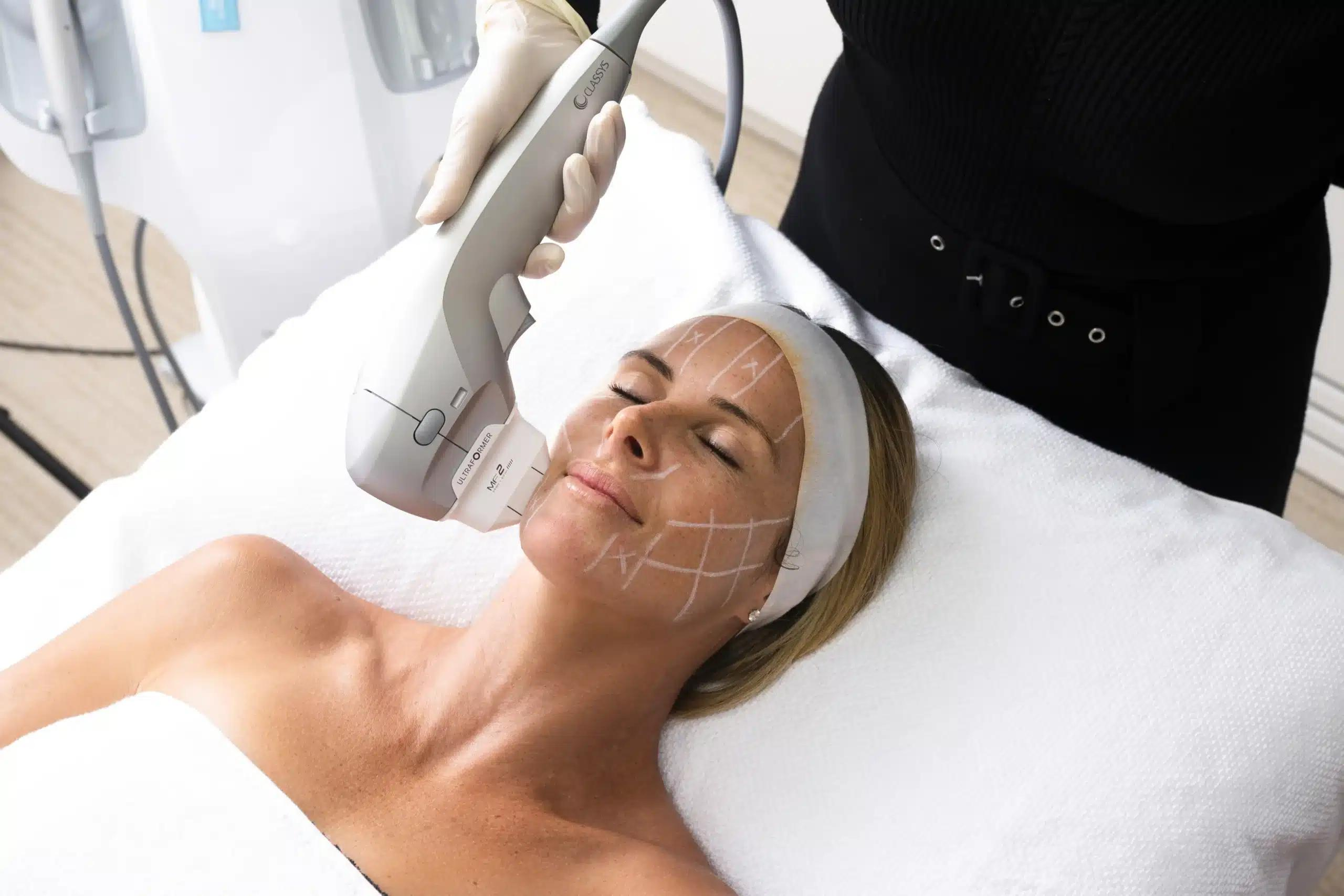
Unlike surface-based treatments, HIFU delivers focused ultrasound energy into deeper structural layers of tissue without damaging the skin's surface.
Professional HIFU systems can target multiple treatment depths, allowing practitioners to address different anatomical layers depending on the treatment area. The precisely focused energy creates tiny thermal coagulation points that stimulate collagen production while supporting gradual tissue tightening.
Common treatment areas include:
- Forehead
- Brow area
- Cheeks
- Jawline
- Double chin
- Neck
- Décolletage
Because HIFU reaches deeper support structures than many surface treatments, it is often selected for clients experiencing mild to moderate skin laxity who want noticeable lifting without surgery.
Radio Frequency (RF) Skin Tightening
Radio Frequency (RF) technology has become one of the most versatile solutions for professional skin tightening.
Instead of ultrasound energy, RF devices generate controlled electromagnetic energy that gently heats the dermis. This thermal effect stimulates collagen remodeling while improving blood circulation and cellular metabolism.
RF treatments are commonly used for:
- Facial tightening
- Neck rejuvenation
- Fine line reduction
- Skin texture improvement
- Body skin tightening after weight loss
- Postpartum skin laxity
One reason RF remains highly popular is its suitability for regular maintenance treatments. Clients often incorporate RF sessions into long-term anti-aging programs because treatments are comfortable, require minimal downtime, and complement many other aesthetic procedures.
Monopolar RF vs. Bipolar RF
Different RF technologies deliver energy in different ways, allowing practitioners to customize treatments according to client needs.
Monopolar RF
Monopolar RF penetrates deeper into the tissue, making it particularly effective for addressing skin laxity and contour improvement. The broader energy distribution allows treatment of larger areas such as the face, neck, abdomen, or thighs.
It is often selected for clients seeking more significant tightening and collagen stimulation.
Bipolar RF
Bipolar RF concentrates energy between two closely positioned electrodes, producing more superficial heating.
This makes it suitable for:
- Fine wrinkles
- Delicate facial areas
- Maintenance treatments
- Sensitive skin zones
Many modern professional systems combine multiple RF delivery modes, enabling practitioners to tailor treatment depth based on the client's skin condition and aesthetic goals.
Microcurrent Technology
Microcurrent facial lifting uses low-level electrical currents that mimic the body's natural bioelectrical signals.
Unlike heat-based technologies, microcurrent primarily focuses on facial muscle stimulation. Gentle electrical impulses help improve muscle tone while supporting circulation and lymphatic drainage.
Clients often appreciate microcurrent treatments because they are:
- Comfortable
- Relaxing
- Non-thermal
- Suitable before important events
Although results may be more subtle than deeper collagen-stimulating technologies, microcurrent is frequently incorporated into comprehensive facial rejuvenation programs to enhance facial definition and reduce temporary puffiness.
Combination Technologies Deliver Better Outcomes
One of the most significant developments in professional aesthetics is the integration of multiple technologies into a single treatment platform.
Rather than relying on one energy source, advanced systems may combine:
- Radio Frequency
- Ultrasound
- Vacuum therapy
- LED light therapy
- Cooling technology
- EMS (Electrical Muscle Stimulation)
- Microcurrent
Each technology addresses different aspects of skin aging.
For example:
- RF stimulates collagen.
- Vacuum therapy improves circulation and tissue mobility.
- LED therapy supports skin recovery.
- EMS enhances muscle engagement.
- Cooling improves comfort and helps calm the skin after treatment.
By combining complementary technologies, practitioners can develop more personalized treatment protocols that address multiple concerns during the same treatment course.
This integrated approach often leads to higher client satisfaction while allowing clinics to expand the range of services they provide.
Why Professional Equipment Outperforms Home Devices
The growing popularity of home-use beauty devices has increased public awareness of non-invasive lifting. However, professional systems remain the preferred choice for clients seeking more consistent and clinically noticeable results.
Several factors contribute to this difference.
Higher Energy Precision
Professional equipment delivers energy with greater stability and accuracy, allowing treatments to reach the intended tissue depth while maintaining safety. Home devices typically operate at lower energy levels to reduce the risk of misuse, which also limits their lifting potential.
Customized Treatment Parameters
Professional systems offer adjustable settings for energy intensity, pulse duration, treatment depth, and operating modes. Experienced practitioners can tailor these parameters to suit different skin types, treatment areas, and aging concerns, creating a more personalized treatment experience.
Advanced Safety Features
Commercial-grade devices often incorporate intelligent temperature monitoring, real-time energy control, contact sensors, and automatic protection systems. These features help ensure consistent treatment delivery and improve overall safety during procedures.
Broader Treatment Capabilities
Professional platforms are designed to address a wide range of concerns beyond facial lifting alone. Depending on the configuration, a single system may support skin tightening, wrinkle reduction, facial contouring, body rejuvenation, and collagen stimulation, making it a versatile investment for clinics and aesthetic centers.
Professional Assessment and Follow-Up
Technology is only one part of a successful treatment. Skilled practitioners evaluate skin condition, recommend appropriate protocols, monitor progress, and adjust treatment plans as needed. This level of professional care helps maximize outcomes while building client confidence and long-term satisfaction.
As client demand for natural, non-invasive rejuvenation continues to grow, combining advanced equipment with clinical expertise enables aesthetic practices to deliver reliable results and differentiate themselves in an increasingly competitive market
Advantages of Non-Invasive Lifting Treatments
The popularity of non-invasive lifting is driven by more than technological innovation. Clients increasingly value treatments that deliver visible improvements while fitting comfortably into their daily lives. For aesthetic clinics, this shift represents an opportunity to offer solutions that balance effectiveness, comfort, and long-term skin health.
Professional lifting technologies are designed to address these expectations by combining scientifically proven treatment principles with flexible treatment protocols.
Natural Results That Improve Over Time
One of the greatest advantages of non-invasive lifting is the gradual nature of the results.
Unlike procedures that produce immediate and sometimes dramatic changes, collagen-stimulating technologies work progressively. As new collagen forms and existing fibers reorganize, skin becomes firmer, smoother, and better supported.
Many clients appreciate this gradual improvement because it allows their appearance to evolve naturally. Friends and family often notice that they look healthier or more refreshed without being able to identify a specific cosmetic procedure.
For professionals, setting realistic expectations is essential. Explaining the timeline of collagen remodeling helps clients understand why optimal results often appear several weeks or months after treatment.
Comfortable Treatments with Minimal Downtime
Modern lifestyles leave little room for lengthy recovery periods.
Professionals, business owners, parents, and frequent travelers often cannot afford weeks away from work or social activities. This is one of the primary reasons non-invasive lifting has become a preferred option.
Most professional lifting procedures allow clients to return to their normal routines on the same day or shortly afterward. Mild redness or temporary warmth may occur depending on the technology used, but these effects generally resolve quickly.
For clinics, treatments with minimal downtime are easier to schedule and encourage repeat visits because clients can integrate sessions into their regular skincare routines.
Personalized Solutions for Different Stages of Aging
No two clients experience aging in exactly the same way.
A client in their early thirties may primarily want preventive collagen stimulation, while someone in their fifties may be more concerned with skin laxity, facial contour changes, and deeper wrinkles.
Professional aesthetic equipment allows practitioners to customize treatments according to factors such as:
- Age
- Skin thickness
- Degree of skin laxity
- Facial anatomy
- Treatment goals
- Lifestyle
- Previous aesthetic procedures
This flexibility enables clinics to provide highly individualized treatment plans instead of relying on a one-size-fits-all approach.
Non-Invasive Lifting vs. Surgical Facelift
Both surgical and non-surgical lifting have important roles in aesthetic medicine. The most appropriate option depends on the client's age, skin condition, expectations, and willingness to undergo surgery.
| Feature | Non-Invasive Lifting | Surgical Facelift |
|---|---|---|
| Invasiveness | No incisions | Surgical procedure |
| Downtime | Minimal | Several weeks |
| Anesthesia | Usually unnecessary | Typically required |
| Results | Gradual and natural | Immediate and more dramatic |
| Maintenance | Periodic sessions | Longer-lasting but with recovery |
| Suitable For | Mild to moderate laxity | Advanced skin sagging |
For clients with early or moderate signs of aging, professional lifting treatments often provide an effective first step before surgery is considered.
Many aesthetic practitioners also recommend non-invasive procedures as part of long-term maintenance programs, helping clients preserve skin quality and potentially delay more invasive interventions.
Non-Invasive Lifting vs. Injectable Treatments
Injectables such as wrinkle-relaxing treatments and dermal fillers remain widely used for facial rejuvenation. However, they address different concerns than energy-based lifting technologies.
Injectables primarily restore facial volume or soften expression lines, while lifting devices focus on improving skin quality, firmness, and collagen production.
Rather than competing, these approaches are often complementary.
For example:
- RF or HIFU may improve skin tightness.
- Injectable treatments may restore lost facial volume.
- Medical-grade skincare supports ongoing skin health.
- LED therapy may assist post-treatment recovery.
A comprehensive treatment plan often combines multiple modalities to achieve balanced, natural-looking results.
This integrated philosophy has become increasingly common in professional aesthetic clinics, where treatment plans are designed around individual client needs rather than a single procedure.
Professional Equipment vs. Home Beauty Devices
The consumer beauty market has introduced a wide range of home lifting devices, increasing public awareness of technologies such as RF and microcurrent.
While these products may help support daily skincare routines, they serve a different purpose than professional systems.
Treatment Performance
Professional equipment operates with higher levels of precision and consistency, allowing practitioners to target specific tissue depths while maintaining safety.
Home devices prioritize ease of use and safety for consumers, which generally means lower energy output and more gradual improvements.
Clinical Assessment
Professional treatments begin with skin analysis and consultation.
Practitioners evaluate factors including:
- Skin condition
- Elasticity
- Hydration
- Facial anatomy
- Medical history
- Treatment goals
This assessment allows protocols to be adjusted throughout the treatment course, something home devices cannot provide.
Comprehensive Treatment Experience
Professional lifting sessions often include much more than energy delivery.
Clinics may combine:
- Skin cleansing
- Exfoliation
- Targeted serums
- Energy-based treatment
- Cooling therapy
- Hydration
- Post-treatment protection
The combination of advanced technology and professional technique creates a more comprehensive aesthetic experience.
Why Clients Continue Choosing Professional Clinics
Successful lifting treatments are rarely the result of a single session.
Instead, they are usually part of a structured skincare journey.
Professional clinics offer ongoing evaluation, progress tracking, treatment adjustments, and home-care recommendations that help clients maintain results over time.
This continuous relationship builds trust and encourages repeat visits.
From a business perspective, non-invasive lifting treatments naturally support long-term client retention because they can be incorporated into maintenance programs throughout different stages of aging.
Benefits for Beauty Clinics and Aesthetic Practices
As demand for non-surgical rejuvenation continues to grow, investing in advanced lifting technology offers several advantages for professional practices.
Expanded Service Portfolio
Modern lifting platforms allow clinics to address multiple concerns using one system, including:
- Skin tightening
- Facial rejuvenation
- Jawline definition
- Neck lifting
- Wrinkle reduction
- Collagen stimulation
- Preventive anti-aging care
This versatility enables practitioners to serve a broader range of clients with varying aesthetic goals.
Higher Client Satisfaction
Clients increasingly appreciate treatments that deliver visible improvements while maintaining natural facial movement and expression.
When practitioners combine appropriate technology with realistic consultation and personalized treatment planning, satisfaction levels are often higher because expectations are aligned with achievable outcomes.
Positive treatment experiences also contribute to referrals and stronger client loyalty.
Long-Term Business Growth
Unlike treatments that are performed only once, many non-invasive lifting procedures are designed as part of an ongoing maintenance strategy.
Clients often return for:
- Scheduled maintenance sessions
- Seasonal skin rejuvenation
- Preventive collagen stimulation
- Combination anti-aging programs
- Facial and neck maintenance
This creates opportunities for clinics to develop recurring service programs while strengthening long-term client relationships.
More importantly, offering advanced lifting technologies demonstrates a clinic's commitment to innovation and evidence-based aesthetic care—qualities that increasingly influence clients when choosing where to receive treatment
Applications of Non-Invasive Lifting Treatments
One of the greatest strengths of professional non-invasive lifting technologies is their versatility. Rather than serving a single client group, these treatments can be adapted to different ages, skin conditions, and aesthetic goals.
By selecting the appropriate technology and treatment parameters, practitioners can develop personalized programs that support both preventive skincare and age-management strategies.
Clients in Their 20s and Early 30s: Prevention Before Correction
Younger clients are increasingly interested in maintaining healthy skin instead of waiting for visible aging to develop.
At this stage, collagen production has begun to decline gradually, although significant skin laxity is usually not yet present.
Professional lifting treatments for this age group often focus on:
- Preventive collagen stimulation
- Improving skin elasticity
- Maintaining facial contours
- Enhancing skin texture
- Supporting long-term skin health
Regular maintenance sessions, combined with professional skincare recommendations, can help delay the appearance of deeper wrinkles and sagging in later years.
Clients in Their Late 30s and 40s: Early Signs of Aging
This age group represents one of the largest markets for non-invasive lifting procedures.
Common concerns include:
- Mild skin laxity
- Fine lines
- Reduced jawline definition
- Early jowls
- Neck looseness
- Decreased skin firmness
Professional technologies such as RF and HIFU can help stimulate collagen remodeling while improving overall skin quality.
Many practitioners recommend combining lifting procedures with hydration treatments, LED therapy, or professional skincare products to maximize treatment outcomes.
Clients Over 50: Comprehensive Rejuvenation Programs
As collagen and elastin continue to decline, clients over 50 often benefit from more comprehensive treatment strategies.
Rather than relying on a single technology, practitioners may combine multiple modalities to address:
- Skin tightening
- Facial contour improvement
- Wrinkle reduction
- Skin texture
- Hydration
- Overall skin vitality
Although non-invasive treatments cannot fully replicate the results of surgical lifting for severe skin laxity, they remain an excellent option for clients who prefer gradual improvements with minimal recovery time or who are not suitable candidates for surgery.
Common Treatment Areas
Professional lifting systems are suitable for a wide range of facial and body applications.
Frequently treated areas include:
Face
- Forehead
- Brows
- Cheeks
- Nasolabial folds
- Jawline
- Chin
Neck
The neck is often one of the earliest areas to show visible aging. Professional lifting technologies can help improve skin firmness and support smoother neck contours.
Décolletage
Sun exposure frequently accelerates aging in the chest area. Collagen-stimulating treatments can improve skin texture and reduce the appearance of fine lines.
Body
Certain RF-based systems are also used to improve mild skin laxity on areas such as:
- Abdomen
- Upper arms
- Thighs
- Knees
This versatility allows clinics to expand treatment offerings beyond facial rejuvenation.
The Importance of Professional Consultation
Technology alone does not guarantee successful outcomes.
Every treatment should begin with a thorough professional consultation to evaluate:
- Skin quality
- Degree of laxity
- Medical history
- Lifestyle factors
- Client expectations
- Previous aesthetic treatments
Based on this assessment, practitioners can recommend the most appropriate treatment protocol, determine the number of sessions required, and explain realistic expectations regarding treatment results and maintenance.
Educating clients before treatment helps build confidence, improve compliance, and increase satisfaction throughout the treatment journey.
Future Trends in Non-Invasive Aesthetic Treatments
The demand for non-surgical facial rejuvenation is expected to continue growing as clients seek treatments that combine safety, convenience, and natural-looking outcomes.
Several industry trends are shaping the future of professional aesthetic equipment:
Multi-Technology Platforms
Manufacturers are increasingly integrating multiple energy modalities into a single system, allowing practitioners to customize treatments more efficiently and address several concerns during one treatment plan.
Intelligent Treatment Systems
Advanced software, real-time monitoring, and automated parameter adjustments are improving treatment precision and consistency while enhancing user safety.
Personalized Aesthetic Care
Data-driven skin analysis and customized treatment protocols are becoming standard practice. Professional clinics are moving away from generalized anti-aging programs toward solutions tailored to each client's unique skin characteristics and goals.
Combination Therapy
Rather than relying on one technology, clinics are increasingly combining RF, HIFU, LED therapy, microcurrent, and professional skincare products to create comprehensive rejuvenation programs that deliver more balanced and sustainable results.
These developments not only improve clinical outcomes but also strengthen the role of professional aesthetic practitioners in delivering personalized, evidence-based care.
Conclusion
The growing preference for non-invasive lifting treatments reflects a broader shift in how clients approach beauty and aging. Instead of seeking dramatic changes, many people now prioritize gradual, natural-looking improvements that support healthy skin over time.
Professional technologies such as Radio Frequency (RF), High-Intensity Focused Ultrasound (HIFU), and other advanced collagen-stimulating systems enable aesthetic practitioners to meet these expectations with treatments that are effective, comfortable, and adaptable to individual needs.
Compared with home-use devices, professional aesthetic equipment offers greater treatment precision, higher energy consistency, customizable protocols, and expert clinical guidance. These advantages allow beauty clinics, medical spas, and aesthetic centers to deliver more reliable outcomes while building long-term relationships with their clients.
As technology continues to evolve, non-invasive lifting is expected to remain a cornerstone of modern aesthetic practice. For professionals, investing in advanced lifting solutions is not simply about adopting new equipment—it is about providing personalized care, supporting long-term skin health, and meeting the changing expectations of today's beauty-conscious consumers
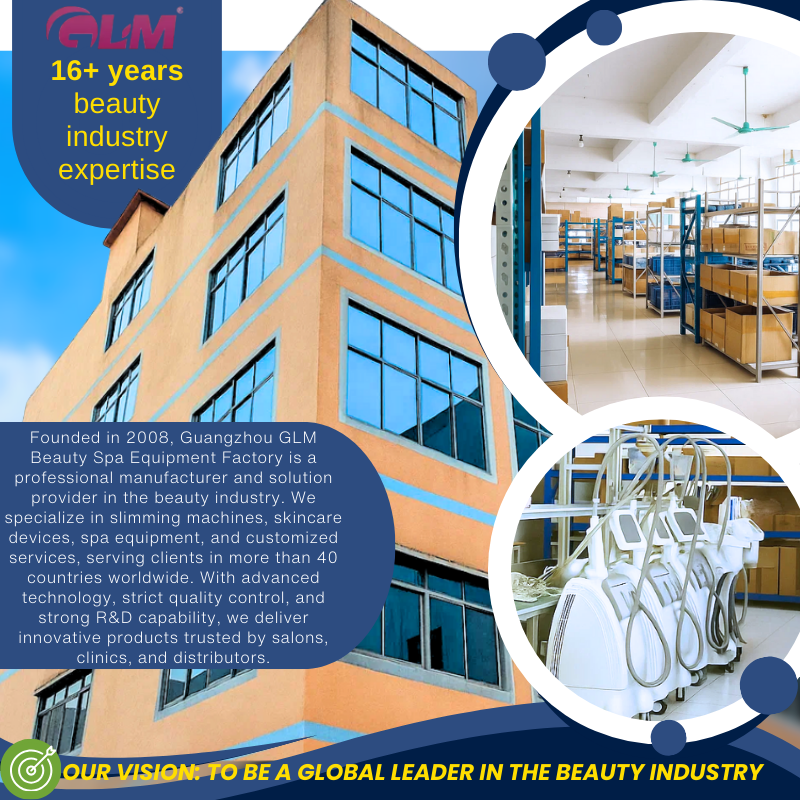
Founded in 2008, Guangzhou GLM Beauty Spa Equipment Factory specializes in research, development, manufacture and selling of beauty and slimming machines. Our production base is located in Guangzhou City, Guangdong Province, China. Since our foundation, we have introduced advanced technologies and equipment, to assure high quality and high performance of our products. With professional marketing guide and excellent after-sales service, our products have been exported to over 20 countries and regions, including Southeast Asia, the Middle East, Europe and the United States, won worldwide praises and gained a good reputation