Introduction
In the fast-moving aesthetic industry, technology upgrades are no longer simply about replacing an old machine with a newer model. For modern beauty clinics and aesthetic practices, the right equipment must support a wider range of treatment needs, improve workflow efficiency, provide greater control for professional operators, and help clinics respond to changing client expectations.
This is one reason why ND laser devices continue to attract attention from professional clinics.
The Nd laser, particularly systems based on the 1064 nm wavelength, has become an important platform in professional aesthetic and dermatological applications. Depending on the device configuration, pulse duration, wavelength, spot size, cooling system, and operating mode, Nd technology can support applications ranging from hair reduction and vascular treatments to pigmentation and tattoo-related procedures. Some systems also offer additional modes designed for skin rejuvenation.
The technology itself is not new. What continues to evolve is how the technology is delivered.
For clinics, upgrading an ND laser device is therefore less about following a trend and more about improving treatment versatility, operational efficiency, user control, and long-term business value.
Background: Why Older Laser Systems May No Longer Be Enough
Many aesthetic clinics begin with a basic laser platform that successfully serves a limited number of treatment requirements. Over time, however, client demand becomes more diverse.
A clinic may start with requests for hair reduction and later receive increasing interest in vascular concerns, pigmentation, tattoo fading, or skin rejuvenation. If the existing machine cannot support these applications, the clinic may need to purchase multiple specialized devices.
This creates several challenges.
First, additional machines require more investment and treatment-room space. Second, operators need to learn and manage different platforms. Third, maintenance, accessories, consumables, and staff training become more complicated.
An upgraded ND platform can help address some of these challenges by combining broader application potential with more sophisticated parameter control.
The goal is not necessarily to make one machine replace every other aesthetic technology. Instead, a versatile ND system can become an important part of a clinic's core treatment portfolio.
This matters particularly for professional clinics that want to maximize the value of each treatment room.
Technology and Mechanism: What Makes ND Laser Technology Valuable?
Nd stands for neodymium-doped yttrium aluminum garnet. In aesthetic laser systems, the 1064 nm wavelength is especially important because it can penetrate relatively deeply into tissue compared with shorter visible wavelengths.
The depth and absorption characteristics of 1064 nm light make it useful for targeting structures beneath the superficial epidermal layer. Long-pulsed 1064 nm Nd systems, for example, have been widely used in professional applications involving hair follicles and vascular structures. Research has also highlighted its use in aesthetic dermatology because of its deep penetration and interaction with melanin, hemoglobin, and water.
For clinics, however, wavelength alone does not determine treatment performance.
A professional device must provide operators with meaningful control over parameters such as:
- Pulse duration
- Energy or fluence
- Repetition rate
- Spot size
- Treatment mode
- Cooling
- Handpiece configuration
These parameters allow trained professionals to adapt treatment strategies to different skin characteristics, treatment areas, and clinical objectives.
1064 nm: Deep-Penetrating Performance
The 1064 nm wavelength is one of the major reasons Nd remains relevant in professional practice.
Compared with shorter wavelengths, 1064 nm generally penetrates deeper and has lower absorption by epidermal melanin. This characteristic can make long-pulsed Nd useful for certain applications where deeper targeting is desirable.
For example, long-pulsed 1064 nm systems are widely associated with hair reduction and vascular applications. Their deeper penetration also makes them useful when treating certain deeper vascular structures.
532 nm: Expanding the Treatment Range
Some professional Nd platforms incorporate frequency-doubled 532 nm output.
The shorter wavelength has different absorption and penetration characteristics and can therefore be used for selected superficial pigment and vascular targets. Q-switched Nd systems using both 1064 nm and 532 nm wavelengths have historically been used for tattoo and pigmentation-related applications.
This dual-wavelength capability is one reason multi-functional Nd systems can be attractive to clinics looking to expand their service menu.
Advantages: Why Clinics Upgrade Instead of Simply Adding Another Device
1. Broader Treatment Applications
The first major advantage is versatility.
Depending on the specific configuration and regulatory indications of the device, Nd platforms may support applications such as hair reduction, selected vascular treatments, pigmentation-related procedures, tattoo fading, and certain skin rejuvenation protocols.
The FDA documentation for an authorized 1064 nm Nd system, for example, lists applications including unwanted-hair reduction, treatment of certain vascular and pigmented lesions, wrinkles, and inflammatory acne. Exact indications vary by device and market, so clinics should always follow the manufacturer's authorized indications and local regulations.
For a clinic, this versatility can translate into a more flexible treatment menu.
2. Better Parameter Control
A newer generation device is often valuable because of improved control rather than simply higher output.
Professional operators need to make decisions based on skin type, target characteristics, treatment area, previous treatment history, and the desired clinical endpoint.
Modern systems may provide more precise adjustment of energy, pulse width, repetition rate, spot size, and cooling. This gives trained operators a more structured platform for treatment customization.
The device becomes not just a source of laser energy, but a tool for controlled treatment planning.
3. More Efficient Treatment Workflows
Treatment efficiency is another important reason clinics upgrade.
A device with multiple handpieces, larger spot sizes, faster repetition rates, intuitive interfaces, and effective cooling can help reduce unnecessary interruptions during treatment.
For a busy clinic, even small workflow improvements can matter.
If an operator spends less time changing accessories, adjusting complicated settings, or managing inefficient treatment processes, more attention can be devoted to consultation, treatment quality, and client experience.
4. Improved Client Experience
Clients increasingly compare aesthetic clinics not only by price, but also by technology, professionalism, treatment environment, and perceived safety.
A modern laser platform can contribute to that professional image.
Features such as integrated cooling, ergonomic handpieces, clear parameter displays, and consistent energy delivery can help create a more controlled treatment environment.
Of course, the presence of a modern device does not guarantee treatment results. Operator training, patient assessment, correct indications, parameter selection, and aftercare remain essential.
The machine is a professional tool. Its value depends on how effectively it is used.
5. Better Long-Term Equipment Value
A clinic should evaluate an aesthetic device not only by its purchase price but also by its potential contribution to the business.
A versatile ND system can potentially support multiple treatment categories, allowing clinics to develop different service packages around one core technology.
This may be particularly attractive for clinics that are expanding their treatment menu but want to avoid filling every treatment room with separate machines.
The key question is therefore not:
“How much does the machine cost?”
A better question is:
“How many useful treatment opportunities can this platform support over its operating life?”
Applications and Client Needs
Hair Reduction
Long-pulsed 1064 nm Nd technology is widely used for professional hair reduction. Its wavelength can penetrate deeply toward the hair follicle while reducing epidermal melanin absorption compared with shorter wavelengths.
This characteristic has made 1064 nm Nd particularly relevant when treating clients with darker skin types, although treatment parameters and safety considerations must always be determined by trained professionals.
For clinics, hair reduction can also be a high-frequency service that supports repeat appointments and long-term client relationships.
Vascular Treatments
Nd technology can also be used for selected vascular applications.
Long-pulsed 1064 nm systems can reach deeper vascular structures, while shorter wavelengths such as 532 nm may be appropriate for selected superficial targets depending on the device and indication. Recent literature continues to describe the complementary roles of 1064 nm Nd and 532 nm KTP systems for vascular treatment.
This makes wavelength flexibility particularly valuable for clinics with clients presenting different vascular concerns.
Pigmentation and Tattoo Applications
Q-switched Nd systems have a long history in tattoo and pigment treatment.
The basic principle is selective interaction between short laser pulses and the target pigment. For tattoo applications, 1064 nm is commonly used for dark pigments, while 532 nm can be useful for selected lighter-colored pigments. Clinical studies have demonstrated the importance of selecting wavelength according to the color and characteristics of the target pigment.
This is also a good example of why professional equipment requires professional assessment. Tattoo composition, depth, color, skin type, previous treatments, and treatment history can all influence the treatment strategy.
Skin Rejuvenation
Certain Nd configurations can also be incorporated into skin rejuvenation protocols.
Long-pulsed 1064 nm energy can generate controlled dermal heating, while specific fractional or picosecond configurations have been investigated for non-ablative skin rejuvenation and improvements in skin texture and pigmentation.
For clinics, this opens another opportunity: the same underlying laser platform may support different treatment concepts when equipped with appropriate modes and handpieces.
What Should Clinics Look for When Upgrading?
Not every ND laser is designed for the same purpose.
Before purchasing an upgraded platform, professional clinics should evaluate several factors.
Wavelength configuration: Does the system provide 1064 nm only, or does it also support 532 nm?
Pulse technology: Is the platform long-pulsed, Q-switched, picosecond, or designed with multiple operating modes?
Parameter flexibility: Can operators precisely adjust energy, pulse duration, frequency, and spot size?
Cooling: Is the cooling system suitable for the intended treatment workflow?
Handpieces: Are the available handpieces appropriate for the clinic's main applications?
User interface: Can trained operators quickly understand and adjust treatment parameters?
Maintenance and reliability: Is the system designed for frequent professional use, and is technical support available?
Regulatory compliance: Are the device's intended uses and certifications appropriate for the target market?
These considerations often matter more than simply choosing the machine with the highest advertised power.
Conclusion
The continued upgrade of ND laser devices reflects a broader change in the professional beauty industry.
Clinics are no longer looking only for machines that perform one treatment. They increasingly want flexible technology that can support a broader service portfolio, improve treatment-room efficiency, provide greater parameter control, and adapt to changing client needs.
Nd technology remains relevant because its wavelength options, pulse technologies, and professional applications give clinics considerable flexibility. From hair reduction and vascular treatments to selected pigmentation, tattoo, and rejuvenation applications, the platform can play an important role in a modern aesthetic clinic.
The most valuable upgrade, however, is not necessarily the newest or most powerful machine.
It is the platform that fits the clinic's treatment strategy.
For professional beauty clinics, dermatology practices, and aesthetic centers planning their next equipment investment, a well-designed ND laser system can provide more than another piece of equipment. It can become a versatile treatment platform that supports operational growth, professional service development, and long-term business value.
That is why, even as new aesthetic technologies continue to emerge, clinics continue to upgrade their ND laser devices
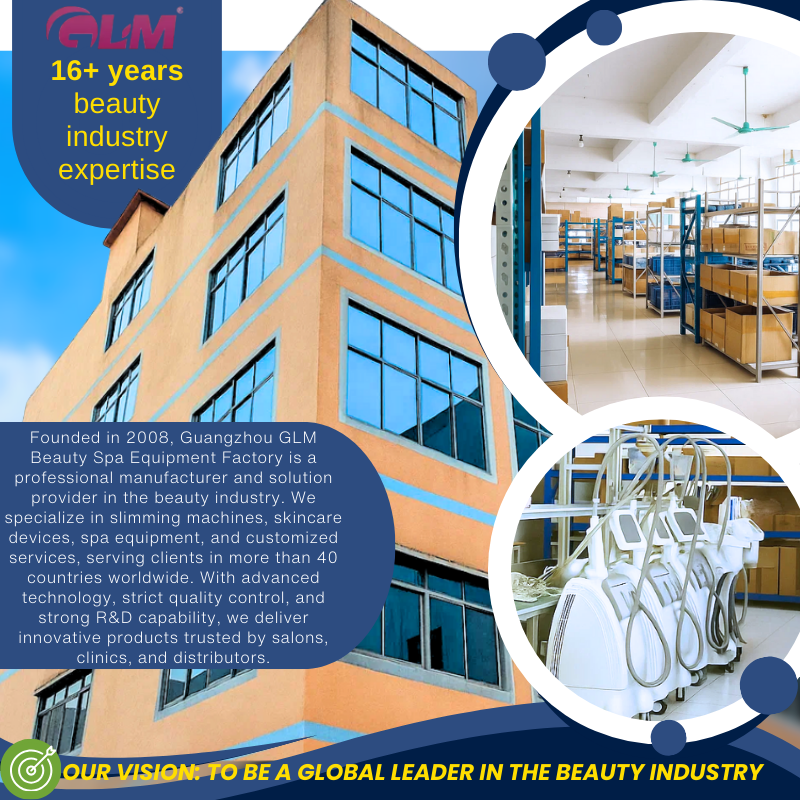
Founded in 2008, Guangzhou GLM Beauty Spa Equipment Factory specializes in research, development, manufacture and selling of beauty and slimming machines. Our production base is located in Guangzhou City, Guangdong Province, China. Since our foundation, we have introduced advanced technologies and equipment, to assure high quality and high performance of our products. With professional marketing guide and excellent after-sales service, our products have been exported to over 20 countries and regions, including Southeast Asia, the Middle East, Europe and the United States, won worldwide praises and gained a good reputation