1. Introduction
The aesthetic industry continues to expand beyond traditional facial treatments, with body contouring becoming an important part of the service portfolio offered by professional beauty salons, med spas, and aesthetic clinics. In 2026, clients are increasingly interested in non-surgical approaches to improving body contours, addressing localized areas of concern, and achieving a more defined appearance without the recovery period associated with surgery.
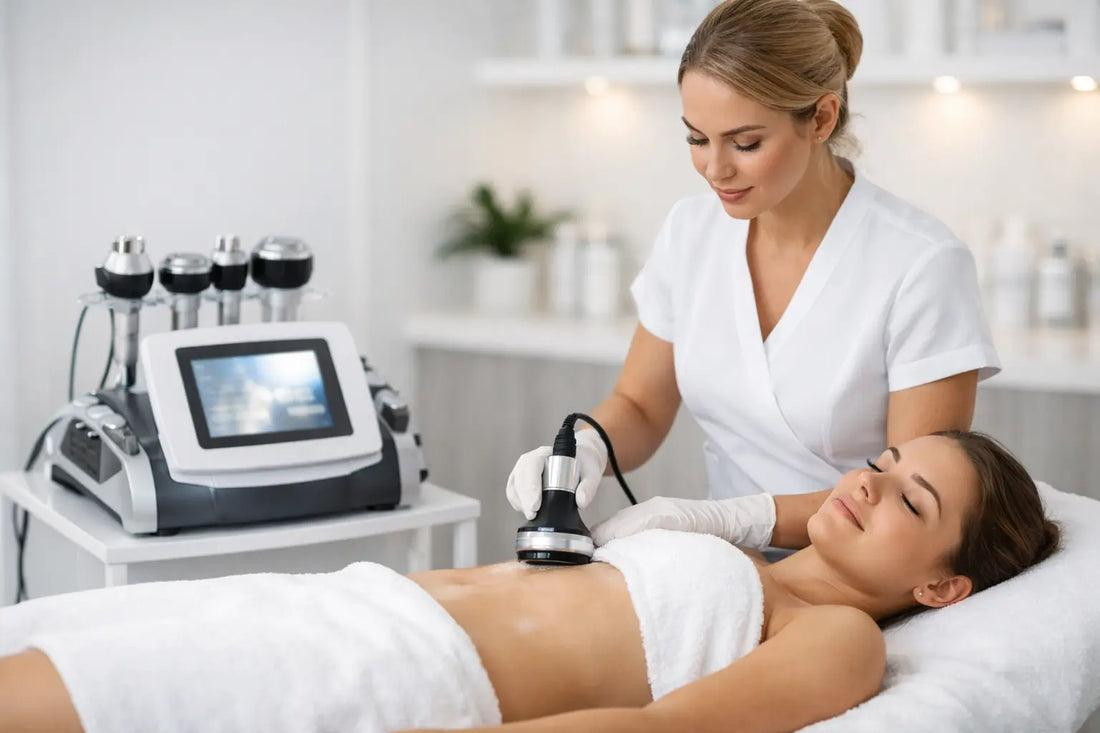
This shift has encouraged clinics to evaluate energy-based aesthetic technologies that can complement existing services. Among the available options, ultrasound cavitation has attracted attention as a non-invasive body contouring approach that uses acoustic energy to target subcutaneous tissue. For businesses looking to expand their treatment menus, a professional ultrasound cavitation machine may offer an additional service category without requiring a surgical treatment environment.
However, adding a new technology should involve more than following a trend. Clinics need to understand how the equipment works, which clients may be suitable, what results can realistically be expected, and how the service fits into their operating model.
By examining the technology, client expectations, treatment considerations, and commercial factors, clinic owners can make more informed decisions about whether ultrasound cavitation deserves a place in their 2026 service strategy.
2. Background and Problem: Why Clinics Are Exploring Non-Surgical Body Contouring
Changing Client Expectations
Many clients want to improve the appearance of specific body areas while avoiding invasive procedures. Common concerns include localized fat deposits around the abdomen, waist, hips, and thighs. These concerns do not necessarily indicate a need for overall weight loss; some clients are primarily interested in subtle changes in body shape.
At the same time, clients often look for treatments that can be incorporated into their regular schedules. Procedures that do not involve incisions and generally require limited downtime may be attractive to people balancing work, family responsibilities, and personal care.
This creates an opportunity for professional clinics to offer a broader range of aesthetic services. Rather than relying exclusively on facial treatments, businesses can explore body-focused programs designed around individual goals and appropriate technology.
Nevertheless, non-surgical does not mean risk-free, and the term body contouring should not be confused with a guarantee of weight loss. Results depend on the specific device, its intended use, the treatment protocol, client characteristics, and the quality of clinical assessment.
The Challenge of Building a Differentiated Service Menu
Competition among beauty salons and aesthetic clinics makes service differentiation increasingly important. Offering another facial treatment may not always be enough to attract clients seeking body-focused solutions.
Ultrasound cavitation provides a potential route to expanding a clinic's service menu into localized body contouring. It can be positioned as a distinct treatment option for appropriately assessed clients, particularly when supported by a structured consultation, a documented treatment plan, and consistent follow-up.
For clinic owners, the key question is not simply whether the treatment is popular. It is whether the technology is appropriate for their target clientele, whether the equipment is supported by credible evidence and training, and whether the service can be delivered safely and sustainably.
3. Technology and Mechanism: How Ultrasound Cavitation Works
Understanding Acoustic Energy
Ultrasound consists of sound waves above the range of human hearing. In aesthetic applications, ultrasound devices deliver acoustic energy through a handpiece placed against the skin, generally using a suitable coupling gel to maintain effective contact.
Ultrasound cavitation refers to the formation and behavior of microscopic bubbles in a liquid under changing acoustic pressure. Depending on the device's design and operating parameters, cavitation-related mechanical effects may contribute to the intended interaction with subcutaneous tissue.
In body contouring, the proposed objective is to influence localized adipose tissue and potentially reduce the circumference or prominence of a treated area. The exact mechanism and degree of effect depend on the device technology. Not every machine marketed as an ultrasound cavitation device produces identical acoustic conditions or has the same supporting evidence.
It is therefore important to distinguish low-frequency cavitation systems from high-intensity focused ultrasound (HIFU). Although both use acoustic energy, they differ in how energy is delivered, their treatment objectives, and their intended tissue effects. Evidence supporting one technology should not automatically be applied to another.
Why Equipment Design Matters
A professional ultrasound cavitation machine should be evaluated according to more than its appearance or the number of handpieces included. Clinics should consider the device's intended use, output specifications, operating controls, treatment-area compatibility, safety features, maintenance requirements, and available technical documentation.
Clear controls and appropriate operating guidance can help trained practitioners follow a consistent protocol. Reliable handpieces, durable construction, and accessible after-sales support may also affect how effectively a clinic incorporates the equipment into daily operations.
Where devices combine ultrasound with other technologies, such as radiofrequency, the functions and safety requirements of each modality should be assessed separately. A combination system should not be assumed to produce superior results simply because it offers more functions.
For manufacturers and equipment suppliers, transparent specifications, clear instructions, operator training, and responsive technical support are important parts of the overall product value.
What the Evidence Means for Treatment Planning
The evidence for body contouring varies considerably across ultrasound technologies and individual devices. Some studies report changes in local circumference or skinfold measurements, but the evidence base for salon-style cavitation systems remains limited and cannot support universal promises about the amount or permanence of fat reduction.
Clinics should request device-specific documentation and examine whether the evidence matches the exact model, intended use, and treatment protocol. Before-and-after photographs alone are insufficient to establish effectiveness because posture, lighting, hydration, and measurement technique can influence the appearance of results.
A responsible treatment plan should define measurable objectives, record baseline measurements under consistent conditions, and reassess outcomes before recommending additional sessions.
4. Advantages and Comparison: Where Ultrasound Cavitation Fits
A Non-Surgical Addition to the Treatment Menu
One potential advantage of ultrasound cavitation is that it can broaden a clinic's service offering without introducing an incision-based procedure. Depending on the device and applicable local regulations, treatments may be delivered in an appropriate professional setting by trained and authorized operators.
For clients who are suitable candidates, the treatment may provide an option to discuss when their goals involve localized contour changes rather than substantial weight reduction. The consultation should explain both the potential benefits and the uncertainty surrounding outcomes.
For clinics, a new body contouring service can also create opportunities for consultation-led treatment plans, progress reviews, and related services. These opportunities depend on client needs and demonstrated value, rather than automatically following from the purchase of a machine.
Professional Equipment Versus Home-Use Devices
The difference between professional and home-use equipment should be assessed through verifiable specifications, intended use, safety documentation, and operator requirements—not simply power claims or marketing language.
Professional systems may offer more structured operating controls, documented treatment protocols, service support, and training resources. These features can help clinics manage treatment consistency and equipment maintenance.
Home-use devices are designed for a different operating context and may have different output characteristics, restrictions, and levels of professional support. A device intended for consumer use should not be treated as equivalent to a professional system, and a professional machine should not be used outside its authorized setting or instructions.
For clinics, the main value of professional equipment lies in integrating suitable technology with practitioner expertise, client assessment, hygiene procedures, documentation, and ongoing service support.
Ultrasound Cavitation Compared With Other Body Contouring Technologies
Ultrasound cavitation is only one option within a wider body contouring market. Alternative technologies may include radiofrequency, cryolipolysis, focused ultrasound, and electromagnetic muscle stimulation. Their mechanisms, intended outcomes, contraindications, and evidence bases differ.
Radiofrequency uses electrical energy to heat tissue and may be used for certain skin-tightening or contouring applications, depending on the device. Cryolipolysis uses controlled cooling to target fat tissue. HIFU delivers focused acoustic energy to specific tissue depths, while electromagnetic systems are designed primarily to stimulate muscle activity.
These technologies should not be considered interchangeable. A clinic should select equipment based on its target clientele, practitioner qualifications, local regulatory requirements, treatment goals, available evidence, and budget.
A well-planned service menu may include more than one modality, but each treatment should have a clear purpose. Purchasing a multi-function device is only commercially useful when its functions are relevant to client demand and can be operated appropriately.
5. Applications and Client Needs: Building a Responsible Treatment Service
Identifying Appropriate Client Goals
Ultrasound cavitation may be considered for clients seeking modest, localized contour changes where the specific device's intended use supports the proposed treatment. It should not be presented as a treatment for obesity, a substitute for medically appropriate weight management, or a guaranteed way to achieve a particular body size.
A thorough consultation should explore the client's goals, relevant medical history, treatment area, expectations, and understanding of possible limitations. Practitioners should review the manufacturer's contraindications and refer clients for appropriate medical assessment whenever necessary.
Depending on the device, factors such as active implanted electronic devices, metal in or near the treatment area, damaged skin, impaired sensation, pregnancy, or certain medical conditions may require exclusion or individualized professional advice. The exact restrictions vary by technology and must be taken from the specific device instructions and applicable professional guidance.
A Structured Professional Workflow
A consistent workflow helps clinics manage expectations and document the service.
Step 1: Consultation and suitability assessment. Discuss the client's goals, review relevant history, explain limitations, and confirm that the treatment is appropriate for the device being used.
Step 2: Baseline documentation. Record the treatment area and, where appropriate, standardized measurements and photographs. Use consistent positioning, measurement landmarks, and documentation methods for later comparison.
Step 3: Device checks and preparation. Verify the machine's condition, handpiece integrity, coupling materials, operating settings, and manufacturer instructions. Prepare the skin and treatment area according to the approved protocol.
Step 4: Treatment by a trained operator. Maintain the contact and movement specified by the manufacturer. Monitor the client's response, avoid unauthorized settings or treatment areas, and stop if concerning symptoms occur.
Step 5: Follow-up and objective review. Reassess the treated area under comparable conditions. Discuss the observed outcome honestly and modify or discontinue the plan if the benefit is insufficient.
This approach supports a more professional client experience while helping the clinic avoid unrealistic promises and unnecessary repeat treatments.
Managing Client Expectations
Clients may encounter online advertisements promising dramatic fat loss, immediate inch reduction, or permanent results after a single session. Clinics should avoid repeating such claims unless they are supported by appropriate evidence for the exact device and protocol.
The consultation should explain that visible changes may be modest, outcomes vary, and more sessions do not guarantee a better result. Measurement variation can also create the impression of change when the difference is not caused by the treatment itself.
Clear communication is not a barrier to sales. It helps clients make informed decisions, reduces misunderstandings, and supports trust in the clinic's professional judgment.
6. Business Potential: Evaluating the Value of an Ultrasound Cavitation Machine
Look Beyond the Purchase Price
For clinic owners, the commercial value of an ultrasound cavitation machine depends on more than the initial equipment cost. Relevant factors include training, installation, maintenance, consumables, treatment time, staffing, client acquisition, and ongoing technical support.
Before purchasing, businesses should estimate realistic demand and calculate the number of paid sessions required to cover both direct and allocated operating costs. A simple contribution calculation can help:
Contribution per session = Treatment price − Variable cost per session
Variable costs may include consumables, payment processing, and other costs that increase with each appointment. Fixed costs, such as equipment depreciation, rent, and salaries, should also be considered when assessing overall profitability.
The break-even point depends on the clinic's actual pricing and cost structure. A machine that appears inexpensive may still be a poor investment if demand is weak, servicing is difficult, or clients do not experience enough value to return.
Integrating the Service Into Clinic Operations
An effective launch begins with a defined target audience and a clear treatment proposition. Clinics can educate prospective clients about how the technology works, who may be suitable, what results are uncertain, and why consultation is necessary.
Staff training should cover device operation, contraindications, client communication, documentation, hygiene, and incident response. Marketing materials should reflect the device's authorized intended use and comply with local advertising and medical-device regulations.
Clinics can monitor business performance through metrics such as consultation-to-booking rate, completed appointments, repeat bookings where appropriate, client satisfaction, treatment-related complaints, equipment utilization, and contribution per session.
These measures provide a more realistic view of commercial performance than social media engagement or machine utilization alone.
Choosing an Equipment Supplier
A dependable supplier can influence the long-term ownership experience. Before making a decision, clinics should review:
-
Technical specifications: Confirm the exact technology, operating parameters, intended use, and supported treatment areas.
-
Safety and compliance documentation: Check applicable certifications, market authorization requirements, labeling, and documentation for the destination market.
-
Training and operating instructions: Ensure that staff can access clear, device-specific guidance.
-
Warranty and maintenance: Understand coverage, service procedures, replacement-part availability, and expected maintenance costs.
-
After-sales support: Confirm how technical questions, faults, and servicing requests will be handled.
-
Evidence and claims: Ask for documentation supporting the specific device's performance claims rather than relying on general ultrasound research.
For manufacturers, supplying professional equipment means providing more than hardware. Transparent product information, realistic performance claims, usable training materials, and responsive support help clinics evaluate equipment and build a more sustainable service.
7. Conclusion
Ultrasound cavitation is attracting interest as clinics continue to explore non-surgical body contouring options in 2026. Its potential role lies in offering an additional treatment category for appropriately selected clients, supported by professional assessment, suitable equipment, and realistic expectations.
However, the technology should not be viewed as a universal solution for fat reduction or a guaranteed source of clinic revenue. Results depend on the specific device and protocol, and the evidence for different cavitation systems is not interchangeable. Safety screening, operator training, compliance, and honest communication remain essential.
For clinic owners, the most effective investment strategy is to evaluate equipment through a combination of technical suitability, evidence quality, operational requirements, supplier support, and realistic financial projections.
A professional ultrasound cavitation machine can become a useful part of a broader body contouring service menu when it meets the clinic's needs and is used responsibly. In a competitive aesthetic market, long-term business potential comes not simply from adding another machine, but from delivering a well-designed service that clients understand, value, and can make informed decisions about
Founded in 2008, Guangzhou GLM Beauty Spa Equipment Factory specializes in research, development, manufacture and selling of beauty and slimming machines. Our production base is located in Guangzhou City, Guangdong Province, China. Since our foundation, we have introduced advanced technologies and equipment, to assure high quality and high performance of our products. With professional marketing guide and excellent after-sales service, our products have been exported to over 20 countries and regions, including Southeast Asia, the Middle East, Europe and the United States, won worldwide praises and gained a good reputation