Introduction
In recent years, the global aesthetic industry has experienced a clear shift in client preferences. While surgical procedures once dominated body contouring solutions, today’s consumers are increasingly seeking treatments that deliver visible results without the risks, downtime, or psychological barriers associated with surgery. This change in mindset has directly contributed to the rapid rise in demand for non-invasive fat reduction technologies.
Beauty clinics, medical spas, and professional salons now report that body contouring treatments rank among their most requested services. Clients are no longer solely focused on dramatic weight loss; instead, they want targeted fat reduction, improved body proportions, and smoother contours that align with a natural, healthy appearance. Non-invasive fat reduction fits perfectly into this evolving demand, offering gradual, controlled improvements that feel safer and more manageable.
From a professional perspective, non-invasive fat reduction technologies represent more than a trend—they reflect a structural upgrade in how aesthetic services are delivered. Advanced devices using radiofrequency, ultrasound cavitation, vacuum therapy, infrared energy, cryotherapy, or electromagnetic stimulation allow practitioners to address stubborn fat deposits without disrupting daily life. These technologies have transformed body shaping from a medical decision into a routine aesthetic choice.
This article explores why non-invasive fat reduction is in such high demand, examining the underlying market drivers, client pain points, technological mechanisms, advantages over invasive alternatives, and how professional beauty institutions can leverage these solutions to meet modern client expectations.
Background / Problem
Despite growing awareness of health and fitness, localized fat remains a common concern for many individuals. Certain areas of the body—such as the abdomen, thighs, flanks, arms, and back—are biologically predisposed to fat accumulation. Genetics, hormones, aging, stress, and lifestyle factors all contribute to fat deposits that are resistant to diet and exercise.
Traditionally, liposuction was considered the most direct solution to remove stubborn fat. While effective, it is a surgical procedure that involves anesthesia, recovery time, potential complications, and psychological hesitation. For many clients, especially those with mild to moderate fat concerns, surgery feels excessive and intimidating.
On the other hand, purely lifestyle-based solutions often fail to deliver targeted results. Even clients who maintain a healthy weight may struggle with uneven contours or small fat pockets that affect body confidence. This gap between lifestyle management and surgical intervention created a strong demand for alternative solutions.
At the same time, modern consumers are becoming more risk-aware and time-sensitive. Many clients cannot afford extended downtime due to work, family, or social commitments. Others are simply uncomfortable with invasive procedures or permanent surgical changes. As a result, the aesthetic market needed solutions that are effective, safe, flexible, and compatible with busy lifestyles.
Non-invasive fat reduction emerged as the answer to this problem. It addresses localized fat concerns while minimizing risk, discomfort, and disruption—making body contouring accessible to a much broader audience.
Technology / Mechanism
Non-invasive fat reduction is not a single technology but a category that includes multiple advanced treatment modalities. Each works through a different mechanism, yet all share the goal of reducing fat volume without surgical intervention.
One of the most widely used technologies is ultrasound cavitation. This method uses low-frequency ultrasound waves to create microbubbles within fat cells. These bubbles cause fat cell membranes to destabilize, allowing stored fat to be released and gradually metabolized through the lymphatic system.
Radiofrequency (RF) technology focuses on controlled thermal heating of the dermis and subcutaneous fat layer. The heat increases fat metabolism while simultaneously stimulating collagen production, leading to both fat reduction and skin tightening. RF is particularly valued in professional settings because it improves skin quality while reshaping body contours.
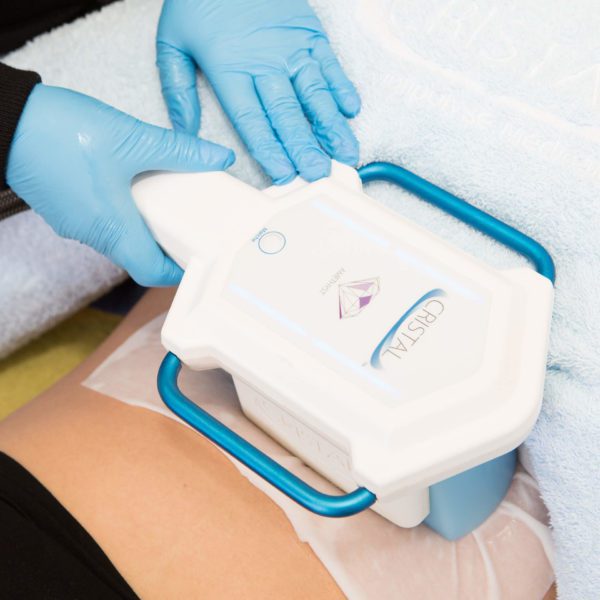
Cryolipolysis, or fat freezing, works by selectively cooling fat cells to a temperature that triggers apoptosis (programmed cell death). The body then naturally eliminates the damaged fat cells over time. This method is often chosen for well-defined fat pockets.
Infrared therapy and vacuum-assisted technologies enhance circulation and lymphatic drainage, supporting fat metabolism and reducing fluid retention. When combined with RF or cavitation, these technologies significantly improve treatment efficiency.
Electromagnetic muscle stimulation (EMS) targets muscle contractions rather than fat directly. By inducing intense muscle activity, EMS increases energy consumption and improves muscle tone, which indirectly enhances body shape and supports fat reduction results.
In professional-grade devices, these technologies are often combined into multifunctional platforms. This allows practitioners to customize treatments based on fat thickness, skin condition, and client goals—something that home-use devices cannot replicate effectively.

Advantages / Comparison
The growing popularity of non-invasive fat reduction is largely driven by its advantages compared to traditional surgical methods and basic cosmetic treatments.
Compared to liposuction, non-invasive fat reduction offers a significantly lower barrier to entry. There is no anesthesia, no incisions, and no recovery period. Clients can return to daily activities immediately, which is a decisive factor for professionals, working individuals, and parents.
From a safety perspective, non-invasive treatments carry fewer risks. Side effects are typically mild and temporary, such as redness, warmth, or slight swelling. This makes the treatments more approachable for first-time aesthetic clients and those who are risk-averse.
When compared to manual massage or topical products, non-invasive devices deliver results at a much deeper and more physiological level. Energy-based technologies interact directly with fat cells, connective tissue, and circulation systems, rather than relying on superficial effects.
Professional non-invasive devices also outperform home-use machines. Clinic-grade systems offer higher energy output, precise parameter control, and multiple treatment modes. More importantly, treatments are administered by trained professionals who can assess anatomy, adjust protocols, and ensure safety.
For beauty clinics and salons, non-invasive fat reduction technologies provide strong commercial advantages. They allow for repeat treatments, package sales, and long-term maintenance programs, creating stable revenue streams. Additionally, visible results help build client trust and encourage referrals.
Applications / Client Needs
Non-invasive fat reduction appeals to a wide range of clients, making it one of the most versatile service categories in professional beauty settings.
Clients with localized fat concerns—such as abdominal bulges, thigh fat, love handles, or upper-arm fullness—are ideal candidates. These individuals are often not overweight but feel frustrated by areas that do not respond to exercise.
Postpartum clients frequently seek non-invasive solutions to address abdominal fat and skin laxity after pregnancy. Non-invasive technologies allow gradual improvement without the physical stress of surgery.
Middle-aged clients experiencing metabolic slowdown and hormonal changes also benefit from non-invasive fat reduction. Combined with skin-tightening effects, these treatments help restore body firmness and proportion.
From a professional standpoint, clinics can design personalized treatment plans by combining multiple technologies. For example, cavitation may be used for fat breakdown, RF for tightening, and vacuum therapy for circulation and lymphatic support.
Education is a critical component of meeting client needs. Practitioners must clearly explain that non-invasive fat reduction is not instant weight loss but a progressive reshaping process. Best results typically require multiple sessions and are enhanced by hydration, movement, and healthy habits.
Maintenance treatments further extend results and strengthen long-term client relationships, positioning the clinic as a trusted body contouring partner rather than a one-time service provider.
Conclusion
The high demand for non-invasive fat reduction reflects a fundamental change in how modern consumers approach body aesthetics. Clients want effective solutions that align with their lifestyles, minimize risk, and deliver natural-looking improvements. Non-invasive technologies meet these expectations by offering targeted fat reduction without surgery, downtime, or disruption.
For professional beauty salons and clinics, non-invasive fat reduction is more than a popular service—it is a strategic investment. Advanced body contouring devices enhance treatment outcomes, expand service offerings, and support sustainable business growth.
As technology continues to evolve, non-invasive fat reduction will remain at the forefront of aesthetic innovation. Its combination of safety, flexibility, and results ensures that it will continue to shape the future of professional body contouring worldwide.
Founded in 2008, Guangzhou GLM Beauty Spa Equipment Factory specializes in research, development, manufacture and selling of beauty and slimming machines. Our production base is located in Guangzhou City, Guangdong Province, China. Since our foundation, we have introduced advanced technologies and equipment, to assure high quality and high performance of our products. With professional marketing guide and excellent after-sales service, our products have been exported to over 20 countries and regions, including Southeast Asia, the Middle East, Europe and the United States, won worldwide praises and gained a good reputation.