Introduction
The beauty market is changing, but one consumer preference has remained remarkably consistent: people want visible improvements without putting their everyday lives on hold.
From skin tightening and facial rejuvenation to body contouring and pigmentation management, non-invasive and minimally invasive aesthetic treatments have become an important part of the modern beauty business. Clients increasingly look for treatments that can fit into busy schedules, involve limited recovery, and deliver gradual, natural-looking improvements.
This shift is also changing how professional beauty salons, medspas, dermatology practices, and aesthetic clinics build their treatment menus. Instead of relying exclusively on traditional procedures, many professional operators are incorporating energy-based technologies such as radiofrequency (RF), ultrasound, laser, intense pulsed light (IPL), LED, vacuum, and other controlled-energy systems.
The scale of the trend is significant. According to the American Society of Plastic Surgeons (ASPS), more than 28.5 million minimally invasive procedures were reported in the United States in 2024, more than double the number of cosmetic surgical procedures.
So why do non-invasive treatments continue to dominate the beauty market? The answer is not simply that consumers dislike surgery. It reflects a broader change in what clients expect from professional aesthetics: personalized treatment, manageable recovery, technological precision, and results that enhance rather than dramatically change their appearance.
Background: Why Consumer Expectations Are Changing
Traditional cosmetic surgery still has an important role in aesthetic medicine. For clients seeking significant structural changes, surgical procedures can provide results that non-invasive technologies cannot replace.
However, surgery is not the preferred solution for every concern.
Many clients are dealing with earlier-stage signs of aging, mild skin laxity, uneven texture, localized body concerns, pigmentation, or a desire to maintain their appearance rather than dramatically transform it. These clients may not be ready—or may simply not have a reason—to undergo surgery.
This creates a substantial opportunity for non-invasive aesthetic treatments.
The modern client often asks questions such as:
- Can I return to work after the treatment?
- Will the result look natural?
- Can the treatment be customized for my skin or body?
- How many sessions will I need?
- Can I combine different technologies?
- Can I maintain the result with regular treatments?
These expectations have helped establish the idea of the “maintenance aesthetic” approach: instead of waiting for advanced signs of aging and then seeking a major intervention, clients can address concerns progressively through professional treatment programs.
Recent market analysis also points to continued expansion in non-invasive aesthetics. Grand View Research estimates that the global non-invasive aesthetic treatment market was valued at approximately $36 billion in 2025 and projects continued growth through 2033.
For clinics and medspas, this means non-invasive technology is not simply a consumer trend. It can become the foundation of a repeatable and diversified treatment menu.
Technology and Mechanism: How Non-Invasive Devices Work
“Non-invasive” does not mean that every technology works in the same way. Different devices use different forms of controlled energy or mechanical stimulation to interact with targeted tissue.
Understanding these mechanisms helps professional operators select equipment according to treatment goals rather than simply following market trends.
1. Radiofrequency: Controlled Thermal Energy
Radiofrequency technology delivers electromagnetic energy into tissue, producing controlled heating. Depending on the system, applicator design, frequency, energy level, and treatment parameters, RF can be used for applications such as skin tightening, texture improvement, and body contouring.
The thermal effect can influence collagen remodeling and other tissue responses. Professional systems may provide adjustable energy settings and specialized handpieces so practitioners can adapt treatment parameters to different body areas.
This is one reason RF remains a popular technology in professional aesthetics. It can be incorporated into facial rejuvenation programs as well as body-focused treatments.
2. Ultrasound: Targeted Energy Delivery
Ultrasound-based aesthetic technologies use acoustic energy to create controlled effects within targeted tissue.
Focused ultrasound systems can deliver energy to specific depths, while other ultrasound technologies may be designed for body contouring or tissue stimulation. The ability to target particular treatment areas makes ultrasound attractive for clinics looking to provide customized facial and body services.
The FDA recognizes several categories of non-invasive body-contouring technologies, including focused ultrasound, radiofrequency energy, low-level light, and mechanical systems.
3. Laser and Light-Based Technologies
Laser and light-based systems use specific wavelengths or broad-spectrum light to interact with chromophores or targeted tissue structures.
Depending on the technology and indication, professional systems may be used for hair reduction, pigmentation concerns, vascular appearance, skin resurfacing, or rejuvenation.
The key advantage is precision. Different wavelengths can interact with different targets, allowing professional operators to build treatment protocols around specific client concerns.
4. LED and Low-Level Light
LED and low-level light systems operate at lower energy levels than many thermal technologies. They are commonly incorporated into facial and skin-rejuvenation programs and may be used as standalone treatments or as part of a broader treatment protocol.
For clinics, this type of technology can also complement more intensive procedures, creating opportunities for customized treatment packages and ongoing maintenance programs.
5. Vacuum and Mechanical Technologies
Vacuum-based systems use controlled negative pressure to manipulate tissue and support mechanical treatment effects. When combined with technologies such as RF, light, rollers, or other modalities, they can become part of broader body-contouring and skin-improvement protocols.
This illustrates an important development in the professional beauty-device market: multifunctional platforms are increasingly valuable because they allow clinics to address several client needs without purchasing a completely separate system for every indication.
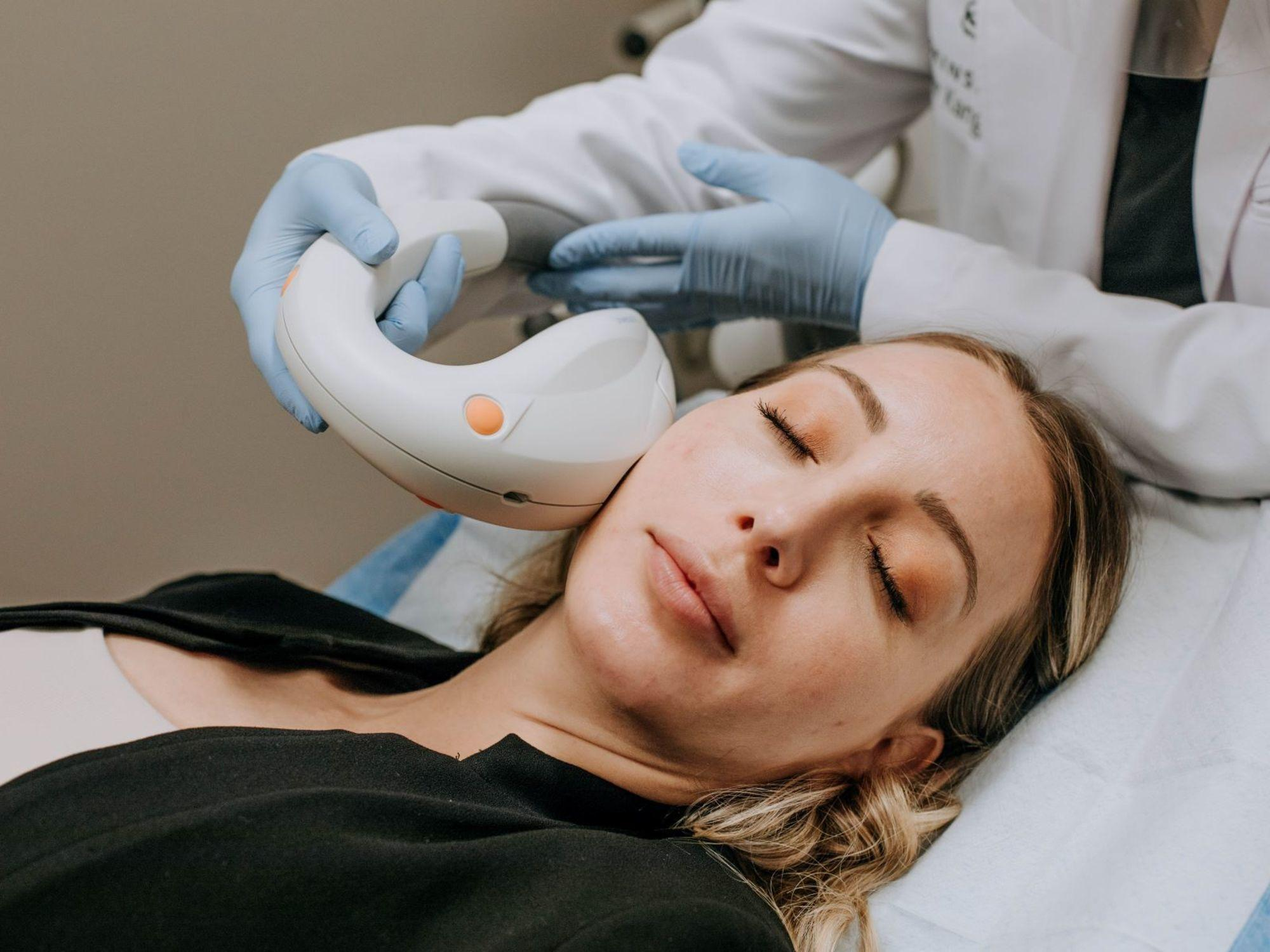
Professional energy-based treatments demonstrate how device technology is integrated into customized clinic protocols.
Advantages: Why Non-Invasive Treatments Have Strong Market Appeal
Minimal Disruption to Daily Life
One of the strongest advantages of non-invasive treatments is convenience.
Clients increasingly have demanding work schedules, social commitments, and active lifestyles. Treatments that can be completed within a relatively short appointment and require limited downtime are easier to incorporate into regular routines.
This has helped create the popularity of “lunchtime” aesthetic treatments—procedures designed around convenience and relatively short recovery periods.
For a clinic, convenience also matters commercially. A treatment that is easy for clients to schedule can potentially support more frequent appointments and structured maintenance plans.
Gradual and Natural-Looking Results
Many clients are not looking for a dramatic transformation. They want to look fresher, firmer, healthier, or more defined while still looking like themselves.
Non-invasive technologies can support this preference through gradual treatment plans. Depending on the technology and indication, practitioners may recommend a series of sessions followed by maintenance treatments.
This approach can also encourage a longer client relationship. Instead of viewing aesthetics as a one-time procedure, clients may see professional treatments as part of an ongoing skin and body maintenance strategy.
Greater Treatment Customization
Professional equipment provides another important advantage: control.
Modern systems may offer adjustable energy levels, treatment modes, applicators, pulse settings, treatment depths, or other parameters. Different handpieces can also be designed for different anatomical areas.
For professional operators, this means treatment can be structured around the individual client rather than using exactly the same protocol for everyone.
Broader Service Opportunities for Clinics
A single technology platform can sometimes support multiple services.
For example, a professional RF platform may be used for facial skin tightening and selected body treatments. A multifunctional system may combine RF, vacuum, cavitation, LED, or other modalities to create different treatment programs.
This versatility can help clinics develop tiered service menus, combination treatments, seasonal promotions, and maintenance packages.
Non-Invasive vs. Surgical: A Different Treatment Philosophy
It is important not to position non-invasive treatments as a universal replacement for surgery.
Surgical procedures and non-invasive technologies address different levels of aesthetic intervention.
Surgery may be more appropriate when a client requires significant tissue removal, repositioning, or structural correction. Non-invasive treatments are generally more relevant when the objective is to improve the appearance of skin quality, firmness, texture, contour, or localized concerns without surgical intervention.
The difference is therefore less about “which is better” and more about “which approach fits the client’s goals?”
In fact, the aesthetic market increasingly supports a continuum of treatments. Clients may combine professional skincare, energy-based devices, injectables, and surgical procedures at different stages of their aesthetic journey.
ASPS data from 2024 reinforces the scale of this treatment continuum: minimally invasive procedures represented the vast majority of reported aesthetic procedure volume, while demand for surgical procedures also remained steady.
For clinics, offering a range of technologies can therefore be more valuable than relying on a single treatment category.
Applications and Client Needs
Facial Skin Tightening and Rejuvenation
Skin laxity, fine lines, uneven texture, and loss of definition are among the most common reasons clients explore non-invasive treatments.
RF, ultrasound, laser, IPL, LED, and combination platforms can be incorporated into facial treatment programs depending on the indication and equipment design.
For example, RF-based systems are commonly positioned around controlled heating and collagen-supporting skin remodeling, while focused ultrasound technologies can deliver energy to selected tissue depths.
The professional advantage is not simply having the machine. It is having the ability to evaluate the client's condition, select appropriate parameters, and create a treatment schedule.
Neck and Jawline Treatments
The neck and jawline are increasingly important areas in aesthetic clinics because changes in these regions can strongly influence perceived facial definition.
Professional energy-based technologies may be used as part of non-surgical programs targeting skin firmness and contour appearance.
This is particularly attractive to clients who are not ready for surgical lifting but want to improve early or moderate signs of laxity.
Body Contouring
Non-invasive body contouring has become another important category.
Depending on the device, technologies such as RF, focused ultrasound, low-level light, vacuum, and mechanical systems can be incorporated into body-focused treatment protocols.
The FDA lists several non-invasive body-contouring technology categories, illustrating the breadth of available energy-based approaches.
For clinics, body treatments can also create opportunities for treatment packages because clients may be interested in addressing multiple areas over several sessions.
Personalized Maintenance Programs
Perhaps the biggest opportunity is not a single treatment but the development of a complete treatment journey.
A clinic can begin with consultation and skin assessment, select an appropriate technology, establish a treatment schedule, monitor progress, and recommend maintenance sessions.
This model transforms equipment from a standalone capital purchase into part of a broader client-service system.
Why Professional Equipment Matters
As non-invasive treatments become more popular, the quality of the equipment and operator training becomes increasingly important.
A professional aesthetic device should not be evaluated only by appearance or the number of functions listed on the specification sheet. Clinics should consider energy stability, parameter control, handpiece design, treatment consistency, user interface, safety features, maintenance requirements, training, and after-sales support.
Professional equipment also provides a level of operational control that basic consumer devices generally cannot match.
For manufacturers and distributors, this creates an important market opportunity. The future of aesthetic equipment is not simply about producing higher energy output. It is about creating systems that help professional operators deliver controlled, repeatable, and customizable treatments.
A well-designed platform can support different treatment areas, multiple client profiles, and a broader service menu while helping clinics build a consistent treatment experience.
Conclusion
Non-invasive treatments continue to dominate the beauty market because they align closely with modern consumer expectations.
Clients want effective aesthetic improvements, but they also want convenience, personalization, natural-looking results, and minimal disruption to their lifestyles. At the same time, professional clinics need technologies that are versatile, controllable, and commercially practical.
The growth of RF, ultrasound, laser, light, vacuum, and multifunctional aesthetic platforms reflects this convergence between consumer demand and professional treatment capability.
The future of aesthetics is therefore unlikely to be defined by one technology alone. Instead, successful clinics will increasingly combine accurate consultation, professional equipment, customized protocols, and ongoing maintenance into complete treatment experiences.
For aesthetic businesses, investing in the right non-invasive technology is not simply about following a market trend. It is about building a treatment menu around what modern clients increasingly value: precision, convenience, flexibility, and results that look naturally refined
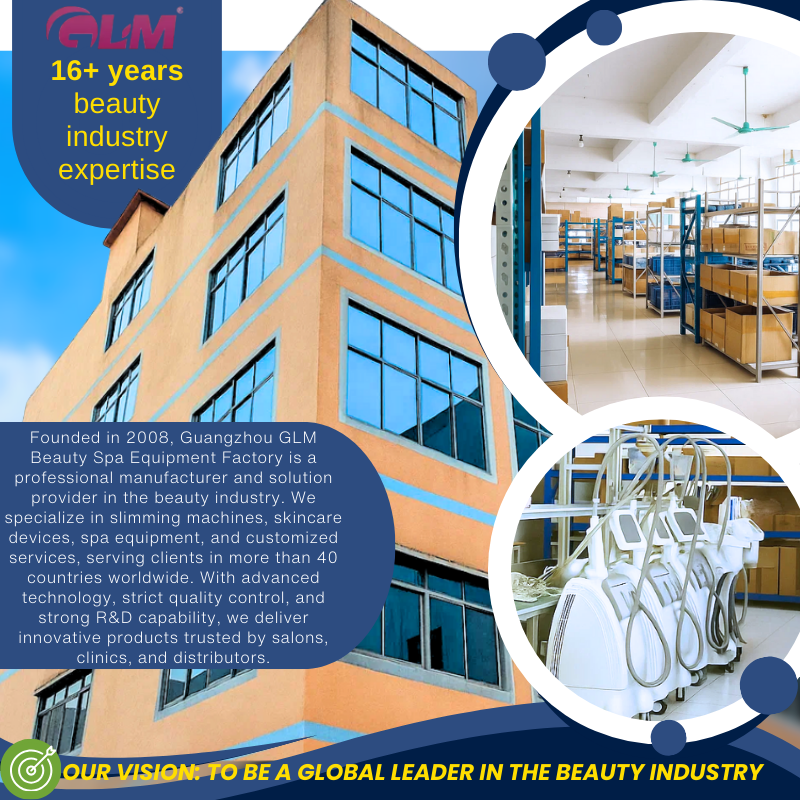
Founded in 2008, Guangzhou GLM Beauty Spa Equipment Factory specializes in research, development, manufacture and selling of beauty and slimming machines. Our production base is located in Guangzhou City, Guangdong Province, China. Since our foundation, we have introduced advanced technologies and equipment, to assure high quality and high performance of our products. With professional marketing guide and excellent after-sales service, our products have been exported to over 20 countries and regions, including Southeast Asia, the Middle East, Europe and the United States, won worldwide praises and gained a good reputation