
Introduction
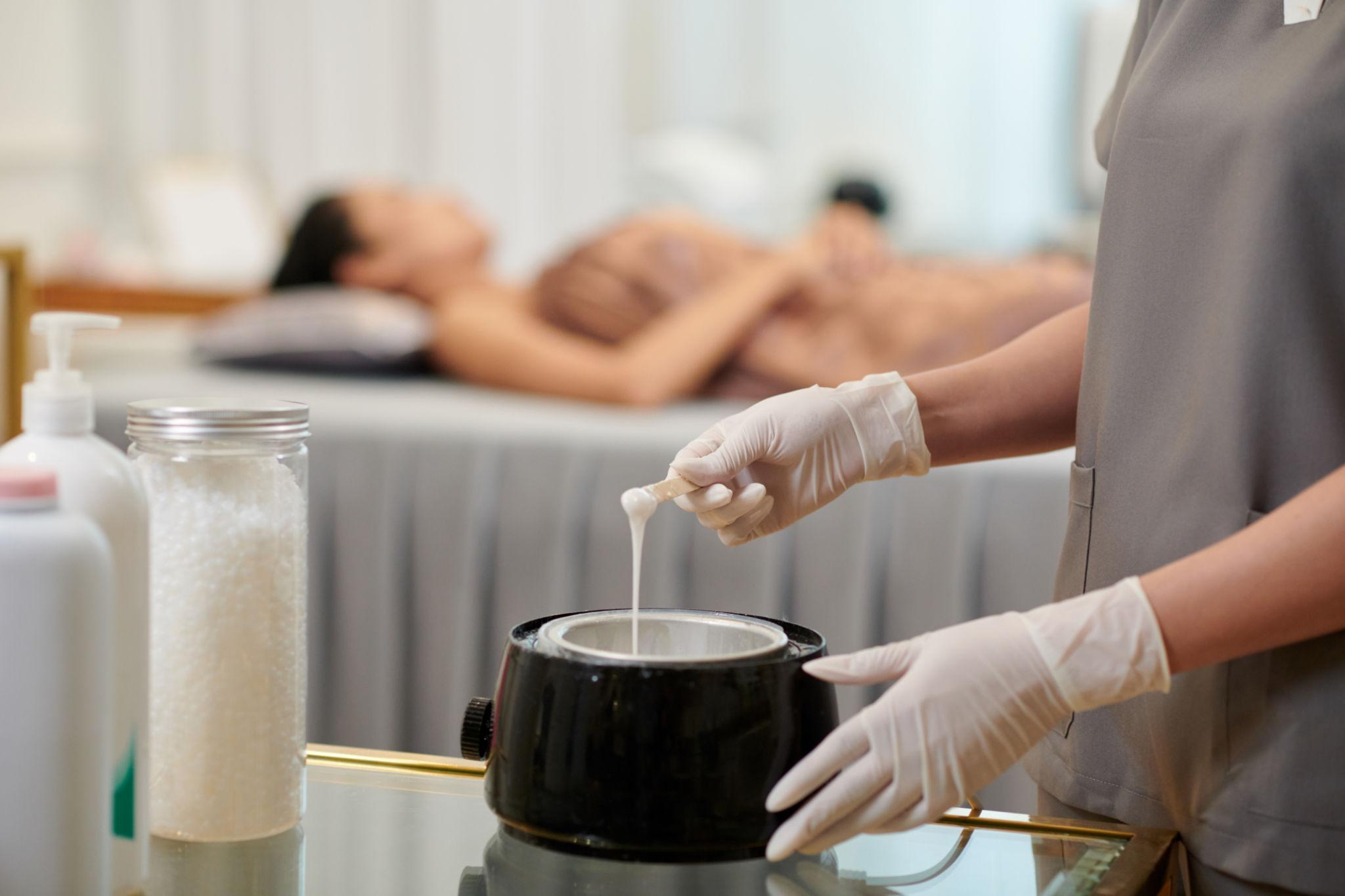
Hair removal is one of the most established services in professional beauty salons, spas, and aesthetic clinics. While the quality of the wax and the technician’s technique are both important, another factor has a direct influence on treatment consistency: how the wax is heated and maintained throughout the service.
A professional wax heating device is more than a container that melts wax. It is a treatment-support system designed to help professionals achieve a workable wax consistency, maintain controlled heat, and manage repeated treatments more efficiently. For salons handling multiple clients every day, these factors can influence application quality, treatment flow, client comfort, and overall service standards.
Professional waxing requires more than simply making wax hot. Different formulations can require different working conditions, and wax temperature affects how easily the product spreads, how it sets, how it adheres to hair, and how comfortable the treatment feels. Professional manufacturers therefore emphasize controlled and consistent heating rather than uncontrolled high temperatures.
This is where a purpose-built professional wax heater becomes particularly valuable.
Background / Problem
At first glance, heating wax may seem like a simple part of hair removal. In practice, inconsistent heating can create several challenges for professional operators.
If wax is too cool, it may become thick, difficult to spread, and less convenient to work with. The technician may need to apply more pressure or spend additional time manipulating the product. If wax becomes excessively hot, it may become too fluid and uncomfortable for the client, while increasing the risk of irritation or burns. The appropriate working temperature also depends on the specific wax formula, which means technicians should always follow the manufacturer's instructions rather than relying on a universal temperature.
The problem becomes more noticeable during busy salon schedules.
Imagine a technician performing several waxing appointments consecutively. The wax needs to be melted, maintained, stirred, applied, and adjusted throughout the working day. A basic heating method may not provide the same degree of temperature stability from the beginning of the appointment to the end.
For a professional business, inconsistency can affect more than one treatment. It can influence appointment times, product waste, application technique, client comfort, and the overall perception of the salon.
A professional heating device addresses this operational challenge by making temperature management a controlled part of the treatment workflow.
Technology / Mechanism
The basic principle of a professional wax heater is straightforward: controlled electrical heating transfers heat to the wax container, allowing the wax to melt and remain within its intended working range.
However, the quality of the heating system determines how effectively this principle works in practice.
1. Controlled Temperature Management
Temperature control is one of the most important features of a professional wax heating device.
Professional heaters may use thermostatic or digital temperature-control systems to regulate heat according to the selected setting. Some models also provide temperature displays, allowing operators to monitor the heating condition more directly. This is particularly useful when a salon works with different wax formulations or treatment areas.
The objective is not simply to reach a high temperature quickly. The objective is to reach the required melting condition and then maintain a suitable working consistency.
For example, hard wax, strip wax, and other formulations may behave differently during heating. A professional heater should therefore be selected according to the wax system being used, with the manufacturer's recommended operating temperature taking priority.
2. Even Heating
Heating consistency is another important factor.
Wax should not be considered ready simply because the surface appears melted. Uneven heating can produce differences in texture within the container, making the wax more difficult to control during application.
Some professional heaters are designed to distribute heat through the bottom and sides of the container to support more uniform melting and maintenance. This can help professionals maintain a more predictable wax consistency during extended services.
3. Heat-Up and Holding Functions
Professional waxing often involves two different stages: melting and maintaining.
During the initial stage, the wax needs enough heat to transition from a solid or semi-solid state into a workable consistency. Once it is ready, maintaining the correct condition becomes more important than continuously increasing the temperature.
Some modern heaters therefore incorporate different heating modes or temperature settings for rapid heating and temperature maintenance. These functions can be useful in professional environments where equipment needs to be prepared before appointments and kept ready between clients.
4. Practical Design
Professional equipment also needs to fit into the daily workflow of a salon.
Features such as removable inner containers, easy-to-clean surfaces, temperature displays, stable controls, suitable capacity, and durable housing can make a noticeable difference when the device is used repeatedly.
For example, removable inserts can simplify cleaning and help technicians manage wax changes more conveniently. Professional suppliers commonly emphasize easy cleaning because wax residue can accumulate around the container and working area over time.
Advantages / Comparison
Professional Wax Heating vs. Basic Home Heating
A home user may only perform occasional hair removal, so the equipment may only be used for a short period and for a limited amount of wax.
A professional salon operates differently.
A technician may perform several services in one day and work with multiple body areas, different wax formulations, and different treatment schedules. Under these conditions, the value of professional heating equipment becomes more apparent.
| Factor | Basic Home Heating | Professional Wax Heating Device |
|---|---|---|
| Temperature control | Often limited | Designed for controlled adjustment |
| Long-duration operation | Limited depending on design | Designed for repeated professional use |
| Capacity | Usually smaller | Available in multiple capacities |
| Wax compatibility | May be limited | Can support specific professional wax systems |
| Temperature monitoring | May be basic | Digital or thermostatic options available |
| Workflow | Occasional use | Designed for salon treatment routines |
| Cleaning | Basic | Often designed with removable/easy-clean components |
| Treatment consistency | More dependent on manual adjustment | Greater equipment support for consistent conditions |
This does not mean that every professional heater must be technologically complex. In fact, the best equipment is often the equipment that makes routine work simpler.
A salon may choose an analogue thermostat because it is familiar and easy to operate. Another business may prefer a digital model because it offers more precise temperature monitoring. The appropriate configuration depends on the salon's service volume, wax types, treatment areas, and operator preferences.
Supporting Client Comfort
Client comfort is an important part of professional hair removal.
Wax that is too hot can become uncomfortable, while wax that is too cool may not spread or perform as intended. A stable heating system gives the technician greater control over the treatment material, allowing technique and product formulation to work together more effectively.
Importantly, temperature control does not replace professional judgment. Technicians should still check the wax, follow the product manufacturer's instructions, assess the treatment area, and use appropriate professional procedures.
The heater is a tool that supports the technician; it does not replace the technician.
Reducing Unnecessary Product Waste
Temperature stability can also contribute to more efficient product use.
When wax repeatedly becomes too hot or too cool, technicians may need to adjust the product, wait for it to return to a workable condition, or remove wax that no longer has the desired consistency.
A controlled heating environment can reduce these interruptions and make the workflow more predictable.
For a salon with a high number of appointments, small improvements in each treatment can accumulate into meaningful operational efficiency.
Applications / Client Needs
Professional wax heating devices can support a wide range of salon and aesthetic applications.
Facial Hair Removal
Areas such as the eyebrows, upper lip, chin, and sideburns require controlled application because the treatment area is relatively small and the skin can be more sensitive.
A heater that maintains a predictable wax consistency can help technicians work with greater precision during these detailed services.
Underarm and Bikini Services
For underarm and bikini waxing, the technician often works with areas that require careful product application and controlled removal.
Hard wax systems are commonly used for certain areas because they can be formulated for application without traditional strips. The heater therefore needs to maintain the wax at the working consistency specified by the manufacturer.
Arms and Legs
Large treatment areas place greater demands on workflow efficiency.
For full-leg or full-arm services, sufficient wax capacity and reliable temperature maintenance can reduce interruptions between applications. Roller-based heating systems may also be selected for certain strip-wax workflows, while pot heaters provide flexibility for other professional wax formats.
High-Volume Salons
For busy salons, the equipment needs to support repeated treatments rather than a single appointment.
Multi-pot or multi-chamber systems can allow different wax types to be prepared simultaneously. This can be useful when a salon offers facial waxing, body waxing, and sensitive-area services within the same working schedule.
The goal is not simply to add more functions. The goal is to create a treatment station that allows the operator to move efficiently from preparation to application and cleanup.
Professional Beauty Clinics and Training Environments
Wax heating devices can also be useful in beauty academies, professional training centers, and aesthetic clinics where standardized operating procedures are important.
A controlled heating system can make it easier for instructors to demonstrate correct equipment handling, temperature management, preparation, and cleaning procedures.
For equipment manufacturers and distributors, this also creates an opportunity to develop models for different professional environments—from compact single-pot systems to larger multi-function configurations.
What Should Professionals Look For?
When selecting a professional wax heater, salon owners and distributors should consider several practical factors.
Temperature control: Can the device maintain the working condition recommended for the wax?
Heating consistency: Does the design support uniform melting and temperature maintenance?
Capacity: Is the wax volume appropriate for the salon's treatment frequency?
Heating speed: Can the device prepare wax efficiently between appointments?
Cleaning: Are the pot and surrounding components easy to clean and maintain?
Durability: Is the device designed for repeated commercial use?
Safety design: Does it include appropriate temperature-control and electrical safety features?
Wax compatibility: Is the heater suitable for the formulations the salon actually uses?
Workflow: Does the device make the technician's routine easier rather than adding unnecessary complexity?
These questions are particularly important for professional buyers purchasing equipment in volume. A device should be evaluated not only by its appearance or maximum temperature, but also by how reliably it performs during real salon operations.
Conclusion
Professional hair removal depends on more than wax and technique. The heating process is an important part of the treatment system, and the quality of the heating device can influence consistency, efficiency, application control, and client comfort.
A professional wax heating device provides controlled temperature management, practical capacity, reliable heating, and a workflow designed around repeated treatments. These advantages become especially relevant in salons and aesthetic clinics where multiple clients may receive waxing services throughout the day.
The most valuable professional equipment is not necessarily the device with the most complicated specifications. It is the equipment that helps operators deliver consistent treatments, maintain professional standards, and work efficiently.
For modern beauty businesses, a well-designed wax heater is therefore not simply a tool for melting wax. It is an important part of the professional hair removal workstation—supporting the technician from preparation to application and helping transform a basic hair removal service into a more controlled and professional treatment experience
Founded in 2008, Guangzhou GLM Beauty Spa Equipment Factory specializes in research, development, manufacture and selling of beauty and slimming machines. Our production base is located in Guangzhou City, Guangdong Province, China. Since our foundation, we have introduced advanced technologies and equipment, to assure high quality and high performance of our products. With professional marketing guide and excellent after-sales service, our products have been exported to over 20 countries and regions, including Southeast Asia, the Middle East, Europe and the United States, won worldwide praises and gained a good reputation