Introduction
Body contouring has become an increasingly important category for professional beauty salons, aesthetic clinics, med spas, and wellness centers. Clients are no longer looking only for traditional weight-loss solutions. Many are interested in improving specific areas of the body, refining their silhouette, addressing the appearance of cellulite, or tightening skin after changes in body size.
This shift creates an opportunity for professional beauty businesses: a well-designed body contouring machine can become more than another treatment device—it can become the foundation of a new service category.
Modern non-invasive body contouring technologies can include radiofrequency (RF), ultrasound, vacuum, mechanical massage, electromagnetic energy, cooling, and other energy-based approaches. Each technology works differently and is designed for different aesthetic objectives.
For a salon or clinic owner, however, the most important question is not simply, “What technology does this machine use?” It is:
“Can this machine help me create a practical, professional, and commercially attractive body contouring service?”
A versatile professional body contouring platform can help answer that question by combining treatment flexibility, professional operating controls, multiple application areas, and opportunities for repeat treatment programs.
Background: Why Body Contouring Is a Strong Business Opportunity
Traditional body transformation often requires significant lifestyle changes, while surgical procedures involve a much higher level of commitment. Non-invasive body contouring occupies a different position in the aesthetic market.
It is designed primarily for clients who want to improve the appearance of specific areas rather than pursue general weight loss.
Common treatment areas include:
- Abdomen
- Waist and love handles
- Thighs
- Buttocks
- Upper arms
- Back
- Flanks
- Areas affected by the appearance of cellulite
Radiofrequency body contouring, for example, is commonly used on the abdomen, thighs, buttocks, and arms and may help improve skin tightness, contour, and the appearance of cellulite.
This gives clinics an important advantage: body contouring can be positioned as a targeted aesthetic service rather than a one-time procedure.
A client may begin with an abdominal contouring consultation and later become interested in the waist, thighs, arms, or skin tightening. A professional machine capable of supporting different treatment objectives can therefore create opportunities for service expansion.
For a new business, that flexibility matters.
Instead of purchasing separate equipment for every concern, a multifunctional platform can potentially support several complementary treatment concepts within the same treatment room.
Technology & Mechanism: How Professional Body Contouring Machines Work
The technology inside a body contouring machine determines what type of treatment it can provide.
One major technology is radiofrequency (RF). RF energy generates controlled heating within targeted tissue. Depending on the device and treatment parameters, heating can influence the appearance of skin laxity, cellulite, and localized body contouring. The FDA describes thermal body-contouring technologies as approaches that may affect fat tissue, connective tissue, cellulite appearance, and collagen-related skin tightening.
Another commonly used technology is ultrasound or cavitation-based treatment. Certain ultrasound systems are designed to deliver energy into targeted tissue, and focused ultrasound has been investigated as a non-invasive approach for localized fat reduction.
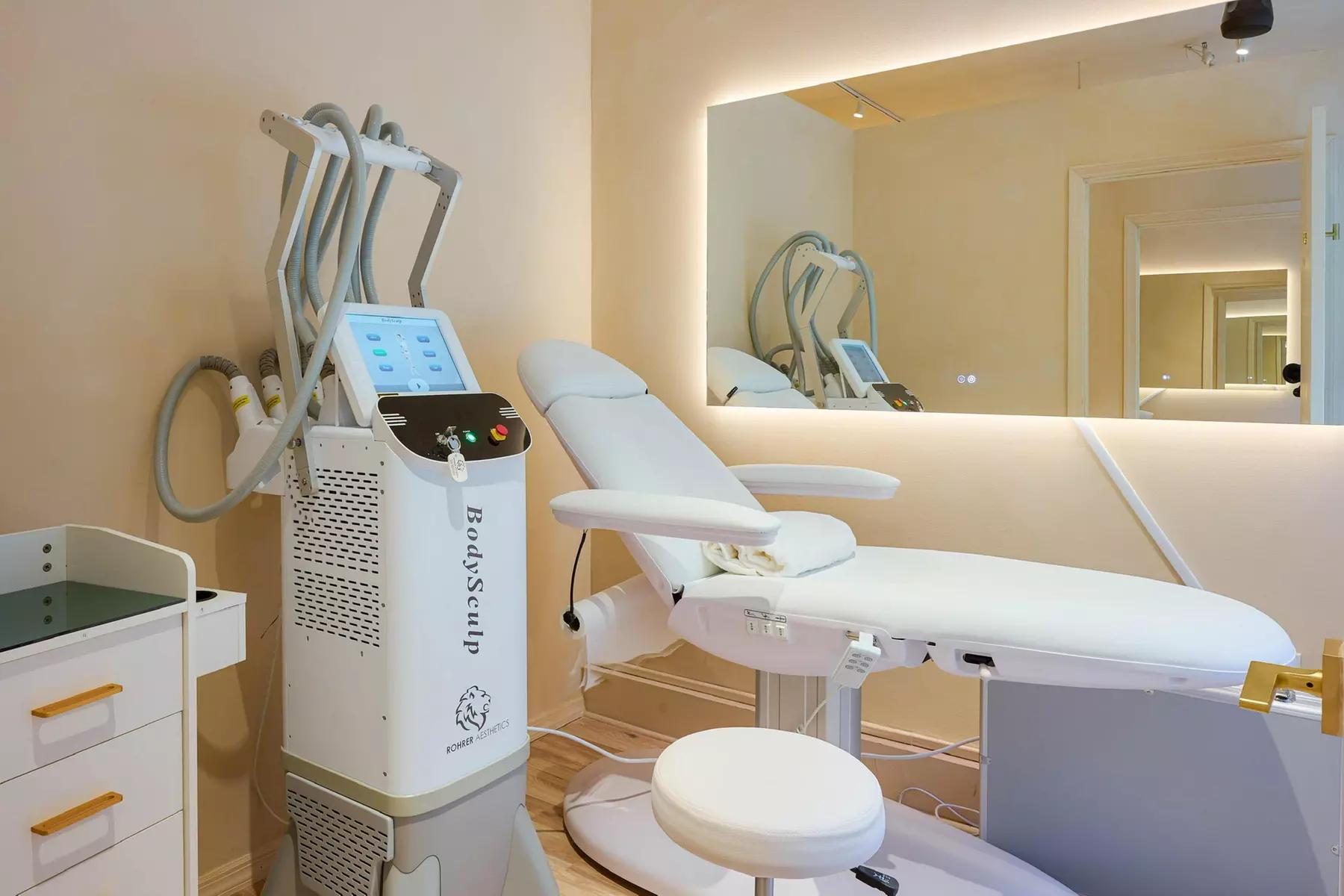
Vacuum technology can provide controlled negative pressure and mechanical manipulation of the treatment area. When vacuum is combined with RF in a professional system, the technologies can be used as complementary components of a body contouring protocol.
Recent research has specifically examined the combination of RF and vacuum for body contouring. A 2025 retrospective study involving 40 patients reported improvements in skin laxity and some degree of circumference reduction during a multi-session treatment course, while also emphasizing the importance of appropriate treatment parameters and professional application.
The key point for business owners is that technology should not be viewed as a collection of impressive specifications.
The real value comes from how those technologies are integrated into a practical treatment workflow.
A professional machine should give operators control over parameters, treatment modes, handpieces, intensity, and treatment areas so that the protocol can be adjusted according to the client and the target area
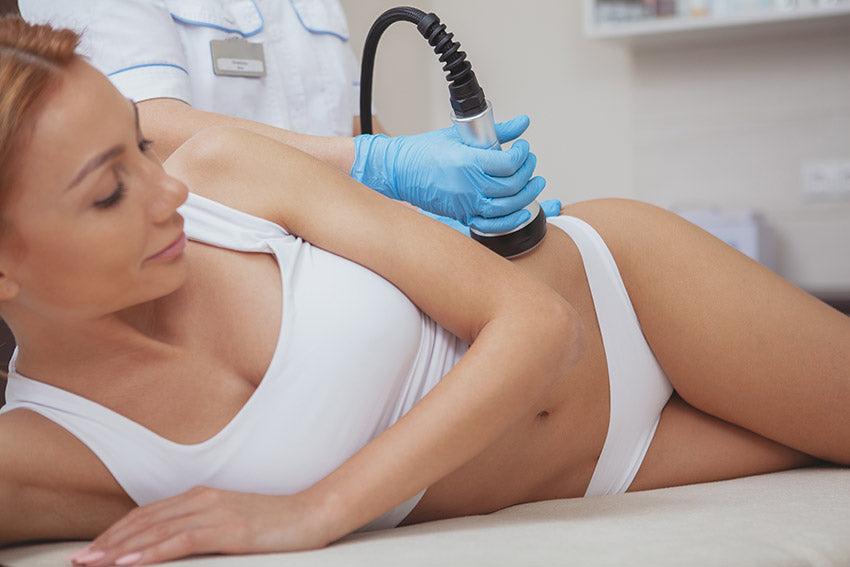
One of the strongest reasons to consider a multifunctional body contouring machine is service versatility.
A professional system may combine technologies such as:
1. RF Skin Tightening
RF heating can be used to support treatments focused on the appearance of loose or less-firm skin.
For clients concerned about the abdomen, thighs, arms, or other areas where skin laxity is visible, RF can become part of a skin-tightening protocol.
2. Vacuum-Assisted Body Treatments
Vacuum technology introduces controlled negative pressure to the treatment area. Depending on the system design and protocol, it can be incorporated into body massage, contouring, and cellulite-focused services.
3. Cavitation or Ultrasound-Based Treatments
Ultrasound-based technologies can provide another treatment option for clients concerned about localized areas of unwanted fat. However, operators should avoid presenting these treatments as substitutes for weight loss or surgical procedures.
4. Mechanical Massage or Roller Treatments
Some professional systems incorporate mechanical rollers or massage components. These can add another dimension to body treatment programs and may improve the overall treatment experience.
The commercial advantage is straightforward:
More treatment functions can create more ways to package your services.
Instead of selling one machine as one treatment, a clinic can develop several service concepts around the same equipment platform.
Advantages: Why Professional Equipment Makes Sense for a New Business
1. Lower Equipment Complexity
Starting a body contouring business does not necessarily mean filling a treatment room with multiple machines.
A multifunctional professional system can potentially consolidate several complementary treatment functions into one platform.
This can help businesses make better use of:
- Treatment-room space
- Operator time
- Equipment investment
- Training resources
- Marketing materials
The objective is not simply to purchase the machine with the largest number of functions.
The better strategy is to choose a machine whose functions correspond to treatments your target customers are actually interested in.
2. More Flexible Treatment Programs
Body contouring clients do not all have the same needs.
One client may primarily be concerned with localized fat. Another may be more concerned with skin laxity. A third may want to improve the appearance of cellulite.
A professional multifunctional machine allows operators to design treatment programs around different aesthetic concerns instead of offering exactly the same procedure to every client.
This is particularly useful for clinics that want to build personalized treatment packages.
For example:
Body Contouring Consultation → Target Assessment → Treatment Selection → Multi-Session Program → Progress Review
This creates a more professional customer journey than simply selling isolated sessions.
3. Stronger Opportunities for Repeat Business
A body contouring business is generally more sustainable when it is built around treatment programs rather than one-off appointments.
Many non-invasive body contouring services are delivered as a series of treatments, depending on the technology, client characteristics, treatment goals, and professional protocol. Research into RF and vacuum body contouring has also examined multi-session treatment courses rather than assuming that one session is sufficient.
This creates an important commercial opportunity.
Instead of:
“Book one treatment.”
A clinic can structure its service around:
“Assessment + personalized treatment plan + scheduled sessions + progress monitoring.”
That approach can increase customer engagement while making the business model easier to plan.
Professional Machine vs. Home Device
The growth of consumer beauty technology has made home-use body contouring devices increasingly visible.
However, professional equipment serves a different purpose.
A clinic-grade system is designed around operator control, treatment workflow, larger treatment areas, professional handpieces, adjustable parameters, and repeatable procedures.
Professional operators can also assess the treatment area before the procedure and determine whether a particular technology is appropriate.
This distinction is important because body contouring should not be marketed simply as “stronger energy equals better results.”
The treatment parameters need to be appropriate for the device, treatment area, client, and intended application.
Professional treatment also provides something that a home device cannot easily replicate: human assessment and personalized protocol design.
For a beauty salon or aesthetic clinic, that professional element can become part of the value proposition.
Applications: Who Is the Right Customer?
A body contouring service can appeal to a broad range of clients, but positioning is critical.
The ideal customer is not necessarily someone looking for dramatic weight loss.
Instead, your service can be positioned toward clients who want to:
- Improve the appearance of localized body areas
- Refine their body silhouette
- Improve the appearance of cellulite
- Address mild-to-moderate skin laxity
- Complement an existing fitness or wellness routine
- Maintain their preferred body shape
- Explore non-invasive aesthetic options
Professional organizations note that RF body contouring may be considered for people with mild-to-moderate skin laxity, cellulite, and localized areas of stubborn fat.
At the same time, responsible positioning matters. Body contouring should not be presented as a replacement for healthy weight management, medical treatment, or surgical procedures.
A consultation should always consider contraindications, treatment suitability, the device's intended use, and local regulatory requirements. For example, the FDA highlights specific precautions and contraindications for certain RF body-contouring technologies.
How to Turn the Machine Into a Business
Buying equipment is only the first step.
The real business opportunity comes from building a complete service around it.
Step 1: Define Your Core Treatment
Start with one clear service, such as:
Professional RF Body Contouring & Skin Tightening
Make the positioning easy for customers to understand.
Step 2: Add Complementary Treatments
Once the core service is established, introduce additional protocols around different body areas and aesthetic concerns.
For example:
- Abdomen contouring
- Waist shaping
- Thigh contouring
- Arm tightening
- Cellulite-focused treatment
- Body maintenance programs
Step 3: Create Treatment Packages
Instead of relying exclusively on single-session pricing, consider structured packages based on your local market, operating costs, treatment duration, and applicable regulations.
Step 4: Document the Treatment Journey
Professional photography, consultation records, treatment parameters, and progress documentation can help demonstrate the service process.
Marketing should focus on realistic expectations rather than exaggerated promises.
Step 5: Train Operators Properly
The machine is only as effective as the person operating it.
Staff should understand:
- How each technology works
- Handpiece selection
- Parameter adjustment
- Treatment areas
- Contraindications
- Client communication
- Cleaning and maintenance
- Appropriate treatment protocols
This is one of the clearest differences between buying equipment and building a professional service.
What Should You Look for When Choosing a Body Contouring Machine?
If you are preparing to launch a body contouring business, do not choose equipment based solely on price or the number of functions listed on a brochure.
Consider these factors instead:
Technology Combination
Does the machine offer technologies that complement each other?
Handpiece Selection
Are the handpieces appropriate for the body areas you plan to treat?
Parameter Control
Can operators adjust treatment settings according to different clients and areas?
User Interface
Is the operating system intuitive enough for daily professional use?
Treatment Efficiency
Can the machine support a practical workflow without unnecessarily increasing treatment time?
Training & Technical Support
Does the supplier provide training, operating guidance, troubleshooting, and after-sales support?
Certifications & Compliance
Are the device's certifications and intended applications suitable for your target market?
OEM & Branding Options
For clinics, distributors, and entrepreneurs building a new brand, OEM labeling, custom colors, packaging, and logo options can also be commercially valuable.
The best machine is therefore not necessarily the machine with the most functions.
It is the machine that allows you to build a reliable treatment system around your customers' needs.
Conclusion: Build the Service, Not Just the Treatment
Launching a body contouring business requires more than purchasing an aesthetic machine.
You need a combination of technology, operator training, treatment protocols, customer positioning, marketing, and service design.
A professional multifunctional body contouring machine can provide a strong foundation because it allows a clinic or beauty salon to address several common aesthetic concerns within one equipment platform.
RF can support skin-tightening applications. Vacuum technology can complement body treatments. Ultrasound-based technologies can provide additional options for localized contouring. Together, when appropriately engineered and professionally operated, these technologies can create a more versatile treatment menu.
The most important question is therefore not simply:
“Which body contouring machine should I buy?”
It is:
“Which machine can help me build a professional, flexible, and sustainable body contouring service?”
For businesses entering the aesthetic market, choosing equipment with versatile functions, professional controls, reliable support, and scalable treatment applications can turn a treatment room into a more capable business asset.
And that is ultimately why the right body contouring machine is not just equipment.
It is the starting point for building your body contouring business
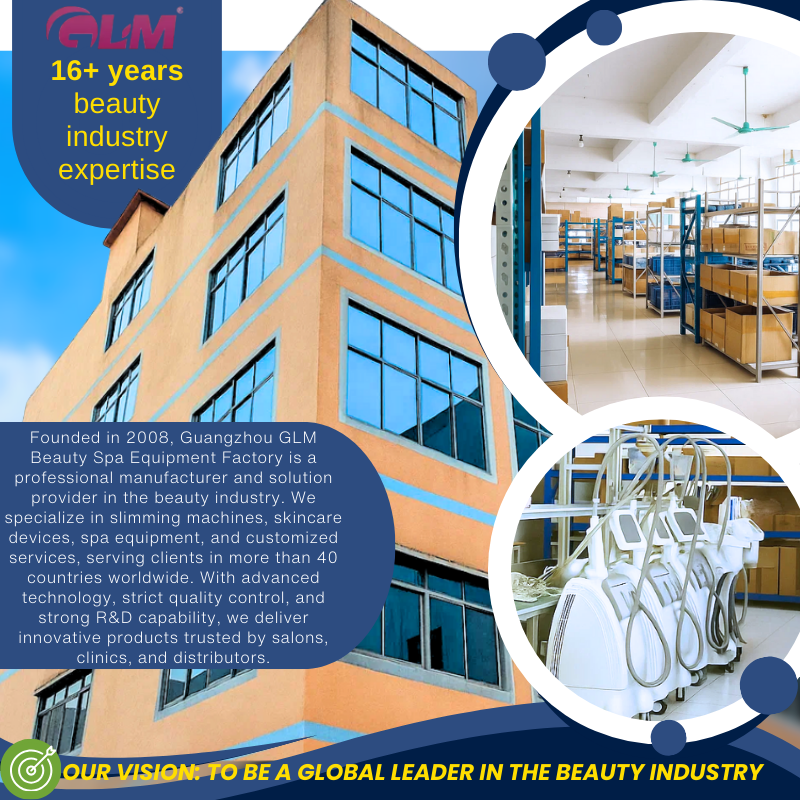
Founded in 2008, Guangzhou GLM Beauty Spa Equipment Factory specializes in research, development, manufacture and selling of beauty and slimming machines. Our production base is located in Guangzhou City, Guangdong Province, China. Since our foundation, we have introduced advanced technologies and equipment, to assure high quality and high performance of our products. With professional marketing guide and excellent after-sales service, our products have been exported to over 20 countries and regions, including Southeast Asia, the Middle East, Europe and the United States, won worldwide praises and gained a good reputation