1. Introduction
The professional aesthetics industry continues to evolve as clients seek treatments that fit their lifestyles, address visible skin and body concerns, and require less downtime than traditional surgical procedures. In 2026, energy-based aesthetic treatments remain an important category for clinics, medical spas, and professional beauty centers looking to expand their service portfolios and respond to changing client expectations.
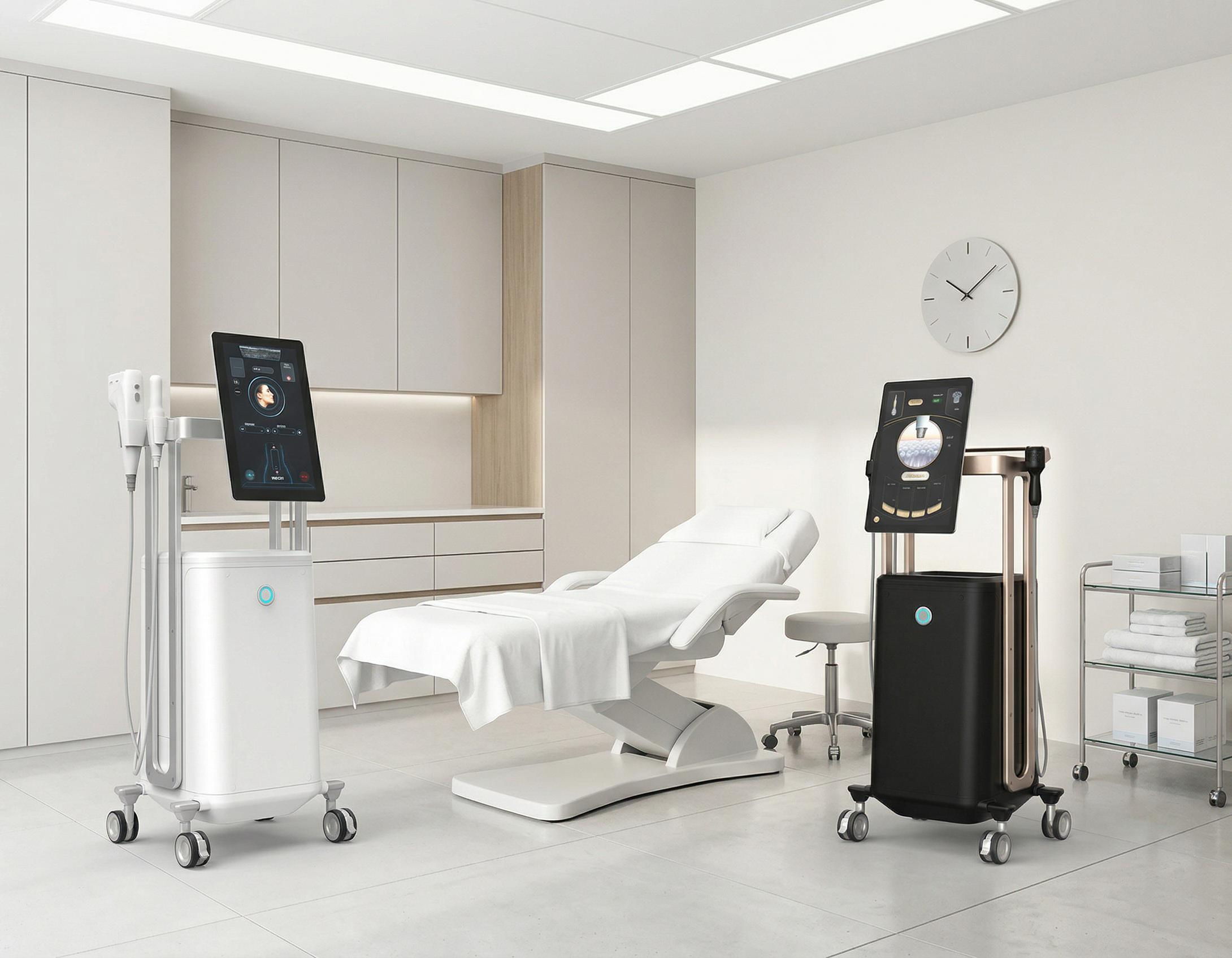
From radiofrequency (RF) skin tightening and focused ultrasound technologies to electrical muscle stimulation and selected body-contouring systems, energy-based devices can support a range of professional treatment protocols. Depending on the technology, these systems may help improve the appearance of skin laxity, support body-contouring programs, or address concerns related to skin texture and firmness.
For practice owners, the opportunity goes beyond adding another machine to the treatment room. A carefully selected device can create new service options, improve treatment customization, and help differentiate a business in a competitive local market.
However, successful integration requires more than following a trend. Clinics need to understand how different technologies work, which client concerns they are designed to address, and what equipment specifications, safety procedures, and training requirements matter in daily practice. This guide explores why energy-based treatments deserve consideration in 2026 and how professional practices can evaluate their potential value.
2. Background and Problem: Changing Client Expectations and Competitive Pressure
Today's aesthetic clients often want visible improvements without the recovery period associated with surgery. Some are concerned about mild skin laxity around the jawline, cheeks, neck, or abdomen. Others want support for body-contouring goals or are interested in treatments that complement their existing skincare and aesthetic routines.
These concerns create an opportunity for professional providers, but they also introduce challenges. A clinic that relies on a limited range of facial treatments may struggle to meet the needs of clients seeking more comprehensive services. Similarly, a beauty center offering body treatments without a clear technology-based approach may find it difficult to explain its value or distinguish its services from competing businesses.
Price competition presents another challenge. When treatments appear similar to potential clients, purchasing decisions can become heavily influenced by discounts. Clinics can reduce this pressure by building services around clear treatment objectives, appropriate technology, professional consultation, and consistent operating procedures.
Energy-based equipment can help support this strategy when it is selected for a genuine service need. Rather than purchasing a device simply because it is popular, practice owners should consider whether it fills a gap in the current menu, serves an identifiable client group, and can be operated safely and consistently by trained personnel.
It is equally important to set realistic expectations. Non-invasive treatments do not automatically deliver surgical-level outcomes, and results vary with the device, treatment parameters, client characteristics, and treatment plan. Transparent communication helps build trust and encourages clients to choose services that match their needs.
3. Technology and Mechanism: How Energy-Based Aesthetic Devices Work
Energy-based aesthetic treatments use controlled forms of energy to produce a specific biological or physical effect in targeted tissue. The appropriate technology depends on the intended treatment outcome, the body area, client suitability, and the device's validated indications.
Radiofrequency: Professional Skin Tightening
Radiofrequency devices deliver electrical energy that produces heat within targeted tissue. Depending on the system, the energy may be delivered through monopolar, bipolar, multipolar, or other electrode configurations. The resulting thermal effect can influence collagen structures and, in appropriate treatment settings, support gradual improvements in the appearance of skin firmness and laxity.
RF technology is used in professional facial and body treatments, including selected protocols for the cheeks, jawline, neck, arms, and abdomen. Treatment design depends on the device's intended use, energy delivery method, tissue characteristics, and practitioner training.
For clinics, RF systems can offer flexibility across several service categories. Nevertheless, temperature management, appropriate contact, treatment duration, and client screening are essential. Excessive or poorly controlled heating can cause burns or other adverse effects, so operators must follow the manufacturer's instructions and relevant professional standards.
Focused Ultrasound: Targeted Energy Delivery
Focused ultrasound systems concentrate acoustic energy at selected depths within tissue. Certain technologies are designed to create localized thermal effects that stimulate tissue responses associated with gradual tightening. The depth, focal characteristics, and energy delivery pattern vary by platform.
These systems may be considered for selected facial and body applications where the device's intended use supports the treatment goal. Their suitability depends on anatomical considerations, client assessment, and the operator's understanding of the technology.
Focused ultrasound should not be treated as interchangeable with every other ultrasound-based beauty device. Different platforms have different mechanisms, indications, and safety requirements. Clinics should verify the manufacturer's technical documentation and avoid promising uniform outcomes across all clients.
Electrical Muscle Stimulation: Supporting Body-Contouring Programs
Electrical muscle stimulation (EMS) uses electrical impulses to trigger muscle contractions. Certain professional systems are designed to support muscle conditioning or strengthening in specific treatment areas. Some devices combine EMS with other technologies, but the effects depend on the actual components and intended use of the equipment.
EMS is distinct from RF and ultrasound. It primarily targets neuromuscular activity rather than relying on the same mechanisms used for thermal skin treatments. As a result, clinics should explain its purpose accurately and avoid presenting muscle stimulation as equivalent to fat reduction.
For suitable clients, EMS-based services may complement broader body-contouring or muscle-conditioning programs. Screening is important, particularly for clients with implanted electronic devices or other contraindications specified by the manufacturer.
Other Energy-Based Technologies
Depending on the practice, additional technologies may include certain laser and light-based systems, cryolipolysis devices, and other specialized platforms. These technologies do not all work in the same way. Lasers and light-based devices use optical energy; cryolipolysis uses controlled cooling rather than energy-based heating; and other platforms may combine different physical mechanisms.
This distinction matters when developing a professional service menu. Clinics should assess each device according to its actual mechanism, intended application, evidence base, and regulatory status rather than grouping all aesthetic equipment under one broad claim.
4. Advantages and Comparison: Why Professional Energy-Based Equipment Matters
A Broader and More Flexible Service Menu
One of the main advantages of energy-based equipment is the potential to expand the range of services a practice can provide. An appropriate RF platform, for example, may support selected facial and body protocols, while a separate muscle-stimulation system may address a different set of client goals.
Multi-platform devices can also be useful when their individual technologies are clearly specified and their treatment functions are genuinely relevant to the clinic. They may help practices organize several service categories within a limited treatment-room footprint.
However, combining more functions into one machine does not automatically make it the better investment. A clinic should evaluate the performance of each function, treatment indications, consumable requirements, maintenance costs, and staff training needs. A well-matched single-function device may be more valuable than a complex system with features that are rarely used.
More Consistent Treatment Protocols
Professional equipment can provide defined operating parameters, adjustable settings, and treatment interfaces intended for repeated clinical or salon use. These features may help trained operators standardize workflows and document treatment settings.
Consistency does not mean that every client should receive the same treatment. Effective protocols account for the client's concerns, skin characteristics, medical history where relevant, tolerance, and response to treatment. Equipment settings should be selected within the manufacturer's specified operating range, with adjustments made by appropriately trained personnel.
Professional Devices Versus Home-Use Equipment
Home-use beauty devices can serve clients who prefer convenience and regular self-care. Professional equipment, by contrast, may offer different output capabilities, applicator designs, treatment controls, and operational workflows depending on its classification and intended use.
The distinction is not simply that professional equipment is always more powerful or that home devices cannot be useful. Instead, professional systems are selected for a defined service environment, operated by trained personnel, and supported by procedures for consultation, screening, maintenance, and adverse-event management.
Clinics should explain these differences without making unsupported claims about superiority. They should also verify that the equipment is appropriate for the facility, the operator's qualifications, and the regulations governing the intended treatment.
Greater Opportunities for Service Differentiation
A practice can distinguish itself through more than the number of devices it owns. Clear consultation, appropriate client selection, documented protocols, realistic outcome discussions, and structured follow-up all contribute to a more professional experience.
Energy-based equipment can support this approach when the technology is aligned with a specific client need. The machine is one component of the service; practitioner competence and treatment planning remain central to quality.
5. Applications and Client Needs: Building a Relevant Treatment Menu
Facial Skin Firmness and Texture
Clients concerned about mild visible laxity or changes in skin firmness may be interested in professional treatments using suitable RF or focused ultrasound systems. A consultation should identify the primary concern, assess whether the client is an appropriate candidate, and explain the expected course of treatment.
Clinics should distinguish between temporary cosmetic effects and gradual changes that may develop over time. Not every client is suitable for every modality, and some concerns may require referral to a qualified medical professional or consideration of other treatment options.
Neck, Jawline, and Selected Body Areas
The neck, jawline, upper arms, and abdomen are common areas of interest for clients exploring non-surgical aesthetic services. The available options depend on the technology, device-specific indications, anatomical factors, and local regulations.
For example, an RF protocol may be considered when its intended use supports a skin-firmness objective. A body-contouring system may serve a different purpose and should be selected based on the concern it is designed to address. Clinics should avoid treating all forms of laxity, localized fat, and muscle weakness as the same problem.
Body Contouring and Muscle Conditioning
Clients may seek help with the appearance of body contours or want to complement their exercise routines with professional muscle-conditioning services. Depending on the equipment, treatment programs may use selected energy-based or electrical technologies to address different aspects of these goals.
Providers should explain what the device is designed to do, what it cannot reliably achieve, and whether the treatment is intended to complement exercise, nutrition, or other services rather than replace them. Claims about fat loss, circumference reduction, or muscle development should be supported by appropriate evidence for the specific device and protocol.
Combining Services Through Individualized Planning
Some clinics use more than one modality within a broader aesthetic plan. For instance, a suitable skin treatment may be offered alongside a separate body-contouring service when both are appropriate for the client's goals.
Combination treatments should not be assumed to produce better outcomes simply because several technologies are used. Practitioners need to consider treatment timing, cumulative tissue effects, contraindications, and device-specific instructions. When medical assessment is required, it should be provided by a suitably qualified professional.
6. Practice Growth: Turning Technology into a Sustainable Business Service
Investing in energy-based equipment can create growth opportunities, but the financial outcome depends on more than the purchase price or the number of available functions.
Evaluate the Business Case Before Purchasing
Before choosing a device, practice owners should assess client demand, competing local services, expected treatment volume, training requirements, consumables, servicing, warranty coverage, and the equipment's useful life.
A practical investment model should include the full cost of ownership rather than the initial invoice alone. For example, if a device costs $12,000 and the practice generates $150 in contribution margin per completed treatment after variable costs, the equipment would require 80 completed treatments to cover that initial equipment cost alone. This simplified calculation excludes staffing overhead, financing, taxes, downtime, and other fixed costs, so it should not be interpreted as a complete profitability forecast.
The same analysis can help compare a multi-platform system with several individual machines. The best option is the one that fits the clinic's demand, budget, staff capabilities, and long-term service strategy.
Build Packages Around Client Goals
Instead of promoting a machine's technical specifications alone, clinics can organize services around clearly defined client concerns. Examples include a skin-firmness consultation pathway, a body-contouring assessment, or a structured series of treatments when the technology and client are suitable.
Packages should explain what is included, how progress will be reviewed, what outcomes are realistic, and when a different approach may be recommended. This makes the service easier for clients to understand and helps the practice communicate value without relying solely on discounts.
Invest in Training, Maintenance, and Documentation
Training is essential to the safe and effective use of professional aesthetic equipment. Staff should understand the technology, screening criteria, contraindications, device settings, cleaning procedures, maintenance requirements, and steps to take if an adverse event occurs.
Practices should also maintain appropriate treatment records and follow the manufacturer's service schedule. Reliable after-sales support, accessible technical documentation, and clear warranty terms are therefore important considerations when purchasing from an equipment manufacturer or distributor.
Measure Performance Beyond Revenue
Practice owners should monitor more than the number of treatments sold. Useful indicators include consultation-to-booking rate, repeat-visit rate, treatment completion, client satisfaction, complaint frequency, utilization of each device function, and contribution margin per treatment.
These measures can reveal whether the equipment is genuinely improving the business or simply adding complexity. If a feature is rarely used, the practice may need additional staff training, a clearer service offer, or a different allocation of marketing resources.
7. Conclusion
In 2026, energy-based aesthetic treatments offer professional beauty centers, clinics, and medical spas an opportunity to respond to demand for non-surgical skin-firmness services, selected body-contouring applications, and more individualized treatment plans.
Radiofrequency, focused ultrasound, and electrical muscle stimulation each have distinct mechanisms and potential applications. Their value depends on selecting the right technology for the right client, using the equipment within its intended scope, and establishing clear safety and operating procedures.
For practice owners, the strongest investment is not necessarily the machine with the most functions or the most ambitious marketing claims. It is the device that addresses a genuine service need, fits the practice's operational capabilities, and can be supported by trained staff, dependable maintenance, and a realistic business plan.
By combining appropriate equipment selection with professional consultation, evidence-informed protocols, and ongoing performance measurement, practices can build a more versatile service menu while protecting client trust. Energy-based technology is most valuable when it supports better-informed treatment decisions and sustainable practice development—not when it is treated as a shortcut to guaranteed results
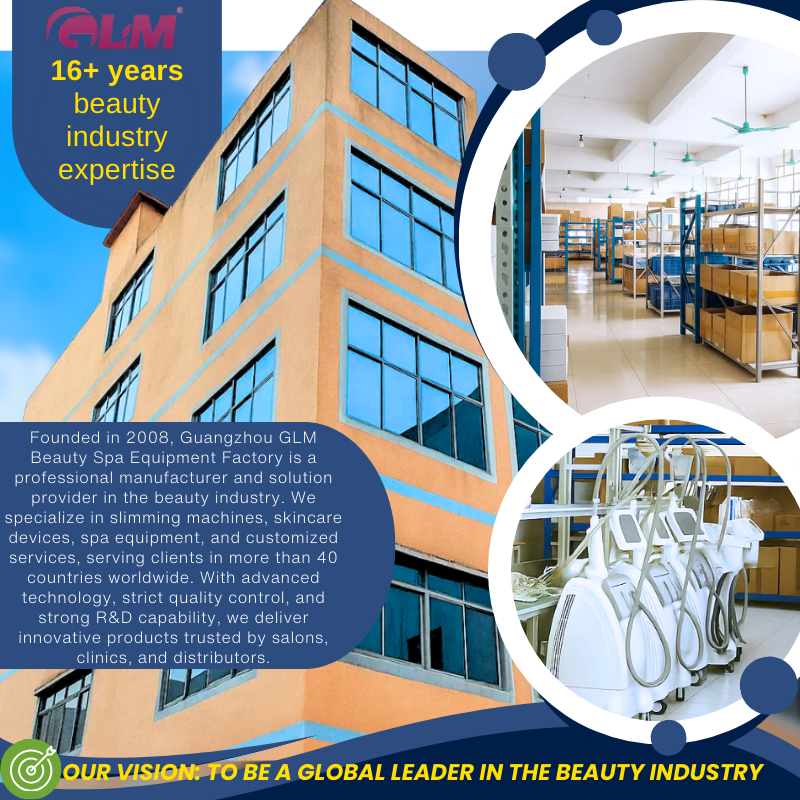
Founded in 2008, Guangzhou GLM Beauty Spa Equipment Factory specializes in research, development, manufacture and selling of beauty and slimming machines. Our production base is located in Guangzhou City, Guangdong Province, China. Since our foundation, we have introduced advanced technologies and equipment, to assure high quality and high performance of our products. With professional marketing guide and excellent after-sales service, our products have been exported to over 20 countries and regions, including Southeast Asia, the Middle East, Europe and the United States, won worldwide praises and gained a good reputation