1. Introduction
The body contouring industry is entering a new stage in 2026. Consumers are increasingly looking beyond traditional weight management and focusing on body definition, skin firmness, muscle tone, and overall body proportions. Rather than simply reducing body weight, many clients want a more sculpted appearance, particularly around the abdomen, waist, thighs, buttocks, and arms.
This shift is creating new opportunities for professional beauty salons, medical spas, and aesthetic clinics. Non-invasive body contouring treatments are becoming an important part of their service portfolios because they offer alternatives to surgical procedures for selected clients who want targeted aesthetic improvements with little or no downtime.
Among the technologies attracting attention, Radio Frequency (RF) and Electrical Muscle Stimulation (EMS) stand out for their complementary functions. RF technology uses controlled energy to heat targeted tissues, supporting collagen remodeling and improvements in skin firmness. EMS technology stimulates muscle contractions through electrical impulses, helping improve muscle activation and definition.
When incorporated into a well-designed treatment protocol, these technologies can address different aspects of body appearance. This combination reflects an important direction in 2026: moving from single-purpose treatments toward comprehensive body contouring solutions that consider fat, skin, and muscle together.
For professional operators, understanding how RF and EMS work, where they are most suitable, and how to select appropriate equipment is essential for delivering consistent treatment experiences.
2. Background and Problems: Why Is Body Contouring Changing in 2026?
Traditional body contouring programs often focused primarily on reducing localized fat deposits. However, clients are becoming more aware that fat reduction alone does not necessarily create the desired body shape.
For example, a client may have relatively little excess fat but still experience loose-looking skin around the abdomen. Another client may have achieved weight loss but lack muscle definition. Some individuals are concerned about uneven body contours, reduced skin elasticity, or the appearance of cellulite.
These concerns require different treatment considerations.
Three major aesthetic concerns are particularly relevant to modern body contouring:
Localized fat accumulation: Stubborn fat deposits around the abdomen, flanks, thighs, and upper arms may remain noticeable even when clients maintain regular exercise and a balanced lifestyle. These areas can affect body proportions and create an uneven silhouette.
Reduced muscle definition: Muscle tone plays an important role in the overall appearance of the body. Clients who spend long periods sitting, have limited physical activity, or have experienced significant weight changes may want additional support for muscle conditioning and definition.
Skin laxity and uneven texture: Changes in collagen, elastin, aging, and weight fluctuations can contribute to reduced skin firmness. After fat reduction or weight loss, skin laxity may become more noticeable, making skin-tightening treatments an important consideration.
The growing interest in combination treatments is closely related to these overlapping concerns. Instead of treating every client with the same technology, professional practitioners increasingly consider which tissue structures need attention.
Another important development is the growing demand for non-surgical aesthetic services. Clients often prefer treatments that can fit into their regular schedules and do not require extended recovery periods. This creates opportunities for clinics to develop structured treatment packages using professional RF, EMS, and other body contouring technologies.
3. Technology and Mechanism: How Do RF and EMS Work?
Understanding the different mechanisms of RF and EMS is the foundation of effective body contouring.
3.1 Radio Frequency (RF): Supporting Skin Firmness and Tissue Remodeling
Radio Frequency technology delivers electromagnetic energy into targeted tissues. As the energy encounters tissue resistance, it generates heat through the movement of charged particles.
In aesthetic applications, controlled RF heating is used to produce thermal effects within the dermal and subdermal tissues, depending on the device design, frequency, electrode configuration, and treatment parameters.
One of its key applications is supporting collagen remodeling. Collagen is an important structural protein responsible for skin strength and firmness. As the skin ages, collagen production and organization gradually change, contributing to visible laxity and wrinkles.
Controlled RF heating can stimulate biological responses associated with collagen remodeling. Over time, this may contribute to improvements in skin firmness, texture, and the appearance of mild laxity.
RF technology is also used in selected body contouring systems designed to target adipose tissue. Depending on the device's energy delivery method and validated indications, RF may contribute to changes in localized subcutaneous tissue.
For professional salons and aesthetic clinics, RF offers several practical applications:
-
Supporting the appearance of firmer skin around the abdomen and waist.
-
Improving the appearance of skin texture on the thighs and upper arms.
-
Supporting body contouring protocols for clients with mild skin laxity.
-
Providing a complementary treatment approach alongside other body sculpting technologies.
The treatment experience depends on the equipment's design, energy output, electrode configuration, temperature monitoring, and operator technique. Professional devices with adjustable parameters and appropriate safety controls help practitioners tailor treatments to different body areas.
3.2 EMS: Stimulating Muscle Contractions for Better Definition
Electrical Muscle Stimulation uses electrical impulses to activate motor nerves and trigger muscle contractions.
Under normal circumstances, the brain sends electrical signals through the nervous system to control muscle movement. EMS devices use externally delivered electrical impulses to stimulate selected muscles, producing controlled contractions.
In aesthetic body contouring, EMS is commonly used to support muscle activation and conditioning. Depending on the technology, stimulation intensity, treatment duration, and individual response, repeated muscle contractions may contribute to improvements in muscle performance and visible definition.
Some professional systems use multiple applicators to treat larger muscle groups, such as the abdominal muscles, gluteal muscles, thighs, and other selected areas.
EMS is particularly relevant for clients who want to improve the appearance of muscle tone rather than simply reduce body circumference.
Its potential applications include:
-
Supporting abdominal muscle conditioning.
-
Improving the appearance of gluteal muscle definition.
-
Supporting thigh muscle activation.
-
Complementing body sculpting programs focused on overall body proportions.
It is important to distinguish EMS from general weight-loss treatments. EMS is designed to stimulate muscle activity; it does not automatically produce substantial weight loss or replace regular physical exercise.
3.3 Why Combine RF and EMS?
The most interesting aspect of RF and EMS is that they address different tissue targets.
RF primarily focuses on controlled tissue heating, with applications in skin firmness and selected body contouring protocols. EMS focuses on muscle activation through electrical stimulation.
When these technologies are combined in an appropriately designed device or coordinated treatment program, practitioners can address several aesthetic concerns within a broader treatment plan.
For example, a client concerned about abdominal appearance may benefit from a program that considers skin laxity, localized fat, and abdominal muscle tone separately.
A 2024 prospective multicenter study published in Aesthetic Surgery Journal Open Forum evaluated combined bipolar RF and EMS treatments. Among 44 participants who completed three treatment sessions, researchers reported measurable changes in abdominal soft-tissue thickness and waist circumference at three-month follow-up. The findings are encouraging, although the study's size and design mean that results should not be generalized to every device or client.
This research illustrates why combination technologies have become an important topic in professional body contouring.
4. Advantages and Comparison: Professional RF and EMS vs. Single-Technology Treatments
As the body contouring market becomes more competitive, professional salons need equipment that can support different client needs while maintaining efficient treatment workflows.
4.1 More Comprehensive Treatment Options
Single-technology devices generally focus on a specific treatment objective.
An RF-only device may be appropriate for clients primarily concerned with skin firmness, while an EMS-only system may be more suitable for muscle stimulation and conditioning.
A combined RF and EMS platform can offer a broader range of treatment possibilities, provided both technologies are independently validated for the intended applications.
This versatility allows practitioners to develop more individualized treatment plans instead of relying on a single treatment approach for every client.
4.2 Improved Treatment Efficiency
Professional combination devices may integrate multiple applicators, adjustable energy settings, and treatment modes into one platform.
This can simplify equipment management and allow clinics to organize treatment sessions more efficiently.
For example, a salon offering abdominal sculpting, gluteal conditioning, and thigh treatments may benefit from equipment that supports different treatment areas without requiring several separate machines.
However, treatment efficiency should never come at the expense of safety. Each technology must be used according to its intended application and the manufacturer's treatment protocol.
4.3 More Personalized Treatment Parameters
Different clients have different body structures, skin conditions, muscle characteristics, and aesthetic expectations.
Professional RF and EMS equipment may provide adjustable settings for energy intensity, stimulation level, treatment duration, and applicator configuration.
These features allow trained practitioners to select suitable parameters based on individual assessment rather than applying identical settings to every client.
Temperature monitoring, automatic shutdown protection, contact detection, and appropriate output controls are also important considerations when evaluating professional equipment.
4.4 Professional Equipment vs. Home-Use Devices
Home-use body contouring products have become more visible in recent years. However, they are not necessarily equivalent to professional salon or clinic equipment.
Professional systems are generally designed around more structured treatment workflows, application-specific parameters, and operator supervision.
Depending on the device category, they may also offer:
-
More flexible treatment configurations.
-
Multiple applicators for different body areas.
-
More detailed parameter adjustments.
-
Integrated monitoring and safety functions.
-
Technical training and after-sales support.
-
Commercial-use designs for repeated treatment sessions.
Home-use products may be suitable for limited personal applications, but they should not be assumed to provide the same energy delivery, treatment capabilities, or clinical outcomes as professional systems.
For clinics investing in long-term service development, equipment reliability, operator training, maintenance, and manufacturer support are just as important as the technology itself.
5. Applications and Client Needs: Where Can RF and EMS Be Used?
The practical value of RF and EMS becomes clearer when their applications are considered by treatment area.
5.1 Abdominal and Waist Contouring
The abdomen is one of the most popular areas for non-invasive body contouring.
Clients may be concerned about localized fat, reduced abdominal muscle definition, and loose-looking skin. RF-based treatments may support skin firmness, while EMS can stimulate abdominal muscle contractions.
A combination program can therefore address multiple aspects of abdominal appearance.
Professional operators should assess the client's skin condition, fat distribution, abdominal muscle status, and medical history before recommending a treatment plan.
5.2 Thigh Sculpting
The thighs are another common treatment area because clients may notice uneven contours, localized fat deposits, and changes in skin texture.
RF technology may be incorporated into protocols intended to improve skin firmness and the appearance of uneven texture. EMS may be used to stimulate selected thigh muscle groups.
The treatment approach should be adjusted according to whether the primary concern is skin laxity, muscle conditioning, or localized adipose tissue.
5.3 Buttock Conditioning and Body Definition
The appearance of the buttocks is influenced by muscle volume, skin condition, fat distribution, and individual anatomy.
EMS-based treatments may support gluteal muscle activation and conditioning. RF may be considered when skin firmness is also a concern and the device is indicated for that application.
For professional beauty businesses, these services can complement existing body sculpting programs and help create customized treatment packages.
5.4 Upper Arms and Other Localized Areas
Changes in skin elasticity and localized fat accumulation can affect the appearance of the upper arms.
RF may be used in suitable protocols to support skin firmness, while muscle stimulation can target selected muscle groups.
The arms, flanks, and other localized areas may also be included in broader body contouring programs when the device is designed and approved for those applications.
5.5 Post-Weight-Loss Body Contouring
Another important client group in 2026 consists of individuals who have experienced significant weight loss.
After weight reduction, some clients may have residual localized fat, loose skin, and reduced muscle definition.
These concerns do not necessarily respond to the same treatment.
RF may be considered for selected skin-firmness concerns, while EMS may provide muscle-conditioning support. Clients with substantial excess skin may require medical evaluation and may not be suitable candidates for non-invasive equipment alone.
This is an area where professional consultation and realistic treatment expectations are particularly important.
6. How Professional Salons Can Build Better Body Contouring Programs
Selecting the right technology is only one part of a successful body contouring service. Professional operators also need a structured approach to consultation, treatment planning, and follow-up.
Step 1: Conduct an individual assessment.
Discuss the client's concerns, treatment goals, relevant medical history, and expectations. Evaluate the treatment area and identify whether the primary concern involves localized fat, skin laxity, muscle tone, or a combination.
Step 2: Select the appropriate technology.
Choose RF, EMS, or a combination approach according to the device's intended use and the client's suitability. Not every client needs multiple technologies.
Step 3: Establish a personalized treatment protocol.
Follow the manufacturer's instructions and applicable professional guidelines. Treatment intensity, duration, and frequency should be determined by the device specifications and individual assessment.
Step 4: Track progress consistently.
Use standardized photographs, measurements, and client feedback where appropriate. Explain that visible changes may develop gradually and that individual results vary.
Step 5: Provide realistic aftercare guidance.
Encourage clients to maintain appropriate physical activity, balanced nutrition, and healthy lifestyle habits. Non-invasive body contouring treatments should complement, rather than replace, long-term health and fitness practices.
Before treatment, practitioners should screen for relevant contraindications. These may include certain implanted electronic devices, pregnancy, active skin conditions in the treatment area, or other conditions specified by the manufacturer. EMS and RF have different safety considerations, so their contraindications should be assessed separately.
7. Conclusion: The Future of Professional Body Contouring in 2026
Body contouring in 2026 is increasingly focused on comprehensive aesthetic improvement rather than a single measurement or treatment objective.
Clients want more than localized fat reduction. They are also interested in firmer-looking skin, improved muscle definition, and balanced body proportions.
RF and EMS technologies offer complementary approaches to these goals. RF supports controlled tissue heating and skin-firmness applications, while EMS focuses on muscle stimulation and conditioning. When combined appropriately, they can expand the treatment possibilities available to professional beauty salons and aesthetic clinics.
For equipment manufacturers and beauty businesses, the opportunity lies in providing reliable, versatile, and professionally designed solutions that respond to changing client expectations.
Ultimately, successful body contouring is not simply about choosing the most advanced machine. It requires the right technology, suitable candidates, trained operators, personalized protocols, and realistic expectations.
As non-invasive aesthetic treatments continue to evolve, professional RF and EMS systems are positioned to remain important tools in the development of modern body contouring services
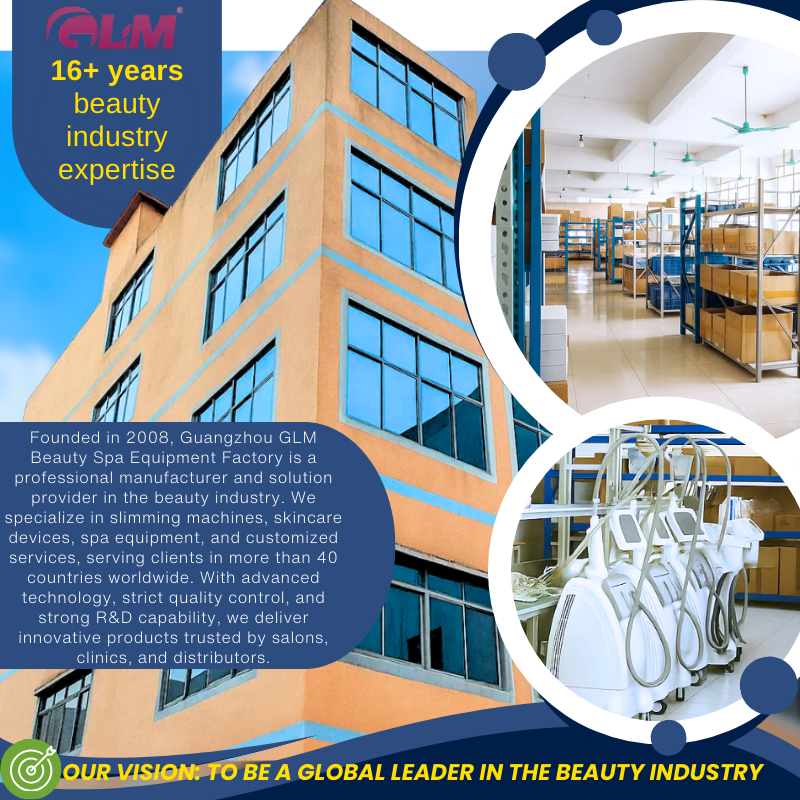
Founded in 2008, Guangzhou GLM Beauty Spa Equipment Factory specializes in research, development, manufacture and selling of beauty and slimming machines. Our production base is located in Guangzhou City, Guangdong Province, China. Since our foundation, we have introduced advanced technologies and equipment, to assure high quality and high performance of our products. With professional marketing guide and excellent after-sales service, our products have been exported to over 20 countries and regions, including Southeast Asia, the Middle East, Europe and the United States, won worldwide praises and gained a good reputation