
1. Introduction
The professional skincare industry is evolving rapidly in 2026. Clients are becoming more knowledgeable about aesthetic treatments, non-invasive skin rejuvenation, and advanced facial technologies. They are no longer looking for basic cleansing and moisturizing alone. Instead, they expect professional treatments that address specific skin concerns, deliver consistent experiences, and combine advanced technology with personalized skincare solutions.
For estheticians, beauty salons, and medical spas, investing in professional skincare equipment is becoming an important part of business development. Modern facial devices allow practitioners to expand their treatment menus, improve service efficiency, and provide customized solutions for different skin conditions.
Among the most widely used technologies are LED light therapy, microcurrent, radiofrequency (RF), ultrasonic skin scrubbers, hydrodermabrasion systems, oxygen infusion devices, and digital skin analysis equipment. Each technology serves a different purpose, from deep cleansing and hydration to skin tightening and appearance-focused rejuvenation.
However, choosing the right equipment requires more than following industry trends. Professionals need to understand how each technology works, which client concerns it addresses, and how it can be incorporated into a structured treatment protocol.
This guide explores seven essential professional skincare tools in 2026 and explains how they can support modern esthetic practices.
2. Background: Why Professional Skincare Equipment Matters in 2026
The demand for non-invasive facial treatments continues to influence the beauty industry. Many clients prefer treatments that fit into their regular skincare routines without requiring significant downtime. At the same time, professional skincare providers face increasing pressure to differentiate their services and offer more personalized treatment experiences.
Traditional facials remain valuable, but equipment-assisted treatments can introduce additional treatment options and improve the consistency of certain procedures.
For example, a conventional facial may focus on cleansing, exfoliation, and moisturizing. A technology-assisted facial can combine hydrodermabrasion, ultrasonic exfoliation, oxygen infusion, and LED therapy within a carefully planned session.
This approach allows estheticians to create different treatment levels according to skin conditions, client expectations, and available appointment time.
Another important development is the growing interest in combination treatments. Rather than relying on a single device, professional clinics increasingly organize treatment programs around complementary technologies.
The key is not simply having more machines. It is understanding how each device contributes to the overall treatment objective.
3. Seven Essential Professional Skincare Tools
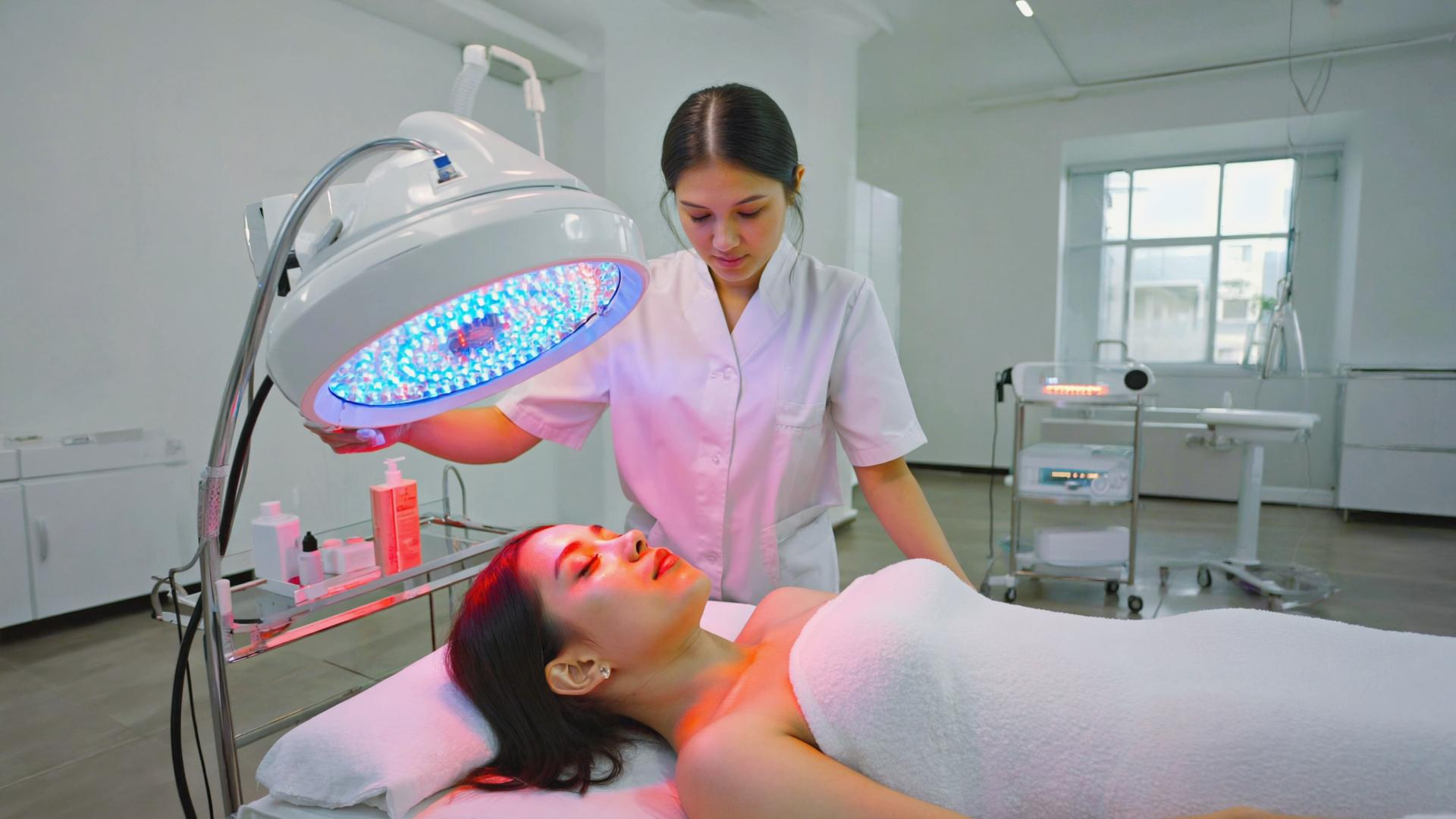
3.1 LED Light Therapy: A Versatile Technology for Skin Rejuvenation
LED light therapy has become a familiar technology in professional facial treatment rooms. It uses specific wavelengths of light to interact with skin tissue through a process commonly known as photobiomodulation.
Different wavelengths are associated with different cosmetic applications:
-
Blue light: Commonly used in acne-focused skincare protocols because of its interaction with acne-associated bacteria.
-
Red light: Used in appearance-focused rejuvenation treatments and protocols targeting visible signs of aging.
-
Near-infrared light: Often incorporated into professional protocols focused on deeper tissue responses and skin recovery.
-
Yellow light: Available in some multi-wavelength systems for specialized cosmetic applications, although its clinical evidence and intended uses should be evaluated individually.
Professional LED panels and masks allow practitioners to deliver controlled light exposure across larger facial areas. Depending on the equipment, adjustable treatment parameters may include wavelength combinations, intensity, and session duration.
One major advantage of LED equipment is its versatility. It can be used as a standalone service or incorporated as a complementary stage after selected facial treatments.
For beauty salons and Med Spas, multi-wavelength LED systems can help create different treatment packages for clients with concerns such as uneven skin appearance, visible signs of aging, and acne-prone skin.
Nevertheless, treatment selection should consider skin sensitivity, contraindications, eye protection requirements, and the manufacturer's operating instructions. LED therapy should be presented with realistic expectations rather than guaranteed claims.
3.2 Microcurrent Devices: Supporting Facial Toning Treatments
Microcurrent technology uses very low-level electrical currents to deliver controlled stimulation through electrodes placed on the skin.
In professional esthetics, microcurrent devices are commonly used in facial toning treatments. Practitioners move specialized probes along selected facial areas according to a defined treatment protocol.
The technology is particularly attractive to clients interested in non-invasive facial treatments that focus on the appearance of facial contours and temporary skin tightening.
Professional microcurrent systems may offer:
-
Adjustable current intensity.
-
Multiple treatment modes.
-
Specialized facial probes.
-
Different operating programs.
-
Controlled treatment timing.
Compared with manual facial massage, microcurrent equipment introduces an additional technology-based treatment option. It also allows practitioners to follow repeatable treatment sequences.
For estheticians, microcurrent can be positioned as an additional service within facial maintenance and rejuvenation programs.
However, it is important to distinguish cosmetic facial toning from medical muscle rehabilitation. Results depend on the device, treatment protocol, and individual client. Benefits should not be overstated, particularly when discussing long-term lifting or structural changes.
3.3 Radiofrequency (RF) Devices: Professional Skin Tightening Technology
Radiofrequency technology is one of the most recognized energy-based technologies in professional aesthetics.
RF devices deliver electromagnetic energy into targeted tissue, where electrical resistance produces heat. Under appropriately controlled conditions, thermal energy can influence collagen structures and stimulate dermal remodeling processes.
Professional RF facial equipment is commonly used in appearance-focused treatments targeting:
-
Visible skin laxity.
-
Fine lines and wrinkles.
-
Reduced skin firmness.
-
Uneven facial contours.
-
General skin rejuvenation.
Different RF systems use different electrode configurations and energy delivery methods. Common categories include monopolar, bipolar, and multipolar RF.
The choice of system influences how energy is delivered and how treatment protocols are designed.
Professional RF devices may provide adjustable energy levels, temperature monitoring, treatment timing, and specialized applicators. These features help trained practitioners manage treatment parameters more systematically.
For clinics, RF equipment can support premium facial treatment programs and provide an alternative or complementary option to traditional manual treatments.
However, RF is not suitable for every client. Practitioners should assess medical history, implanted electronic devices, skin conditions, and other relevant contraindications before treatment. Appropriate training and temperature control are essential.
3.4 Ultrasonic Skin Scrubbers: Advanced Facial Exfoliation and Cleansing
Ultrasonic skin scrubbers use high-frequency mechanical vibrations to assist with superficial exfoliation and facial cleansing.
A handheld metal spatula transfers ultrasonic vibrations across the skin surface, helping loosen accumulated debris, excess oil, and superficial dead skin cells.
This technology is frequently incorporated into professional facial cleansing procedures, particularly for clients seeking a more equipment-assisted alternative to manual exfoliation.
Its main applications include:
-
Superficial skin exfoliation.
-
Removal of accumulated surface debris.
-
Assistance with facial cleansing.
-
Preparation for subsequent skincare steps.
Professional ultrasonic scrubbers may offer different operating modes and adjustable settings, allowing estheticians to adapt the procedure to the client's skin condition.
One advantage is their compact design and relatively straightforward integration into existing facial treatment workflows.
However, ultrasonic exfoliation should remain gentle and controlled. Excessive pressure or inappropriate use on irritated, damaged, or highly sensitive skin can compromise the skin barrier.
For professional operators, correct technique is just as important as the device's technical specifications.
3.5 Hydrodermabrasion Machines: Combining Cleansing, Exfoliation, and Hydration
Hydrodermabrasion has become an important category of multifunctional facial equipment.
Unlike traditional dry mechanical exfoliation, hydrodermabrasion systems use liquid solutions and specialized treatment tips to combine superficial exfoliation with cleansing and hydration-focused procedures.
Many professional platforms integrate several functions, such as:
-
Hydrodermabrasion.
-
Solution-based facial cleansing.
-
Vacuum-assisted extraction.
-
Serum infusion.
-
Additional facial treatment functions, depending on the model.
This combination makes hydrodermabrasion particularly suitable for structured facial treatment programs.
For example, an esthetician may begin with a consultation and skin assessment, proceed with gentle cleansing and exfoliation, and then use selected infusion functions to complete the hydration-focused stage.
Multifunctional hydrodermabrasion machines can also help salons develop signature facial services.
From a business perspective, one integrated platform may provide several treatment options without requiring separate machines for every procedure. This can improve treatment-room organization and create opportunities for different service packages.
When selecting a hydrodermabrasion machine, professionals should evaluate solution compatibility, suction adjustment, treatment-tip design, cleaning requirements, consumable availability, and equipment maintenance.
The number of functions alone should never determine the purchasing decision.
3.6 Oxygen Infusion and Jet Peel Equipment: Enhancing Hydration-Focused Treatments
Oxygen infusion and jet-based facial systems are another category of equipment used in modern professional skincare.
Depending on the design, these systems use pressurized airflow, liquid solutions, or high-velocity jets to distribute selected skincare formulations across the skin surface.
They are commonly incorporated into facial programs focused on:
-
Surface hydration.
-
Refreshing and revitalizing the skin's appearance.
-
Supporting serum application.
-
Complementary facial care after cleansing and exfoliation.
Some advanced systems combine oxygen-related functions with water-based exfoliation or serum delivery, allowing practitioners to create multiple stages within one facial appointment.
For professional salons, oxygen infusion equipment can help differentiate hydration-focused facial services from conventional manual facials.
However, practitioners should understand the actual delivery mechanism of the equipment. Oxygen spray, oxygen infusion, and oxygen-based medical therapies are not interchangeable terms.
Claims about deep oxygen delivery, cellular oxygenation, or medical benefits should only be made when supported by appropriate evidence and the device's intended use.
A professional treatment should focus on the functions the equipment is designed to perform, with realistic descriptions of expected cosmetic outcomes.
3.7 Digital Skin Analysis Systems: Making Facial Treatments More Personalized
Digital skin analysis equipment is becoming increasingly useful in professional skincare consultations.
These systems use cameras, specialized lighting, and image-processing software to capture skin characteristics and present visual information about different skin conditions.
Depending on the system, analysis features may include:
-
Visible skin texture.
-
Pore appearance.
-
Fine lines and wrinkles.
-
Pigmentation patterns.
-
Redness distribution.
-
Oil-related surface characteristics.
-
Before-and-after image comparisons.
The main value of digital skin analysis is not simply generating attractive reports. It helps estheticians organize consultations and communicate treatment priorities more clearly.
For example, a practitioner can use assessment images to explain why a client may benefit from a cleansing-focused facial, hydration program, or appearance-focused rejuvenation treatment.
Digital analysis can also help clinics document treatment progress over time, provided that image capture conditions remain consistent.
For equipment manufacturers and beauty businesses, this technology creates opportunities to combine professional facial equipment with more structured consultation services.
It is important to remember that cosmetic skin analysis devices are not substitutes for medical diagnosis. Their results should be interpreted within the equipment's intended capabilities.
4. Advantages and Comparison: Professional Equipment vs. Home Skincare Devices
As consumer skincare technology becomes more accessible, home-use beauty devices are attracting considerable attention. LED masks, portable microcurrent tools, and compact facial cleansing devices are now widely available.
However, professional skincare equipment serves a different purpose.
The main distinction is not that every professional device automatically produces better results. Rather, professional systems are generally designed around the requirements of treatment businesses, including operating efficiency, treatment flexibility, equipment durability, and practitioner-controlled protocols.
| Comparison | Professional Equipment | Home-Use Devices |
|---|---|---|
| Intended users | Trained estheticians and qualified operators | Individual consumers |
| Treatment design | Professional service protocols | Personal skincare routines |
| Functions | Often offers broader treatment configurations | Usually focuses on selected functions |
| Parameter control | May provide more adjustable operating settings | Generally simplified |
| Treatment capacity | Designed for repeated business use | Designed for individual use |
| Maintenance | Requires structured cleaning and maintenance | Usually simpler maintenance |
Professional equipment can also provide operational advantages.
First, multifunctional systems help businesses expand their service menus. Second, adjustable parameters allow trained operators to adapt treatment procedures within the manufacturer's guidelines. Third, professional platforms can support standardized workflows across multiple practitioners.
There is also an important commercial consideration: professional equipment can create additional revenue opportunities through treatment upgrades, customized packages, and repeat appointments.
Nevertheless, purchasing decisions should be based on actual performance, safety documentation, training, warranty coverage, and after-sales support rather than marketing descriptions alone.
5. Applications and Client Needs: Building a Professional Facial Treatment Menu
The most effective way to use these seven technologies is to organize them around client needs rather than offering every device as an isolated service.
Different clients have different skincare priorities, and not every technology is appropriate for every skin condition.
For clients concerned about acne-prone skin:
Blue LED therapy and appropriate cleansing technologies may be incorporated into selected professional skincare programs. Estheticians should assess skin sensitivity and avoid aggressive exfoliation when the skin barrier is compromised.
For clients seeking hydration and skin refreshment:
Hydrodermabrasion and suitable oxygen infusion systems can form the foundation of hydration-focused facial treatments. Professional serums and appropriate aftercare can complement the procedure.
For clients concerned about visible signs of aging:
Red LED therapy, microcurrent, and RF may be considered as separate or complementary treatment options, depending on the client's suitability and the capabilities of each device.
For clients interested in skin texture improvement:
Ultrasonic exfoliation and hydrodermabrasion can be considered within appropriate cleansing and exfoliation protocols.
For clients who want personalized skincare plans:
Digital skin analysis can support consultations, treatment selection, and progress documentation.
For beauty salons and Med Spas, a well-designed facial menu should include several levels of service.
An introductory facial may focus on cleansing and hydration. An advanced facial may incorporate hydrodermabrasion, ultrasonic exfoliation, and LED therapy. A premium rejuvenation program may include selected energy-based treatments, such as RF or microcurrent, when appropriate.
This structure helps businesses serve different client needs without creating an unnecessarily complicated treatment menu.
Professional consultation should always come first. Practitioners need to review relevant medical history, assess contraindications, explain realistic outcomes, obtain informed consent, and provide appropriate aftercare instructions.
6. How to Choose the Right Professional Skincare Equipment
With so many technologies available, purchasing the right equipment requires a practical evaluation.
1. Identify your target treatment services.
Start by determining which services your business wants to offer. A facial studio specializing in hydration may prioritize hydrodermabrasion and oxygen infusion, while a clinic focused on skin rejuvenation may consider RF and LED systems.
2. Evaluate technical specifications.
Review the actual output parameters, treatment modes, applicator design, operating controls, and available accessories. Do not rely solely on the number of functions advertised.
3. Consider safety and compliance.
Check product documentation, applicable electrical and equipment safety standards, manufacturer instructions, and the regulatory requirements of your market. Ensure that the equipment is suitable for its intended cosmetic use.
4. Review training and technical support.
A reliable supplier should provide operating guidance, treatment protocols, maintenance instructions, and accessible technical assistance.
5. Calculate long-term operating costs.
Consider consumables, replacement accessories, maintenance, warranty terms, and the availability of spare parts. A lower purchase price does not necessarily mean a lower total cost of ownership.
6. Choose equipment that supports business growth.
The best investment is not necessarily the machine with the most functions. It is the equipment that fits your existing treatment menu, target customers, staff capabilities, and long-term business strategy.
7. Conclusion
Professional skincare in 2026 is increasingly shaped by technology, personalization, and integrated treatment experiences.
LED light therapy, microcurrent, radiofrequency, ultrasonic skin scrubbers, hydrodermabrasion, oxygen infusion, and digital skin analysis each offer different opportunities for modern esthetic practices.
When selected and operated appropriately, these technologies can help beauty salons and aesthetic clinics expand their treatment options, improve workflow consistency, and create more personalized facial care programs.
For estheticians and clinic owners, successful equipment investment begins with understanding client needs and selecting technologies that serve a clear purpose. Professional training, appropriate treatment protocols, reliable equipment quality, and ongoing technical support are equally important.
As the beauty industry continues to evolve, the most competitive skincare businesses will not simply collect more machines. They will build well-organized treatment systems that combine professional expertise, suitable technologies, and a consistent client experience
Founded in 2008, Guangzhou GLM Beauty Spa Equipment Factory specializes in research, development, manufacture and selling of beauty and slimming machines. Our production base is located in Guangzhou City, Guangdong Province, China. Since our foundation, we have introduced advanced technologies and equipment, to assure high quality and high performance of our products. With professional marketing guide and excellent after-sales service, our products have been exported to over 20 countries and regions, including Southeast Asia, the Middle East, Europe and the United States, won worldwide praises and gained a good reputation
